A Quick Guide to the Girard-Perregaux Laureato

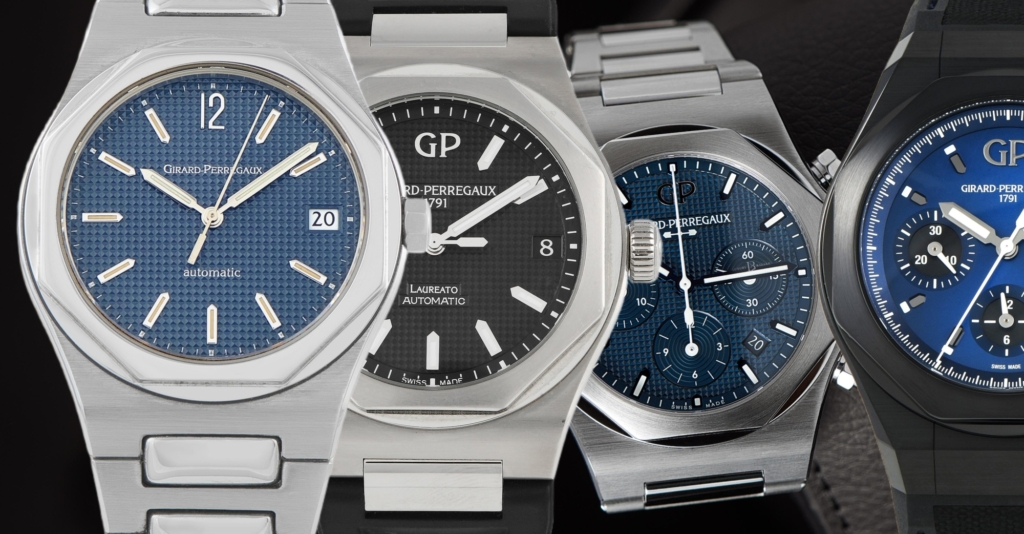
The Girard-Perregaux Laureato debuted in 1975, sporting an integrated bracelet and an octagonal bezel like the now-iconic Audemars Piguet that came three years prior. Today, it’s a well-respected luxury sports watch in its own right, with its sixth generation being produced today. The chunky Laureato Absolute models could also be considered a seventh “type.” Here we’ve aimed to provide the most concise and coherent guide to GP Laureato models on the web.
The OG Quartz Chronometer (1975-1984)
Complications: Time+date (26mm, 30mm, 35mm)
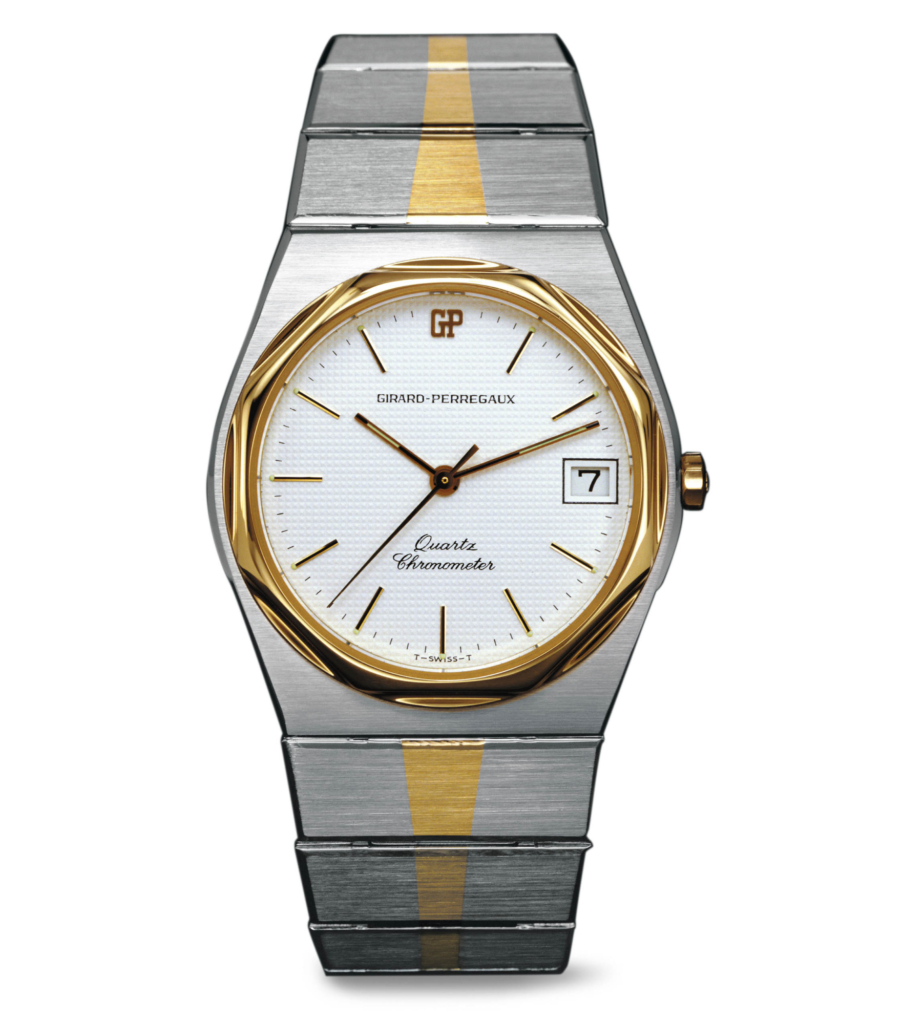
The first Girard-Perregaux Laureato, which appeared in 1975, came in three sizes: 26mm, 30mm and 35mmm. It originally came exclusively in two-tone (yellow gold + stainless steel). By the early 1980s full stainless steel was an option. Solid yellow gold and white gold models are rare.
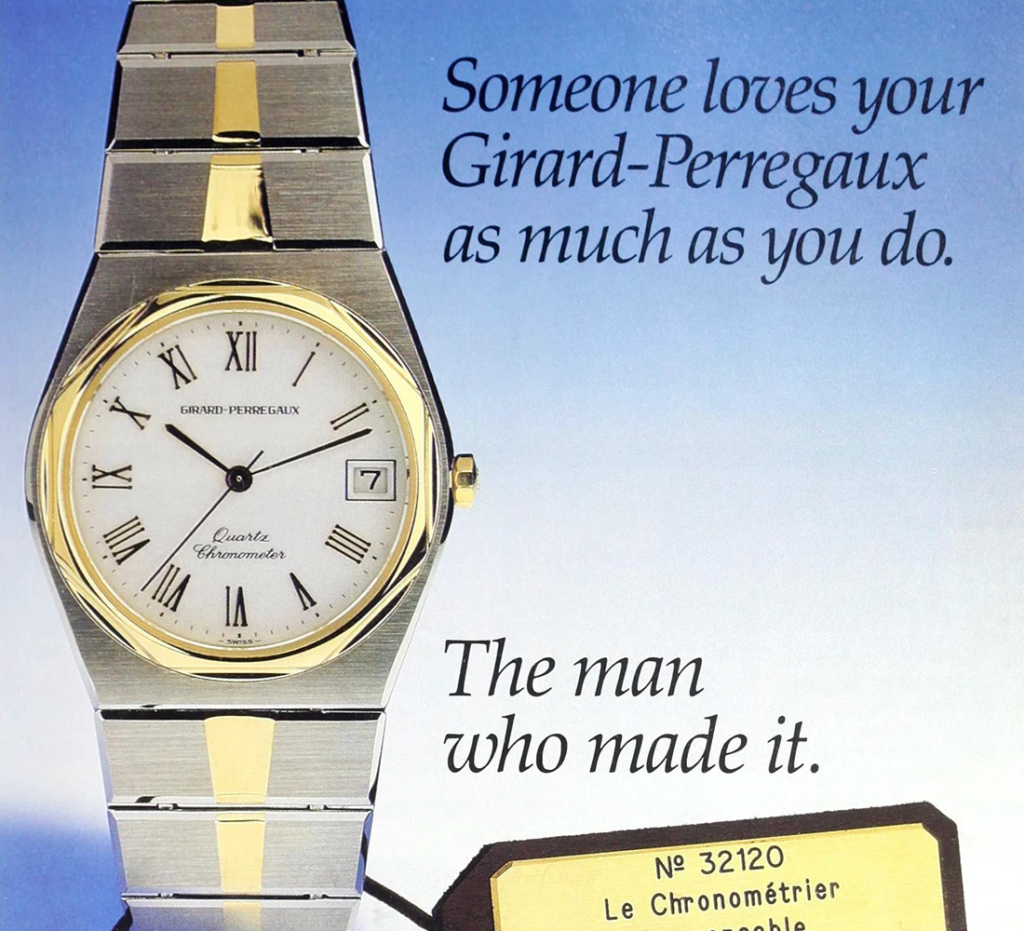
The integrated bracelet is a simple one-link-across design, although the gold streak down the middle of the two-tone models gives a three-link appearance. The gold is inlaid, not merely plated.
It should be noted that “Laureato” was just a nickname at first–“Quartz Chronometer” was the official model name. The most plausible explanation behind the Laureato nickname (which means “graduate” in Italian, with Italy being GP’s biggest market at the time) is that it comes with a “diploma”–its chronometer certificate.
The quartz caliber 705 inside the original Laureato was much slimmer than Girard-Perregaux’s first-generation quartz movements. Quartz wasn’t just an afterthought for the brand; they had been putting serious R&D into it since the mid-1960s. In fact, one of Girard-Perregaux’s many contributions to watchmaking was the creation of the 32,768 Hz standard that almost all quartz watches use today. When quartz crystals are sized/shaped as such that they oscillate 32,768 (which is 2 to the 15th power) times per second, a simple 15‑stage binary counter can divide it down to exactly 1 Hz with minimal power and complexity.
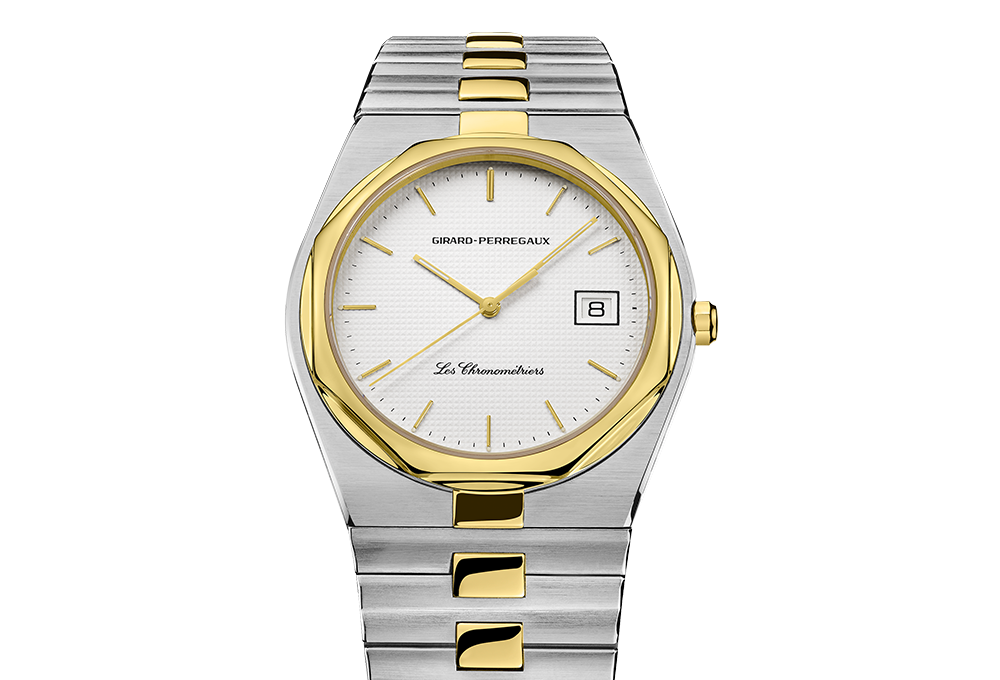
Towards the end of the first-generation GP Laureato’s run, the text at the bottom changed from “Quartz Chronometer” to “Les Chronométriers”. And while the Laureato’s design is often misattributed to Gerald Genta or even Italian architect Adolfo Natalini, the brand is adamant that it was “designed, developed and crafted in-house.” As a sports watch, the Laureato was given an ample 100m water resistance rating.
More on Girard-Perregaux:

Second Generation: The Quartz Complication Era (1984-1994)
Complications: Time and date window, Time and date subdial, Date and moonphase, Date and zodiac/season indicator, Date and zodiac/season indicator with moonphase, Perpetual calendar and zodiac/season indicator with moonphase (all 35mm)
By the mid-1980s, the second-generation Laureato had appeared, and it only came in one size: 35mm. Aside from getting an H-link bracelet (similar to the Vacheron Constantin 222 and Patek Philippe Nautilus), the design didn’t change too much, and all the movements were still quartz. But not just any quartz: the “Equation” models had mechanical gear trains and sapphire display casebacks, which are extremely rare on quartz-powered watches to this day. GP didn’t skimp on the finishing, either.
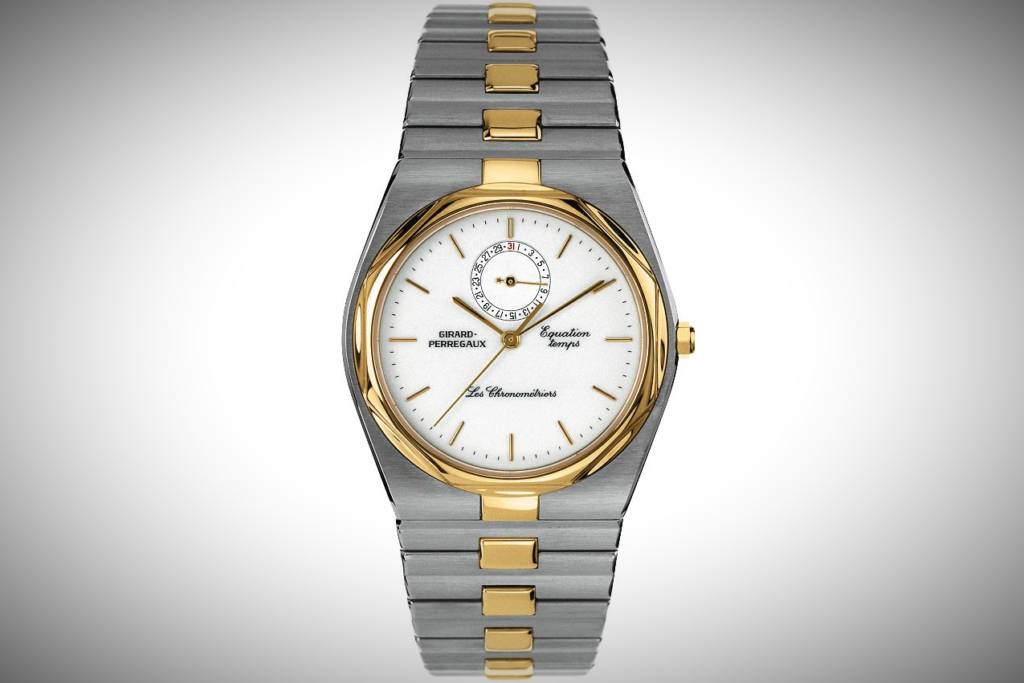
Regular three-hand models were offered with a standard date window (ref. 4266-3) or a small pointer date at 12 o’clock (ref. 4266-8, which says “Equation Temps” on the dial). Plus there were four complicated Equation models.
The “Equation Soleil” (ref. 4266-4) has the same date subdial along with a zodiac/season indicator on the bottom of the dial. That disc, labeled with the 12 Western zodiac signs, makes one full rotation per year, and thus roughly indicates the current time of year. The “Equation Terre” (ref. 4266-7) is the same thing, but with a moonphase added above the zodiac window. Add a perpetual calendar function to that and you have the “Equation Perpetuelle” (ref. 4266-9). The “Equation Lune” (ref. 4266-5) just has the date and moonphase–no zodiac.
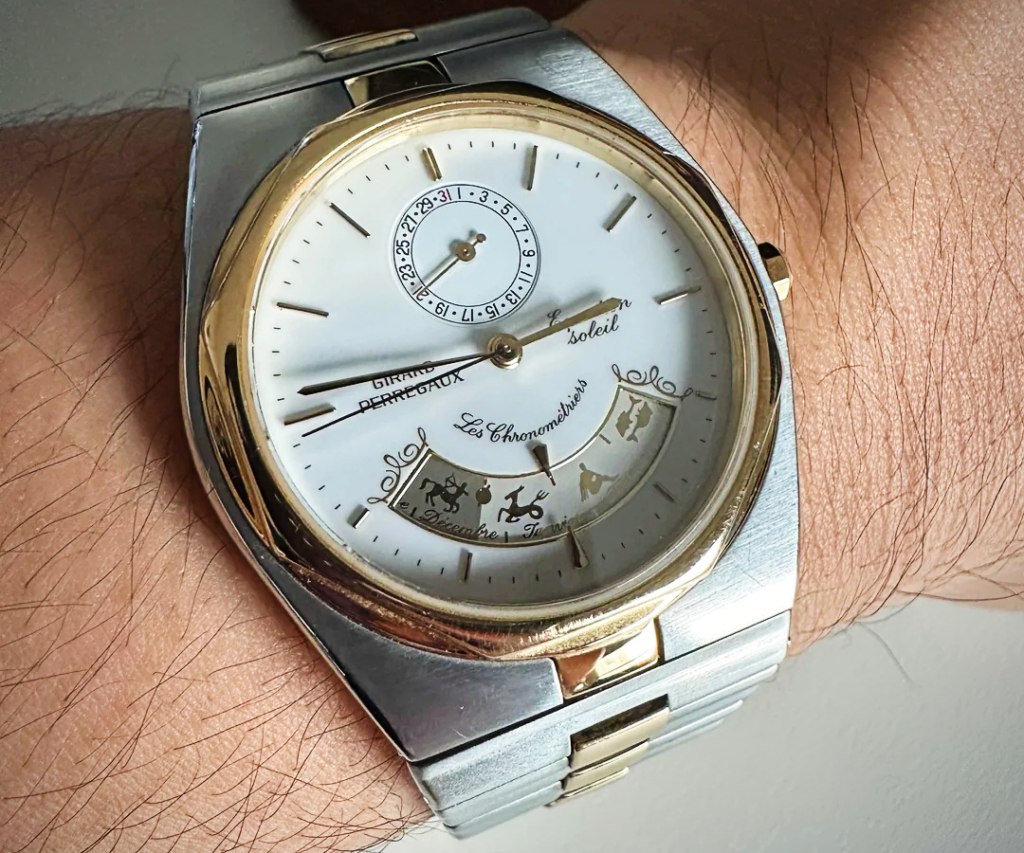
Despite the “Equation” part of the name, none of them are equation-of-time watches, and notably, none of them were offered in full stainless steel.
Third Generation: The First Mechanicals (1995-2000)
Complications: Time and date (36mm), Chronograph (40mm), Tourbillon with Three Bridges (40mm)
1995 was a major turning point for the GP Laureato line. By then, quartz movements no longer seemed novel or luxurious, so Girard-Perregaux unveiled their first mechanical Laureato, ref. 8010. It slightly grew to a 36mm case size, and the center bracelet links got wider (you may seem them called “pillow” links). Inside ticks the excellent in-house ultra-thin automatic GP3100 caliber–the same movement used in the Vacheron Constantin Overseas at the time. The 8010 is only 7.9mm thick despite having a full-size winding rotor.
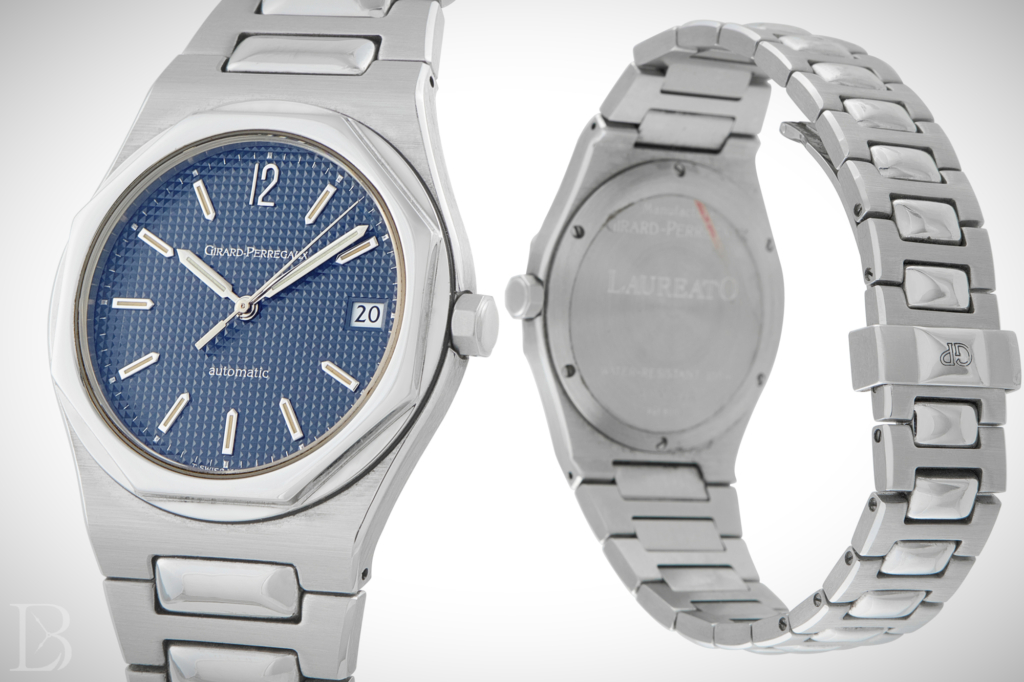
The first-ever chronograph version of the Laureato, the Laureato Olimpico (ref. 8017), came out in 1996, sporting a 40mm case and a black or white dial. It was intended to be limited to 999 pieces to celebrate the 1996 Olympics in Atlanta, but only an estimated 580 were actually made. The cases and bracelets for the 8010 and 8017, notably, were made by GTF–the same company who was making bracelets for the Audemars Piguet Royal Oak. GTF was later acquired by AP.
A vertical-clutch Dubois-Dépraz chronograph module was added to a GP3100 base to make caliber GP3170, which puts the date window at 4:30. Even with the chrono module, the Olimpico is 12.5mm thick. So, while it’s certainly not one of the thinnest watches in the world, the GP Laureato Olimpico is roughly the height of a Rolex Daytona ref. 116500LN, which is considered a relatively thin/wearable luxury chronograph.
Ref. 99070, a rare tourbillon version of the Laureato, has the “Three Bridges” movement architecture that Girard-Perregaux has been known for since the 19th century. To me, third-generation Laureatos are pretty much perfect.
And they were actually the first ones to officially be called Laureatos. While some still came in two-tone or solid gold, the majority of them (unlike the “pre-Laureatos”) are stainless steel. Even basic steel 8010’s can sell for over $15,000 today. Olimpico chronographs are closer to $10,000. The Laureato was discontinued altogether around 2000.
GP Laureato Evo³ (2003-2010)
Complications: Flyback chronograph (46mm), Chronograph GMT (44mm), Perpetual calendar chronograph (44mm), Big date with power reserve and moonphase (42.6mm), time and date (quartz, 42.6mm), Tourbillon with Three Sapphire Bridges (42mm)
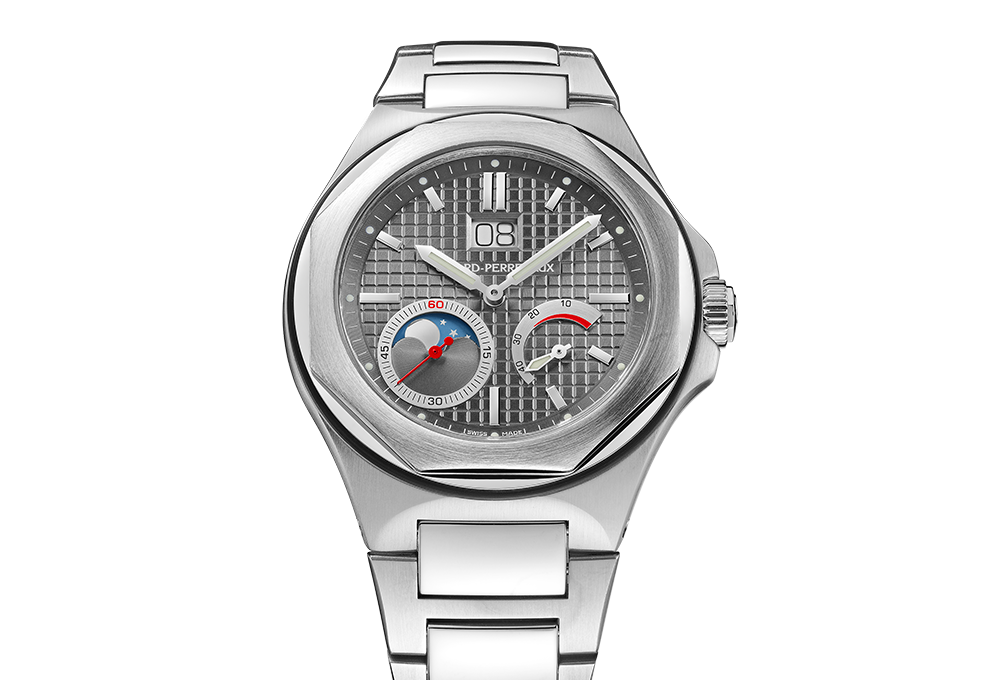
In 2003, when huge watches started to come into style for about a decade, Girard-Perregaux reinvented the Laureato in a major way. The Laureato Evo³–which is, oddly, the fourth evolution of the Laureato–is a complication-focused generation ranging in size from 42mm-46mm.
Ref. 80180 is a chronograph that also has a second time zone indicated in its 24-hour subdial at 9 o’clock, while ref. 90190 is a perpetual calendar chronograph that we ranked among the best complicated luxury watches for the money. Ref. 80185 is more asymmetrical, with a big date, moonphase and power reserve indicator.
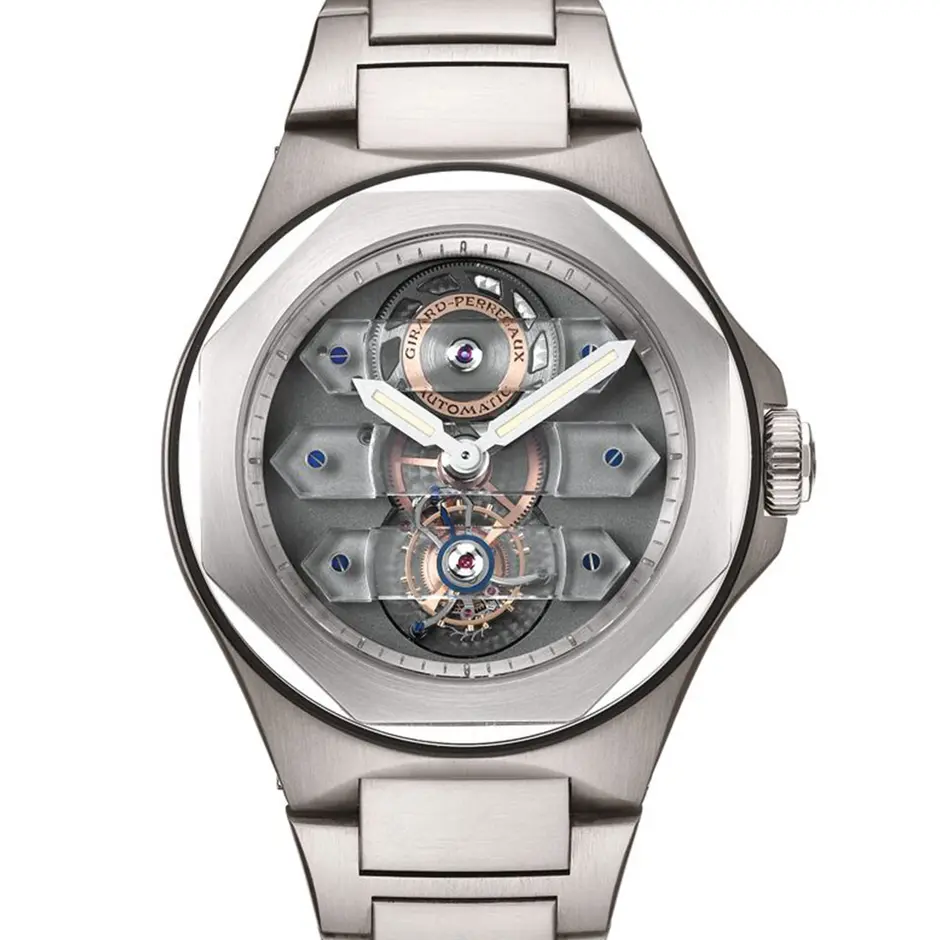
The largest GP Laureato Evo³ is a 46mm limited-edition flyback chronograph made for Oracle Racing (ref. 81875). The smallest is the oddball quartz 80188 reference, released in 2010 to celebrate 40 years of the 32,768 Hz standard. Although 40 examples were intended to be made, Laureato collector (and head of the Laureato fan club on Facebook) Marc Naidu estimates that “only 20 pieces were actually made.” The Chairman and CEO of Girard-Perregaux’s parent company, Sowind Group, died in October of 2010, and Kering took majority ownership of Sowind the following year. “Hence the 80188 was lost in the commotion,” adds Marc. Its caliber 13500 movement was never used in any other watch.
The 80188 was the only time-and-date Evo³; every automatic version had complications. And all Evo³’s have sapphire casebacks. The most upscale was the Tourbillon with Three Sapphire Bridges version, replacing GP’s typical gold three-bridge architecture with sapphire for the first time.
With the Evo³, Girard-Perregaux began to experiment with titanium (sometimes PVD-coated) and rose gold, and sometimes a combination of the two. They’re cool watches, and great for big wrists, but they’re not the most elegant Laureatos. Sales were relatively tepid, and the Evo³ was discontinued around 2010. A slimmer, more subdued Laureato came six years later.
Fifth-Generation Girard-Perregaux Laureato (2016+)
Complications: Time and date (34mm, 38mm, 41mm, 42mm), Tourbillon (43mm, 45mm), Skeleton (42mm), Chronograph (42mm), Flying tourbillon skeleton (42mm)
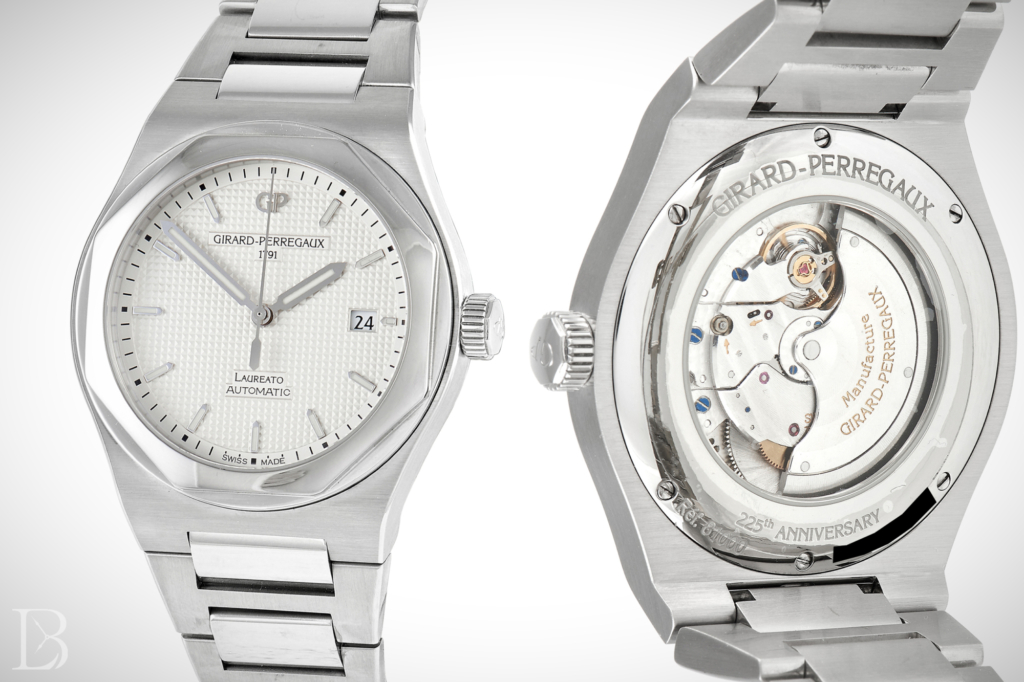
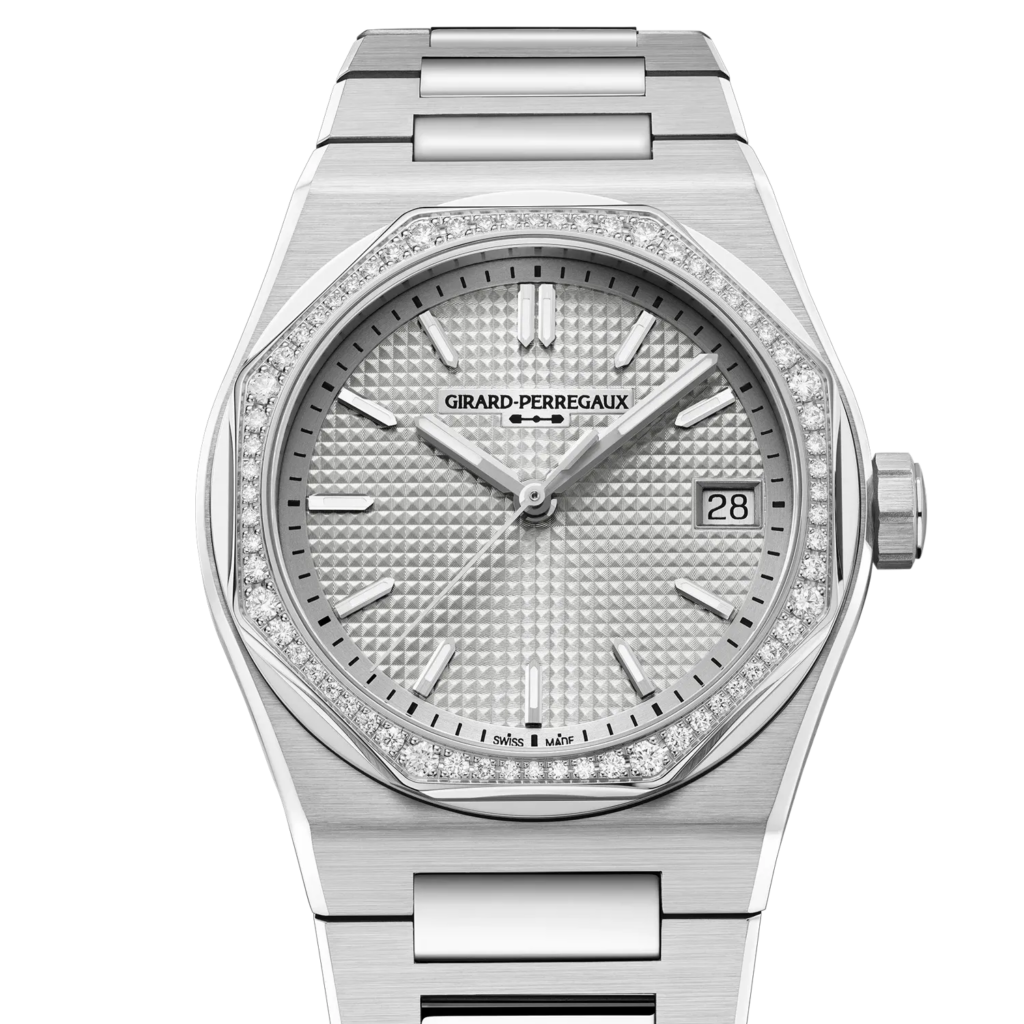
In 2016, the reborn Girard-Perregaux Laureato ref. 81000 picked up where ref. 8010 left off, but in a more modern 41mm size with an exhibition caseback. It was as if the Evo³ never happened. The 81000 was limited to 225 pieces (celebrating GP’s 225th anniversary) and oddly, it’s the only basic 41mm Laureato ever made. Although it often gets mistaken for the more common 42mm models, the 41mm Laureato has different hands, clasp and dial, along with a smaller “GP” logo, a more polished bezel, and a thinner movement.
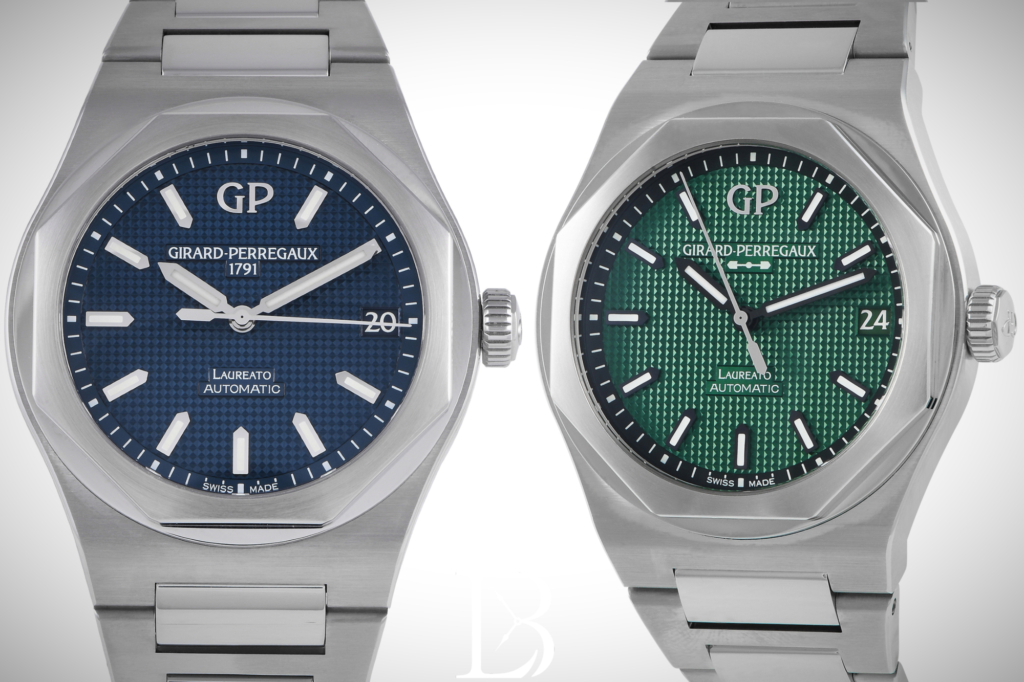
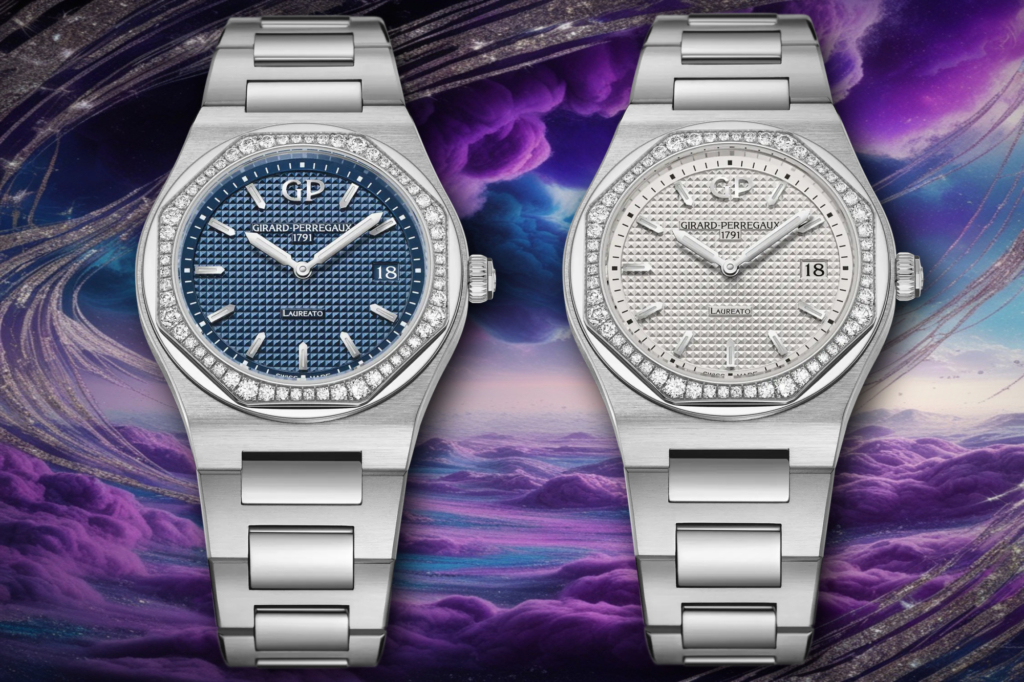
In 2017, Girard-Perregaux replaced the limited 41mm Laureato with a regular production 42mm model (ref. 81010) and added 38mm and 34mm sizes. Those 34mm models (ref. 80189) have quartz movements, and they’re the only Laureatos with closed casebacks made this century.
Aside from the 81000 (which was powered by the GP03300), the time-and-date automatics are powered by the attractive workhorse GP01800 movement, which is not an ultra-thin caliber, but case heights are still comfortably under 11mm.
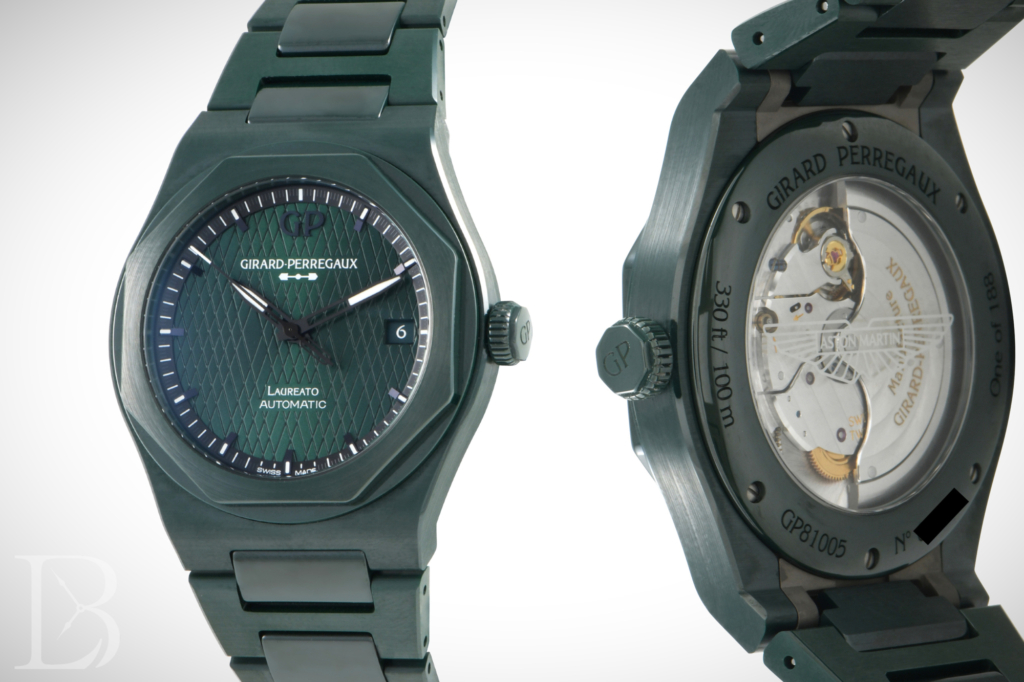
GP has released a lot of dial and material options for this generation of Laureato, almost always with hobnail dials. Since 2021, Girard-Perregaux has released several watches in partnership with Aston Martin, and the clear collector favorite among them is the full green ceramic model released in 2023 in both 38mm and 42mm.
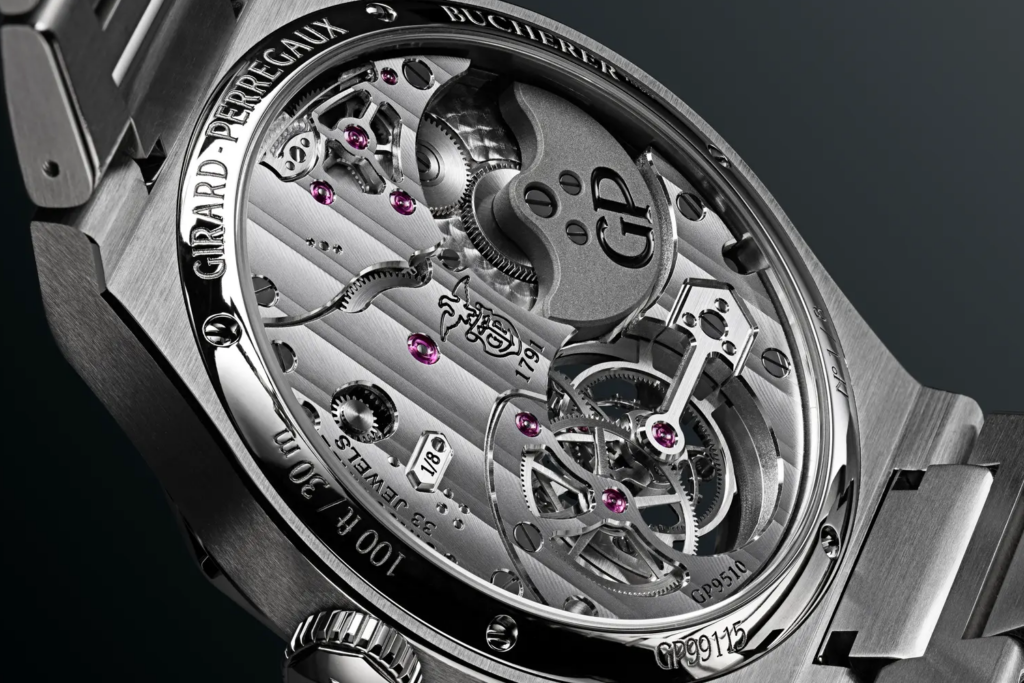
The most complicated fifth-generation GP Laureato is the now-discontinued 42mm Flying Tourbillon Skeleton model, ref. 99110. A regular (non-flying, non-skeletonized) tourbillon model was also released in 45mm (ref. 99105) and later downsized to 43mm (ref. 99115). I think GP doesn’t get enough credit for how good their movements look.
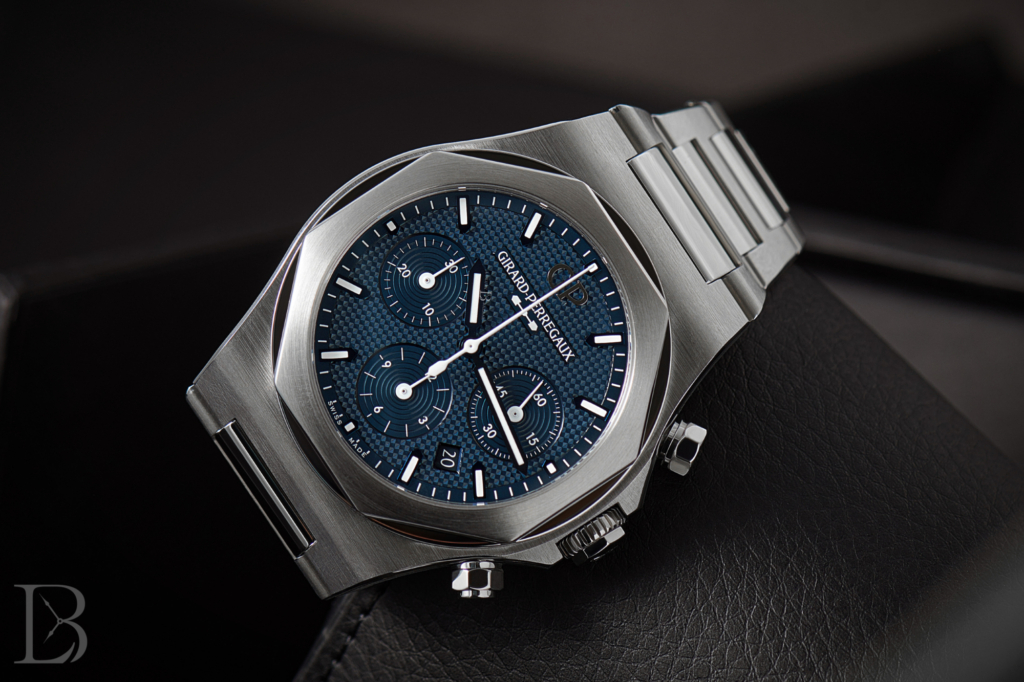
Chronographs and time-only skeleton models, both in 42mm, are also key parts of the fifth-gen GP Laureato lineup. The chronograph is the only one still offered on a leather strap. Most customers choose the bracelet anyway. All in all, there are numerous attractive pre-owned options for fifth-generation Laureatos in the $10,000 range, while skeleton models can top $20,000 and solid gold flying tourbillons can exceed $100,000.
The 38mm Laureato is now discontinued, and it seems like the 34mm model is headed that way too (only two variants are left in the catalog, both with diamond bezels). So, that leads me to believe that the Laureato Fifty launched in 2025 will indeed ultimately be a replacement and not just an upscale companion for the current standard Laureato. I’ll talk more about that in a moment, but now let’s address GP’s modern “chunky” Laureato sub-family.
GP Laureato Absolute (2019+)
Complications: Time and date, Chronograph, Skeleton, Worldtimer (all 44mm)
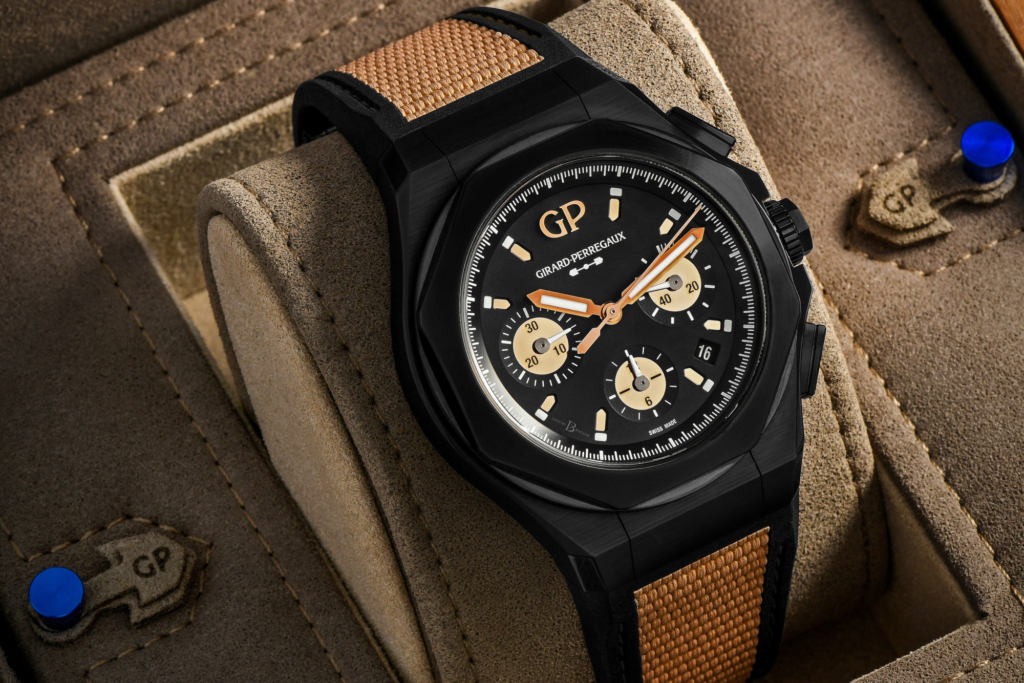
If the Girard-Perregaux Laureato is like the Audemars Piguet Royal Oak, and the Laureato Evo 3 is like the AP Royal Oak Concept, then the Laureato Absolute is like the AP Royal Oak Offshore. Launched in 2019, the GP Laureato Absolute is very sporty, with a big angular case (44mm and about 15mm thick), big well-lumed hands, a focus on chronographs, a prominent slanted rehaut, and an integrated strap instead of a bracelet. In lieu of precious metal options, cases have been offered in titanium and carbon–as well as solid sapphire.
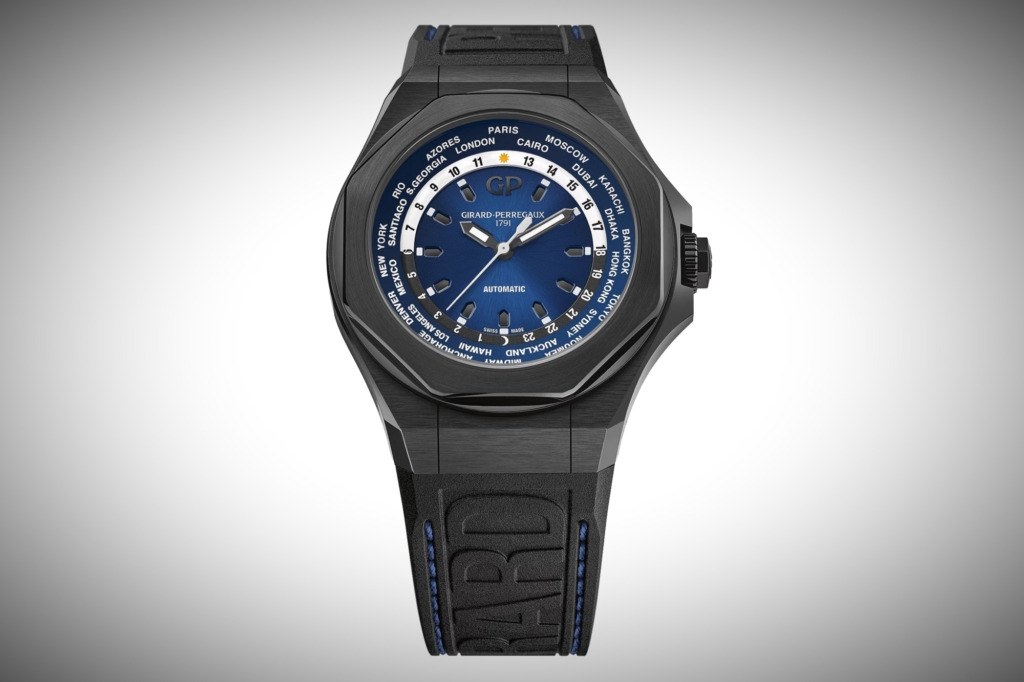
Simple time-and-date GP Laureato Absolute models, which have date windows at 6 o’clock, are now discontinued. The Laureato Absolute Worldtimer is also discontinued, as are non-sapphire-cased Absolute skeleton models (which were a rare example of a full-bracelet Absolute).
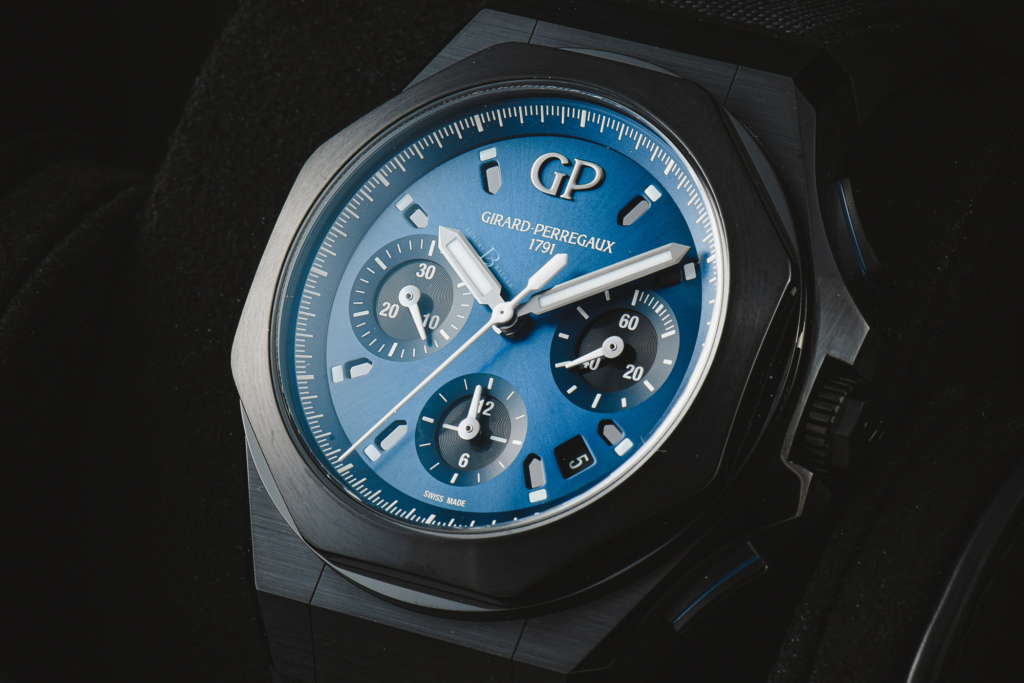
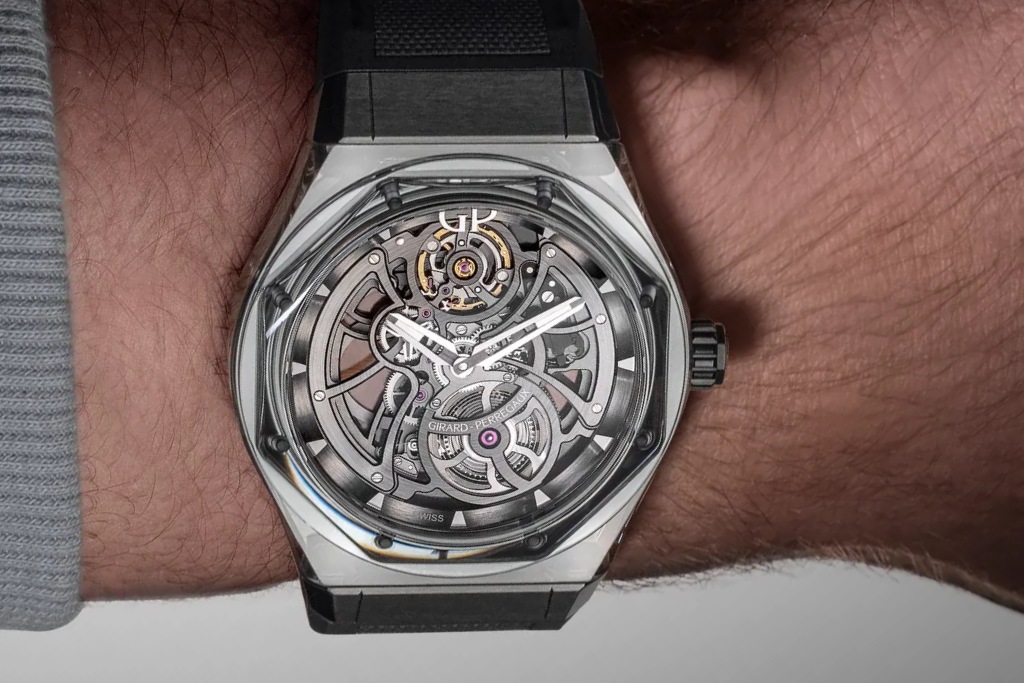
All that’s left in the current Laureato Absolute family are chronographs, and the Laureato Absolute Light & Shade (ref. 81071-43-2022-1CX), which is a sapphire-case watch with a skeletonized time-only movement. Its sapphire case, which takes 170 hours to machine, is tinted grey, while the original Absolute Light was made of clear sapphire and the Absolute Light and Fire was red sapphire.
GP Laureato Fifty and Other 6th-Generation Models (2025+)
Complications: Time and date (36mm, 39mm), Time only (39mm), Tourbillon with Three Gold Bridges (41mm)
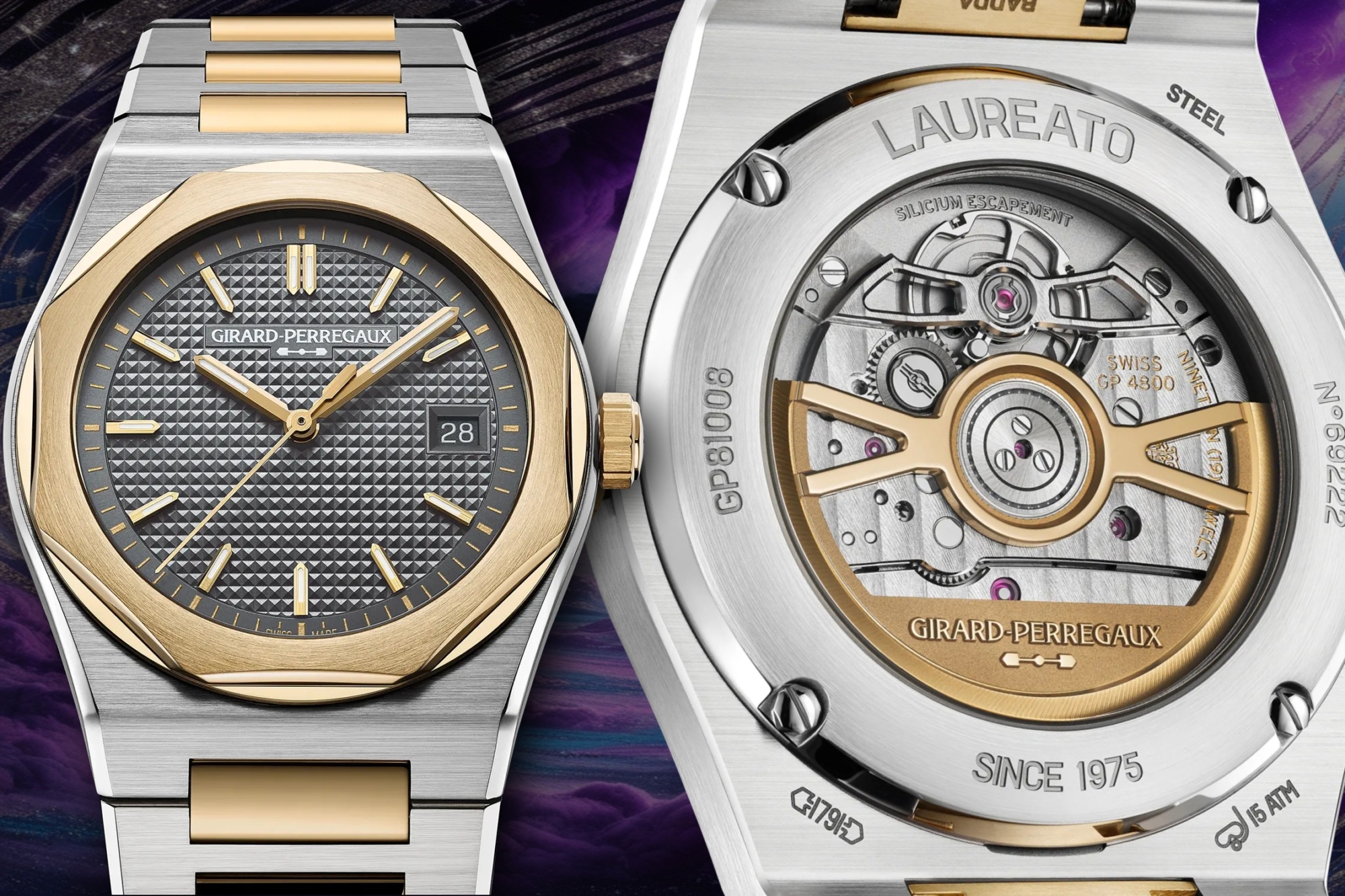
To celebrate the 50th anniversary of the Laureato, GP released the Laureato Fifty in 2025, with a notably upgraded and ultra-thin movement, along with a much-appreciated tool-free micro-adjust clasp. It also has case proportions and a less-tapered bracelet that give it an overall aesthetic very faithful to the original. At first the Laureato Fifty was only available as a two-tone 39mm time-and-date model, but stainless steel models and a 36mm size came the next year.
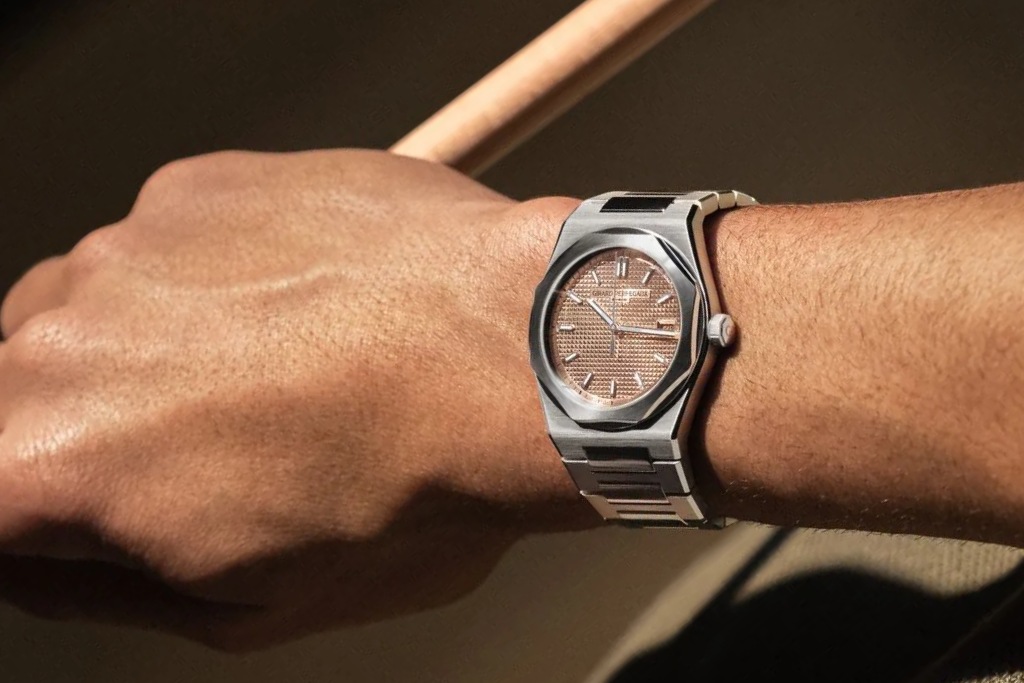
The stainless steel 39mm model is also available with a blue enamel dial in time-only form. No complications have yet entered the Laureato Fifty family. With starting prices of $23,100, it seemed like an “upscale version” of the regular Laureato at first. The extra-thin GP4800 caliber is an in-house movement with a silicon escapement, a variable‑inertia balance with gold timing screws, hacking seconds, and a ball‑bearing rotor system.
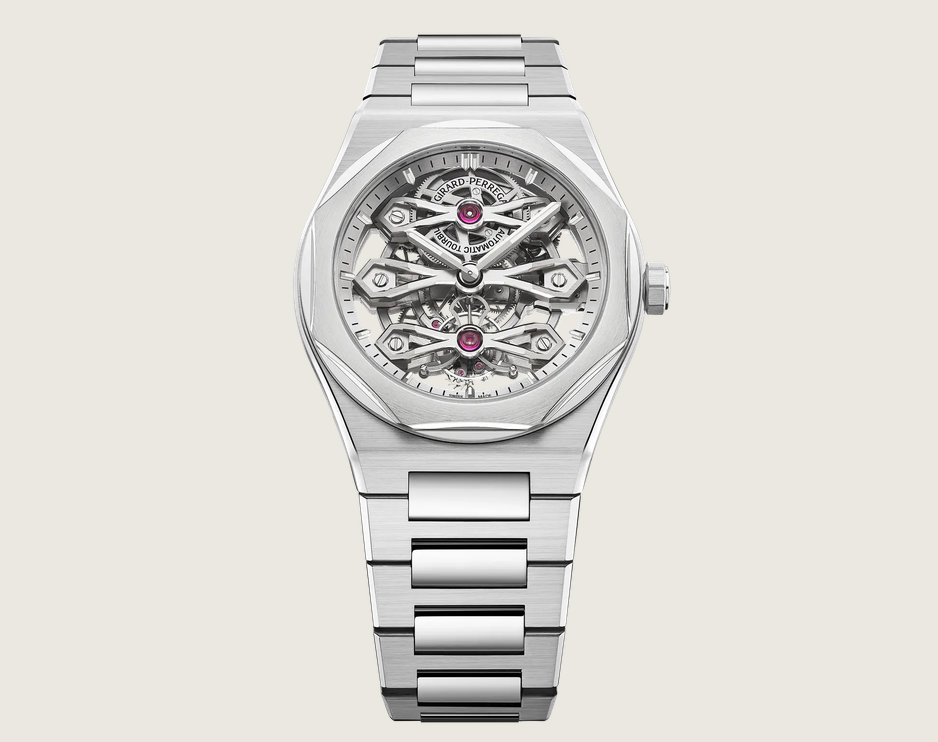
The 41mm Three Gold Bridges model is the current flagship of the GP Laureato family, with a fully skeletonized movement and a tourbillon secured by the bottom bridge. Released in 2025, it is also considered a sixth-generation Laureato, even though it isn’t officially called a “Fifty” model.
Given the seemingly inevitable discontinuation of the Laureato Absolute, along with the imminent demise of the 34mm and 38mm versions of the regular Laureato, I can’t help but think the Laureato Fifty is going to be the next regular Laureato. GP might just be moving even more upmarket. We’ll see!
Special thanks to Marc Naidu for his help fact-checking this article.
More on 2026 Watch Releases:


Leave a Reply