A Collector’s Guide to the Rolex Submariner

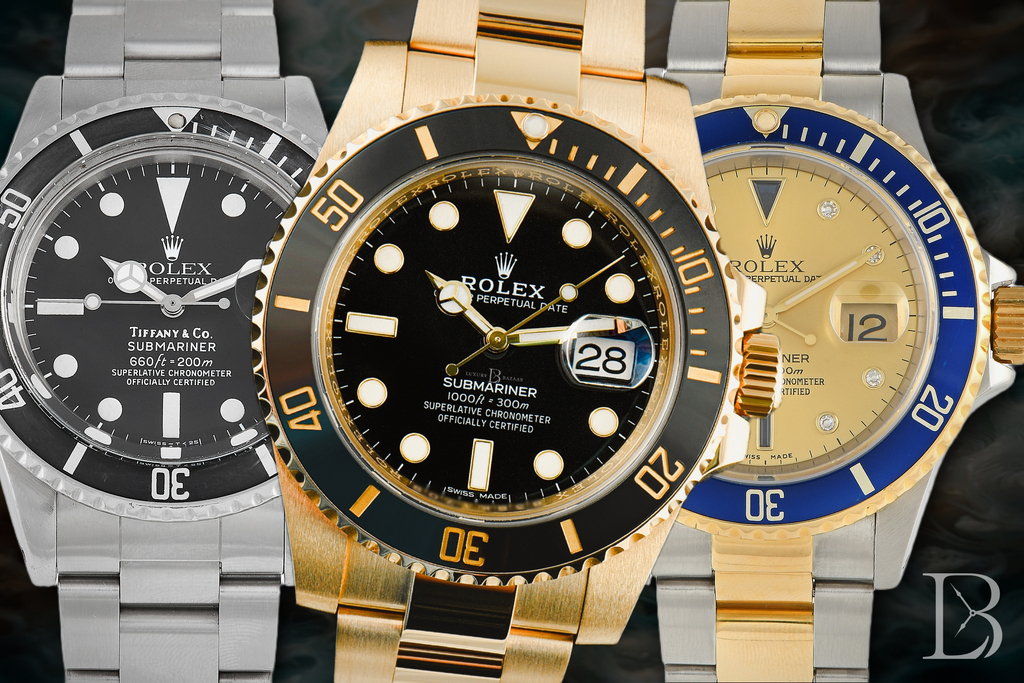
The Rolex Submariner, one of the most recognizable and often-imitated watches in the world, has a storied history as one of the first dive watches ever made with a rotating bezel. Its popularity helped normalize the very concept of wearing dive watches in everyday life. Now, so many versions of the Sub have been made–with so many subtle evolutionary updates over the years–that it can be tough to keep track of which references have which traits. In this article I’ll break down all the Rolex Submariner models, from its 1953 release to today, into coherent generations and groupings that collectors understand.
Historical Context
The first production Rolex with a rotating bezel was the Turn-O-Graph, first shown at the 1953 Basel fair. Although it was functionally waterproof for everyday life, it wasn’t intended for diving.
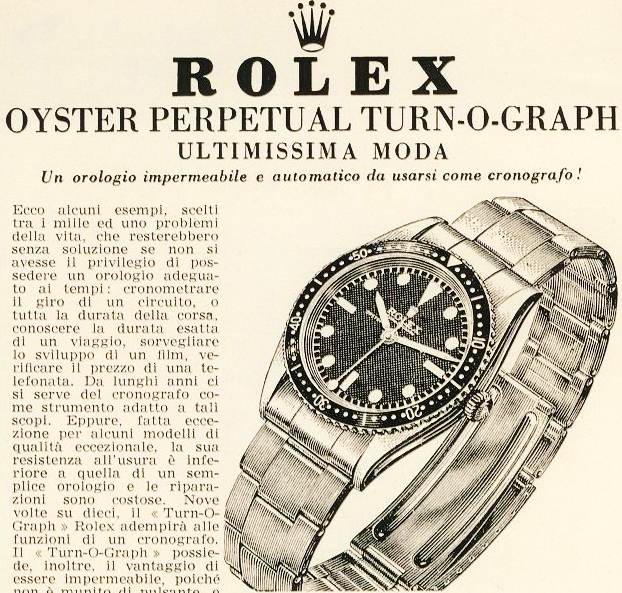
The Submariner made its public debut there in 1954, looking very similar to the first Turn-O-Graph but with a thicker case. Development had been ongoing for a while at that point, though, and the first Subs were made around the same time as the Blancpain Fifty Fathoms in 1953, when scuba diving was becoming a worldwide phenomenon. Let’s sort through some of those first Subs now.
NCG (No Crown Guard) Rolex Submariner Models (37.5mm, 1953-1962)
Movement Calibers: Hunter A260, Hunter A295, 1030, 1530
Total Production: 21,644 (source: Oyster Perpetual Submariner: The Watch That Unlocked the Deep by Nicholas Foulkes)
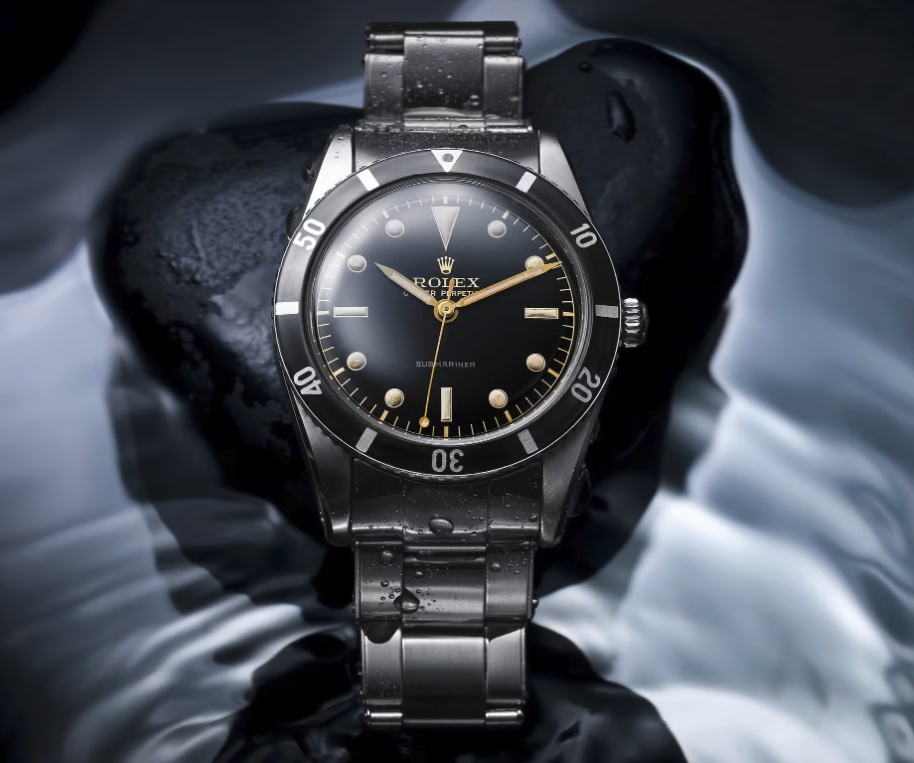
When the Rolex Submariner first debuted, it had a 100m depth rating. But soon 200m versions came out and were made concurrently. “Small Crown Submariners” have 100m depth ratings, relatively thin cases (about 13mm or less with crystal), and 6mm crowns–except for the very first Submariner, ref. 6204, with its 5.3mm crown.
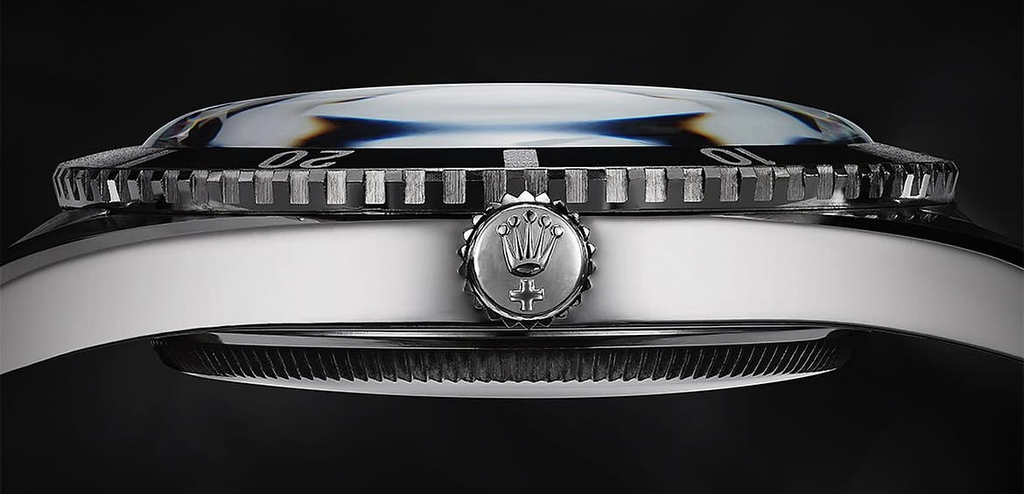
Meanwhile, “Big Crown Submariners” have 200m depth ratings, thicknesses around 15mm, and 8mm crowns. One exception: the transitional 6536/8 model (also called a “6536/6538” because the inner caseback has “6538” crossed out above “6536”) is a small-crown model with the thick case but a 100m rating.
All of them are approximately 37.5mm wide and have no crown guards; you may hear these called “NCG Subs” by collectors. Also note the blocky gear-like bezel rim of the NCG Subs, as opposed to the more pie-crust-like scalloped ones that have been standard for well over 60 years. One exception here too: The military-issue A/6538, with its prototype bezel made of German silver (a nickel-copper-zinc alloy), was the first example of the scalloped style.
Note that all early Submariners (pre-1966) came with what collectors call “gilt dials.” That means the gold-ish text that you see on the dial is actually the unpainted bronze dial base, while the rest of the dial is covered in black glossy paint. There’s also a clear lacquer topcoat. And if you see any additional silver text on an early Sub dial (either depth ratings or chronometer text), according to vintage Sub guru Beaumont Miller II, that silver writing is actually printed on top of that lacquer.
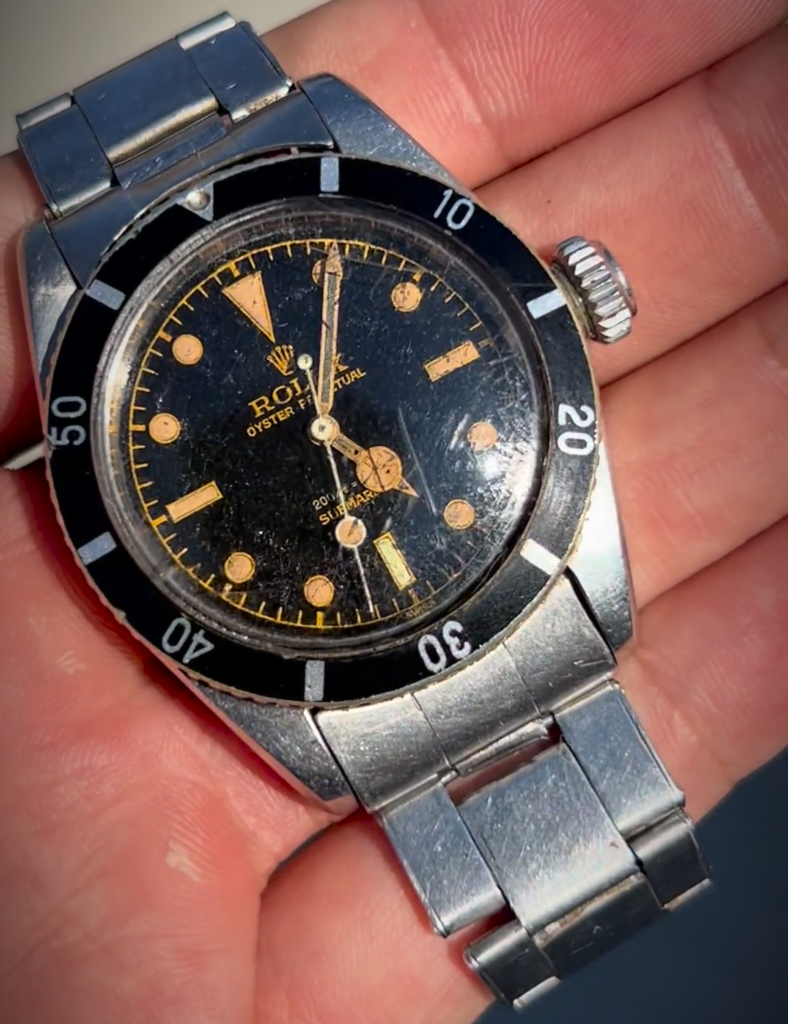
Nowadays, I expect each successive generation of Rolex Submariner to get produced for at least a decade. But in the early days, Rolex was making several tweaks which resulted in a lot of reference numbers. All the 37.5mm Subs are rare, although 5508 is the easiest to find for sale. Plus, notably, the 5508 has a flatter case that brings the thickness down to only 12.2mm (as does the 6536-1). Here’s a quick rundown of NCG Rolex Submariner references:
| Reference number | Years produced | Crown diameter | Water-resistance rating | Approximate Thickness | Movement caliber |
|---|---|---|---|---|---|
| 6204 | 1953–1954 | 5.3mm | 100m | 13mm | A260 |
| 6200 | 1954–1956 | 8mm | 200m | 15.2mm | A296 |
| 6205 | 1954–1955 | 6mm | 100m | 13mm | A260 |
| 6536 | 1955–1958 | 6mm | 100m | 13mm | 1030 |
| 6536-1 (a.k.a. 6536/1) | 1955–1959 | 6mm | 100m | 12.2mm | 1030 |
| 6536/8 (a.k.a. 6536/6538) | 1955 | 6mm | 100m | 15.2mm | 1030 |
| 6538 | 1955–1959 | 8mm | 200m | 15.2mm | 1030 |
| A/6538 (UK military only; 6540 is crossed out) | 1957 | 8mm | 200m | 16mm | 1030 |
| 5508 | 1958–1962 | 6mm | 100m | 12.2mm | 1530 |
| 5510 | 1958–1959 | 8mm | 200m | 15.2mm | 1530 |
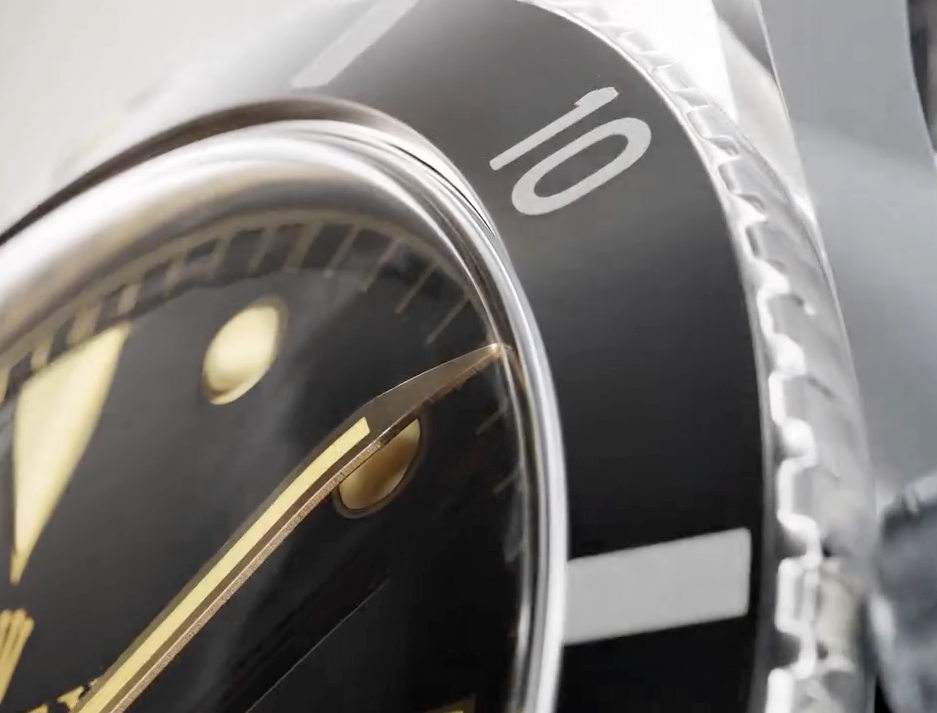
All NCG Subs are stainless steel, and originally came on rivet bracelets. They all have radium lume, except some of the last 5508’s (which had tritium). And the signature Mercedes hands have been standard since at least 1955. Here are some rare early Rolex Submariner traits that collectors seek:
- Bezel insert with no hashes from 0-15
- Red depth rating
- Red triangle at 12 o’clock
- “Explorer dials” with numerical 3-6-9 markers
- Pencil hands (6204 and 6205 only)
- “Sub-Aqua” branding instead of “Submariner” (6204 only)
Prices for early NCG Subs typically range from $20,000-$200,000, and in addition to the characteristics above, condition/originality of the parts will mostly dictate where any given example falls in that range. The dial is particularly important on any big-dollar vintage watch.
And although Rolex has always used robust movements, the legendary 15xx series (seen on the 5508 and 5510, as well as numerous later watches) is a cut above older calibers.
If you’re in the market for one of these early Submariners, I recommend doing a deep dive on the specific reference number you’re looking at to know what looks correct before making a purchase. But, hopefully this has provided a good overall picture of the complex pre-crown-guard Rolex Submariner landscape. Now let’s talk about the next era.
4-Digit Rolex Submariner Models with Crown Guard (39.5mm, 1959-1989)
Main Changes vs. Previous Generation: Crown guards, 2mm larger case, first gold model, first date model, folded bracelets
Changes during 551x/1680 Generation: Diver's extension (1969)
Total Production: 287,935 (excludes 1665)
Movement Caliber: 15xx
When people talk about a “4-digit Rolex Submariner” they’re usually referring to ref. 5512 or 5513, or perhaps 1680 (the first Submariner Date). These were the first Rolex Submariner watches to have crown guards. The NCG Subs above are also technically 4-digit Subs but they’re much rarer.
Rolex Submariner 5513 vs. 5512: What’s the Difference?
Broadly speaking, the Rolex Submariner 5512 is just the chronometer-certified version of the 5513, so the only difference is the movement (and the movement differences are pretty minor) and the chronometer text on the dial.
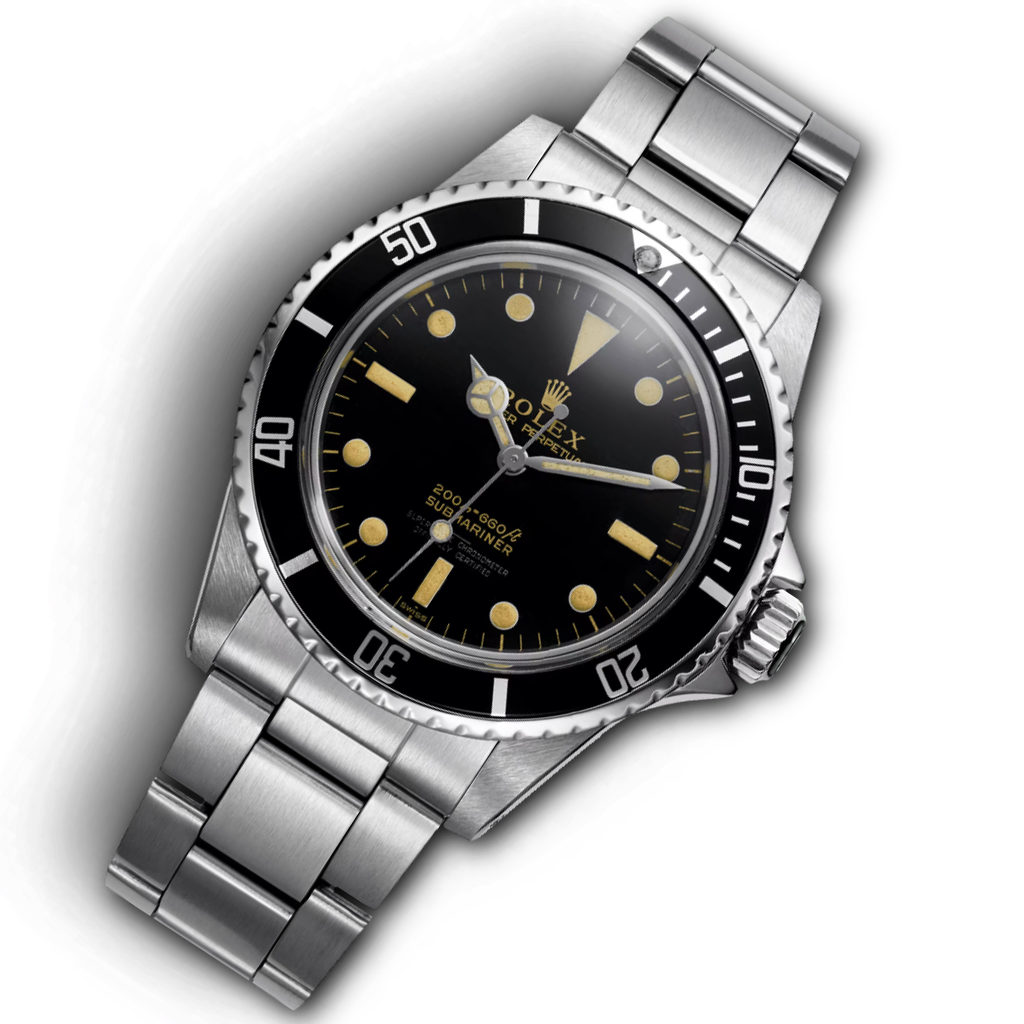
The exception is that the first Rolex Submariner ref. 5512’s, made from 1959-1962 before the 5513 existed, weren’t chronometers. Then from 1962-1980 both references co-existed in the Rolex catalog, and the 5513 soldiered on for another decade after that.
5513 and 5512 movements
The first 5512s (circa 1959–1962) have non-chronometer caliber 1530 movements with Breguet overcoil hairsprings beating five times per second. The chronometer-certified caliber 1560, used until the mid-1960s, added a free-sprung, Microstella-regulated balance. Then until its discontinuation around 1980, the 5512 was powered by caliber 1570, with a slightly higher rate of 5.5 beats per second.
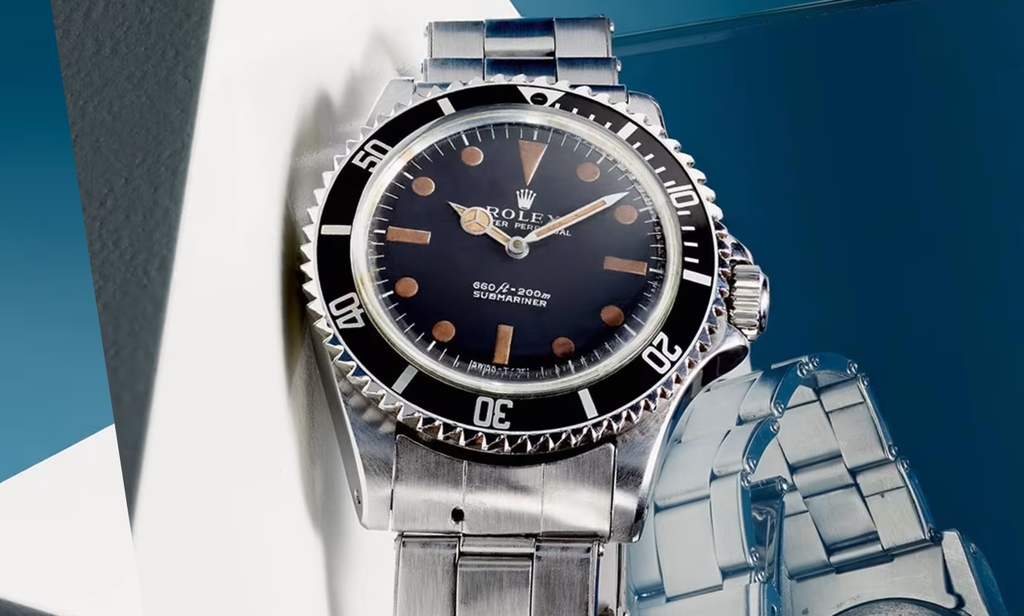
The 5513, which was never given a chronometer-grade movement, was only made with caliber 1530 from 1962-1964. Then for another quarter-century it was made with caliber 1520, which substituted a simpler (cheaper) flat hairspring for the 1530’s Breguet overcoil one. And hacking seconds was added across the board in 1972.
Rolex Submariner 5513 and 5512 Crown Guards
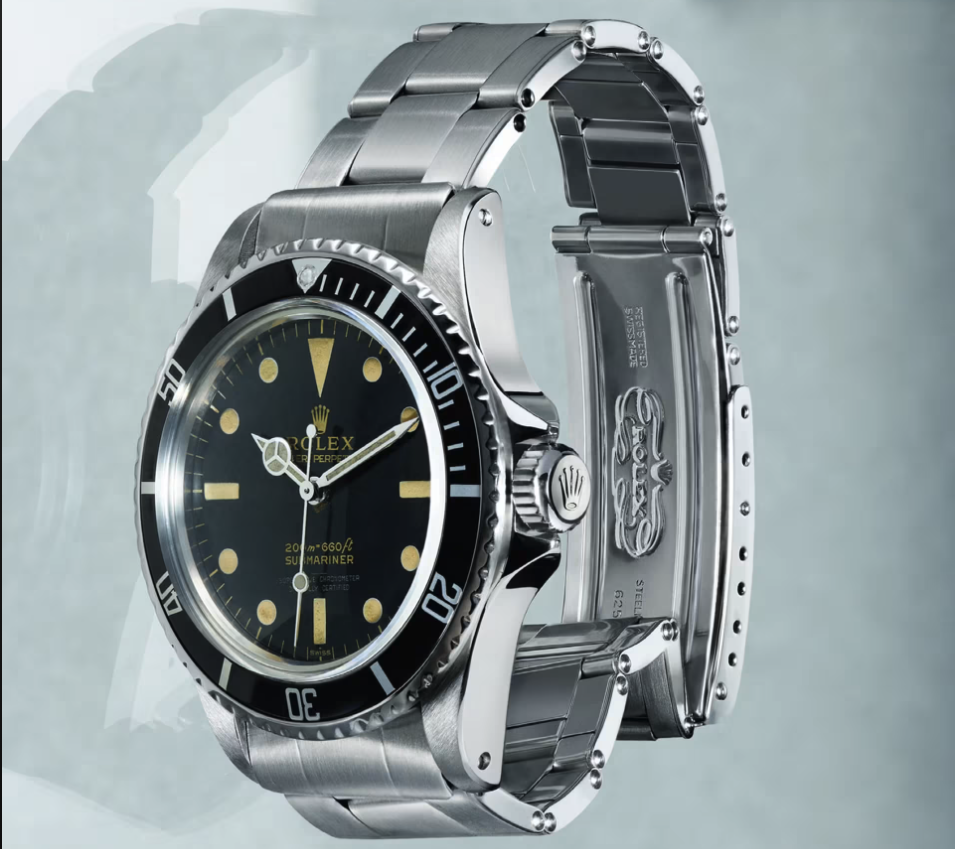
When the Rolex Submariner 5512 debuted in 1959, it was the first watch ever with an integrated (i.e. normal) crown guard. The only type of crown guard that came earlier was Panerai‘s big lever-operated backwards-C-shaped one. The first 5512 and 5513 models had square crown guards. “From what I understand, Rolex made around 100 of these very unique watches before moving on to the Eagle beak,” noted Rolex restoration expert Phillip Ridley.
The beak crown guards were in turn followed by pointy crown guards (“PCG”) in the early 1960s, and rounded crown guards became standard in the mid-1960s. Note that some collectors further break down those four types (square/beak/pointy/round) into subcategories; Aircooltime made a good write-up on this topic.
Gilt vs. Matte Dial vs. Glossy Dial
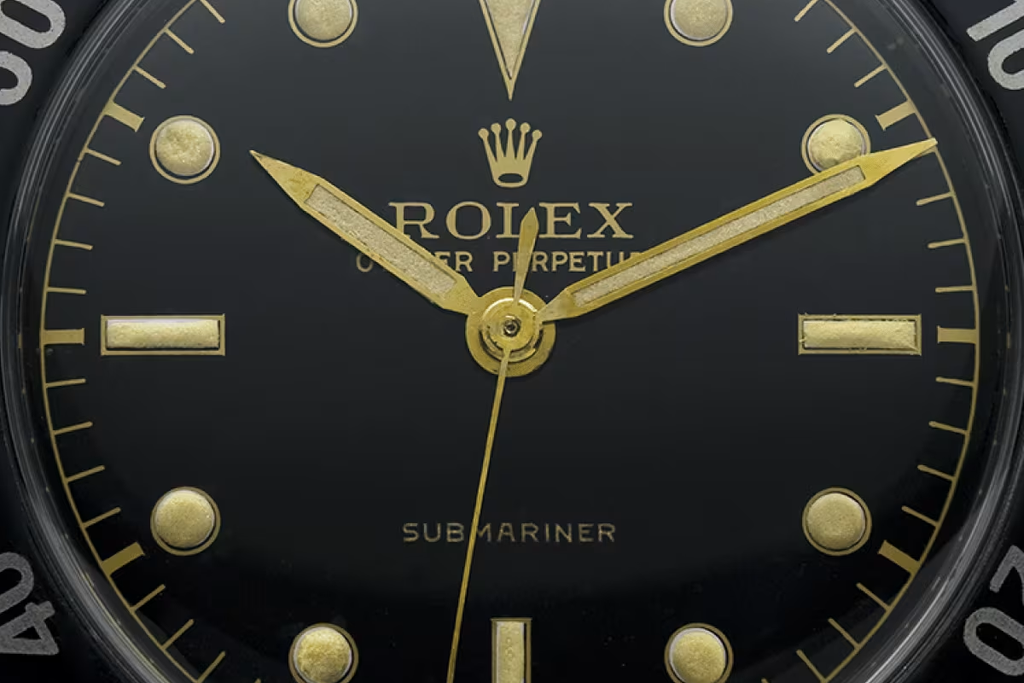
Glossy gilt dials (usually just called “gilt dials”) were replaced by the now-standard white-text dials around 1965. Rolex also switched to matte black paint. Thus, typical white-text dials from about 1965-1984 are called “matte dials.”
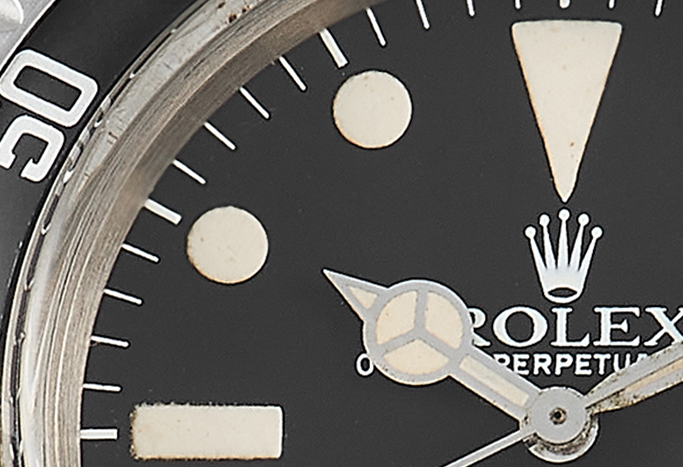
There are, interestingly, some transitional dials which have white text and glossy black paint, but they’re very rare.
In the mid-1980s, long after the 5512 was discontinued, Rolex moved away from matte black Submariner dials and made the paint glossy again. At the same time they added white gold hour surrounds.
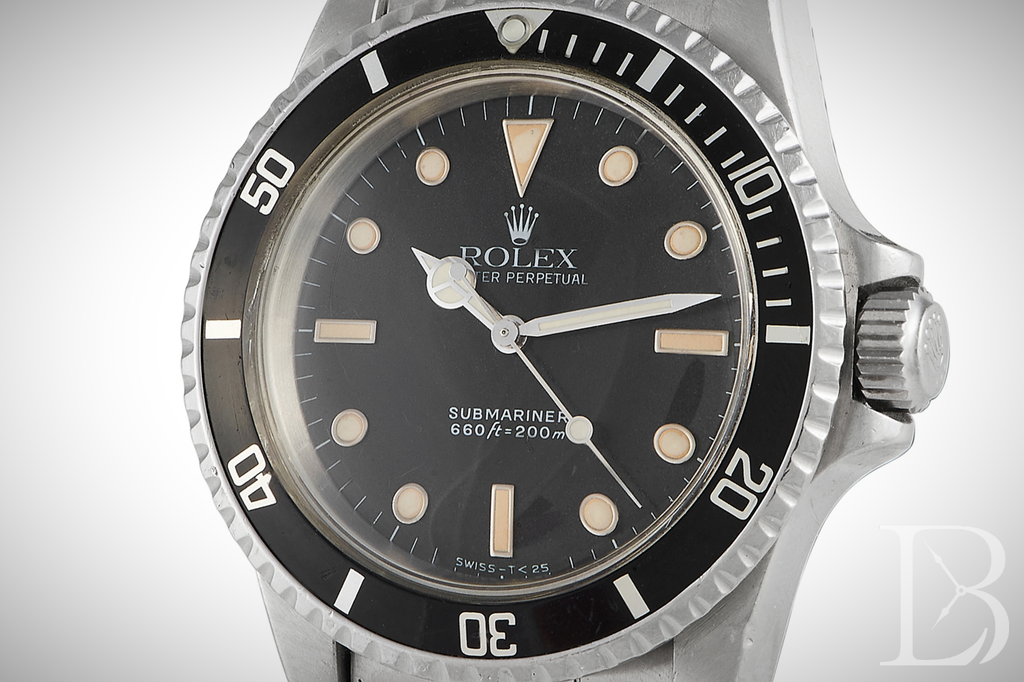
If you hear a collector refer to a “gloss” or “glossy” dial, that’s what has been the norm since then, and it’s basically what we regard as typical for a Submariner today. Even though gilt dials are also glossy, collectors will pretty much always say the “gilt” part if that’s what they’re talking about.
Feet First vs. Meters First
Rolex has always written the depth rating of the Submariner in both meters and feet, separated by an equals sign on the same line. Originally meters was on the left, but that changed around 1970. So a “meters first Sub” is just an old Submariner where the measurement in meters appears first. While “feet first Subs” are more common, condition to me matters more than the depth rating orientation.
A Note About the Sea-Dweller 1665
The Rolex Submariner is well-suited to almost anything a diver can throw at it. But, it isn’t suitable for saturation diving. Saturation divers live in pressurized chambers between dives, so they decompress only once at the end of an extended assignment rather than after every dive. And those chambers contain helium, which can build up inside a watch and cause its crystal to pop off.
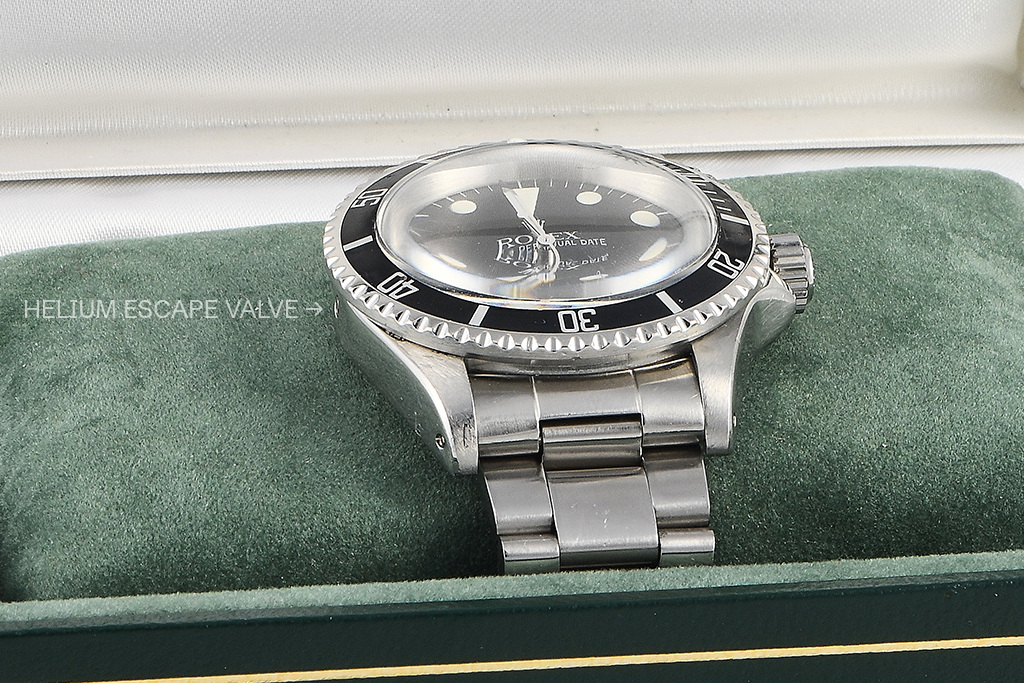
Diver Bob Barth of the U.S. Navy’s SEALAB program recognized this issue and suggested a one-way valve to release the accumulated helium. This resulted in what we know today as a helium escape valve (HEV) which is a signature feature of the Rolex Sea-Dweller to this day. The Sea-Dweller was also given a thicker caseback, crystal and case which allow for a much higher depth rating (2000 ft. vs. 660 ft. on models with acrylic crystals).
Technically, the Sea-Dweller is regarded as its own separate line distinct from the Submariner. And because saturation divers can spend many days decompressing in hyperbaric chambers, the Sea-Dweller was given a date display.
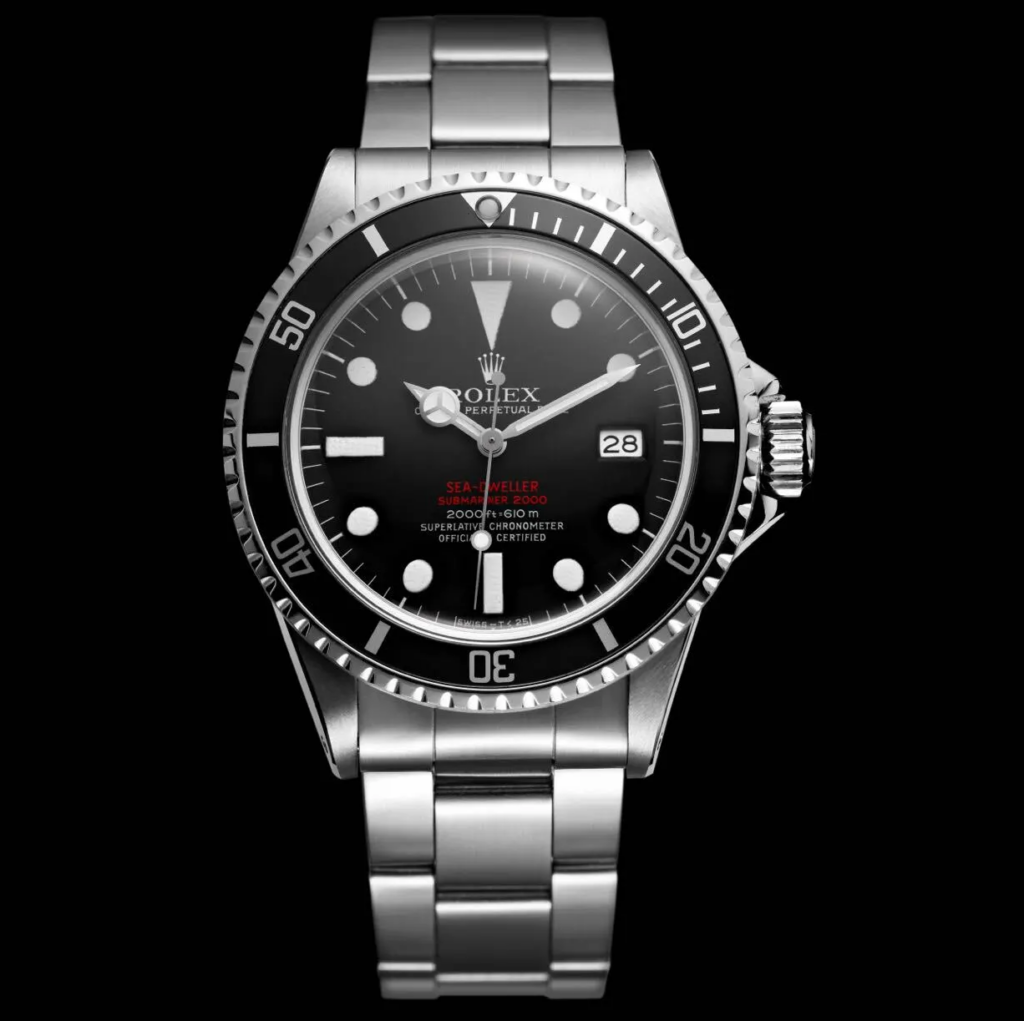
Although the 1665 isn’t exactly a Submariner, it’s not entirely not a Submariner either. Some of the first Sea-Dweller models from the late 1960s actually say “Submariner 2000” on the dial in addition to “Sea-Dweller.” Those lines of text are both written in red, hence the nickname “Double Red Sea-Dweller” or simply “DRSD.” They’re among the biggest grails in vintage Rolex. The Single Red Sea-Dweller is a thing too, but probably less than 20 of those were ever made, so they’re what collectors call “unobtainium.”
5514 Rolex Submariner Comex
Another vintage Rolex grail is the Submariner ref. 5514, exclusively sold to COMEX (Compagnie Maritime d’Expertises), a French engineering company that has helped push the limits of deepsea diving since it was founded in 1961. In addition to being a customer of Rolex, COMEX was the organization that helped actually test the HEV in saturation diving environments, even though the concept came from SEALAB.
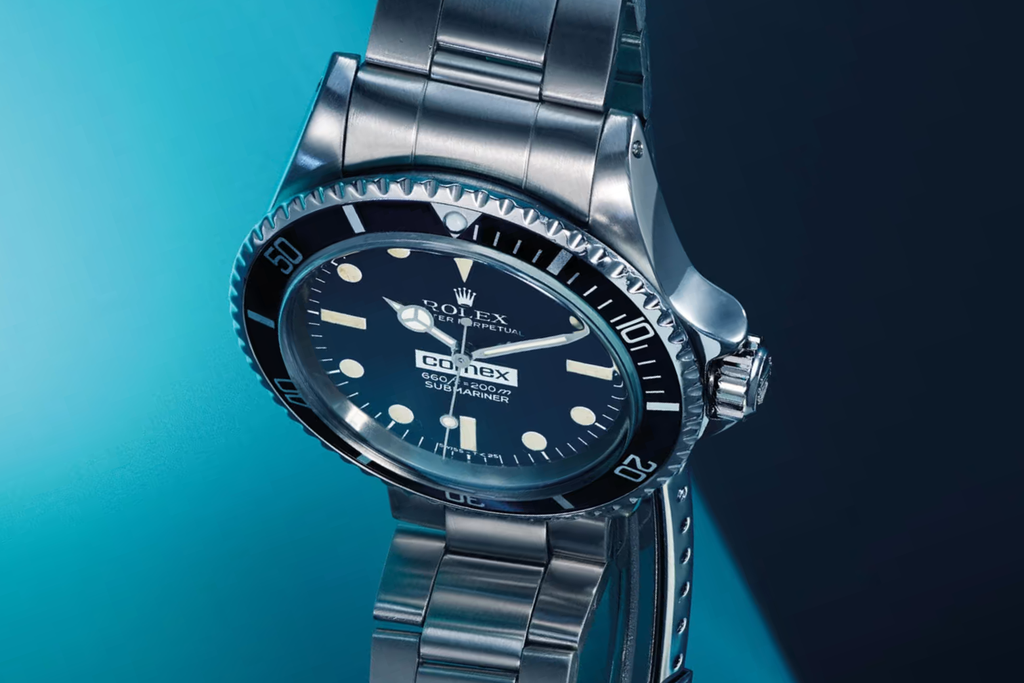
The 5514 is essentially just a 5513 with a helium escape valve, a caseback with “Rolex Comex” and the Comex issue number engraved, and (usually) the COMEX logo on the dial. But the 5514 was not the precursor to the Sea-Dweller 1665–it actually came later, in 1971.
Some COMEX divers were issued COMEX Sea-Dwellers, but most of them didn’t need the extra depth rating that the Sea-Dweller provided. But many needed the helium escape valve for saturation diving. So, Rolex made the 5514 to fit the specs that were most often needed.
Note that a very small number of the first 5514’s did not have helium escape valves. And not all 5514’s have COMEX on the dial. And some COMEX-issued Submariners with the 5513 reference number do have HEV’s for some reason. Back in the 1960s and 1970s, these watches were indispensable professional tools, so Rolex was understandably more concerned with functionality than consistent nomenclature.
Today, COMEX Submariners and Sea-Dwellers–which spanned several references through the final batch in 2004–are some of the most expensive Rolex watches with another company’s logo on the dial (and there were a lot of those). Expect to pay well over $150,000 for a nice 5514 with the COMEX logo and more like $60,000 for a 5514 with a standard dial.
5517 Milsub
There’s one more grail among Rolex 4-digit Submariners that I have to mention: The Rolex Milsub (“military Submariner”) ref. 5517, which was built exclusively for the British Ministry of Defence in the 1970s. Its distinctive sword hands, fully graduated 60-minute bezel, fixed strap bars, and a circled “T” on the dial (a British military requirement for anything with tritium lume at the time) clearly set it apart from typical Subs.
Only 539 5517’s were made according to Foulkes’ Submariner book, and they go for huge money today (expect to pay over $200,000 if you can even find one). Note that there are also, for whatever reason, some Milsubs marked with the 5513 reference number. And if it has 5513 written in between the lugs, but 5517 written on the underside of the 7 o’clock lug, that’s what collectors call a “5513/7.”
The First Rolex Submariner Date: Ref. 1680 (1969-1979)
Although the Submariner started as a purpose-built professional tool, it had gained significant mainstream recognition by the late 1960s. So in 1969, ref. 1680 debuted with a date function.
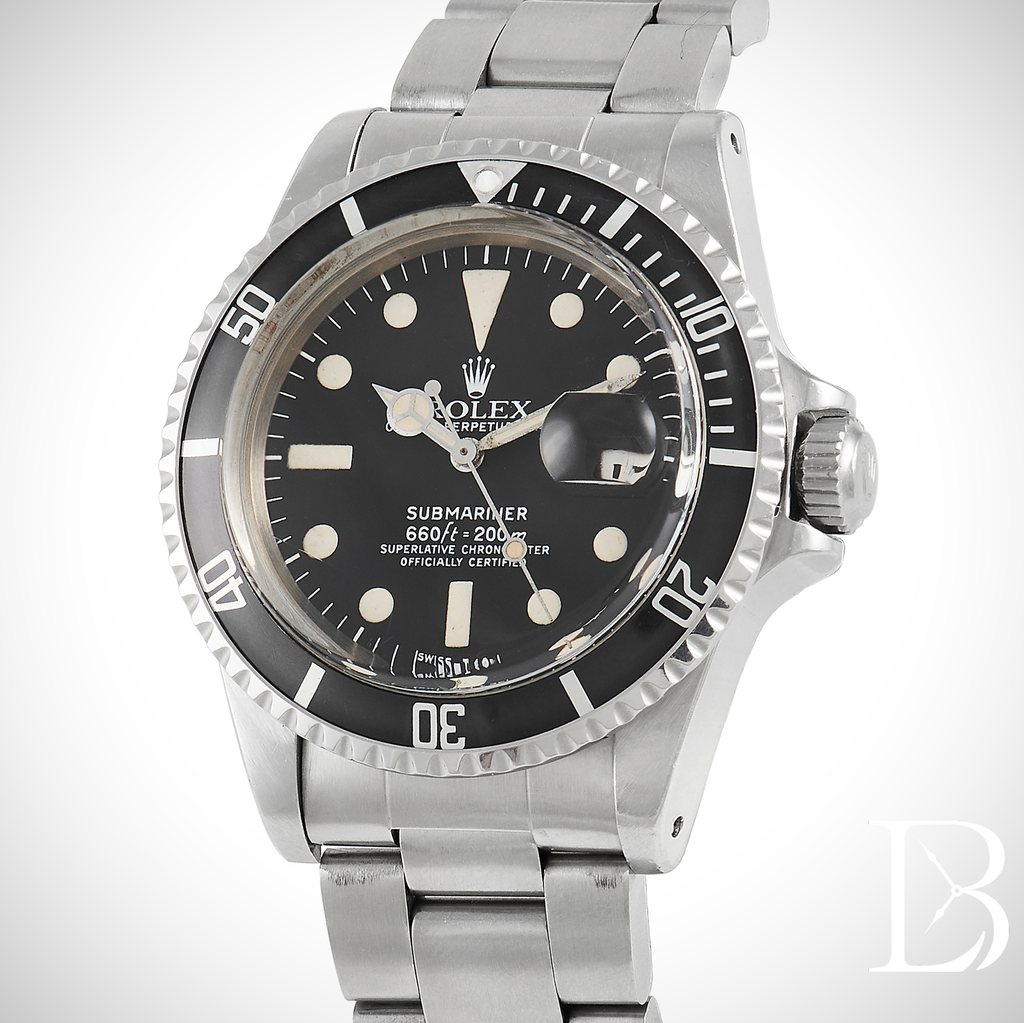
The full reference number of the original steel Submariner Date is 1680/0 while the yellow gold version is 1680/8. That was the first gold Submariner ever, and it was available with either a black or blue dial (and bezel insert). The distinctive nipple hour markers would remain a feature on all solid gold and two-tone Rolex Submariners and GMT-Masters until the mid-1980s. It’s worth noting that 4- and 5-digit blue Rolex Submariner dials could fade to colors like purple, gold, or grey due to paint defects, sun exposure etc.
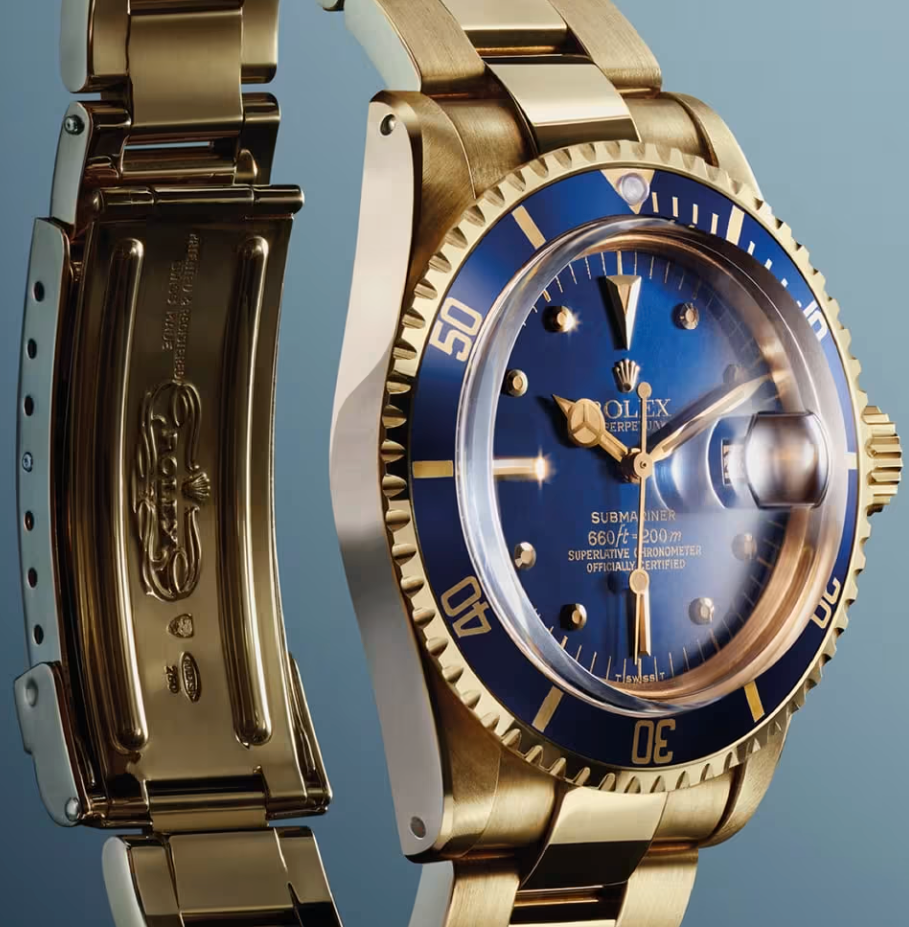
The classic no-date version of the Submariner has never been offered in anything but the classic steel + black dial config, however. Some people say “there’s no such thing as a no-date Submariner” and insist that the no-date Submariner is simply the only Submariner, while all other variants are Submariner Date models.
The problem with that logic is that Submariner Date models clearly say “Submariner” on the dial, not “Submariner Date,” so to say they’re “not Submariners” is rather asinine. Plus, the date version is far more common, so “no-date Sub” is a useful term–even if it’s just a Rolex nickname.
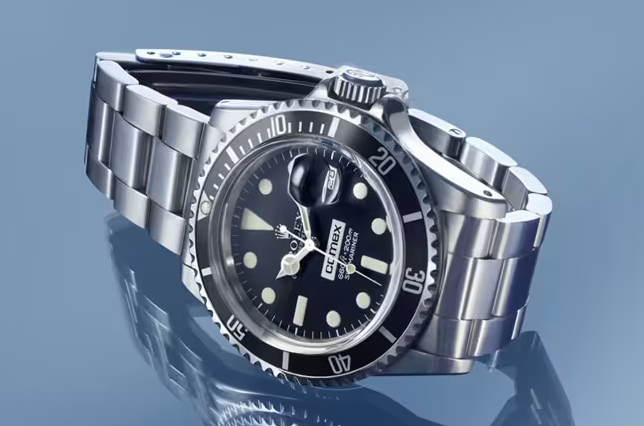
Anyway, all Rolexes have had sapphire crystals since at least 1990, but 4-digit Rolexes were made in the acrylic crystal days. A plastic crystal has to be quite thick to achieve a 200m depth rating. Thus, the date magnification of Rolex’s cyclops lens on ref. 1680 appears particularly pronounced. Some collectors are fond of the 1680 for this reason.
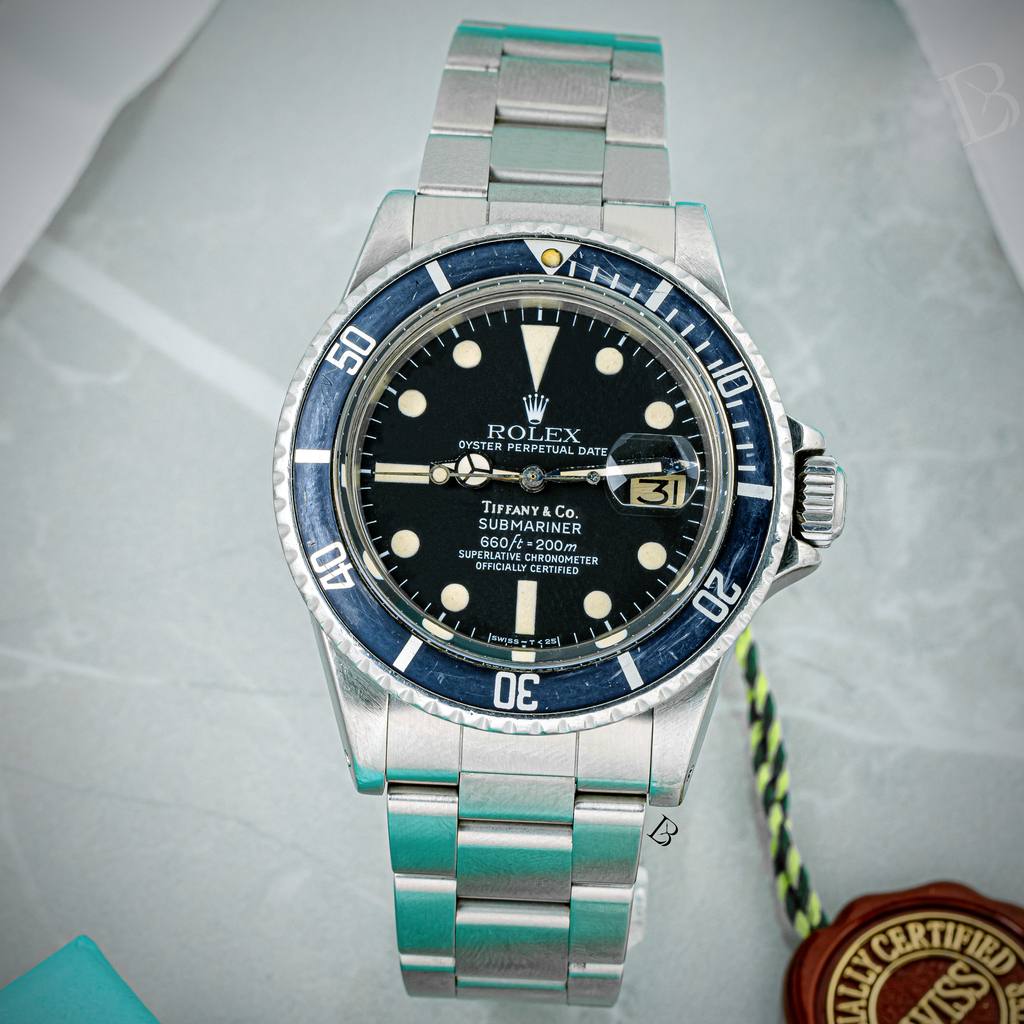
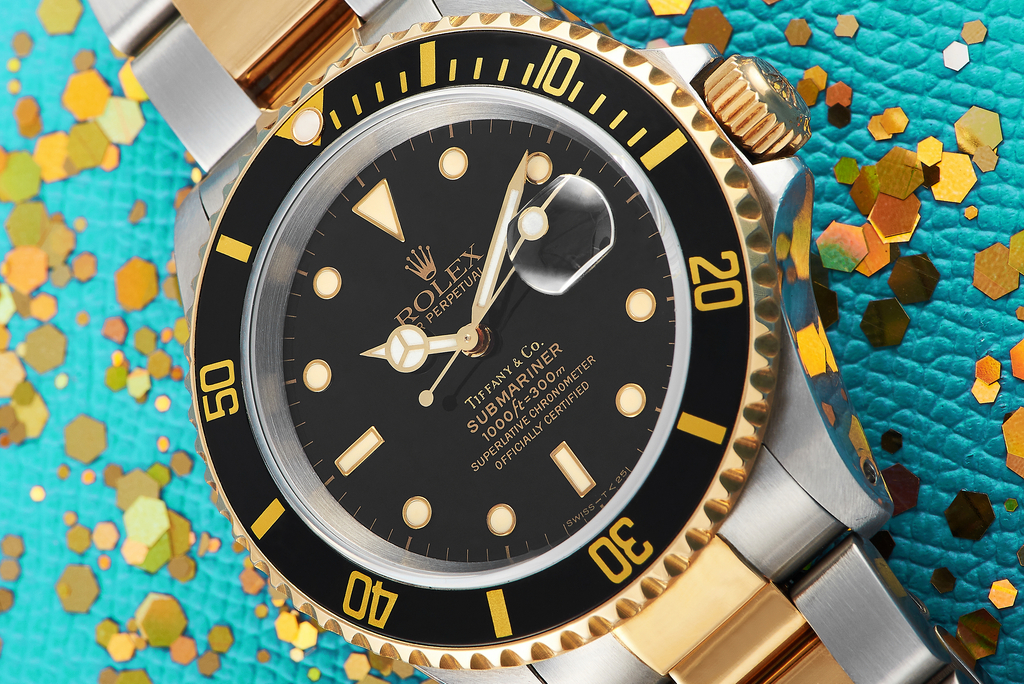
Aside from COMEX- or Tiffany-stamped examples, by far the most desirable type of 1680/0 is the “Red Sub.” That just means the word “Submariner” is written in red. It’s the only Submariner reference that was ever made like that, and the red text only appeared on some 1680/0 models until about 1975.
Collectors have been going wild for the red 1680 for decades, and you’ll likely pay at least $30,000 for a good one today. If you want to know their minutia, I recommend Mark Lerner’s Red Sub guide.
The Rolex Diver’s Extension
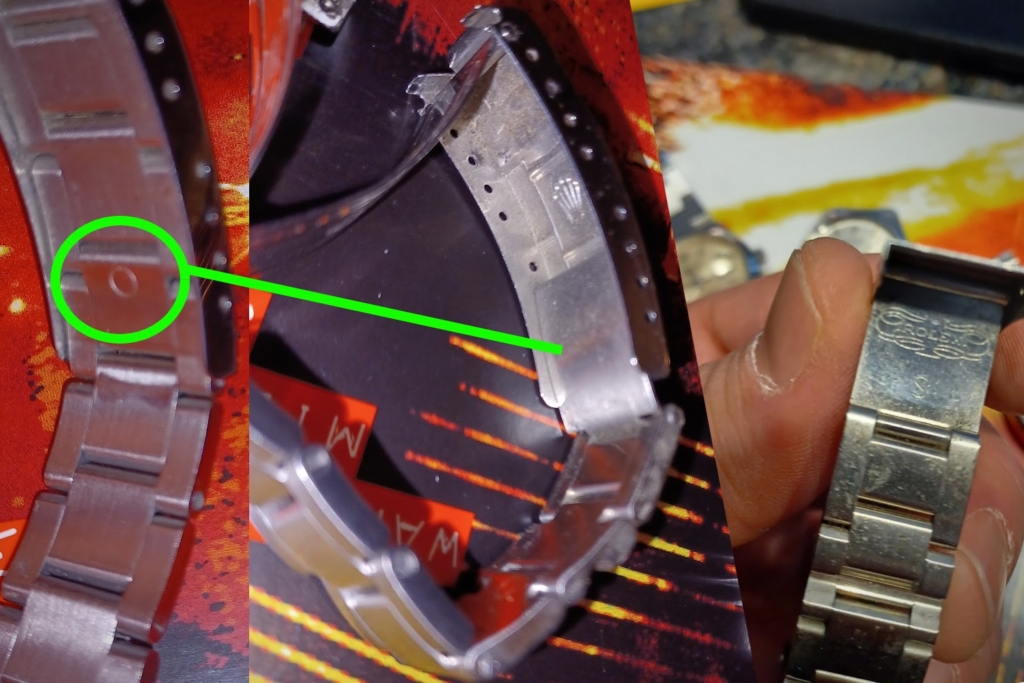
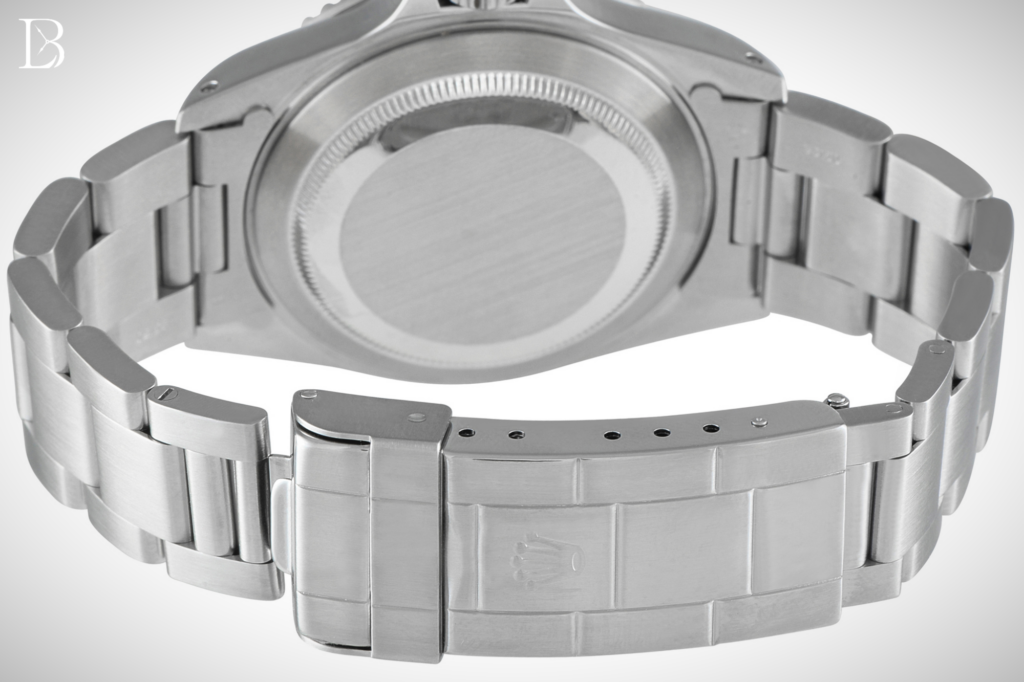
By the time the Submariner Date came out in 1969, Rolex had replaced rivet bracelets with folded-link ones and they were putting “diver’s extensions” in the clasps of all Subs and Sea-Dwellers. When folded out, it extends the bracelet by 26mm–enough to go over a wetsuit. Here’s an image from our Rolex bracelet guide:
5-Digit (“Neo-Vintage”) Rolex Submariner Models (39.5-40mm, 1979-2012)
Main Changes vs. Previous Generation: Sapphire crystal, higher depth rating, higher beat rate (8 beats per second), thinner, Sub Date gets 0.5mm larger, first two-tone, first gem-set dials, first green model
Total Production: 1,541,946
Changes during 5-digit run: Super-Luminova replaces tritium lume in late 1990s, date models get solid endlinks (~2000) and lose lugholes (~2002)
Movement Caliber: 30xx, 31xx
1979 represented a major change in the Submariner Date lineup, although oddly, the no-date Sub wouldn’t get an update for another 11 years.
16800, 16803, 16808 Submariner Date (1979-1988)
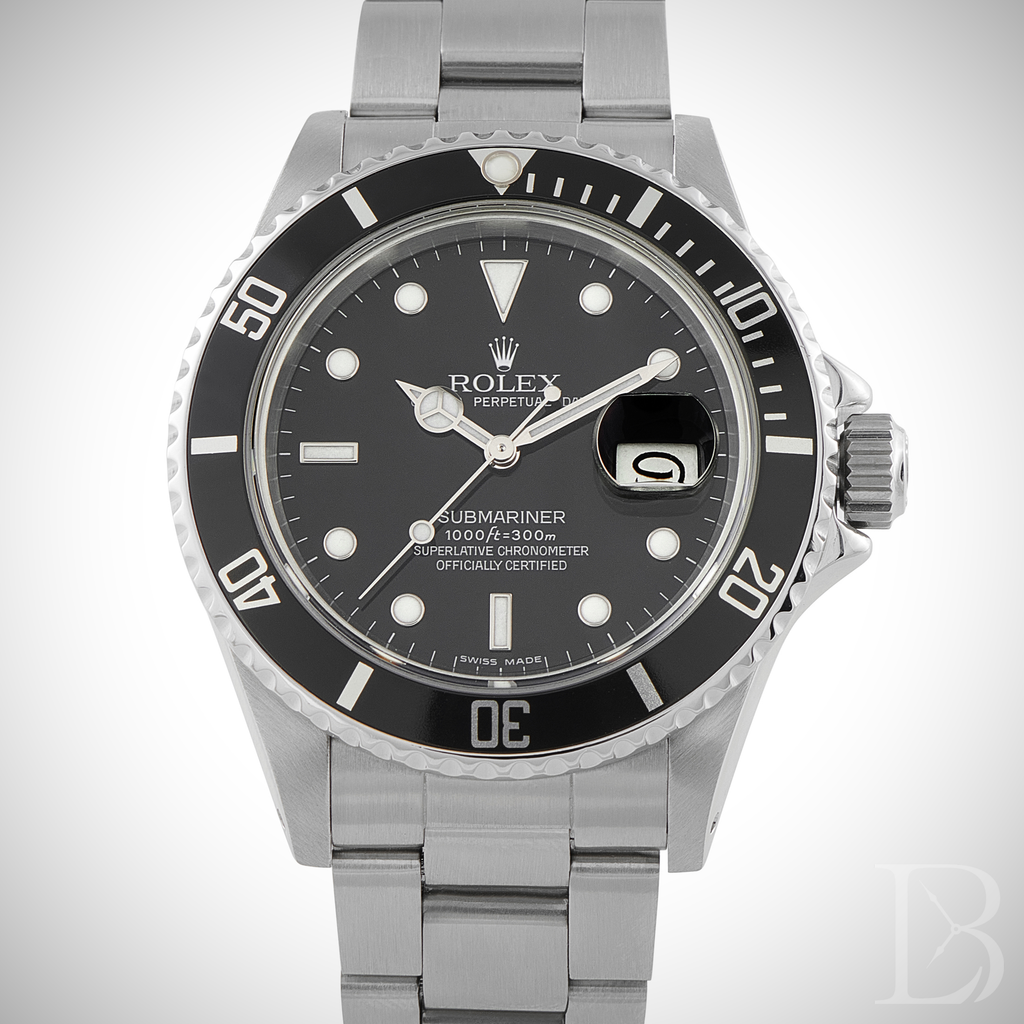
Ref. 16800 (plus its yellow gold equivalent, 16808) replaced the 1680 in 1979 sporting a sapphire crystal, a slightly larger 40mm case, and a new movement with a higher beat rate (caliber 3035 ticks 8 times per second instead of 5.5). Thanks to the strong but thin sapphire crystal, depth rating increased to 1000 ft. while the watch’s thickness simultaneously decreased to 12.5mm.
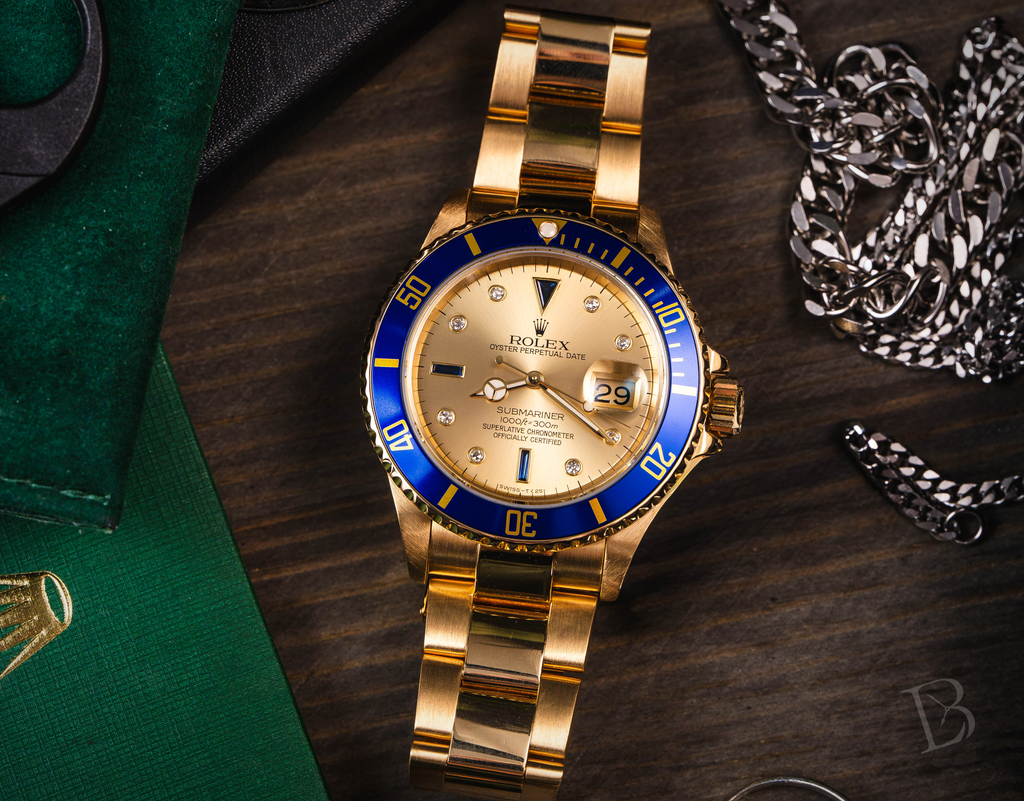
Ref. 16803, the first two-tone Rolex Submariner, debuted in 1984. Gold and two-tone five-digit Submariners had four dial options: black, blue, silver serti, or champagne serti. Serti Submariner dials have diamonds at 1, 2, 4, 5, 7, 8, 10 and 11 o’clock, with sapphires at 12, 6 and 9.
Rolex Submariner Date 168000 (1987)
In 1987, Rolex released the Submariner Date ref. 168000, which is considered a “transitional” model because it was only made for about a year. It was the last Sub released with the vintage-looking “open 6 and 9” date typeface (where the 6 and 9 aren’t completely “closed”).
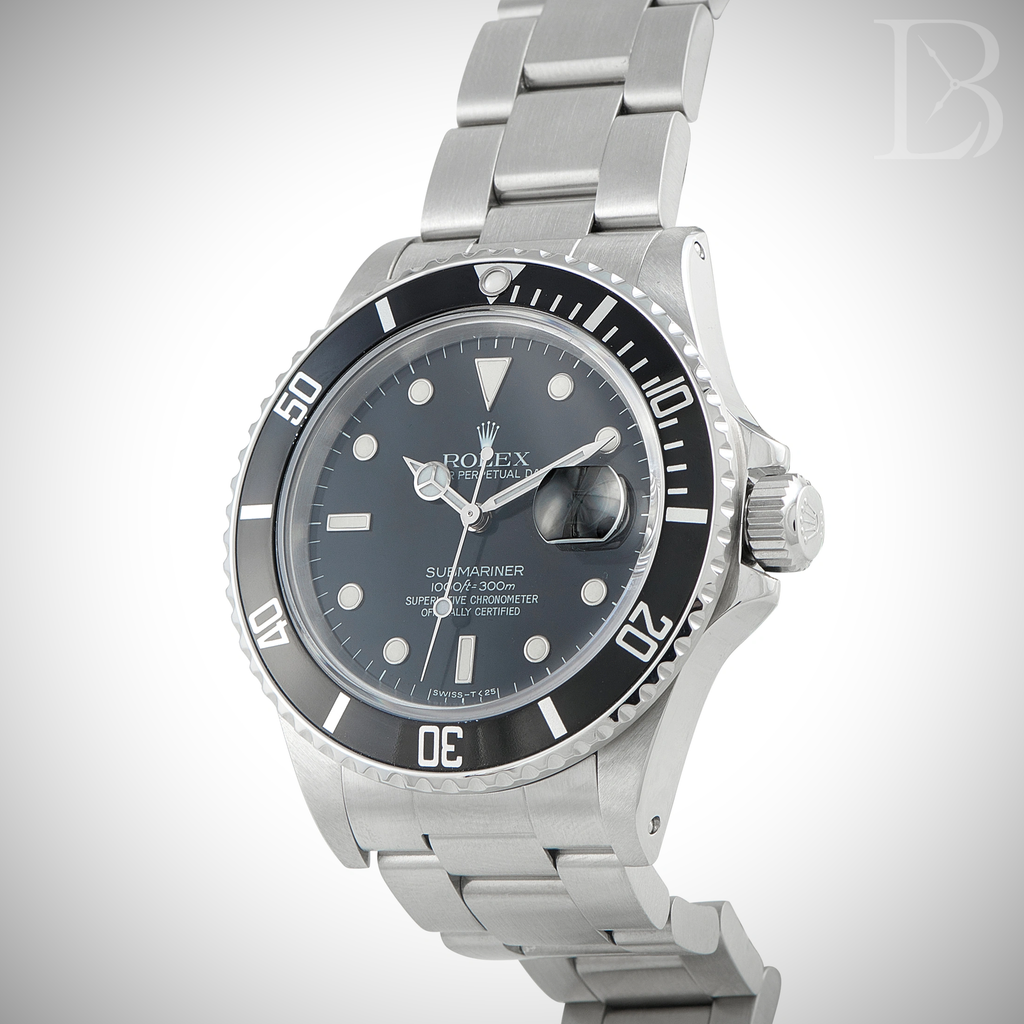
Ref. 168000 is just like the 16800 except for one thing: instead of industry-standard 316L stainless steel, Rolex began using 904L, which is slightly more corrosion-resistant thanks to an increased amount of molybdenum, chromium and nickel content. So, it’s actually true that nickel allergies can be an issue for Rolex wearers.
Even though its reference number is six digits long, the 168000 is generally considered a “5-digit” Submariner. The 6-digit era truly began in the early 2000s. But before we talk about that time period, there’s one more generation of Submariner Date to discuss.
16610, 16613, 16618 Submariner
In 1988, the Submariner Date lineup got another movement upgrade. Caliber 3135 replaced 3035, and thus the Rolex Submariner 16610, 16613 and 16618 replaced the 168000, 16803 and 16808, respectively. The Rolex 3135 has three main changes from the 3035: a full balance bridge replacing the single-sided balance cock, 31 jewels instead of 27, and a laser-welded hairspring attachment rather than adhesive at the stud.
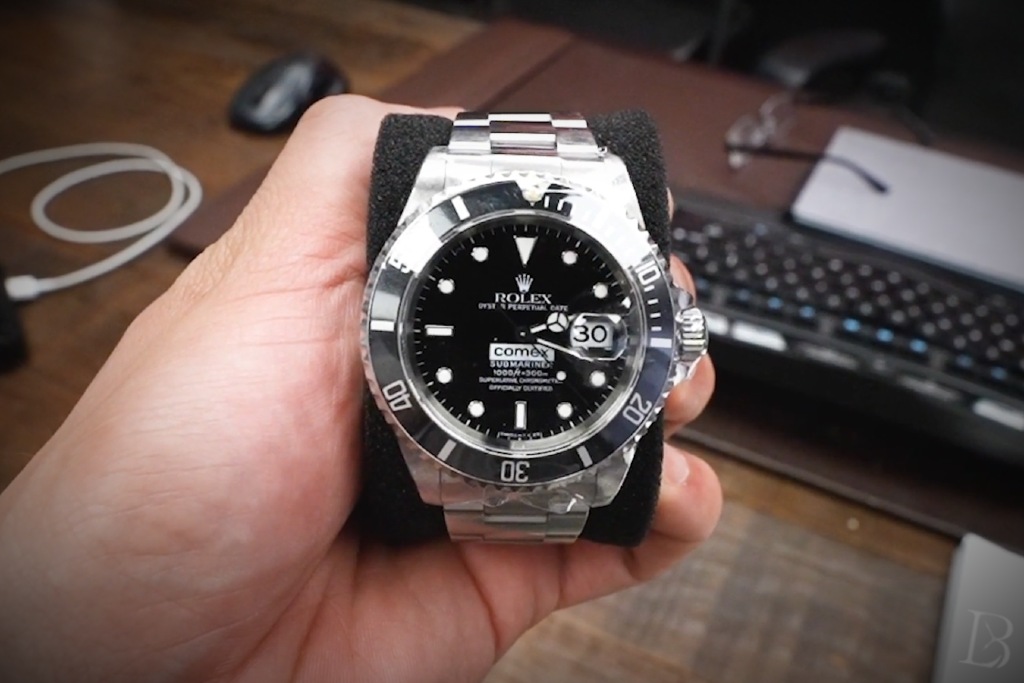
The two-tone Rolex Submariner 16613 also got the 904L upgrade for its steel parts. Aside from the steel and the movement, early 1661x models were basically the same as the 1680x ones.
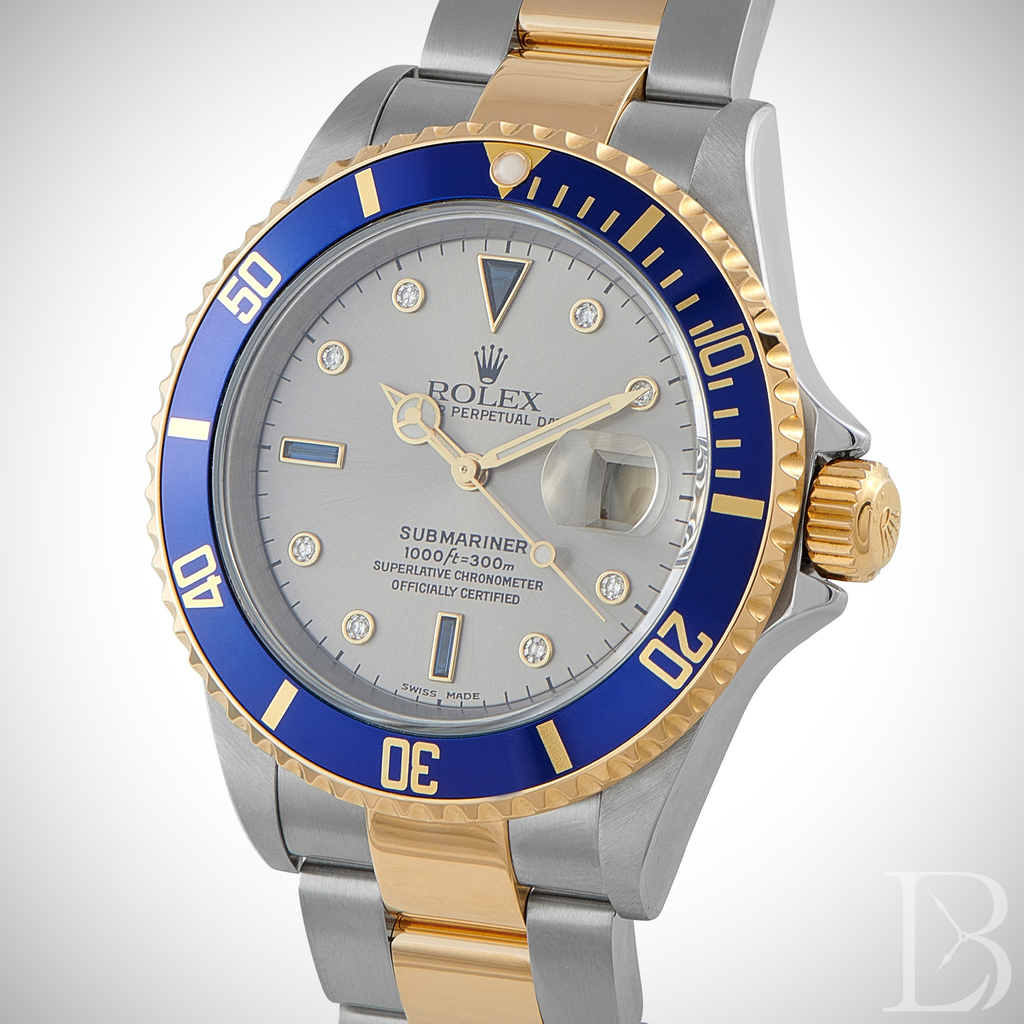
Four more small but notable changes happened to the Submariner Date during the 1661x era:
- Super-Luminova replaces tritium lume (late 1990s)
- Solid endlinks replace hollow endlinks (~2000)
- “Gold-through clasp” (meaning the clasp has gold in the middle) replaces the all-steel clasp on the 16613 (~2000)
- Lugholes disappear, and “T” is added to the end of the reference number (~2002)
- Rolex serial numbers (previously located between the lugs where the bracelet goes) move to the rehaut as the “ROLEXROLEX” engraved rehaut appears (~2007)
16610 LV “Kermit” (2003-2010)
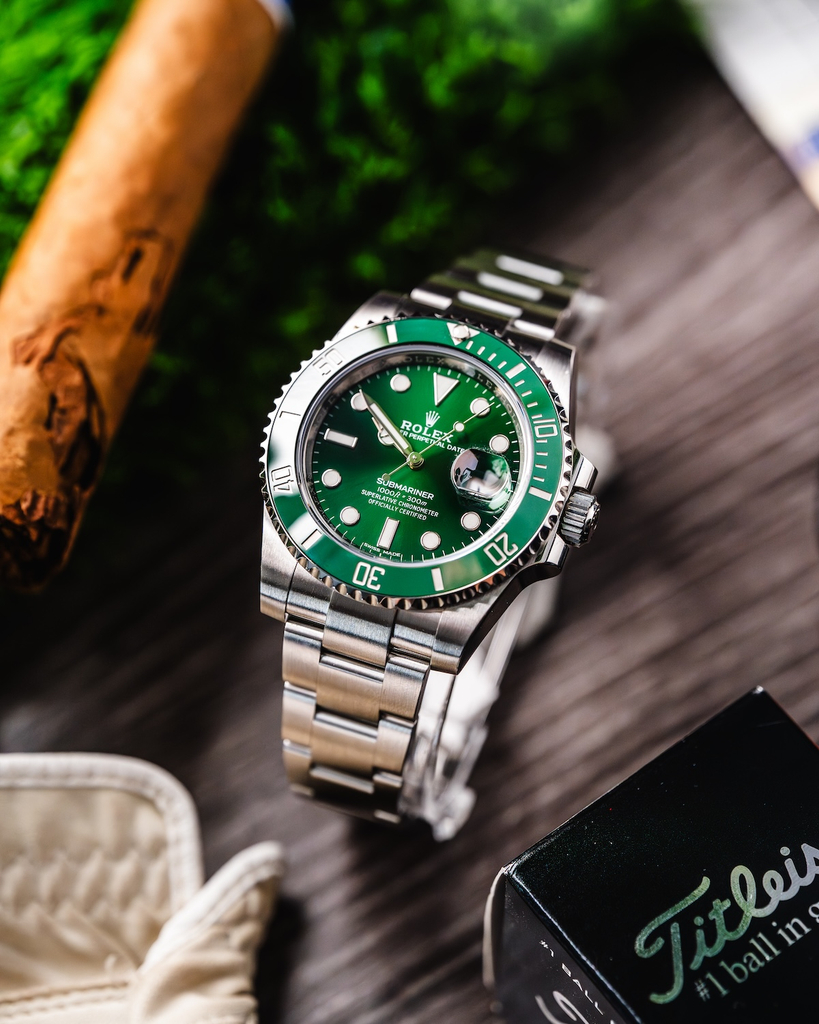
In 2003, to celebrate the Submariner’s 50th anniversary, Rolex released a version with a green bezel insert. The Submariner Date ref. 16610 LV quickly got the nickname “Kermit.” In addition to its green insert, the Kermit differs from the 16610 LN in two ways: bigger hour plots, and a wider minute hand.
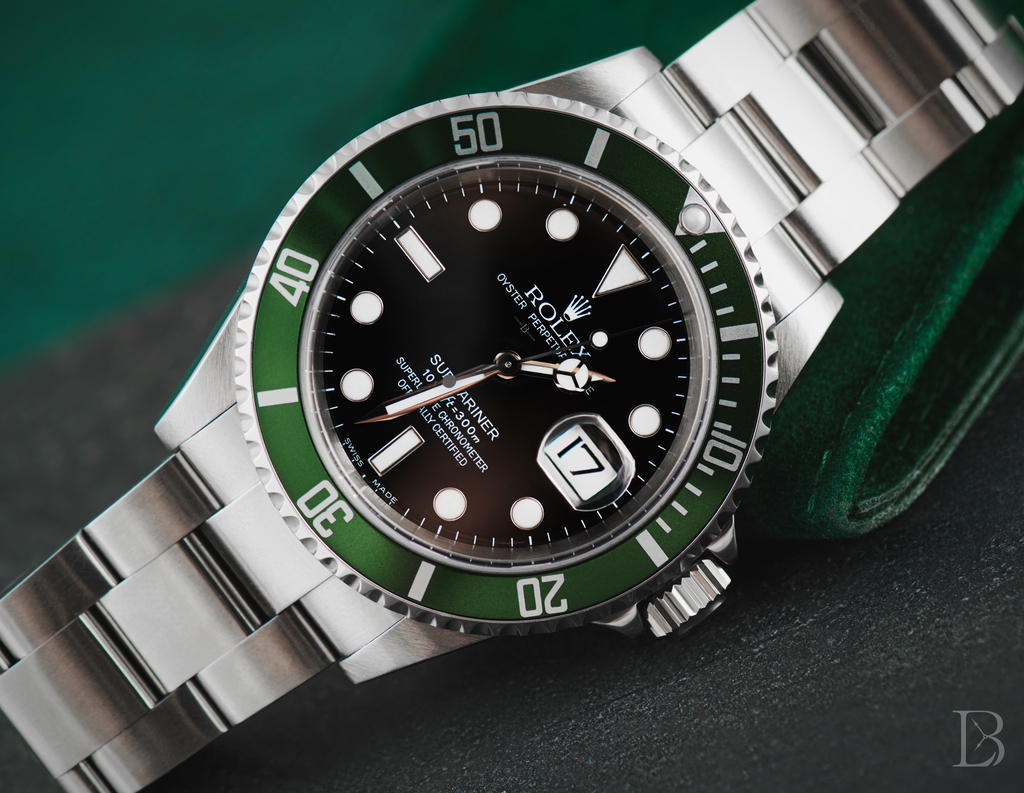
By the time the Kermit debuted, the lugholes were already gone, while Super-Luminova and solid endlinks were long standard. The Rolex rehaut engraving was added in 2007, but aside from that, the 16610 LV was basically unchanged through its entire run.
Rolex Submariner 14060 and 14060m (1990-2012)
In 1990, the Rolex 14060 Submariner finally replaced the long-lived 5513. It got the 904L steel, sapphire crystal and 8-beat-per-second rate of the 16610. However, it retained its 39.5mm size, flat hairspring and non-chronometer status.
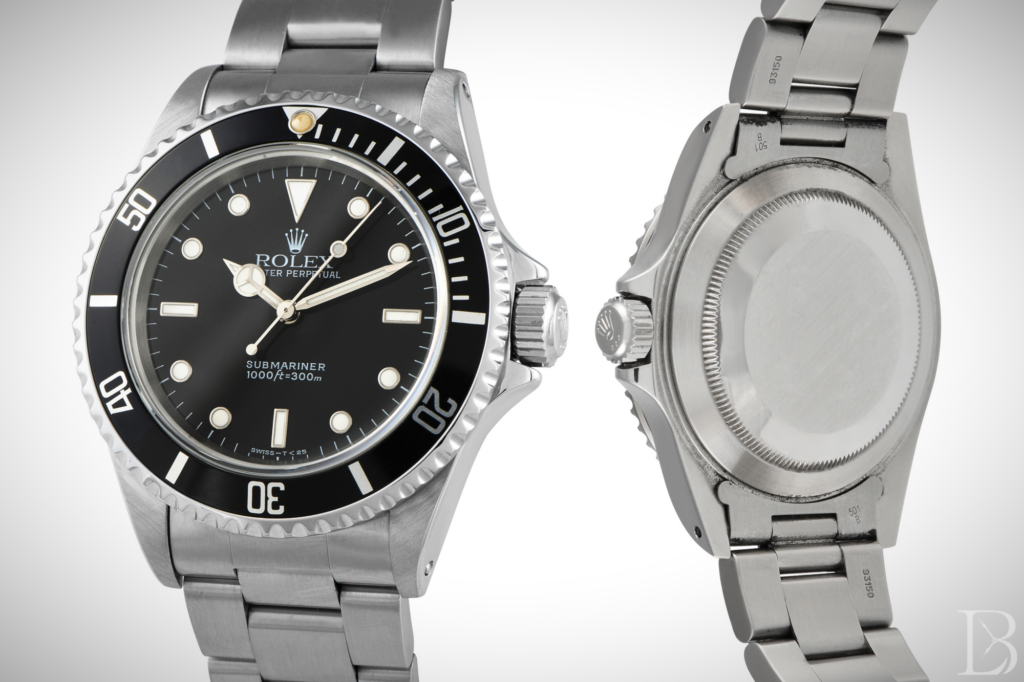
It finally got a Breguet overcoil hairspring in 1999 when caliber 3130 replaced 3000. Thus, 14060m replaced 14060 (“m” denotes the upgraded movement).
The 14060m got the engraved rehaut as well as chronometer certification in 2007, but unlike the Submariner Date of its day, it kept its lugholes and hollow endlinks until its discontinuation in 2012.
What is a 2-liner vs. 4-liner 14060m Submariner?
If you hear a collector talk about a “4-liner” Rolex Submariner 14060m, they’re talking about one made from 2007 or later with four lines of text on the bottom of the dial. The chronometer text adds two lines, so the non-chronometer 14060m’s are “2-liners.”
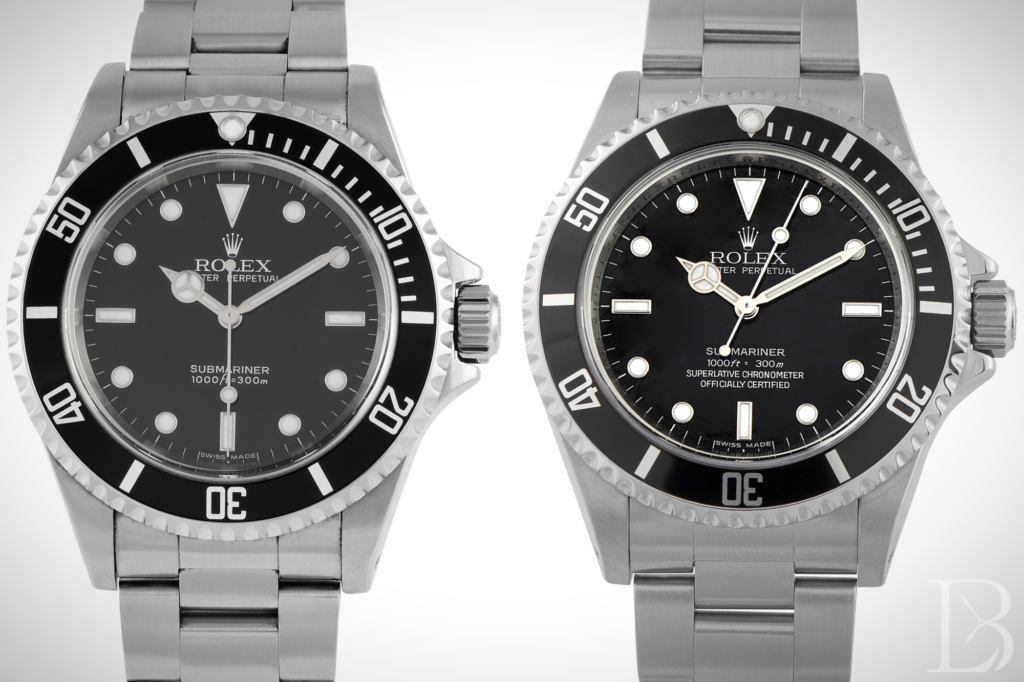
The 14060m was the last Sub with a 39.5mm case, the last Rolex with lugholes, the last Rolex with an aluminum bezel insert, the last Rolex with a stamped clasp, and the last Rolex with hollow endlinks. Now let’s talk about some notable firsts.
Maxi-Case Era (40mm, 2008-2020)
Main Changes vs. Previous Generation: Glidelock clasp, ceramic bezel insert, thicker lugs, date and no-date are both 40mm, bigger hour plots, updated lume ("Chromalight"), first white gold model
Total Production: 1,202,067
Movement Caliber: 3130, 3135
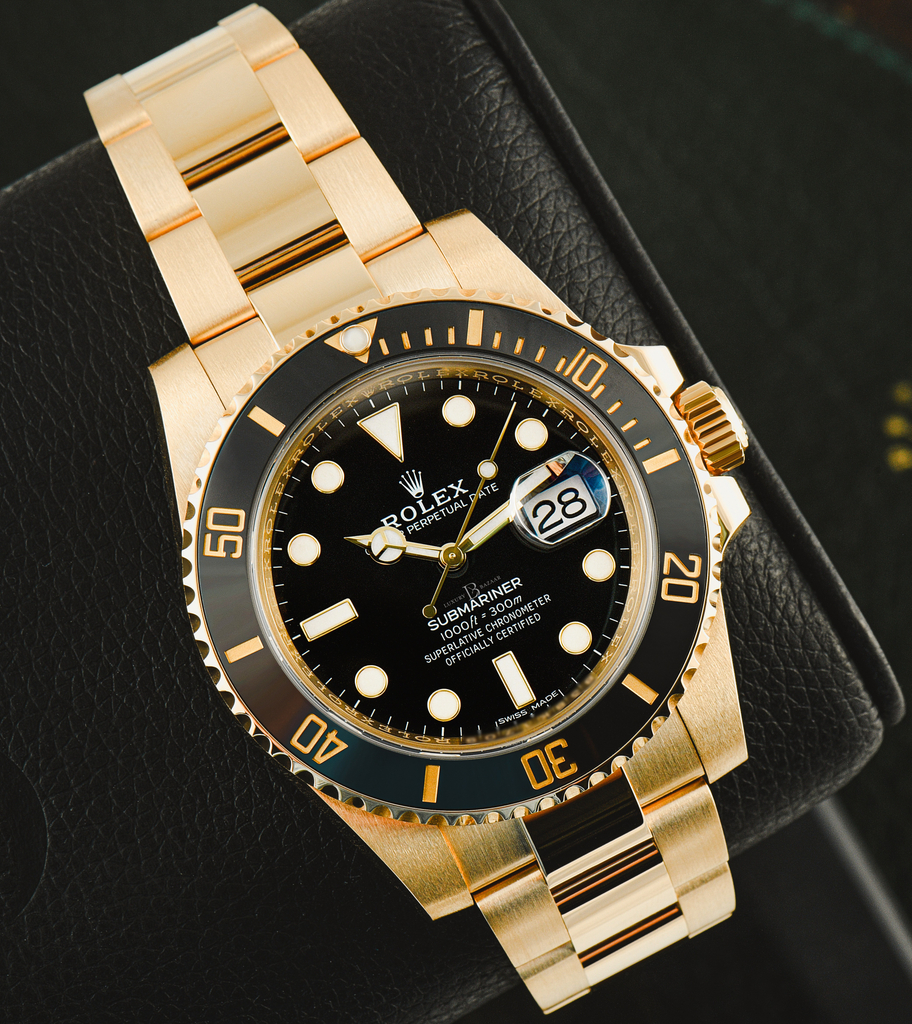
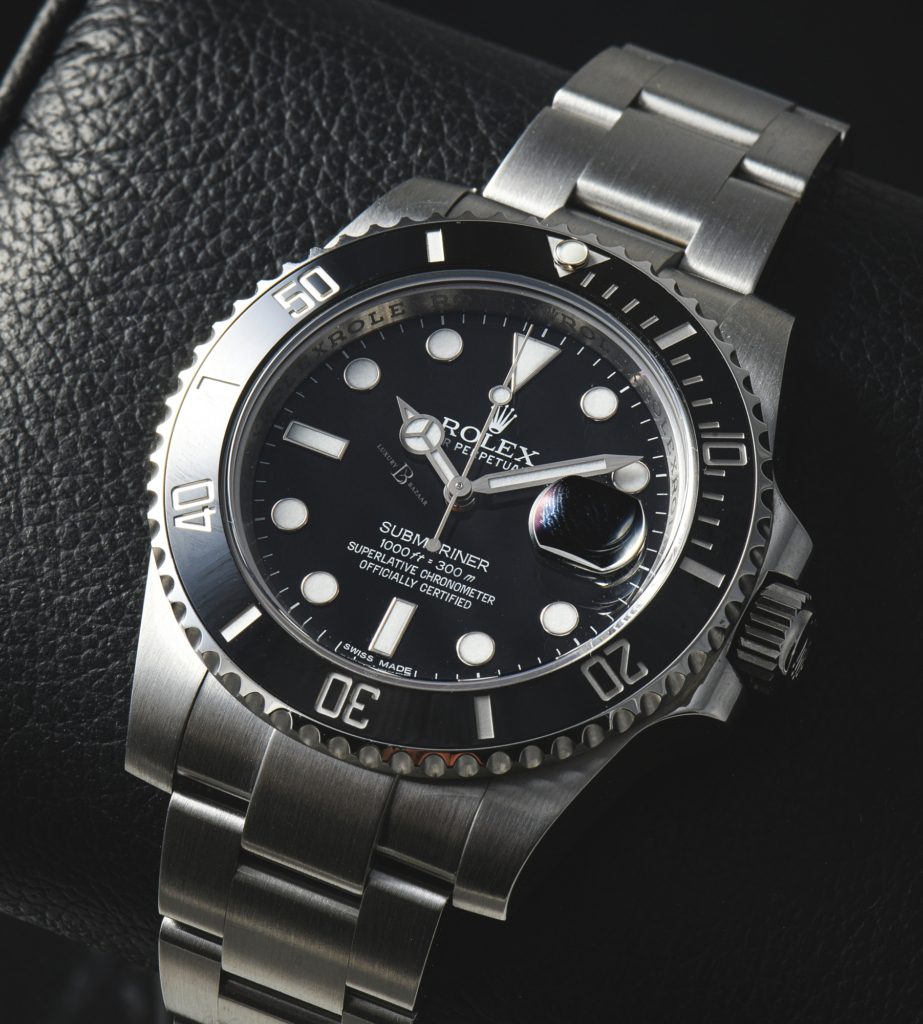
The first 6-digit Submariner models appeared at Baselworld in 2008, in either yellow gold (ref. 116618) or, for the first time, white gold (ref. 116619, the “Smurf”). The fat lugs of this generation spurred the nickname “maxi case,” and the oversized hour plots complement the look.
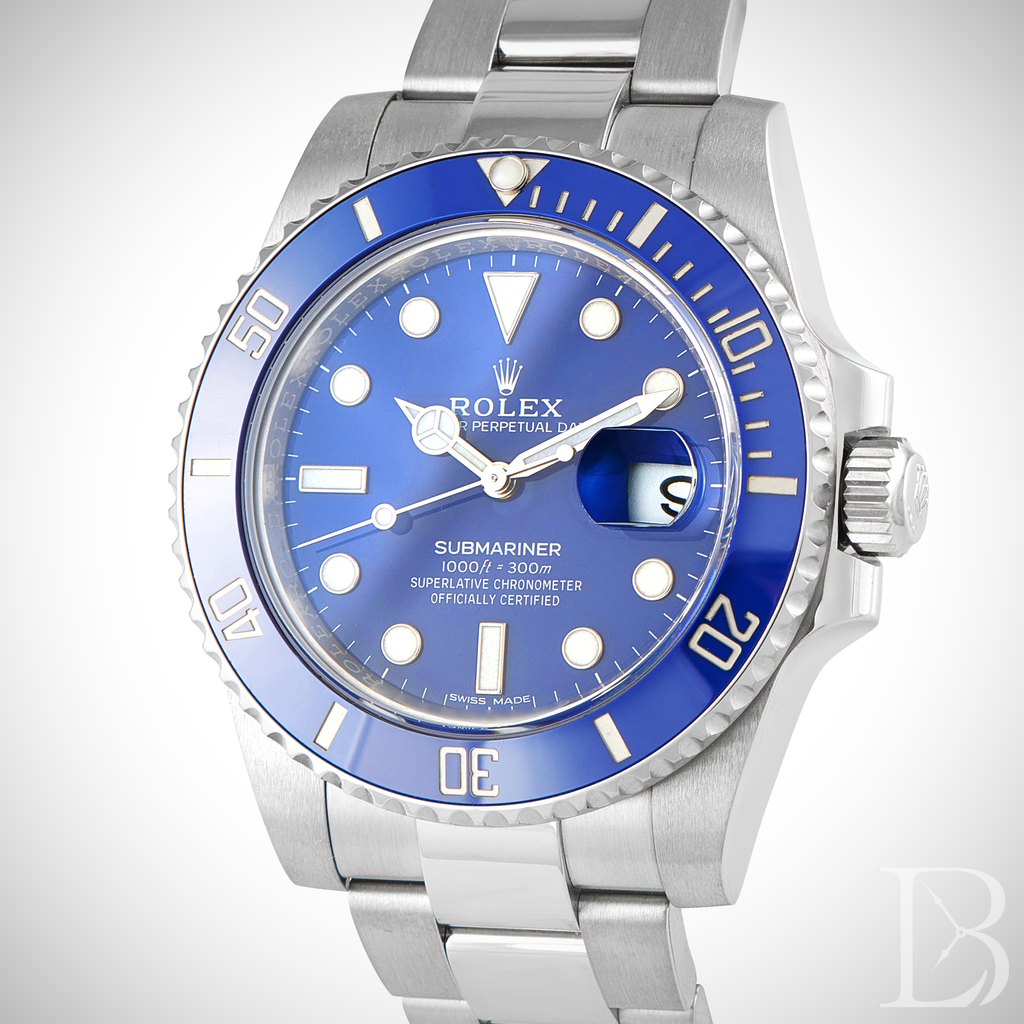
These were the first dive watches ever made with ceramic bezel inserts, which are extremely scratch-resistant. When people talk about “ceramic Subs” they’re just talking about the insert being ceramic, not the actual watch.
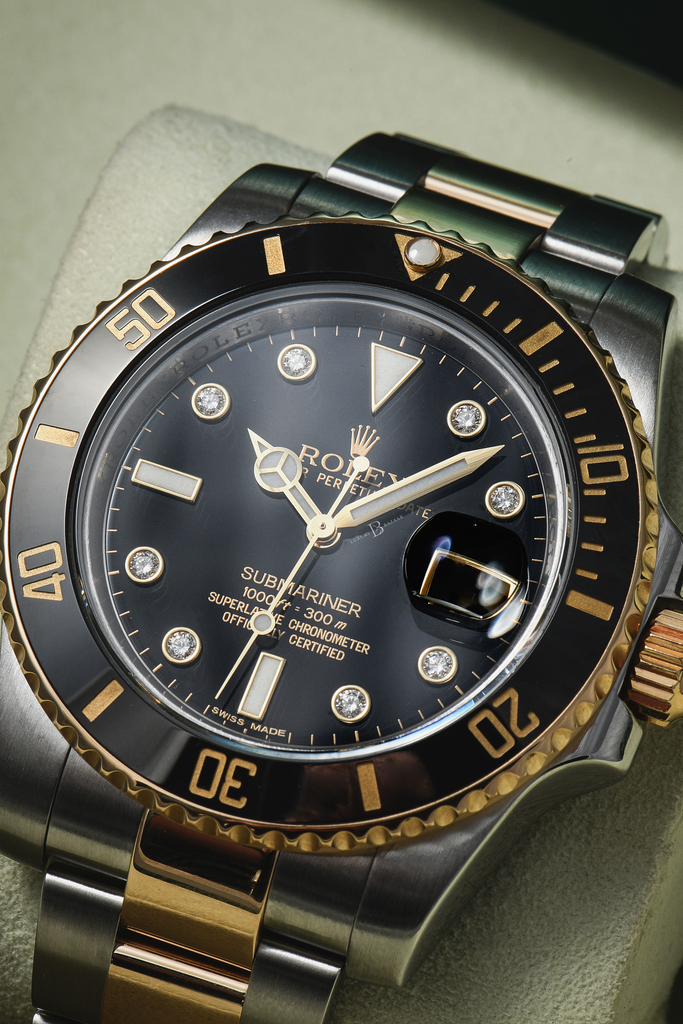
The first two-tone 6-digit Rolex Submariner Date (ref. 116613) arrived in 2009, followed by the steel Sub Date (ref. 116610) in 2010. An LV (green bezel insert) option was still offered, but now it had a green dial as well, and it’s not hard to see why collectors call ref. 116610 LV “The Hulk.”
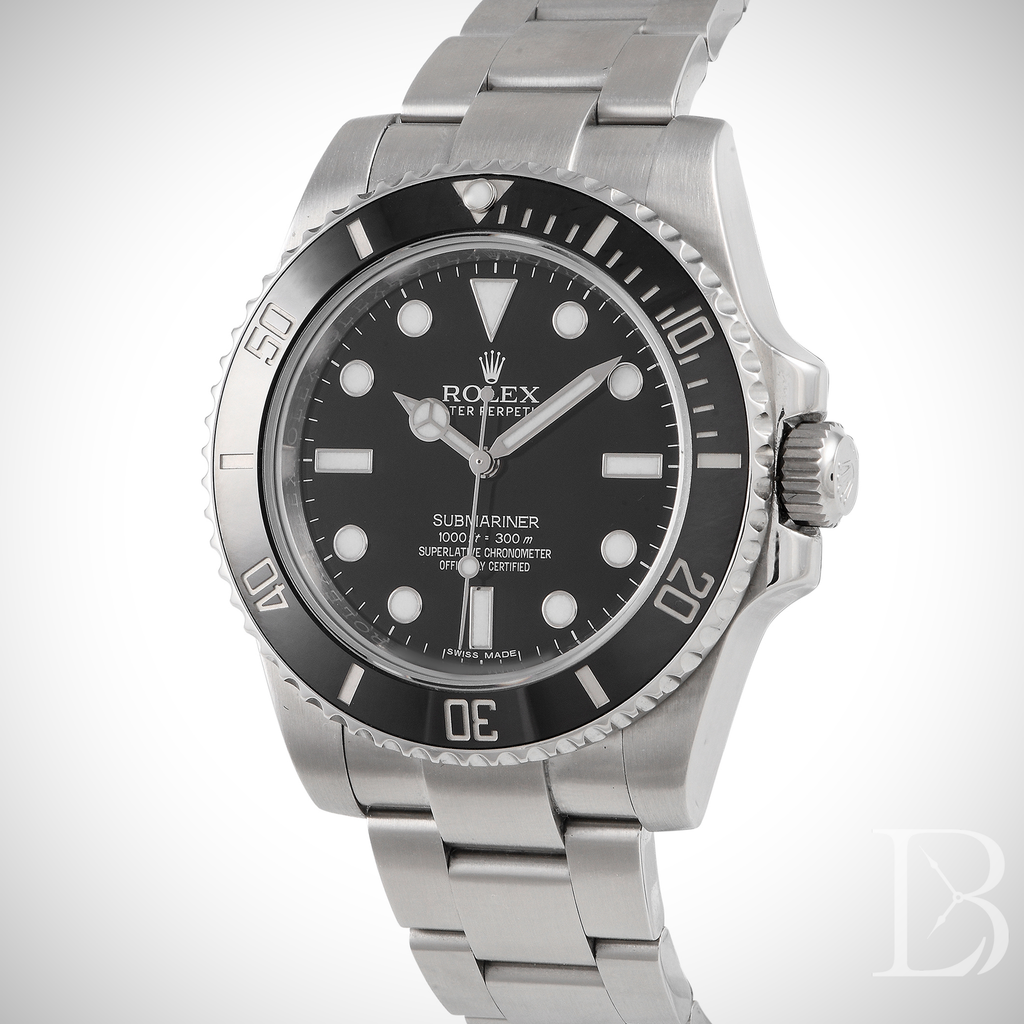
Finally a ceramic-insert no-date version came in 2012. The trusty 3130 and 3135 movements were unchanged from the previous generation. And the lume, now called “Chromalight,” glows blue rather than green.
There were no more champagne or silver serti dials, but diamond hour markers were an option for everything except the stainless steel models until 2013. On two-tone models and yellow gold models, blue dials were flat at first, but became sunburst when the diamond option was discontinued. The Smurf stayed flat blue, however. The bezel insert always matches the dial color on this generation of Subs. Here’s a quick breakdown of the dial options:
Dial/Insert Color Options (11661x and 114060 Submariner)
| Case material | Black | Black w/diamonds | Green | Flat blue | Flat blue w/diamonds | Sunburst blue |
|---|---|---|---|---|---|---|
| Steel (114060, 116610) | 2010–2020 | — | 2010–2020 Date only | — | — | — |
| White gold (116619) | — | — | — | 2008–2020 | 2008–2013 | — |
| Yellow gold (116618) | 2008–2020 | 2008–2013 | — | 2008–2013 | 2008–2013 | 2013–2020 |
| Two-tone (116613) | 2009–2020 | 2009–2013 | — | 2009–2013 | 2009–2013 | 2013–2020 |
Better Bracelets, Now with Glidelock
Some people might say that the ceramic bezel inserts of the first six-digit Rolex Submariner models were their most definitive generational upgrade. But the most important upgrade was really the bracelet. The 11661x Subs were the first watches to get Rolex’s industry-changing Glidelock clasp. Glidelock offers 10 increments of 2mm increments to allow for up to 20mm of bracelet expansion without tools. That’s enough to go over a wetsuit, so there’s no more old-school flip-open diver’s extension on Subs with Glidelock.
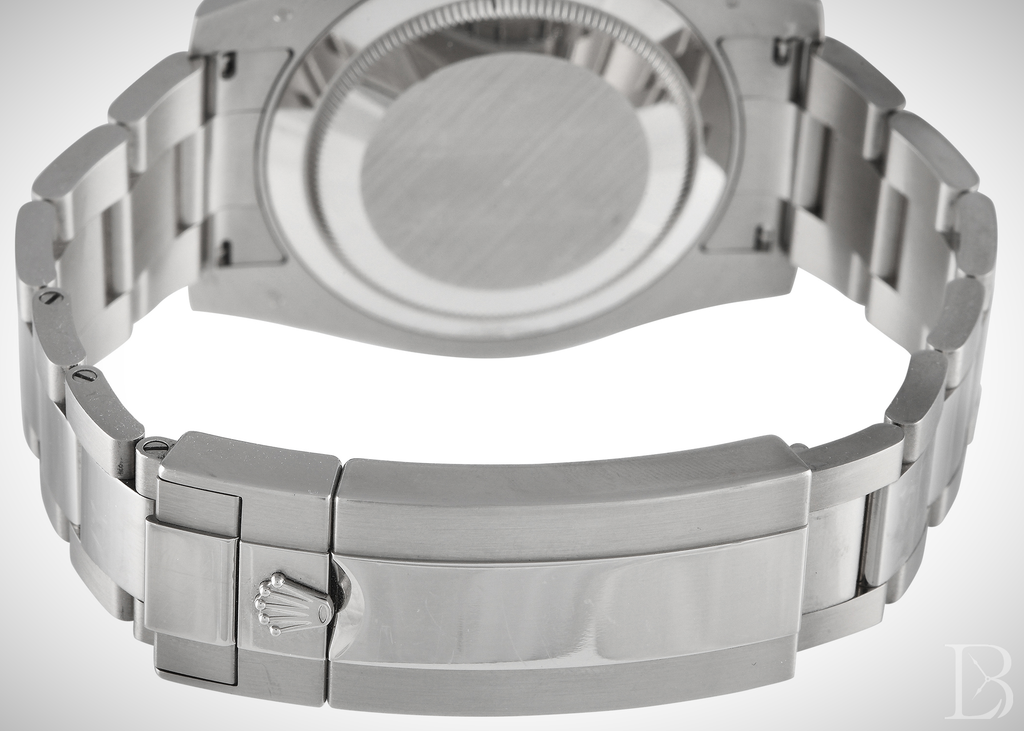
In addition to the tool-free adjustability of the Glidelock, the lugs just fit flusher and the whole bracelet feels heavier than older generations. In my opinion these Rolex Submariner bracelets are what set the standard for luxury watch bracelets today.
Off-Catalog Submariner
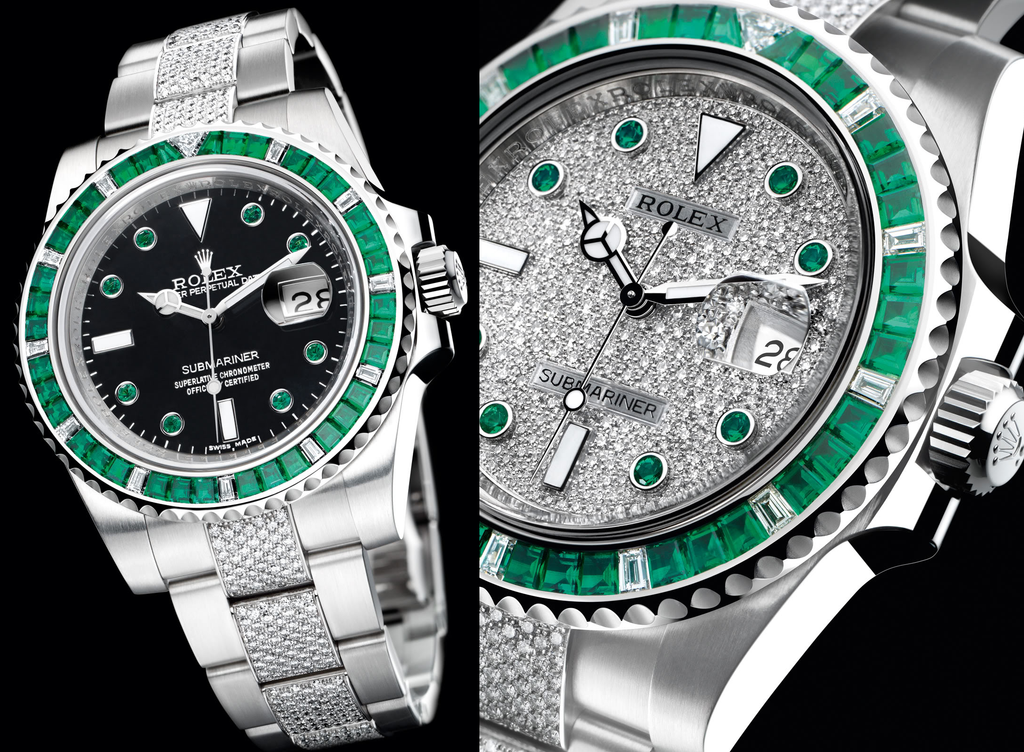
The only two off-catalog Rolex Submariner references ever made came during the 116xxx era, and they’re both white gold models with trapezoidal-gem-set bezels. Ref. 116649 EMBR (only 51 made according to the Foulkes book) has a bezel set with emeralds and diamonds, and a dial (either black or pave diamond) with eight more emeralds. Its center bracelet links are covered in diamonds.
The 116659 SABR (771 made) has blue sapphires instead of emeralds, and diamonds on the lugs instead of bracelet.
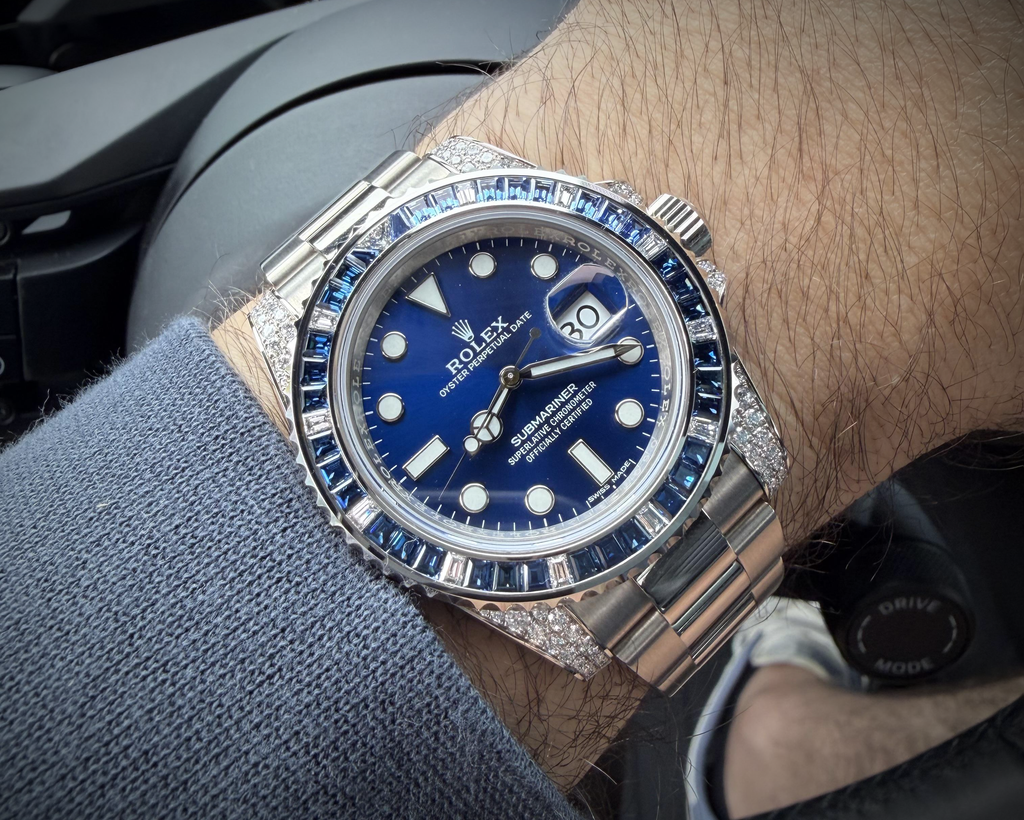
Its two dial options were a pretty normal dark blue sunburst dial or a pave diamond dial with 8 sapphire hour markers.
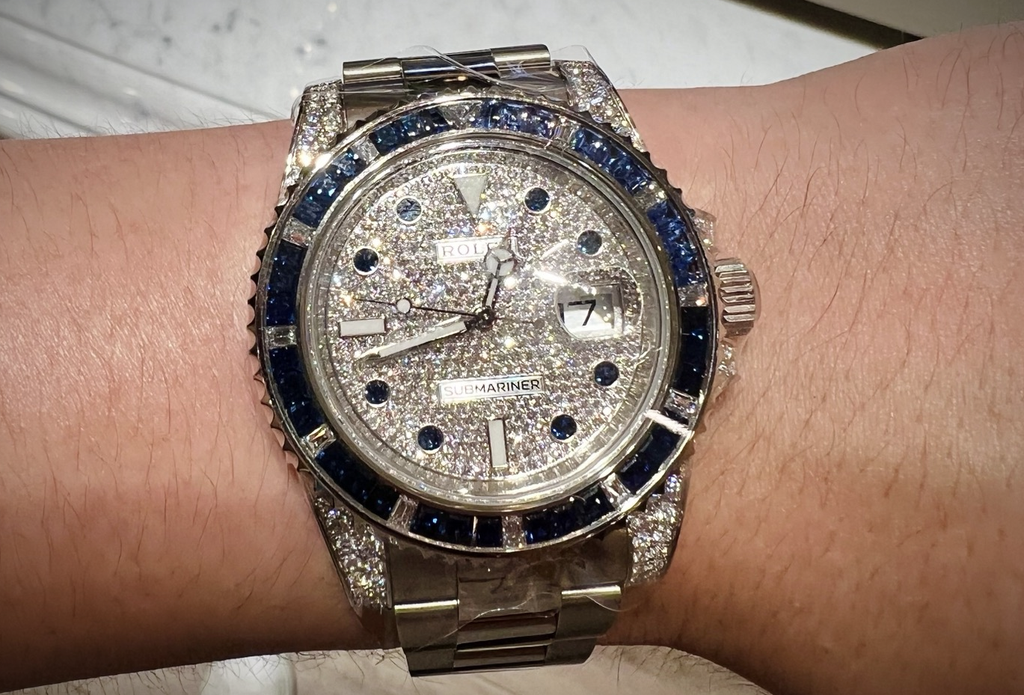
These off-catalog Subs do not display the depth rating, perhaps because the exquisite gem-setting isn’t really meant to withstand the pressures of deepsea diving. I’ll mention that trapezoidal gems are much harder to set into a circular shape than round diamonds because they need to be sized and shaped so perfectly to avoid gaps. That’s why square-ish (technically trapezoidal) diamond-set Rolex bezels always cost way more than ones set with round diamonds.
Current Era (41mm, 2020+)
Main Changes vs. Previous Generation: New movement with longer power reserve, AR coating, slimmer lugs, wider lug width, more tapered bracelet
Changes during 12xxxx run: Lume became brighter in 2022, green bezel insert hue changed 2023
Movement Caliber: 32xx
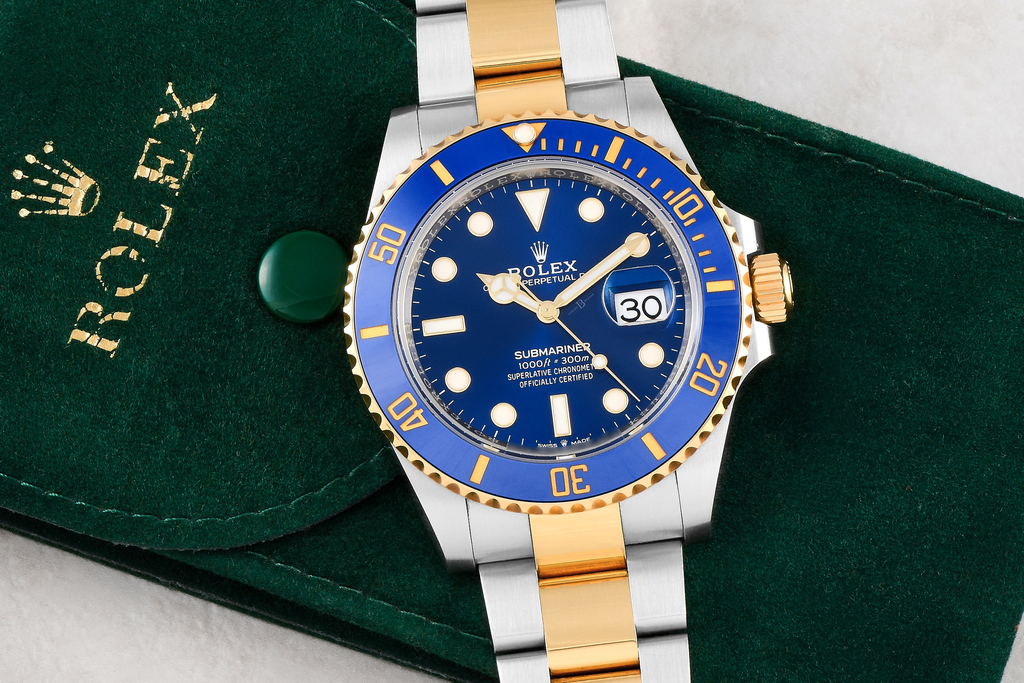
In September 2020, Rolex released the current generation of Submariner models, featuring an updated movement (3230 and 3235 replaced the 3130 and 3130), slimmer lugs, and a more tapered bracelet with a wider lug width (21mm instead of 20mm).
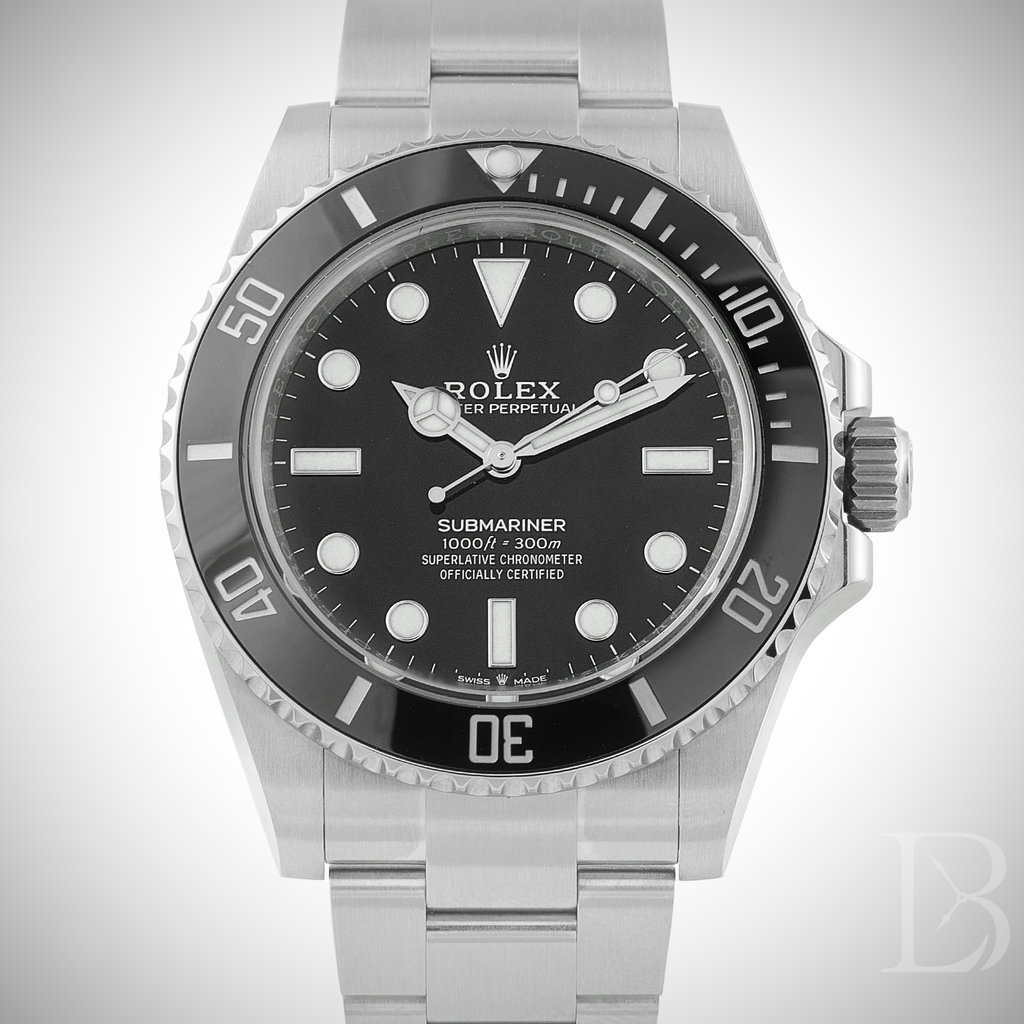
The movement takes power reserve up from 48 hours to 70 hours, and although there were apparently some low-amplitude issues with the 32xx movements early on, most examples keep well within their guaranteed Superlative Chronometer timekeeping rate of ±2 seconds per day.
Rolex also added AR coating to the underside of the Sub’s crystal for the first time. And for once, Rolex decided to update all five variants simultaneously. White gold, yellow gold, two-tone and stainless steel 12661x models all debuted in 2020 alongside the no-date 124060. The reference numbers are all the same as the prior generation, except the second digit changed from a “1” to a “2.”
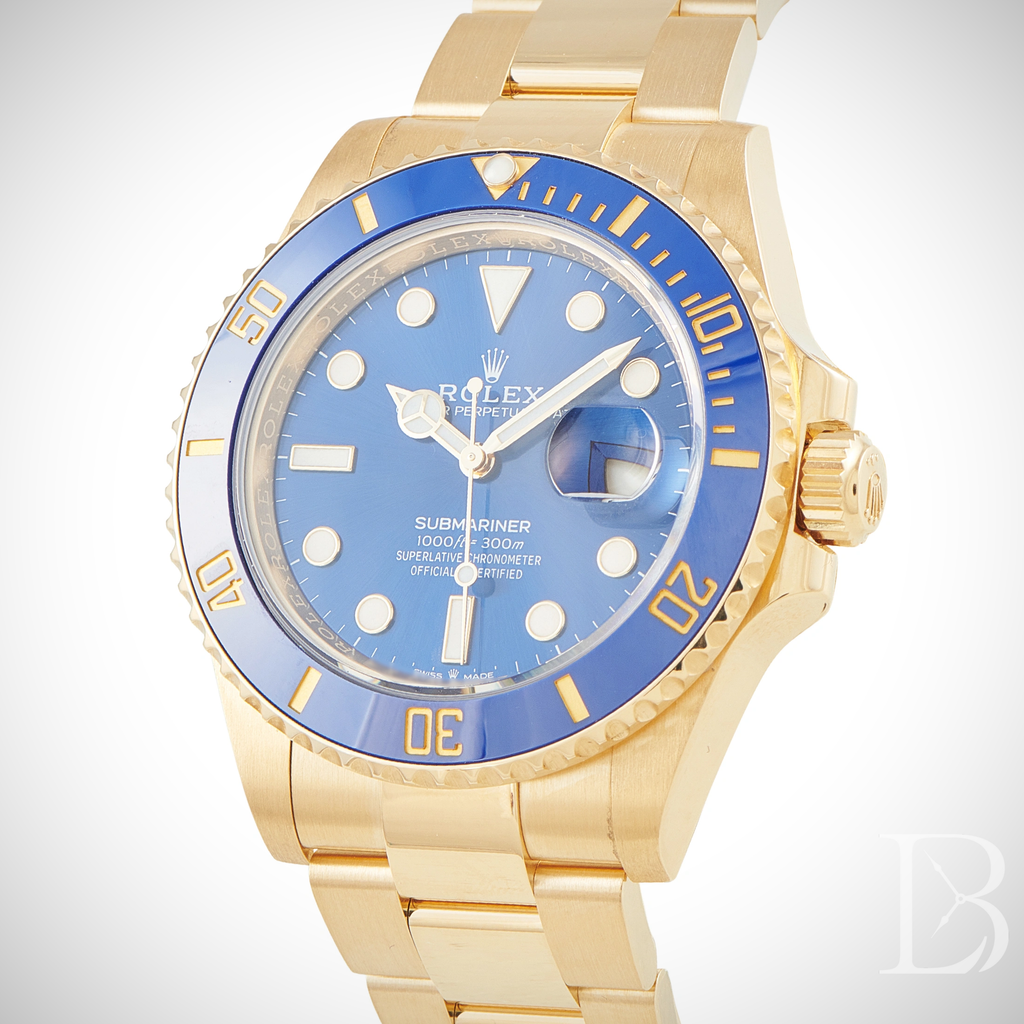
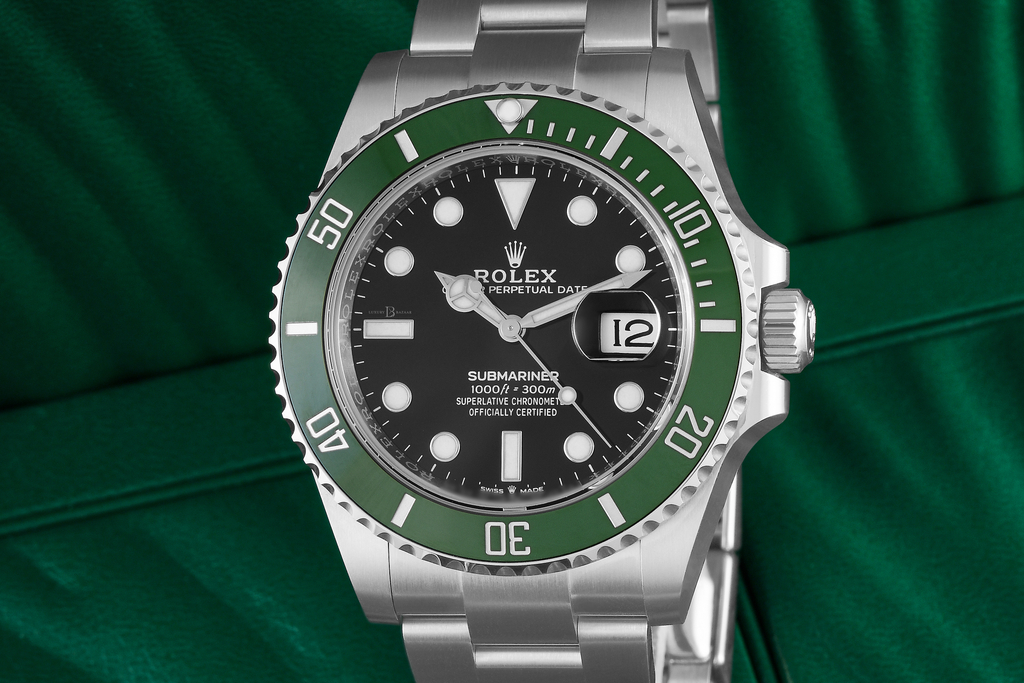
The white gold model, which is known as the “Cookie Monster” and was one of the Rolex models discontinued in 2026, has a black dial. The 126610 LV (“Starbucks”) once again gets a black dial. It’s worth noting that the green color of the Starbucks bezel insert changed from a more grassy color (Mark 1) to a more piney color (Mark 2) in 2023.
Current-generation Subs all have the Rolex coronet logo in between the words “Swiss” and “Made” at the bottom of the dial, which is a quick and easy way to tell them apart from previous models. As of late 2026, Rolex Submariner retail prices range from $10,050 for the 124060 up to $50,800 for the 126610. Rolex waitlist times for the Sub can be frustrating but definitely not as bad as they were in 2021-2022.
Rolex updated their Chromalight formula in 2022, so if a relatively new Rolex seems to glow brighter than older models, that’s normal.
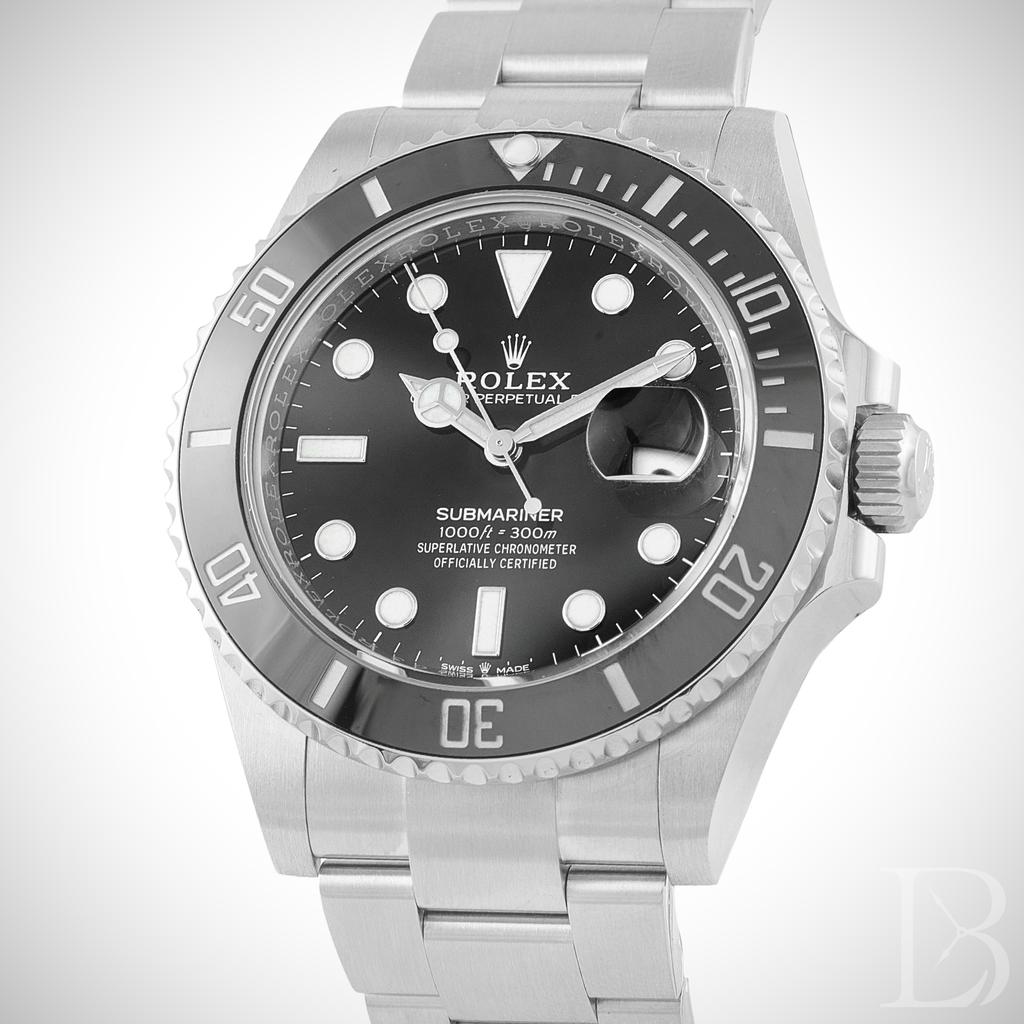
And if you have an old Rolex with tritium lume, don’t expect it to glow at all anymore. Whether you’re into vintage, neo-vintage or modern Subs, there are plenty of options available on the market. Hopefully this guide has helped you know what to look for.



Leave a Reply