A Collector’s Guide to Corum Watches

Corum, a Swiss luxury watch brand founded in 1955, is primarily known for four things: the Coin Watch, worn by more US Presidents than any other watch; the Admiral’s Cup (now simply “Admiral”) with a distinctive 12-sided bezel; the aptly-named Bubble from the early 2000s; and perhaps most of all the Golden Bridge, with its entire gear train, escapement, barrel, and regulating organ all arranged linearly and suspended in a mostly-transparent case. In 2025, Corum entered their fourth ownership era, becoming fully Swiss-owned once again, and their revamped lineup is well worth a look. Here’s everything a collector should know about Corum watches.
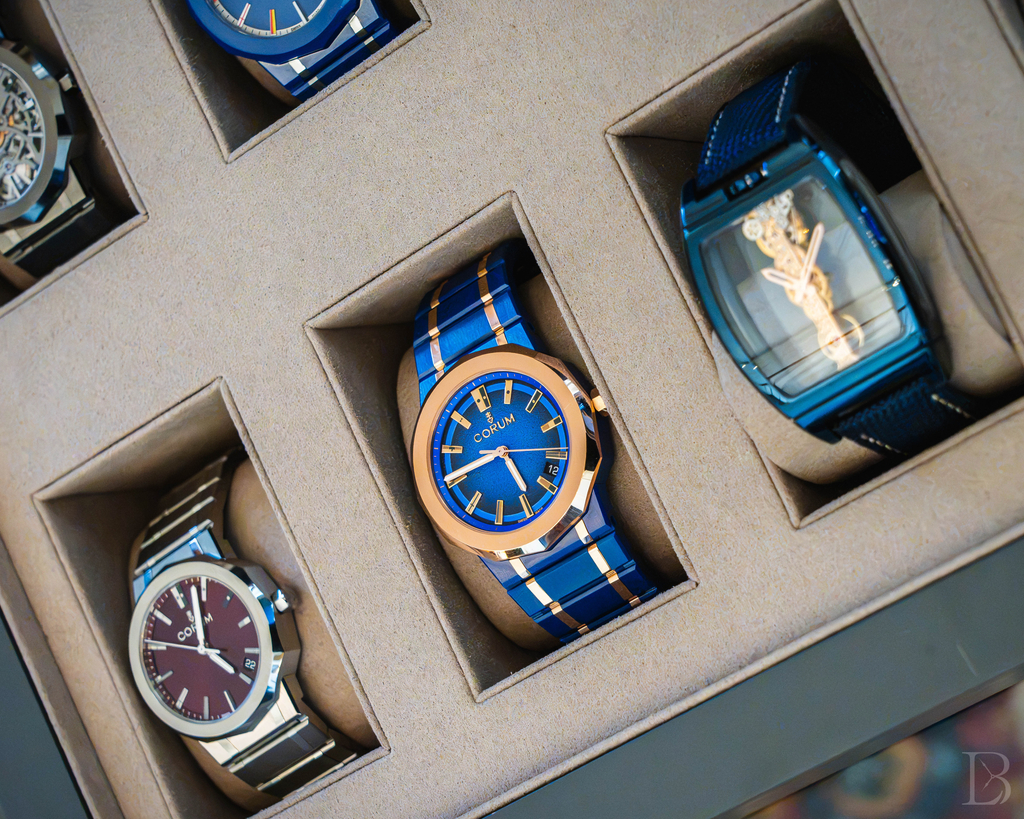
Before I get more into each of their most notable watch lineups, let’s go over a quick history of the Corum company as a whole.
History of Corum Watches
René Bannwart and his uncle Gaston Ries founded Corum in La Chaux-de-Fonds in 1955, establishing a reputation for unconventional case design. Under family ownership, the brand introduced its three most definitive creations: the Admiral’s Cup in 1960, the gold Coin Watch in 1964, and the Golden Bridge in 1980, featuring Vincent Calabrese’s legendary linear movement (more on that in a minute). They also made several interesting lesser-known designs, including some with dials made of actual feathers and some shaped like a Rolls Royce grill.
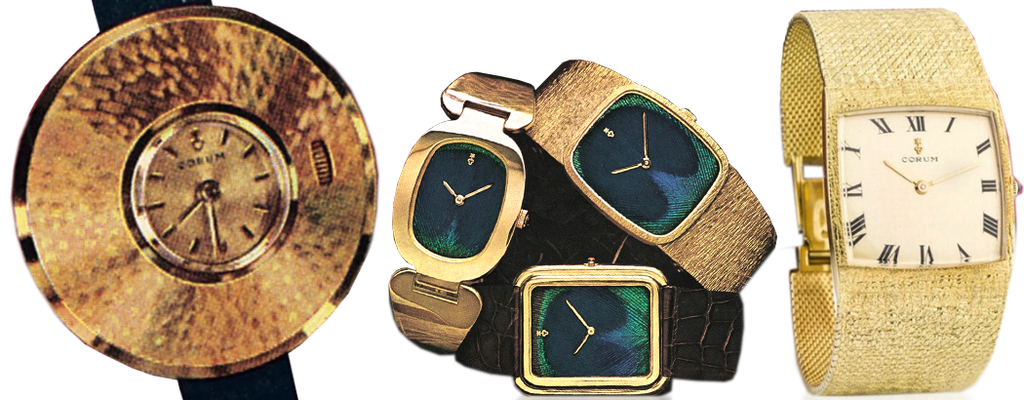
The world’s first meteorite-dial watch, along with the now-definitive 12-sided shape of the Admiral’s Cup, also debuted under the ownership of the Bannwart family.
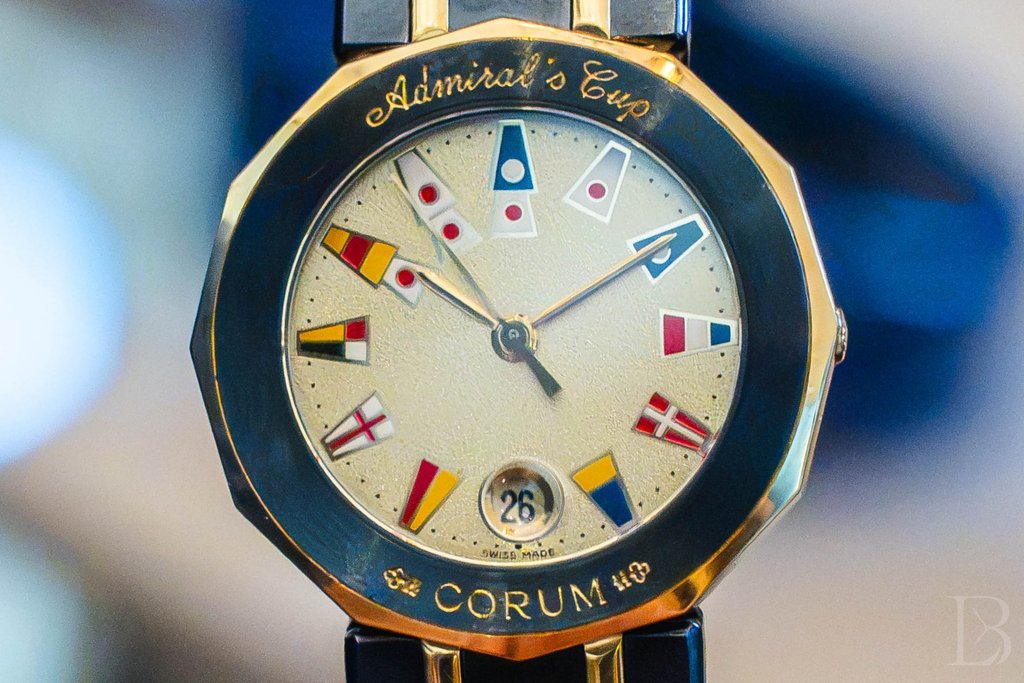
Severin Wunderman, the entrepreneur behind Gucci’s watch business, bought 90% of Corum in 2000 and took the company in a more flamboyant direction. His oversized Bubble watch debuted that year and became a signature of the brand. The Admiral’s Cup line also got larger and more diverse.
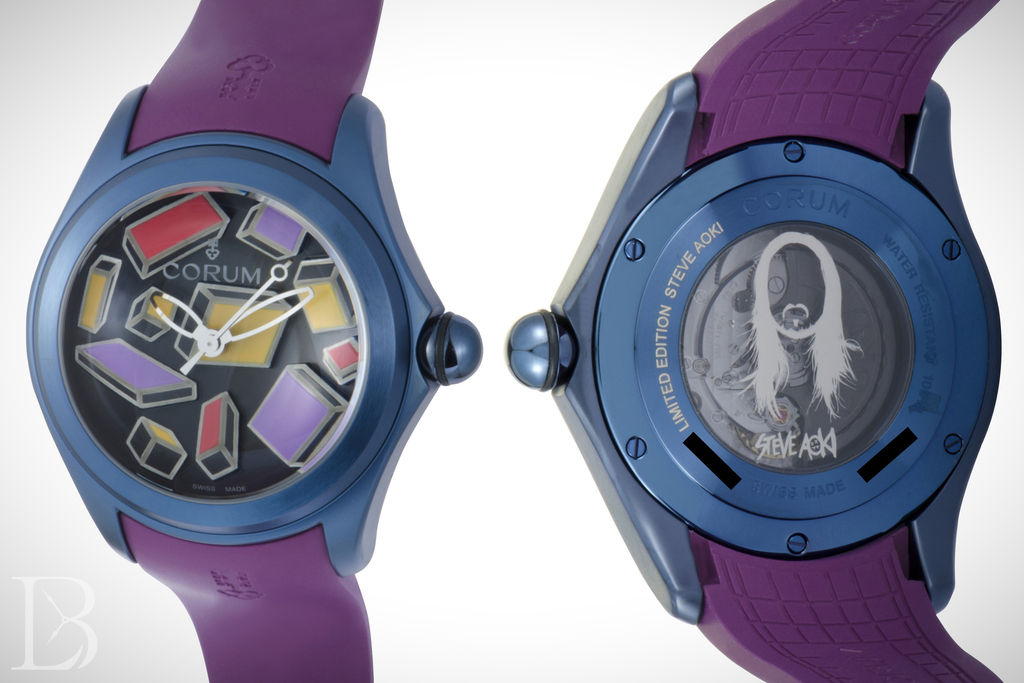
After his death in 2008, Corum remained under Wunderman family ownership until its sale to a Hong Kong-based holding company in 2013. That company (Citychamp) oversaw a relaunch of the Bubble in 2015, along with some key revisions to the Golden Bridge lineup. They also grouped miscellaneous historically-inspired models into the Heritage family and launched an avant-garde Corum Lab lineup in 2018:
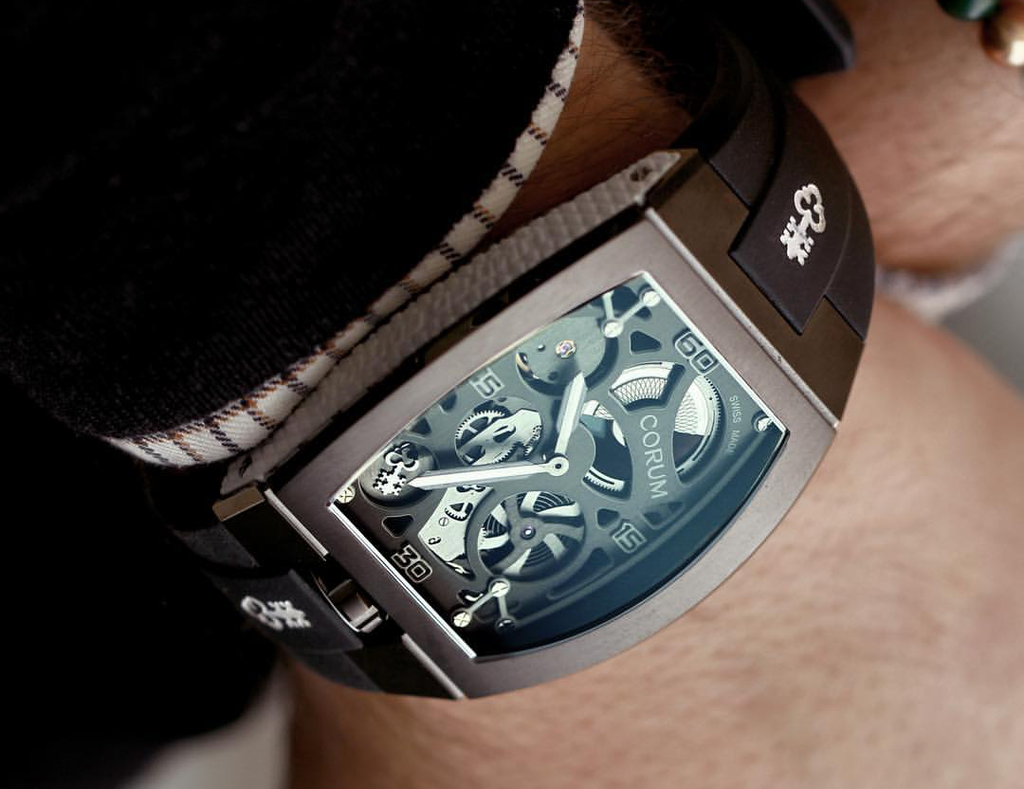
Corum’s quality has remained high, but they haven’t had a mainstream “hit” with collectors in a while. That’s why we named them as one of the most underrated luxury watch brands. Backed by two Swiss investors, watchmaker and then-sales director of Corum, Haso Mehmedovic, led a management buyout of the company in 2025. He is now chairman and CEO.
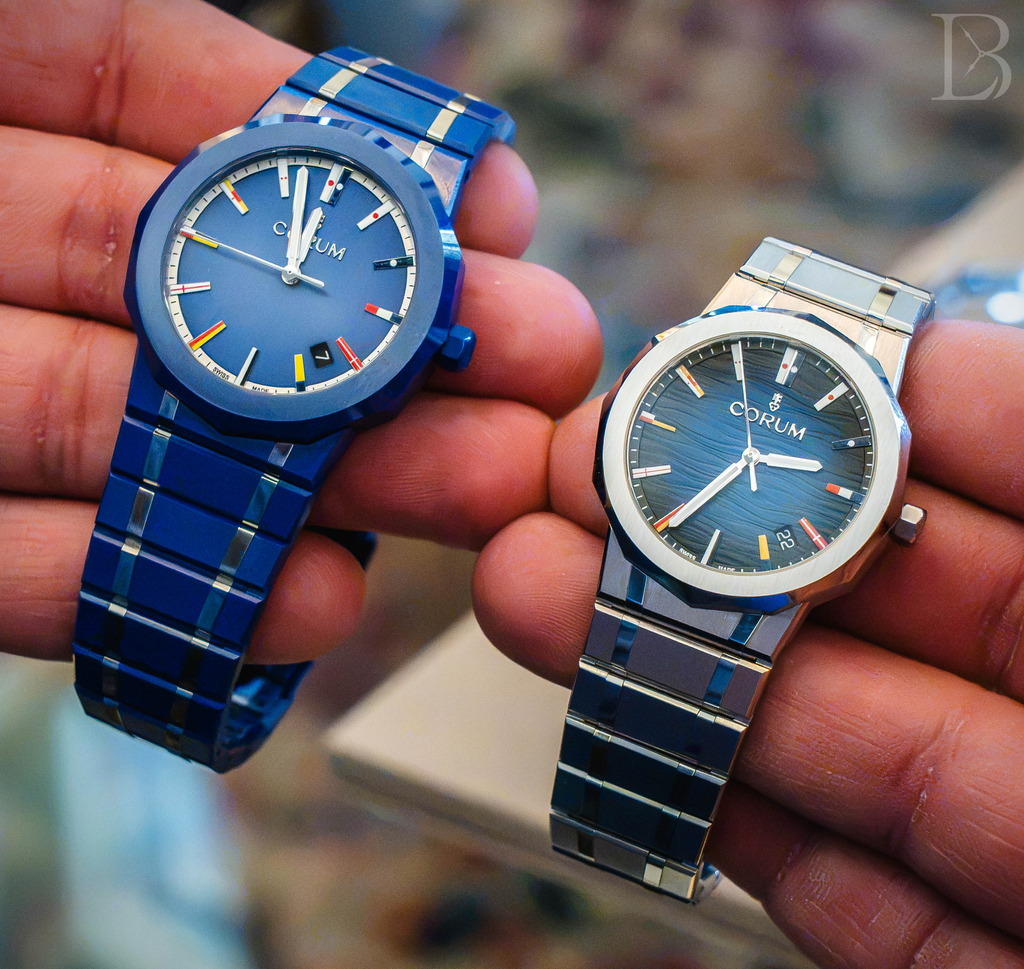
In 2026, the first new releases of the Mehmedovic era were unveiled, and they might have that much-needed hit on their hands with the latest (very well-proportioned) Admiral 36 and Admiral 39.
Admiral’s Cup/Admiral
The Admiral is the most important family in the modern Corum lineup, so let’s get more into that now.
The Original Square Corum Admiral’s Cup Watches
The first Admiral’s Cup was a square waterproof watch–a rarity when it debuted in 1960.
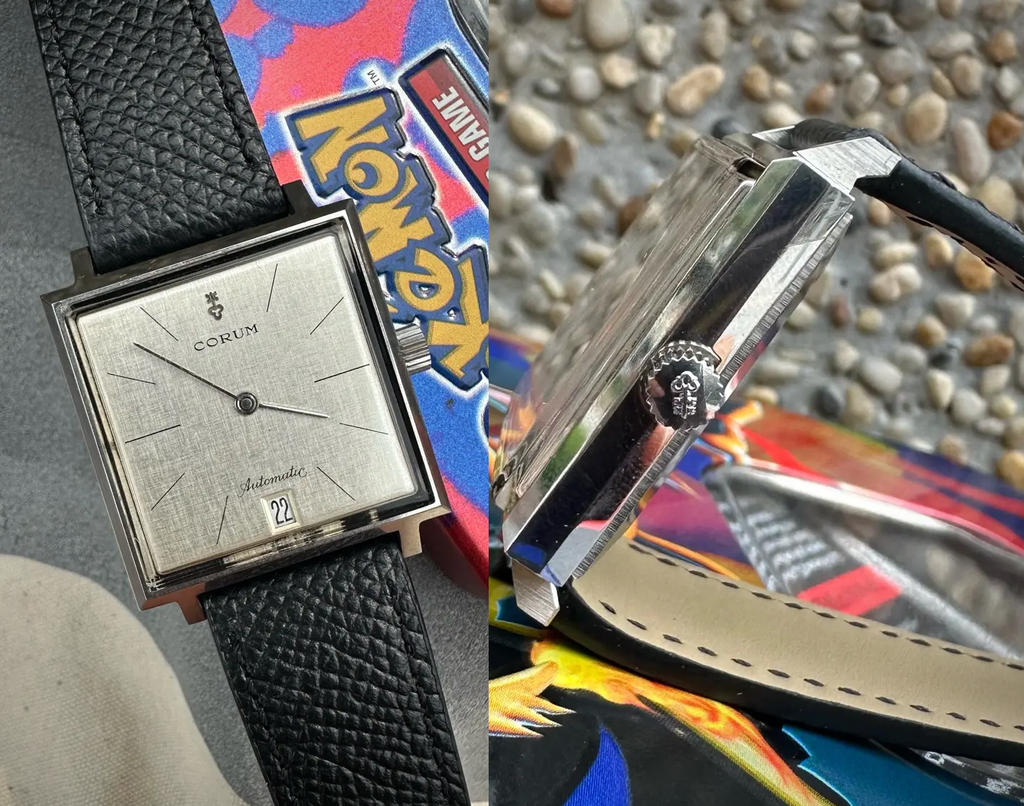
It’s an attractive watch with a 31mm diameter and a linen-textured dial, and its production lasted into the early 1980s. Decent examples seem to go for around $1,500 today (or more on a mesh bracelet) if you can even find one. Some have date windows at 6 o’clock while others are time-only. There is no seconds hand, which helps minimize the watch’s thickness.
The First Dodecahedron Models (Hidden Lugs)
The dodecahedron shape that most collectors associate with the Corum’s Admiral’s Cup actually debuted in 1983. It was offered in 27mm or 34mm sizes and featured a circular date window at 6 o’clock.
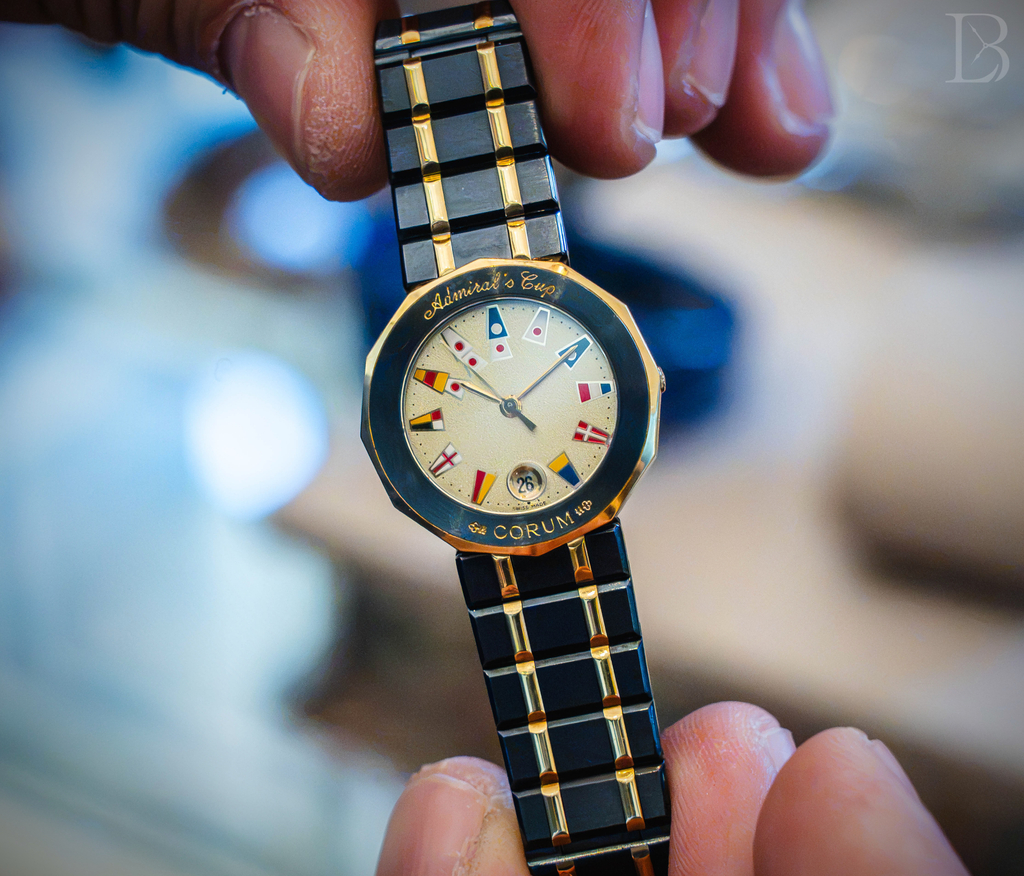
The larger version was available with either an automatic or quartz movement, while the smaller size was exclusively quartz. The quartz ones are extremely thin (only about 6mm thick) and even the automatic ones are quite svelte (under 9mm).
The first thing you might notice on a Corum Admiral’s Cup watch is the unusual flag-like hour markers. Because ships often need to communicate basic information with ports and other ships, the International Code of Signals established a visual set of flags for every letter and numeral. So instead of the numbers 1-12 on the dial, Corum uses the maritime signal flags that represent those numbers.
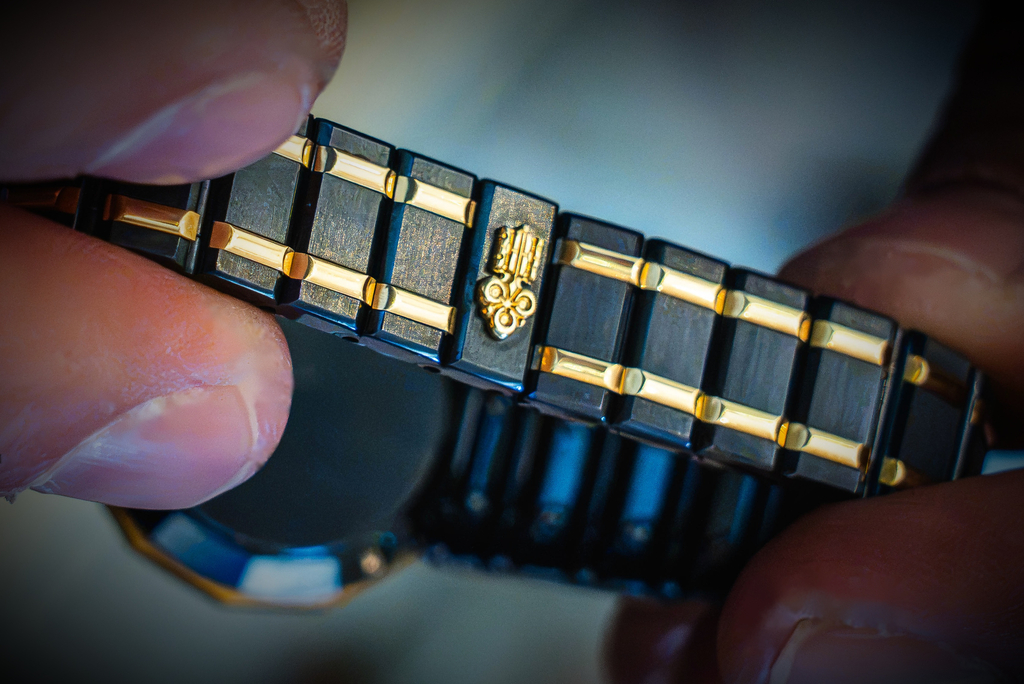
The five-link well-beveled flat-link bracelets on these 1980s Corum Admiral’s Cup models give the visual impression of an integrated bracelet, although it would be more accurate to say the watch simply has “hidden lugs” and a standard bracelet. There are (broadly speaking, arguably) five generations of dodecagonal Admiral’s Cup models, and they can most easily be identified by the lugs: hidden (1980s), straight and dressy (1990s), thick and sporty (2000-2010), medium/curved (2011-2025) or integrated (2026+).
Third-Generation Admiral’s Cup
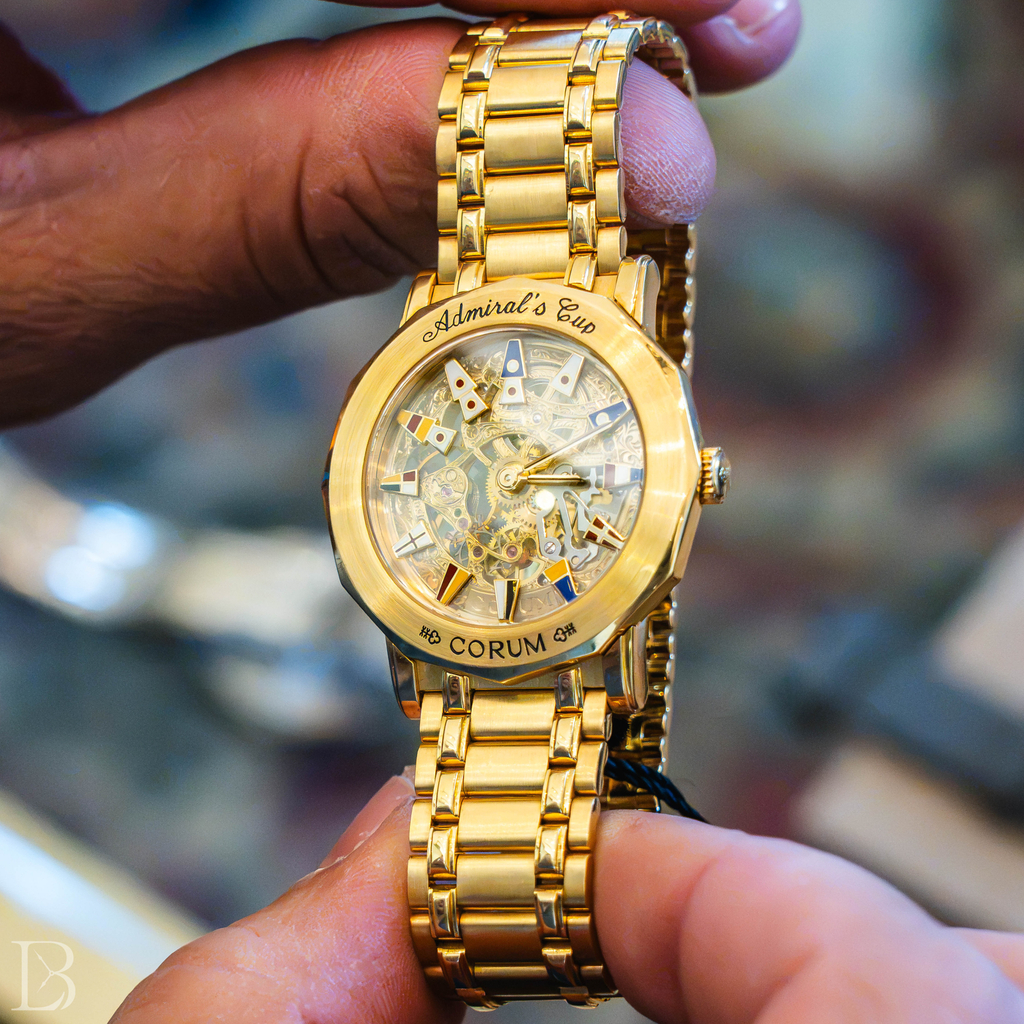
The dressy lugs of the gold skeletonized Admiral’s Cup model above tell you that it hails from the 1990s. In addition to what we would now call small and mid-size models, that was when Corum started adding larger sizes and more complications to the Admiral’s Cup lineup for the first time, like the 40mm Admiral’s Cup Tides/Marées model, which indicates the timing and strength of the tides, as well as the moonphase and date.
Quartz remained an option for smaller sizes of the Admiral’s Cup, but anything above 36mm is automatic–with the notable exception of the Régate model which is a 40mm mechaquartz regatta-oriented chronograph.
2000-2010: The Chunky Lug Era
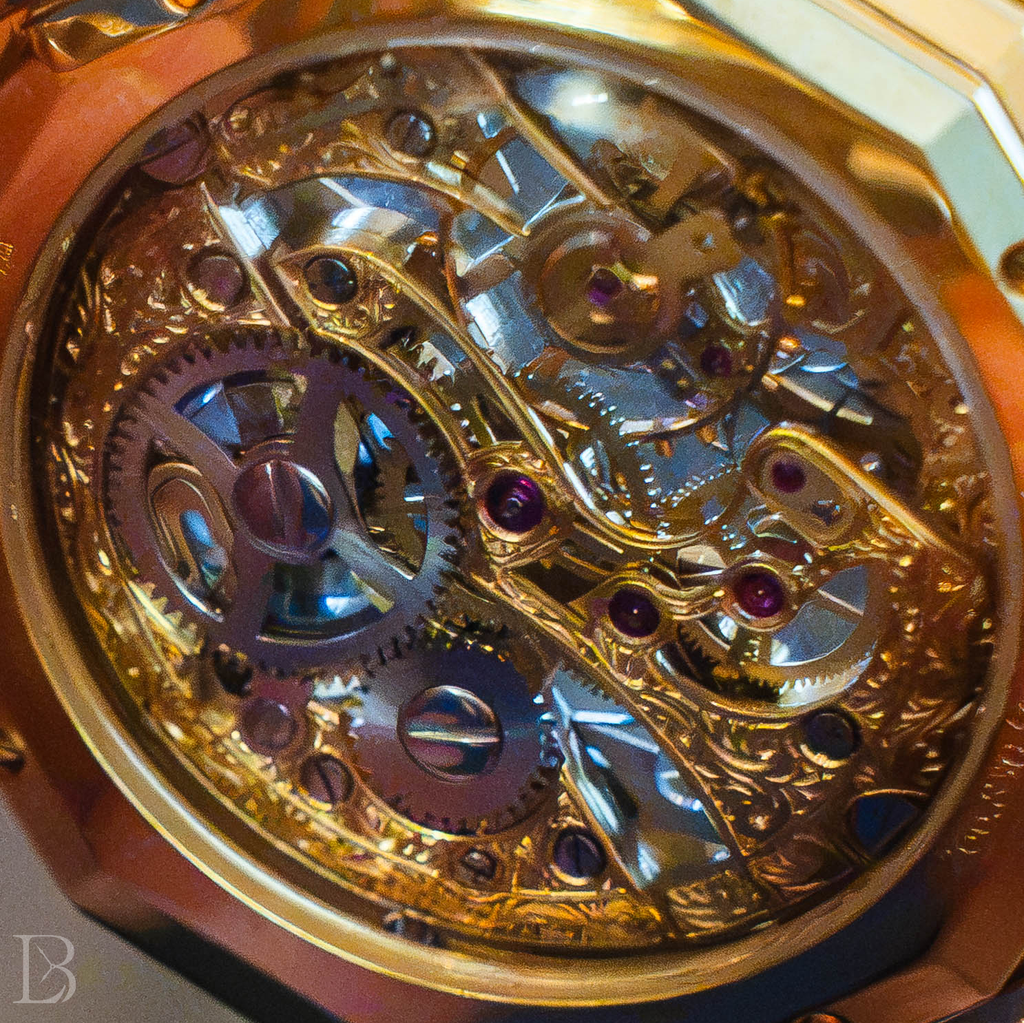
In the 2000s the Admiral’s Cup got larger still, and as with many watches of the day, they had big shiny lugs. Rotating bezels appeared in the lineup for the first time.
2011-2025: The Legend Era
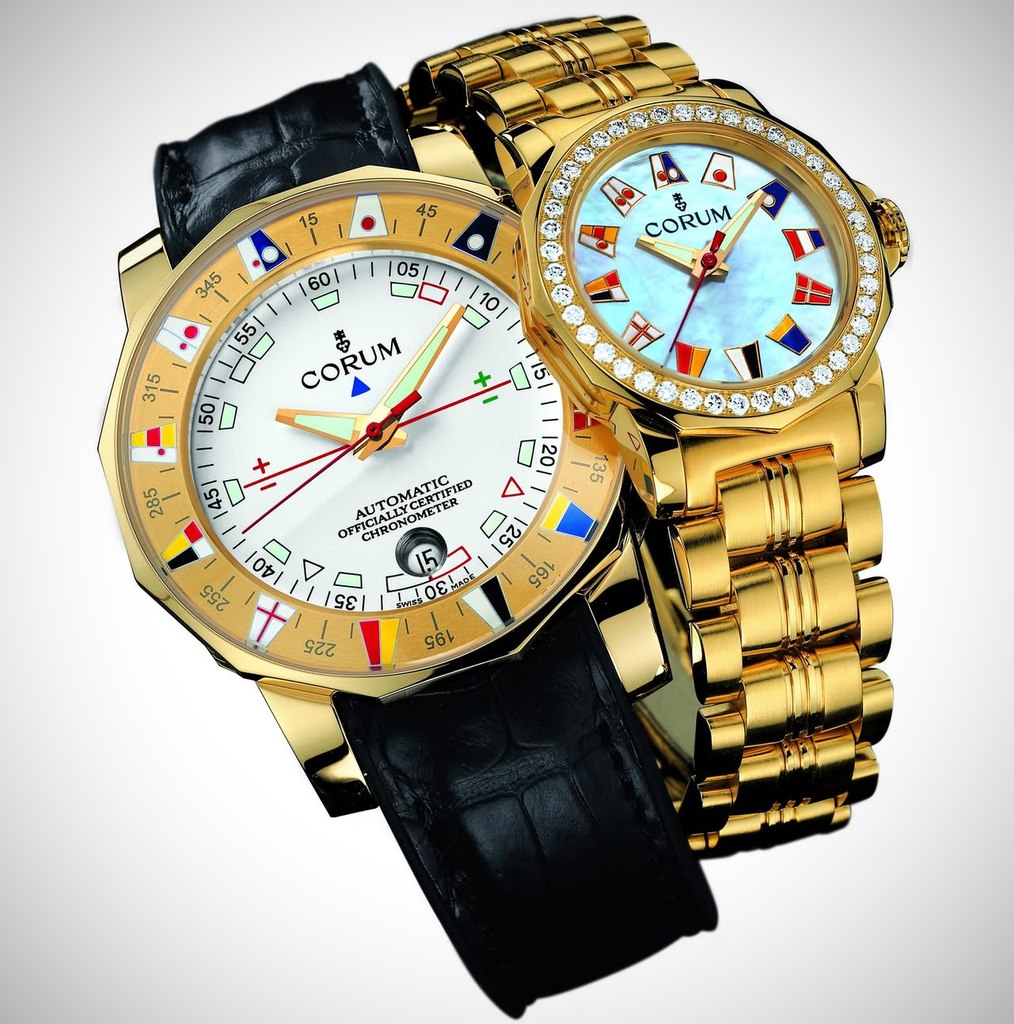
In 2011, the Admiral’s Cup Legend came out and its slanted rehaut and thinner bezel soon became a signature part of the line’s aesthetic. For many years, Corum Admiral’s Cup watches looked more or less like this:
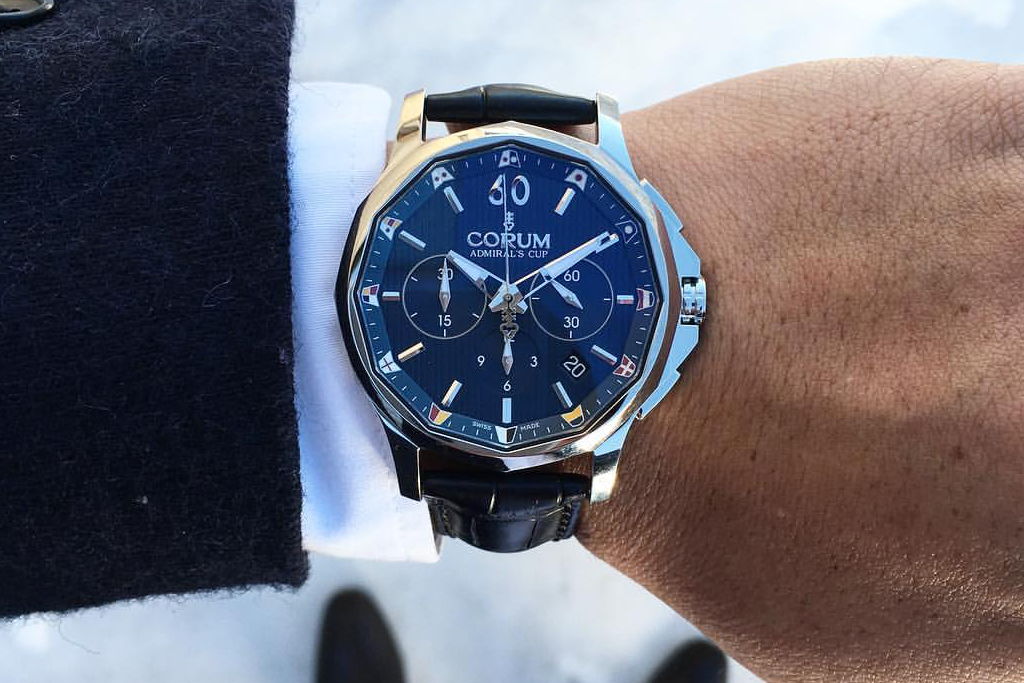
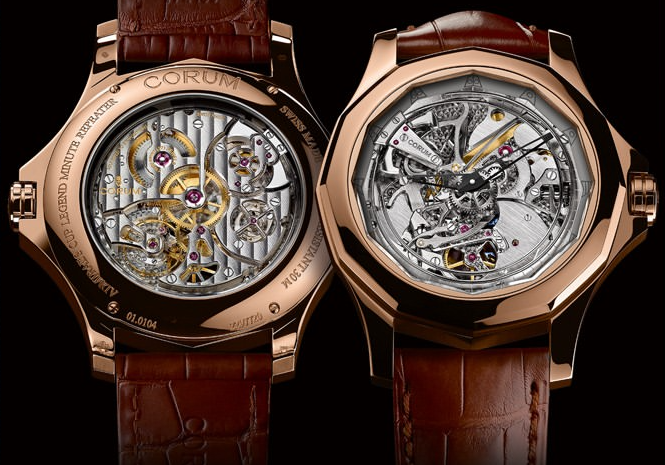
The Admiral’s Cup was made with numerous complications in this era, most with ETA movements, and some as large as 50mm. I can’t cover every single one in this article, but I have to mention the 46mm Admiral’s Cup Legend Minute Repeater Acoustica from 2012, which is one hell of a way to spend over $300,000.
Even standard minute repeater watches are among the most difficult to make, but the Acoustica, developed with the help of La Fabrique du Temps, takes it up a notch by chiming chords rather than single notes. I’m not aware of any other watch that does that.
Corum Admiral’s Cup Watches Enter the Integrated Bracelet Era
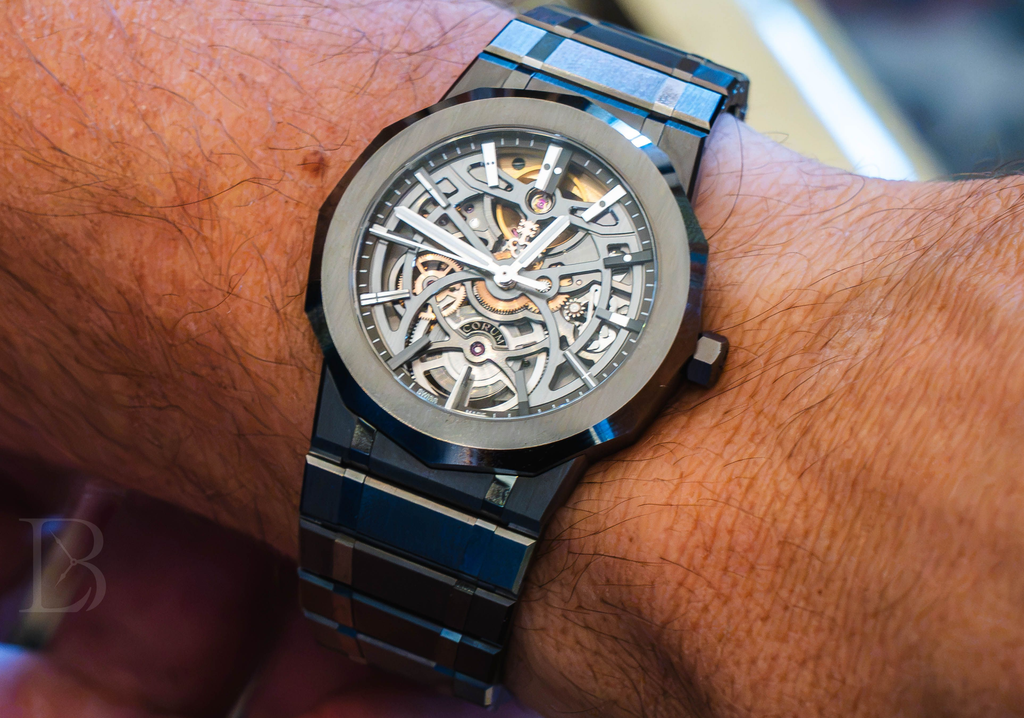
For 2026, Corum completely revamped the Admiral’s Cup lineup, now simply calling it the Admiral 36 and Admiral 39. For the first time, it has a proper integrated bracelet, and it feels great on the wrist. Every variant is under 9mm thick! 16 models are offered (11 in 39mm and 5 in 36mm), ranging from $14,900 for a simple steel model to $64,500 for a skeletonized one with a baguette-diamond-set bezel.
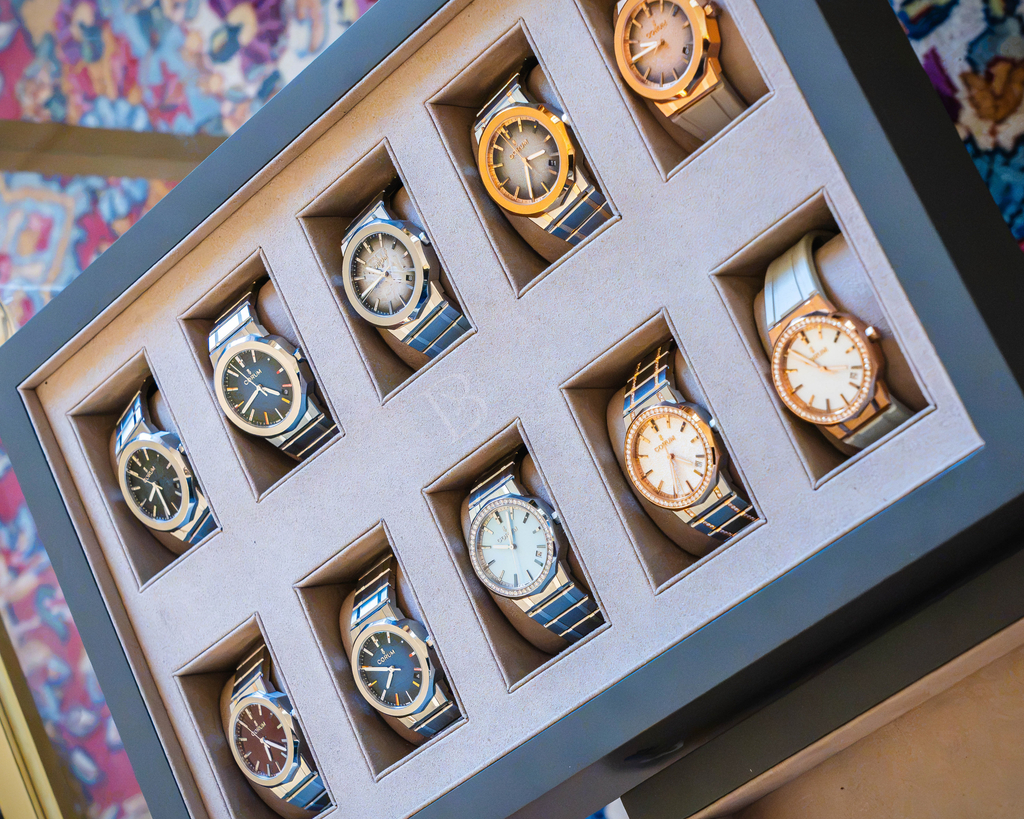
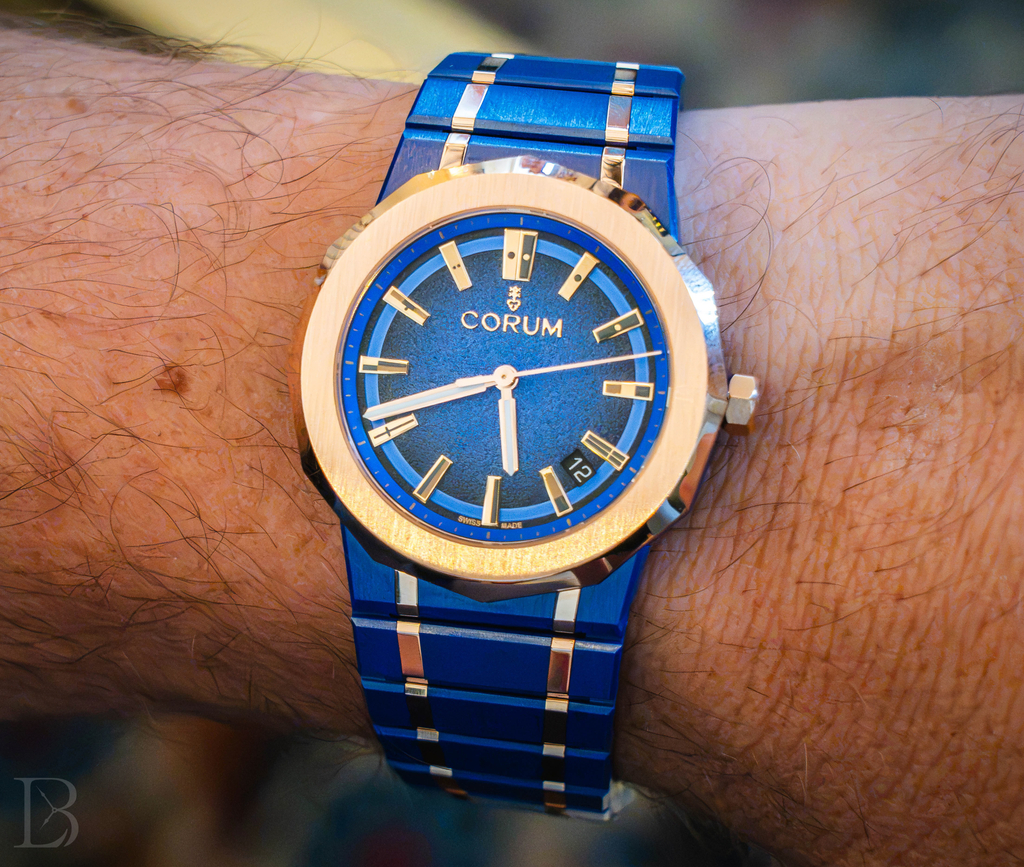
All of the new Admirals have a fantastic simple push-button quick-release strap system, so a bracelet can be swapped out for a rubber strap in seconds, and vice versa. My favorite reference is the two-tone blue ceramic/red gold 39mm version, priced around $45,000.
The solid red gold version of the Admiral 39 on a vulcanized rubber strap is in the same price range.
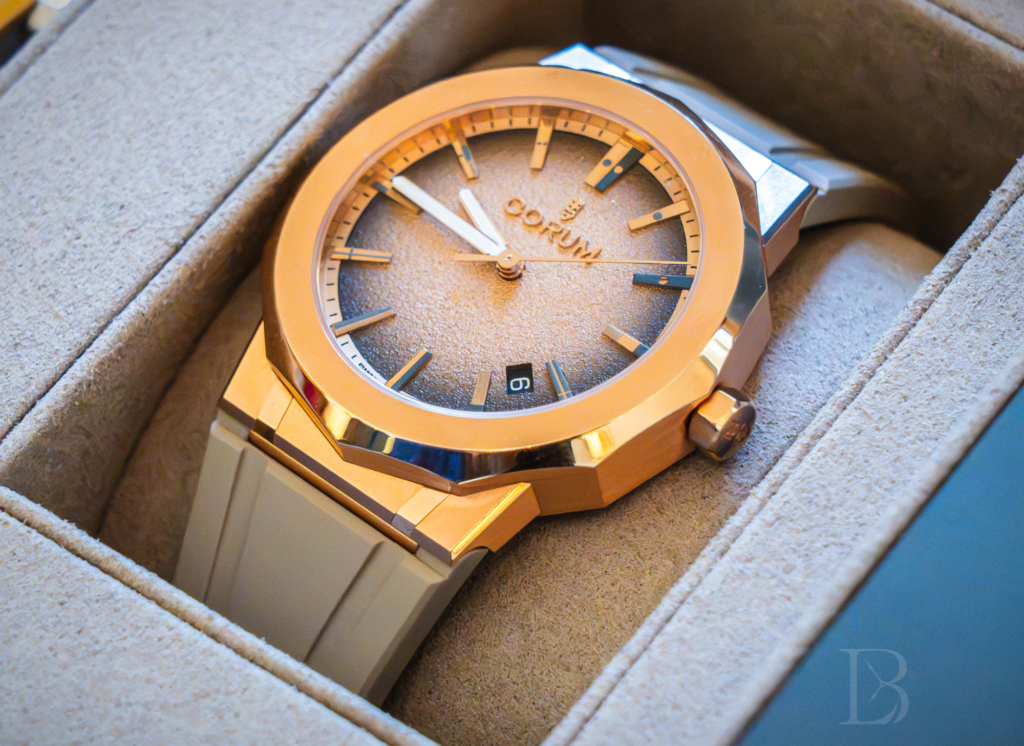
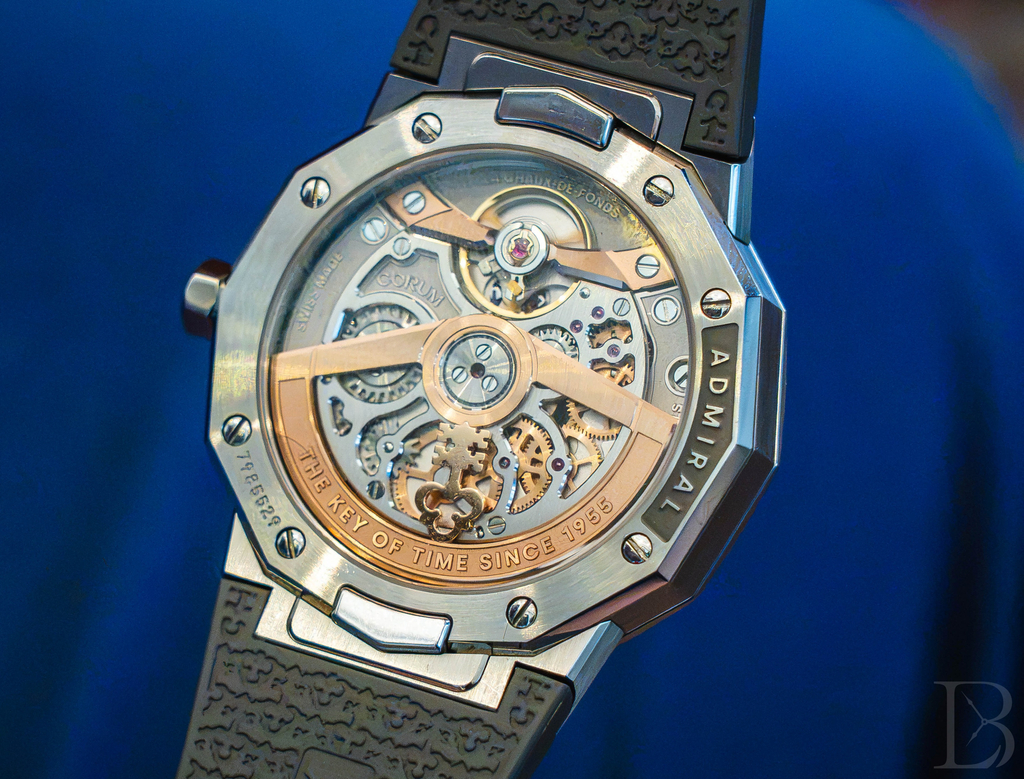
Instead of ETA movements, Corum now uses proprietary upscale movements from Concepto, a highly respected Swiss supplier. Caliber CO231 powers the typical time-and-date Admiral 36 and Admiral 39 models, while CO232 is a skeletonized time-only caliber.
All current Admirals have exhibition casebacks showing off their well-finished movements:
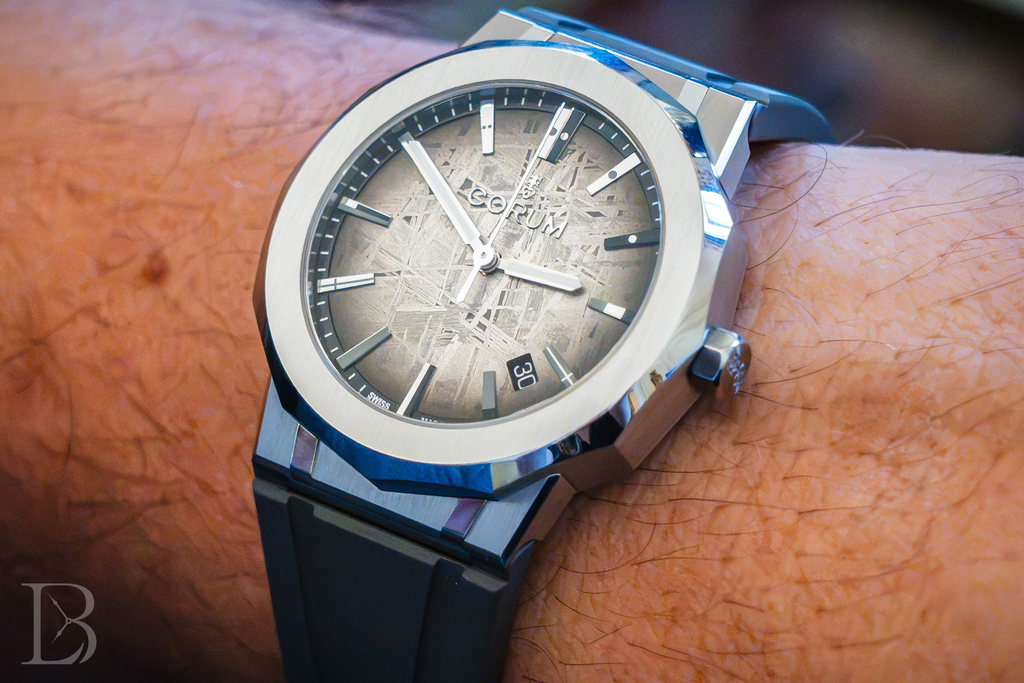
And, as a nod to their history as the first watch brand to make a meteorite dial, Corum offers a meteorite option for the Admiral 39.
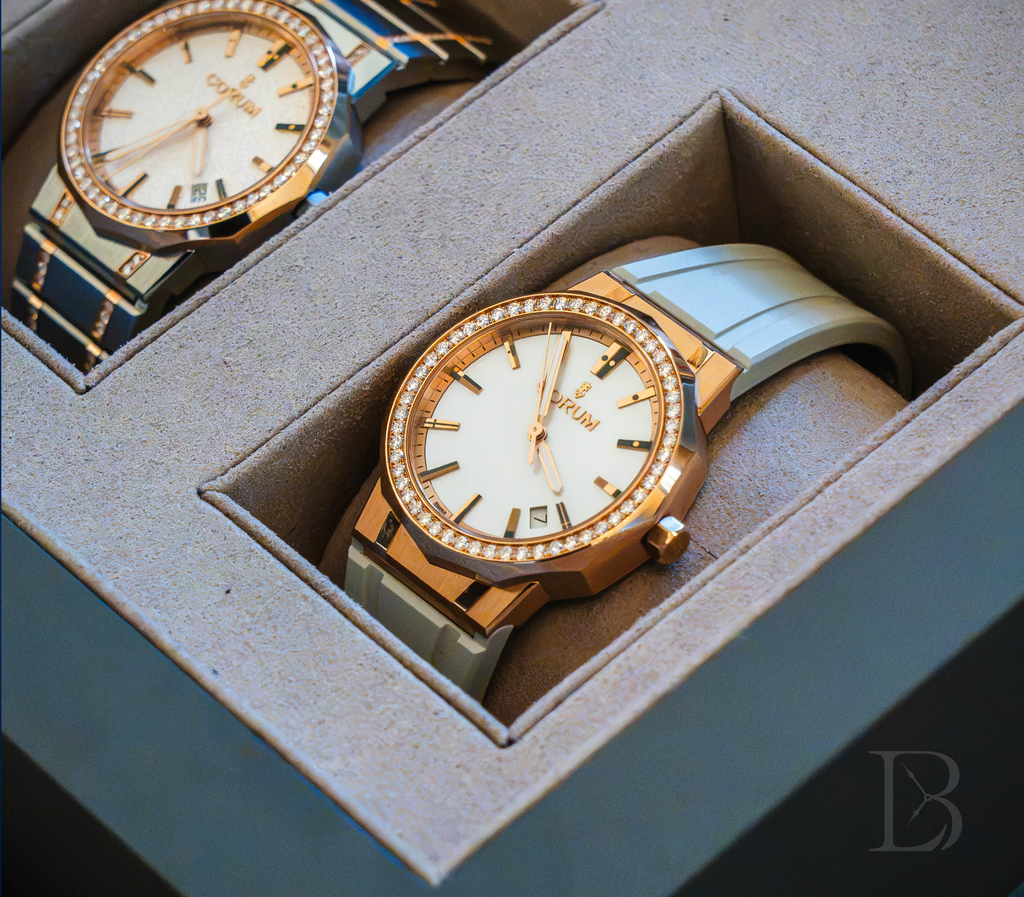
The Admiral’s 36 lineup is clearly aimed more at ladies, with 3/5 available options having diamond-set bezels:
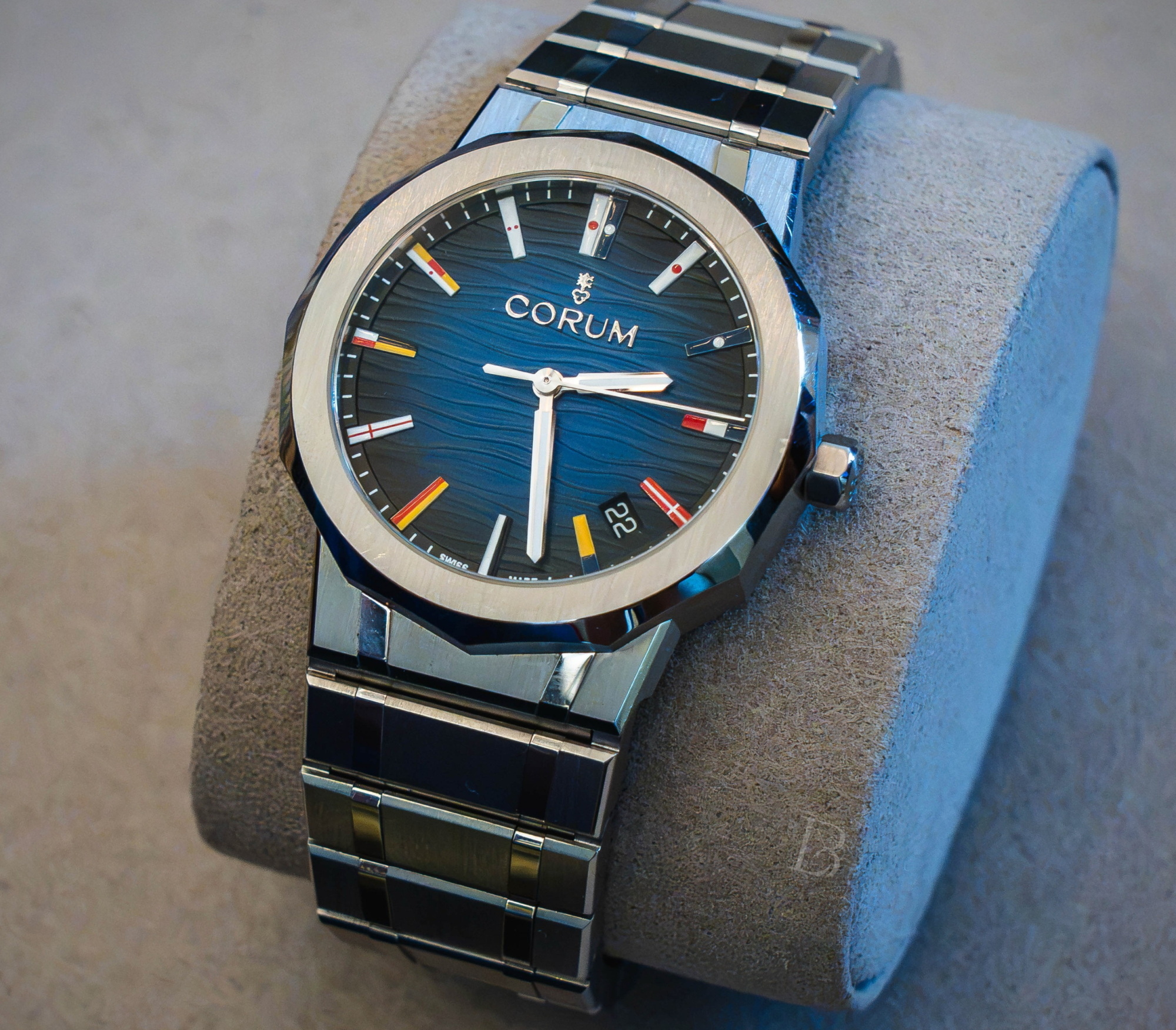
But a standard stainless steel Admiral 36, available with either a blue or burgundy dial, is fortunately available as well.
Corum’s management team has done a great job of bringing the Admiral’s aesthetic into the modern era. Now let’s talk about the other product line that they seem to be focusing on, and rightfully so.
The Corum Golden Bridge
The straight-line movement of the Golden Bridge, which arranges the barrel, gear train and balance along a single narrow axis, was revolutionary when it was conceived by legendary watchmaker Vincent Calabrese in the 1970s. Corum purchased the patent for it and launched the original Corum Golden Bridge watch in 1980 with a rectangular case.
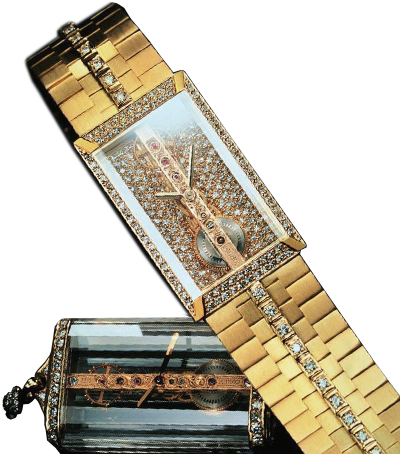
One version even had the movement encased in faceted sapphire on four sides. That was the first-ever sapphire-case luxury watch. The movement wasn’t particularly shock-resistant, though.
So, in 2005, with the help of Vaucher, the movement was reworked and made more robust. Moving the crown from the back of the watch to the 6 o’clock position was a key improvement. Corum still uses that manual-wind CO113 caliber to this day.
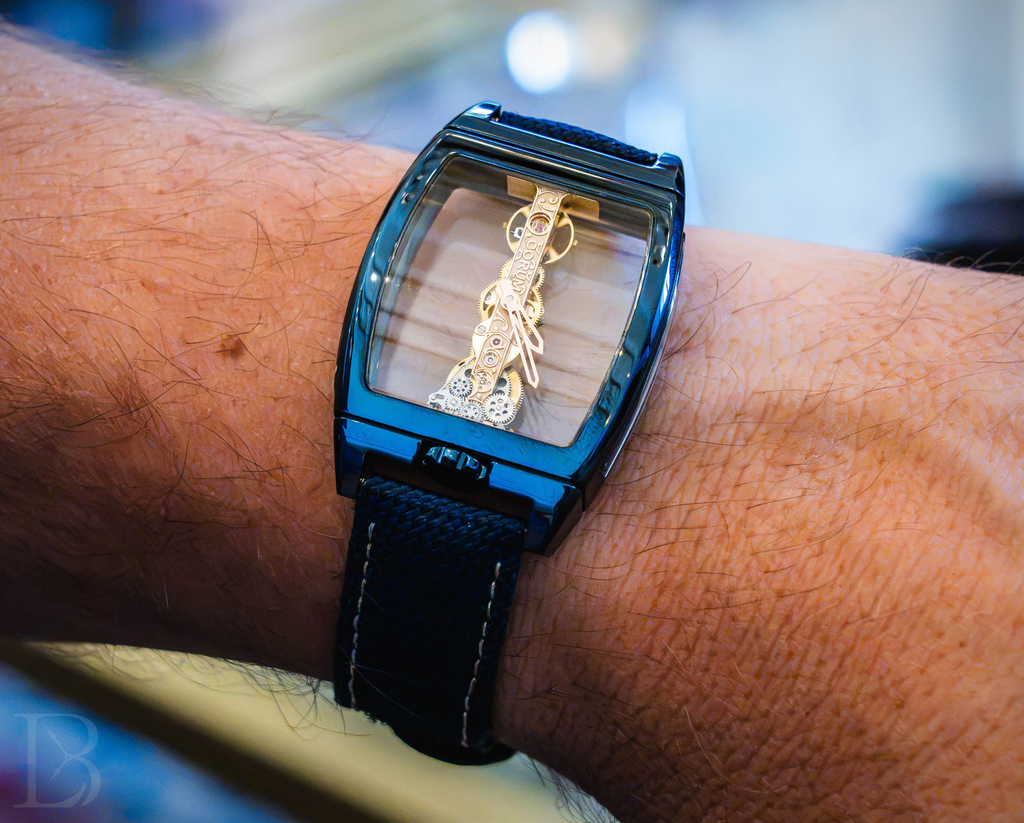
The current Golden Bridge lineup includes three sizes: the Miss Golden Bridge (21mm wide), Classic (34mm) and Automatic (37mm).
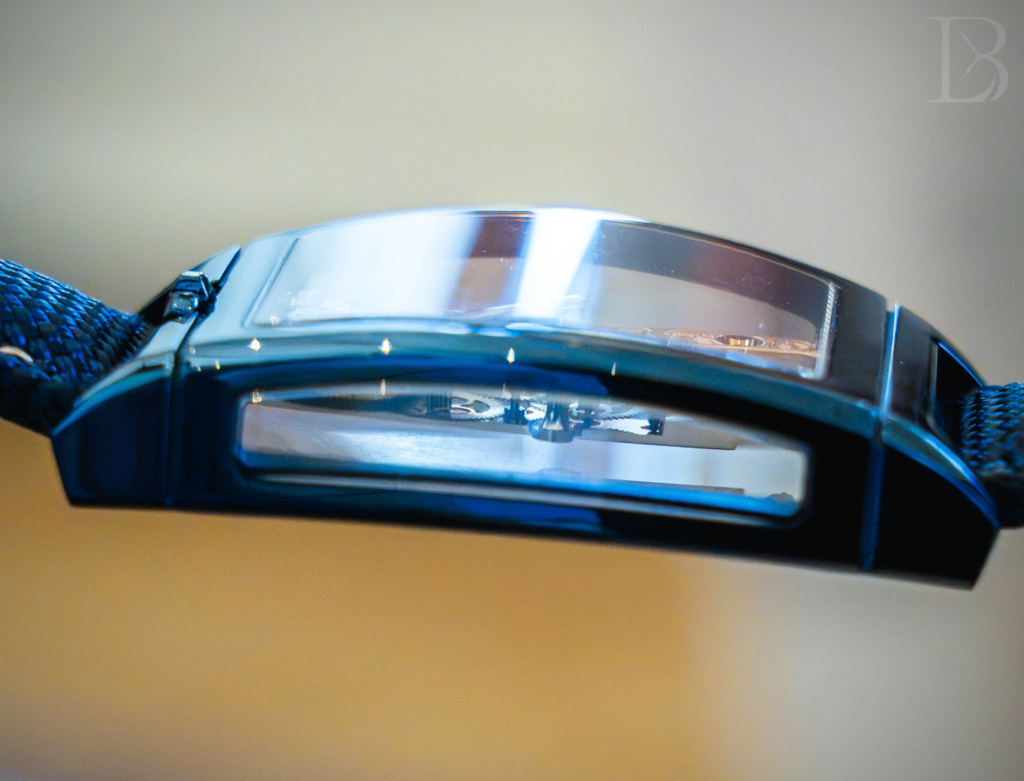
I like the blue PVD titanium Classic version, which wears great on the wrist and retails for $31,000, but there are gold and even sapphire case options too–although they’ll cost about twice as much.
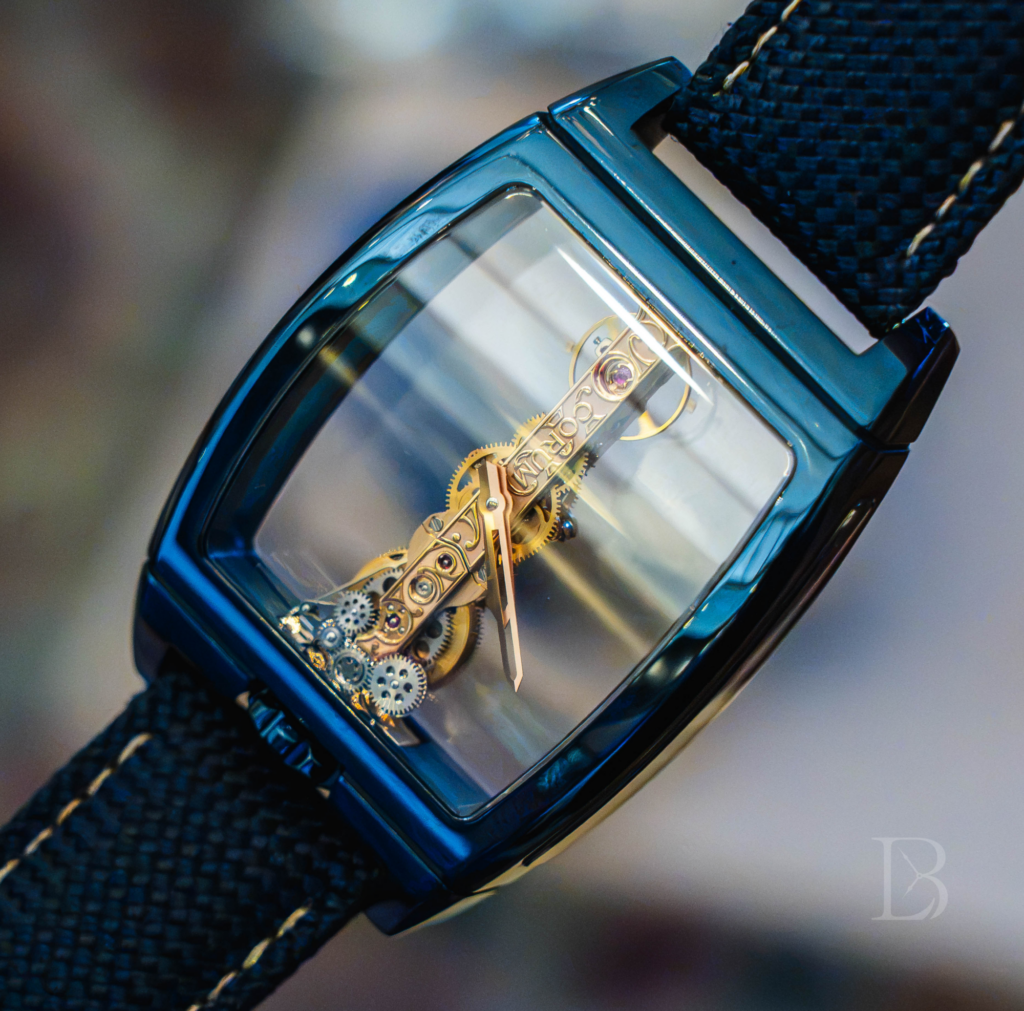
Over the years there have been numerous variations of the Golden Bridge, including some with tourbillons, some with round cases, and some with rectangular cases. But the current lineup is 100% tonneau cases.
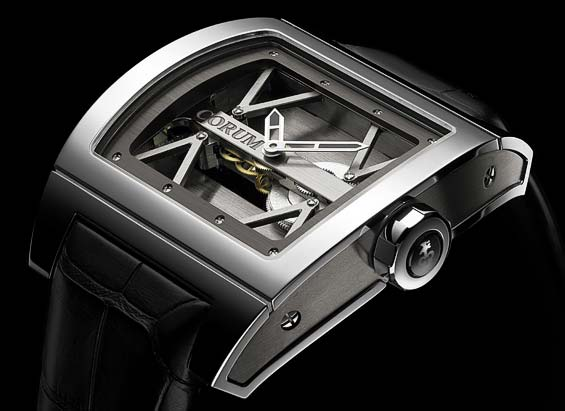
A sportier “Ti-Bridge” lineup was also made from about 2009-2015 with, as the name suggests, titanium bridges instead of gold. The reborn Corum brand has left the Ti-Bridge in the past, but there’s one more watch I don’t think Corum will ever stop making:
Corum Coin Watch
Of the seven U.S. presidents who served between 1963 and 2000, Gerald Ford was the only one never spotted wearing a Corum Coin Watch. Originally introduced at the 1965 Basel Fair, the Corum Coin Watch sandwiches a thin movement between the machined halves of a genuine gold coin, classically an American $20 Double Eagle. It quickly became a hit, and numerous versions have since been made out of various coins (including smaller coins aimed at ladies). The Coin Watch remains part of Corum’s Heritage collection to this day.
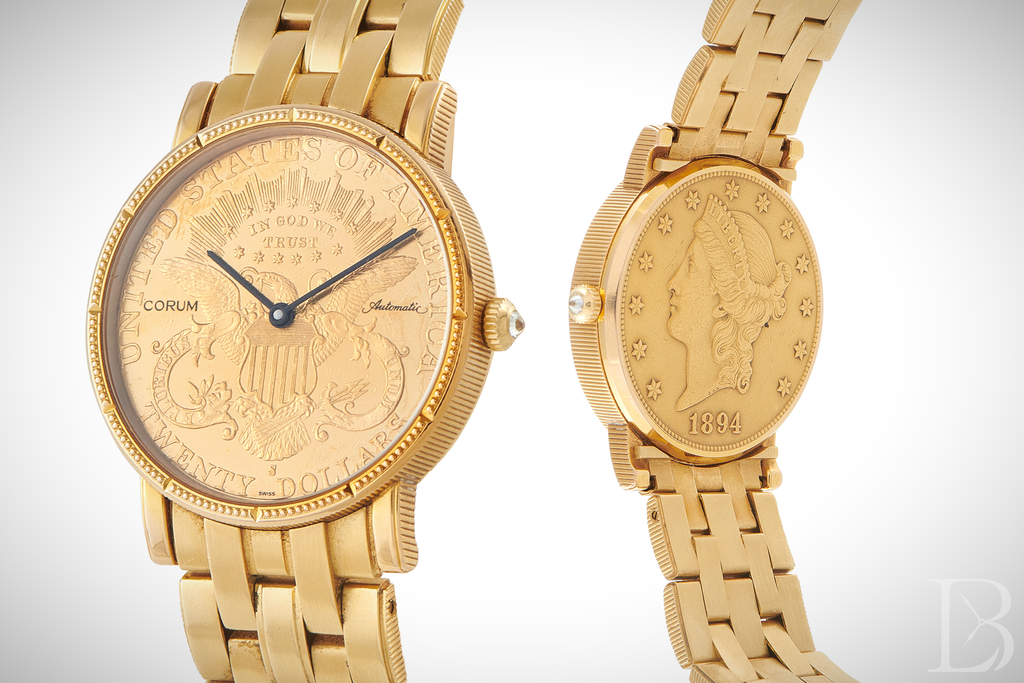
Early Coin Watches had thin Frederic Piguet movements, but by the 2010s they had ETA 2892-based calibers. In between there were a lot of quartz movements. The 2026 $50 gold coin version retails for $63,500, although pre-owned Coin Watches can be found for significantly less. Note that silver Corum Coin Watches exist as well, made from silver dollar coins, for roughly 1/3 the price.
Corum Bubble
Unveiled at the Basel watch exhibition in 2000, the Bubble was the brainchild of Corum’s new majority owner at the time, Severin Wunderman. From 1972 to 1997, Wunderman’s company produced and distributed Gucci-branded watches under license, so he was no stranger to success in the world of colorful, fashionable statement watches.
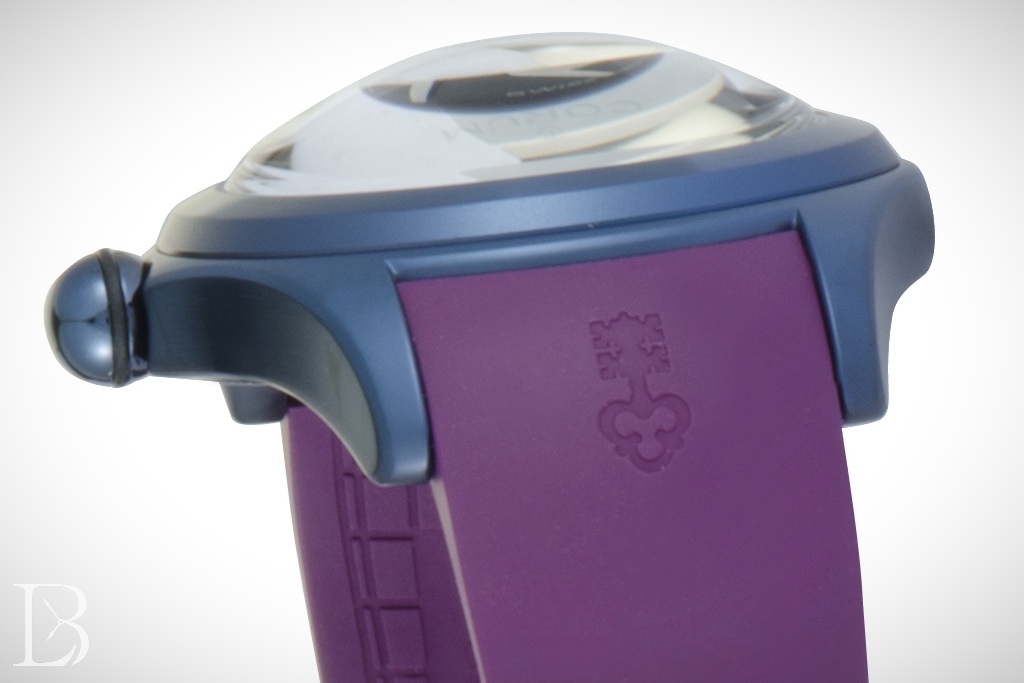
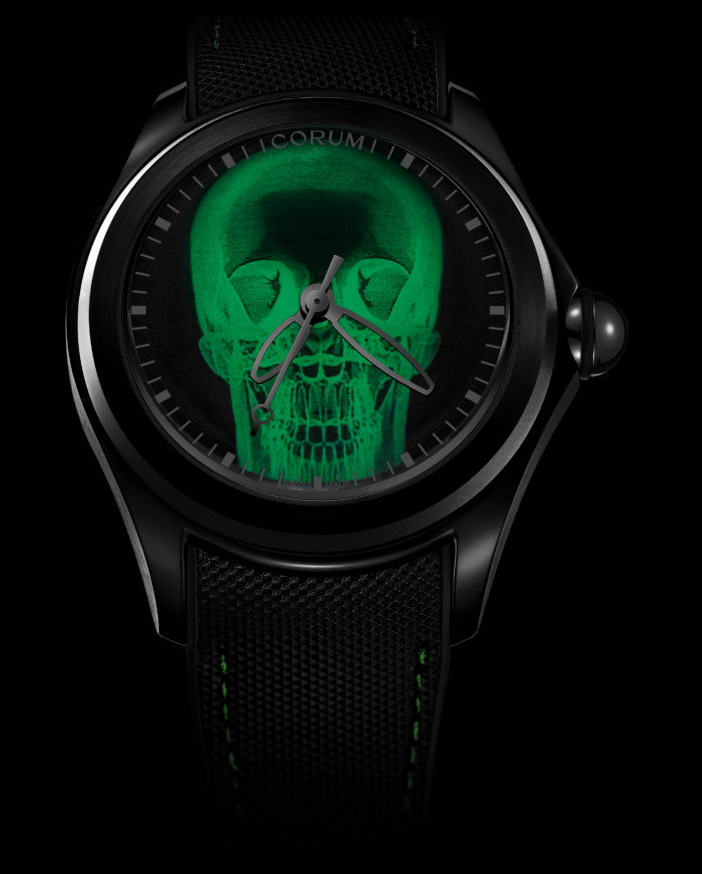
The Bubble’s massive domed crystal, which distorts the dial unapologetically, is the hallmark of its aesthetic. The rubber-strip-lined ball-like crown is another notable design signature of the Bubble. It grew to be quite popular in its day.
The first-generation Corum Bubble was offered in three sizes, all with fairly common but reliable movements from suppliers like ETA, and the dial options were colorful and numerous. Here’s how their complications break down:
- 26mm: quartz time-only
- 35mm: quartz time-and-date, quartz chronograph
- 45mm: quartz time-and-date, automatic time-and-date, quartz chronograph, automatic chronograph with or without dive bezel, automatic skeleton time-only, automatic GMT
One way to identify the quartz vs. auto chronographs is to look at the layout of the subdials. If it resembles the layout of an Omega Speedmaster, with a 3-6-9 o’clock configuration, it’s automatic. If it has the telltale 1:30-6:00-10:30 subdial spacing, that’s indicative of an ETA quartz movement. There’s nothing wrong with that–they’re good movements–there’s just no masking the counter orientation.
Corum Heritage Bubble
The Heritage Bubble relaunch, which came in 2015 under Citychamp ownership, dropped quartz movements altogether and upped the sizes significantly to 42mm, 47mm and 52mm. But the vibe and bulbous sapphire crystal remained the same:
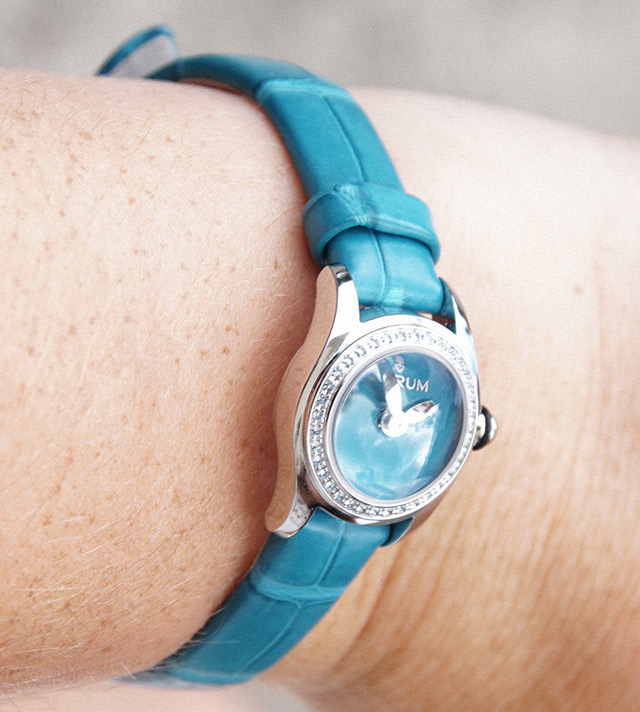
A tiny limited-edition 17mm quartz Mini Bubble did also appear in 2018:
Several variants were made, particularly in the 47mm size. All told, the second-generation Corum Bubble lineup included these complications (they’re all automatic except for the 17mm):
- 17mm: Quartz time-only
- 42mm: Time-only (center seconds), time-only (small seconds, Frederic Piguet movement, comes with mother-of-pearl dial)
- 47mm: Time-only, skeleton time-only, time-and-date, chronograph, flying tourbillon, central tourbillon, tourbillon chronograph, tourbillon GMT
- 52mm: Time-only
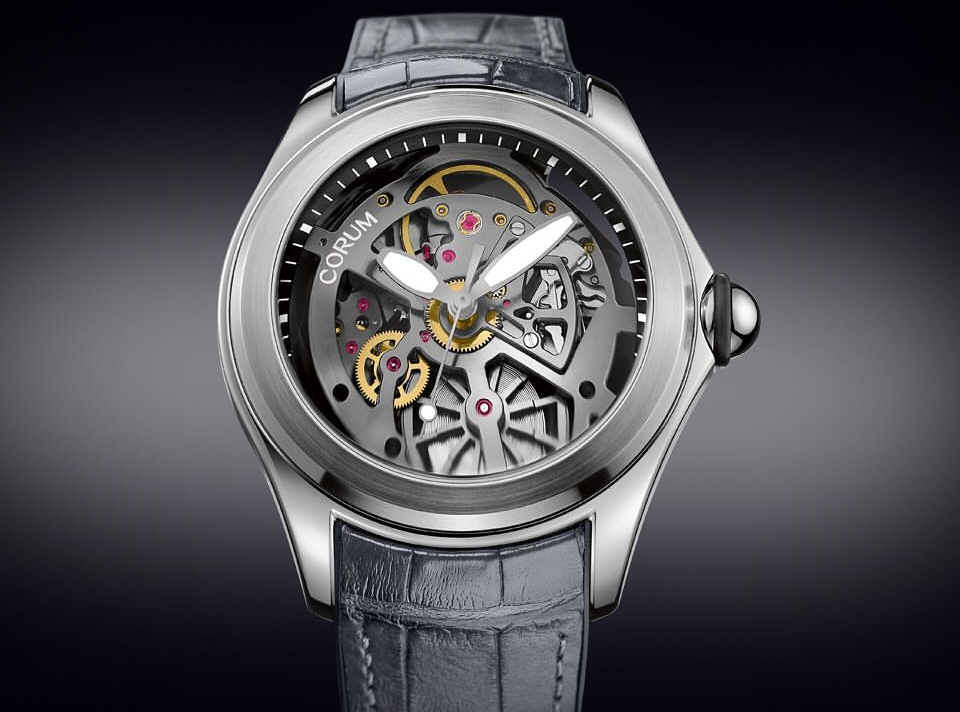
The Corum Bubble is now discontinued, and the vast majority of iterations can be found pre-owned today between $1,000-$5,000.
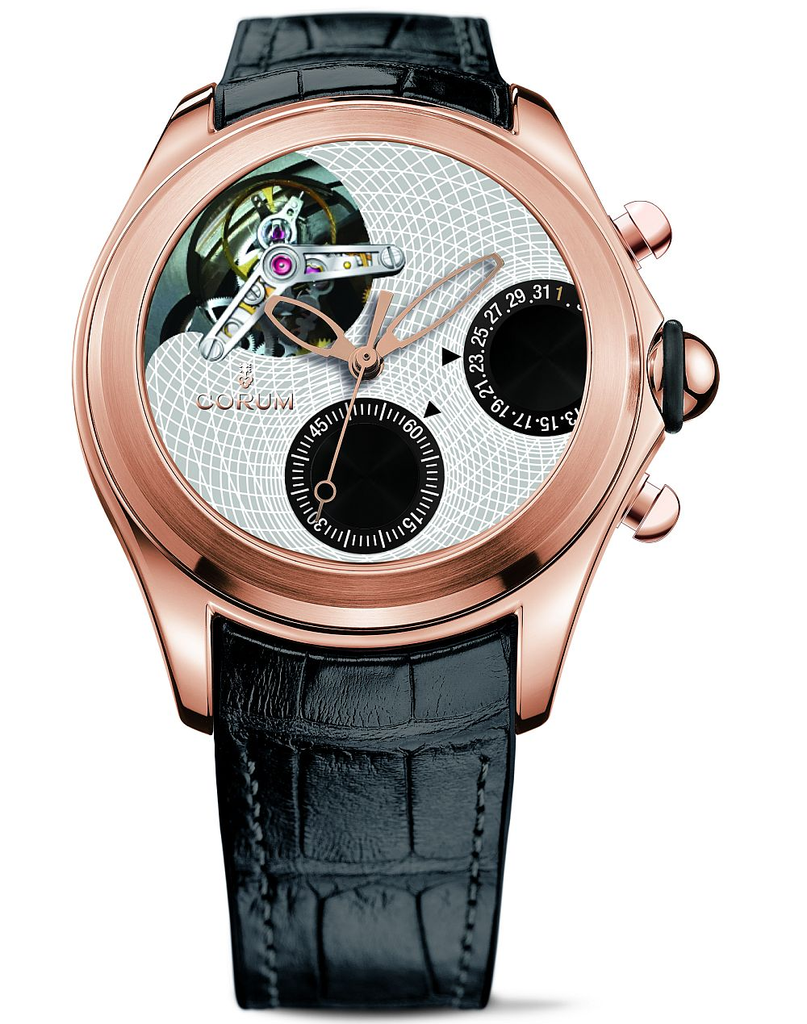
Naturally, tourbillons and solid gold models will cost more, and some small quartz models can be found for even less. There are a lot of gems in the Corum Bubble back catalog if you don’t mind some loud designs.
Other Corum Watches
That just about covers all four major sales successes of the Corum brand, but now let’s quickly discuss some notable but more obscure ones.
Heritage Golden Book
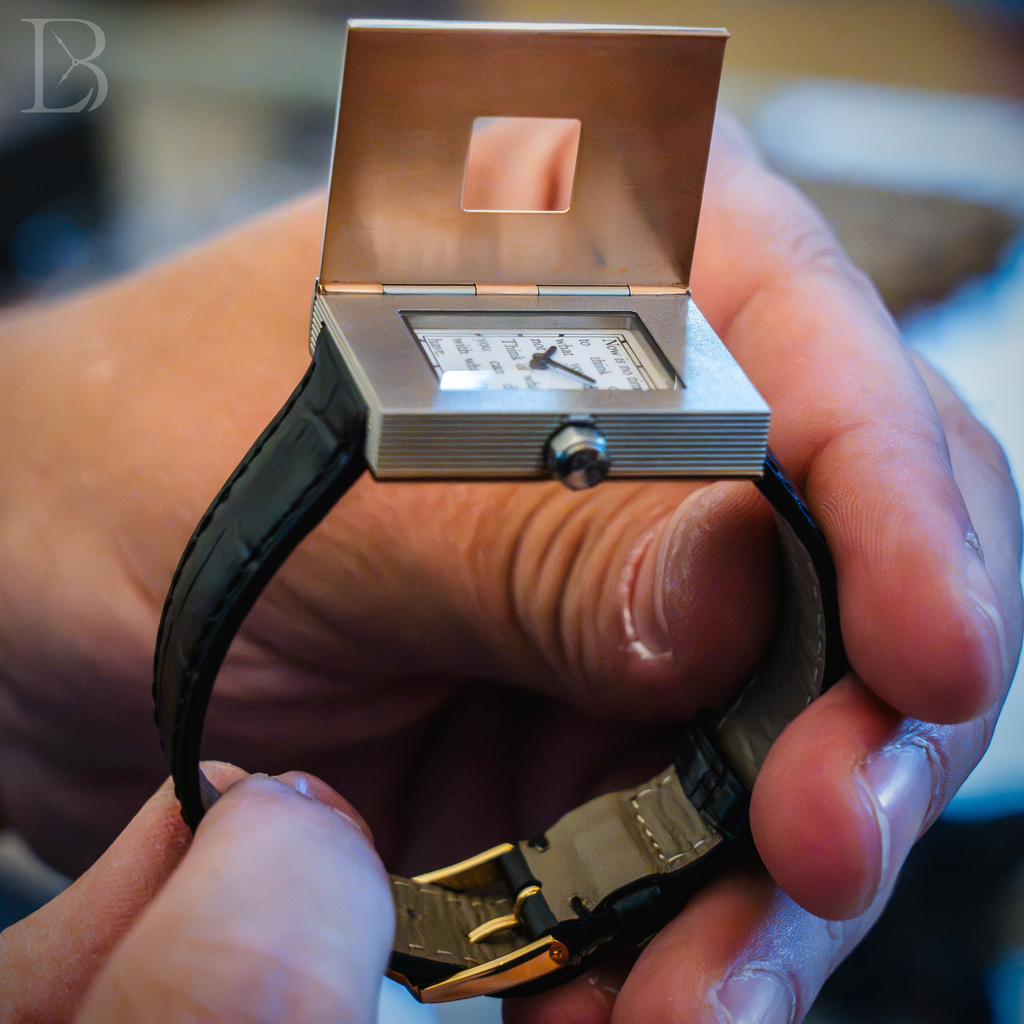
The only current watch in Corum’s Heritage lineup other than the Coin Watch is the Golden Book. The lid of its 18k red gold case, which measures 29 x 36mm, flips open. But the time remains legible even when it’s closed.
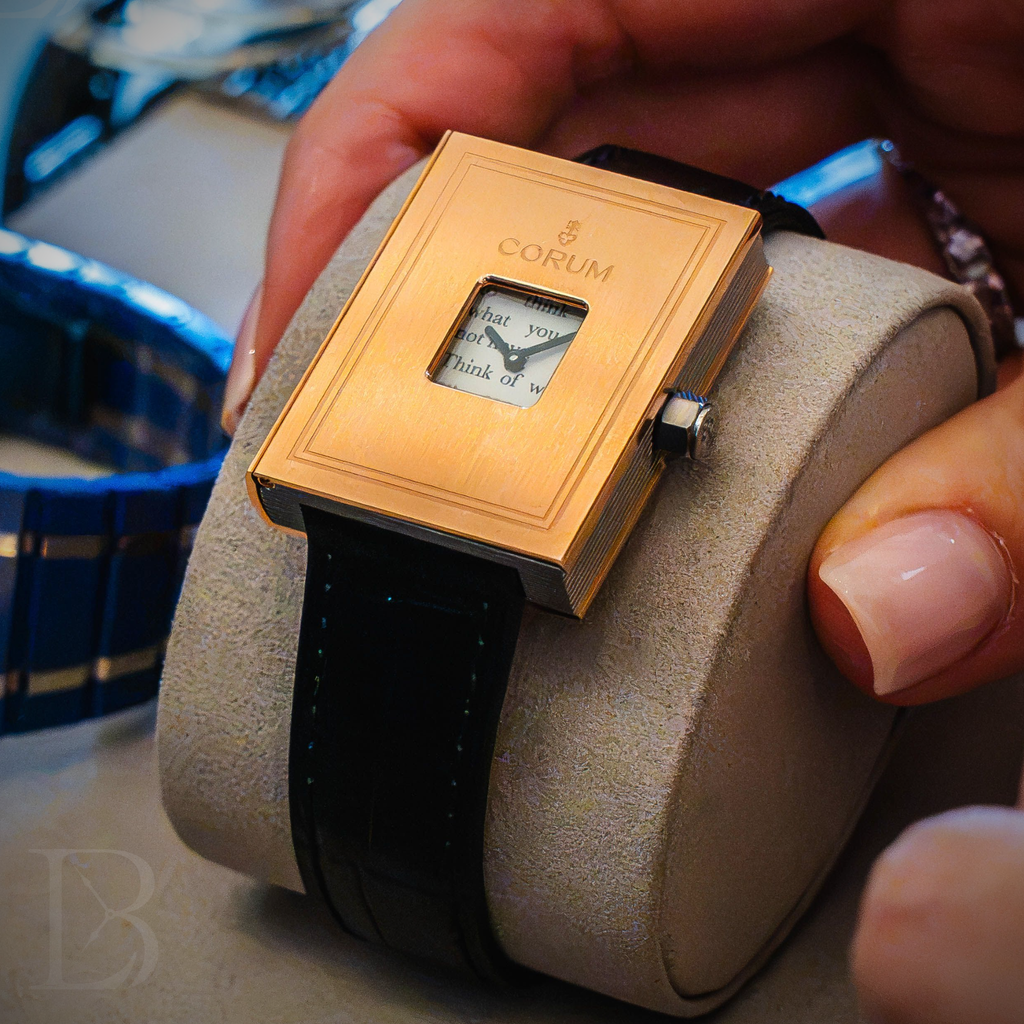
The 2026 version features text written by Ernest Hemingway, while the original 1996 version used excerpts from William Shakespeare’s Sonnets. List price is $39,500.
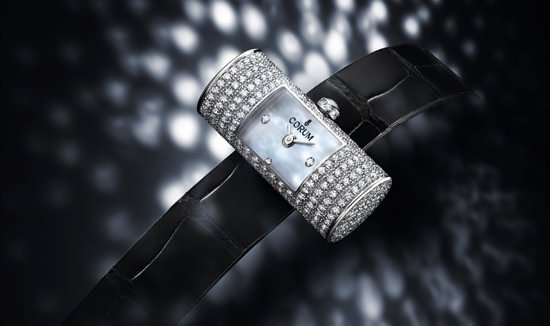
Corum Golden Tube
1957 was the first time Corum explored unusually-shaped watches in a serious way. The original Golden Tube was a major statement piece, although it’s so rare that I can’t even find any auction results for it.
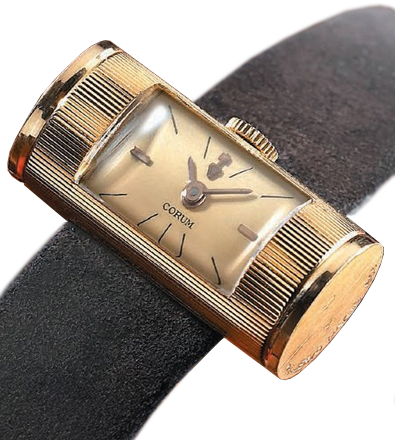
The Golden Tube was re-released with a diamond-covered case in 2010 in only 120 examples; half in white gold and half in red gold. Of those, half had pave diamond dials while half had mother-of-pearl dials. Expect to pay around $12,000 for one today.
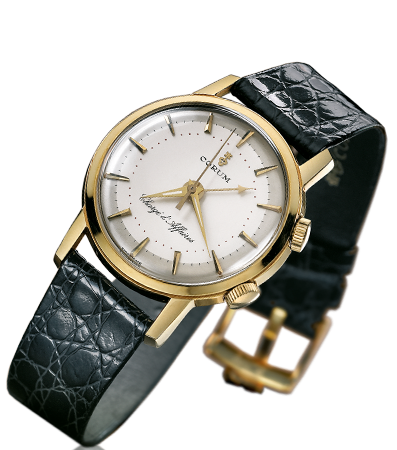
Chargé d’Affaires
The Chargé d’Affaires, released 1956 and re-released 2013, is Corum’s tasteful take on an alarm watch.
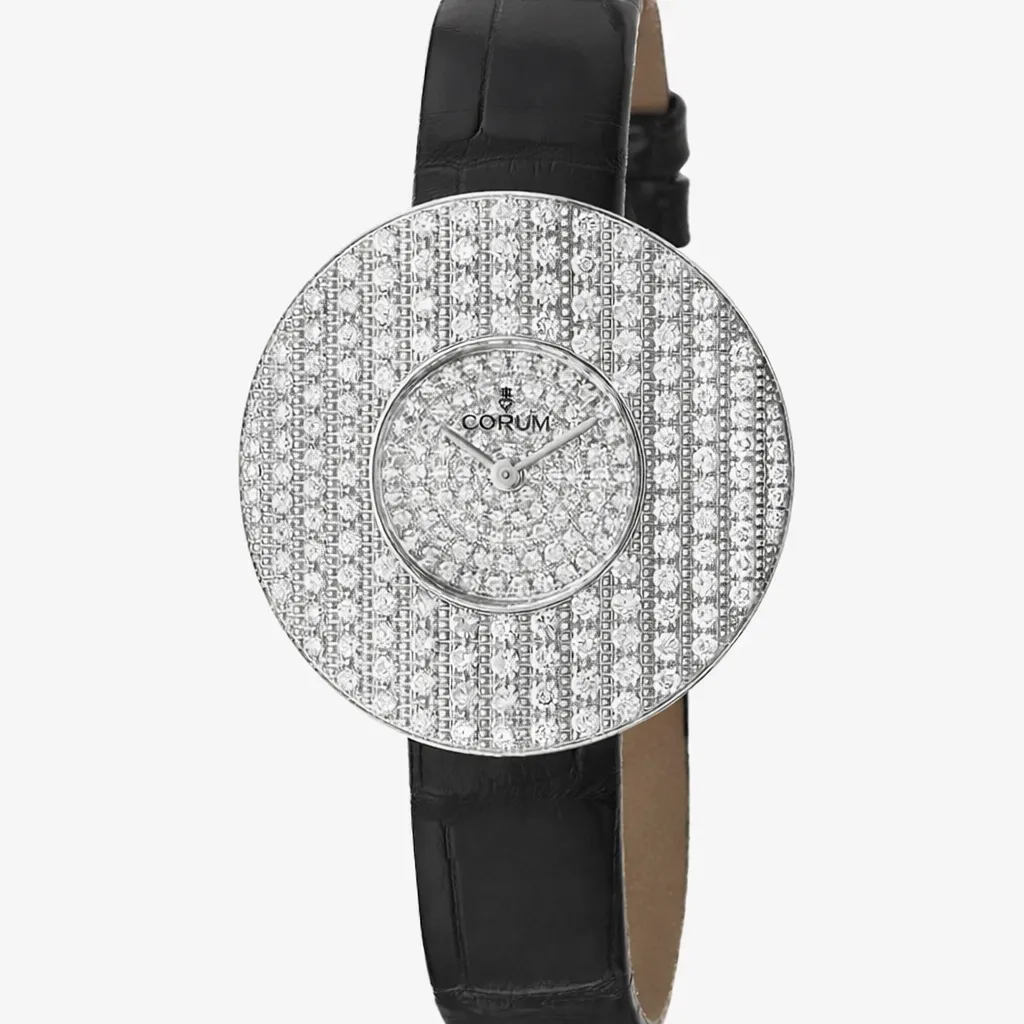
Chinese Hat
The Chinese Hat is Corum’s take on a “disco volante” (flying saucer) watch. Interestingly, its bezel is curved downwards on the sides (towards the wrist) like a hat. It was originally released in 1958 and re-released in 2010 to celebrate the brand’s 55th anniversary.
Corum Rolls Royce Watch
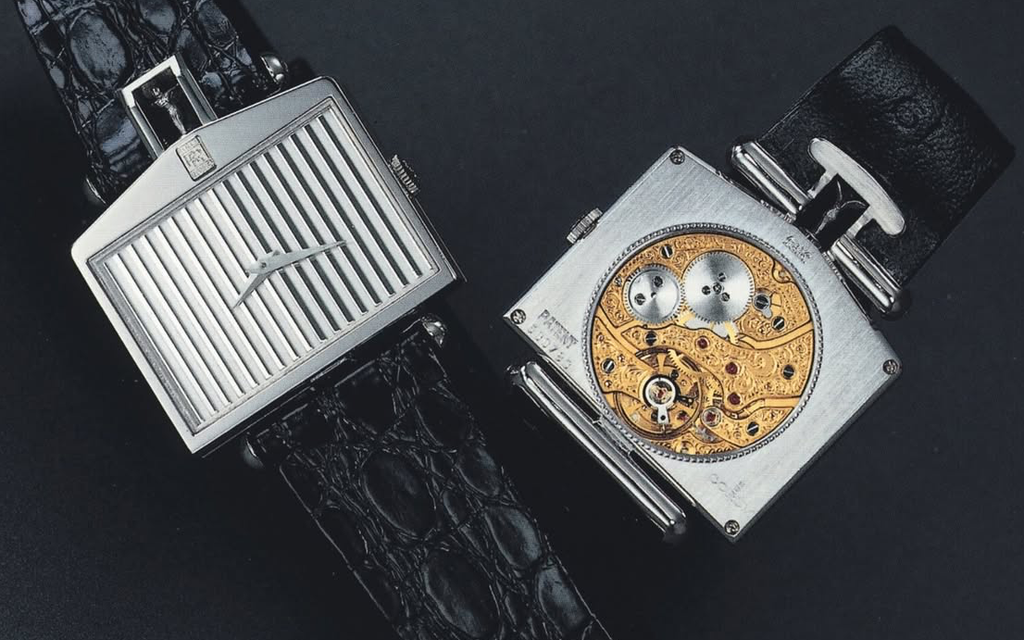
The original Corum “Spirit of Ecstasy” Rolls Royce Watch debuted in 1976, and the relationship between the two brands lasted about 20 years.
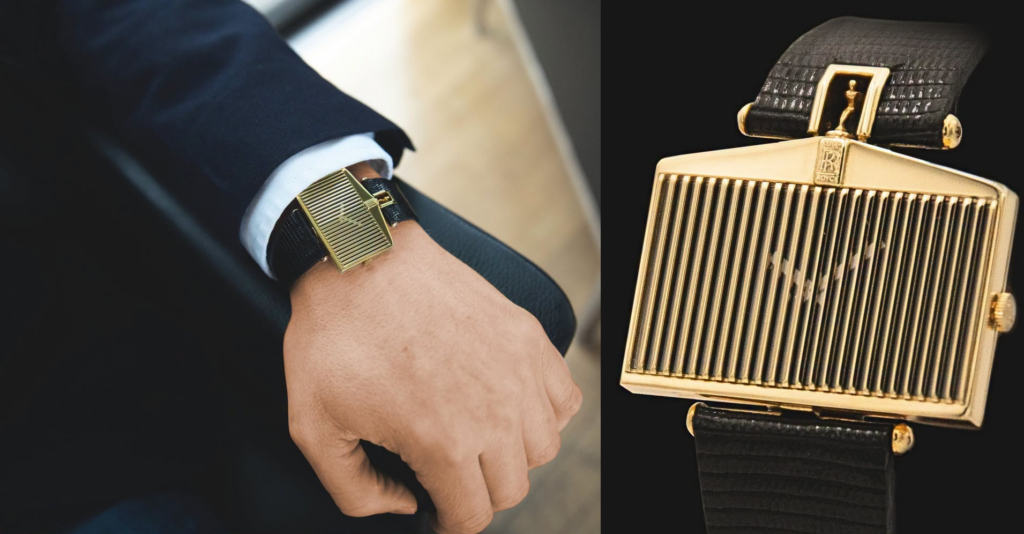
The Rolls Royce was made in several versions, some with mechanical movements and some with quartz, but always in solid gold and in very small numbers.
Romvlvs
The Corum Romvlvs, launched in 1966, was the first wristwatch with Roman numerals engraved on the bezel for its hour markers. That was over a decade before the BVLGARI BVLGARI or Omega Constellation “Manhattan” came out. The Romvlvs was also relaunched in the Wunderman era (2000s).
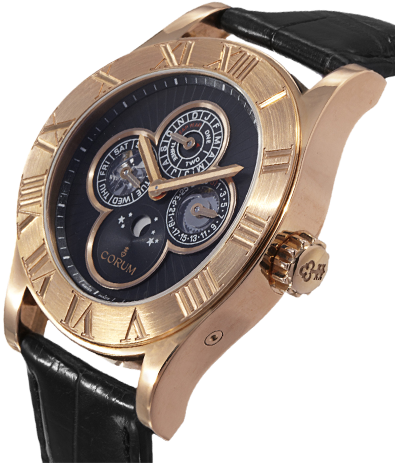
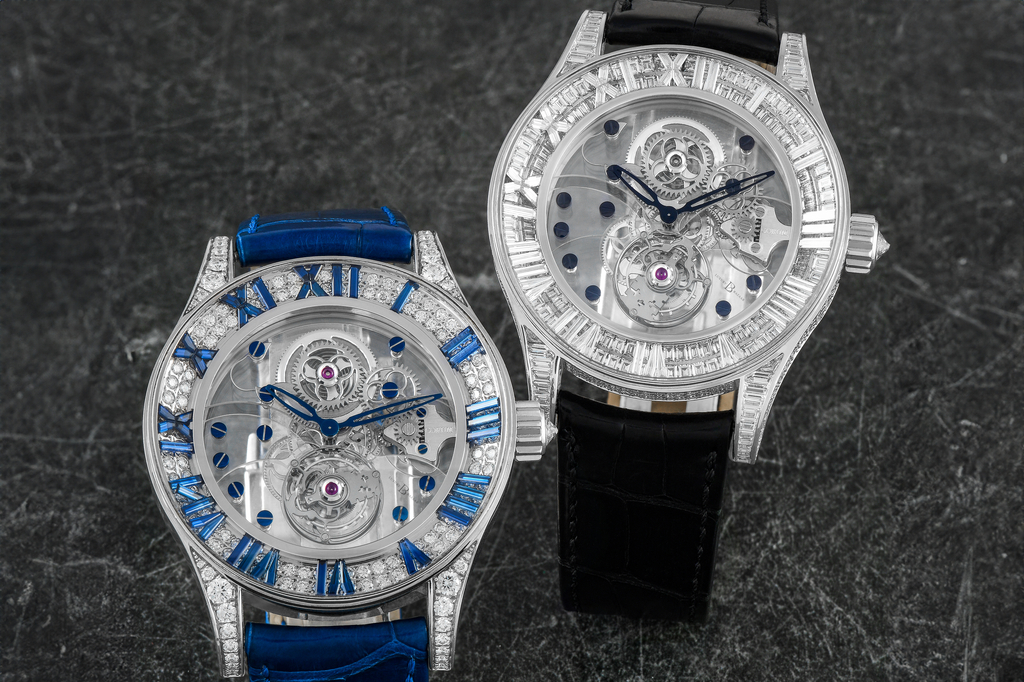
Corum released several variants of the Romvlvs, including some later iced-out ones with tourbillons:
Because CityChamp released annual reports, we know that Corum reached annual sales over $44 million in 2013, before falling to $15 million as the Bubble hype faded. However, they recovered to $22.5 million by 2022 and Prospeo’s current estimates of Corum’s revenue are still in that ballpark.
I think it’s fortunate that under private management Corum hopefully won’t have to focus too much on short-term sales goals and can revamp the catalog from the ground up with a coherent vision. They seem to be doing a great job of doing exactly that, while focusing on what matters most–which is, for them, the Admiral and the Golden Bridge.
More on High-End Independent Watchmakers:



Leave a Reply