A Collector’s Guide to Gerald Charles Watches

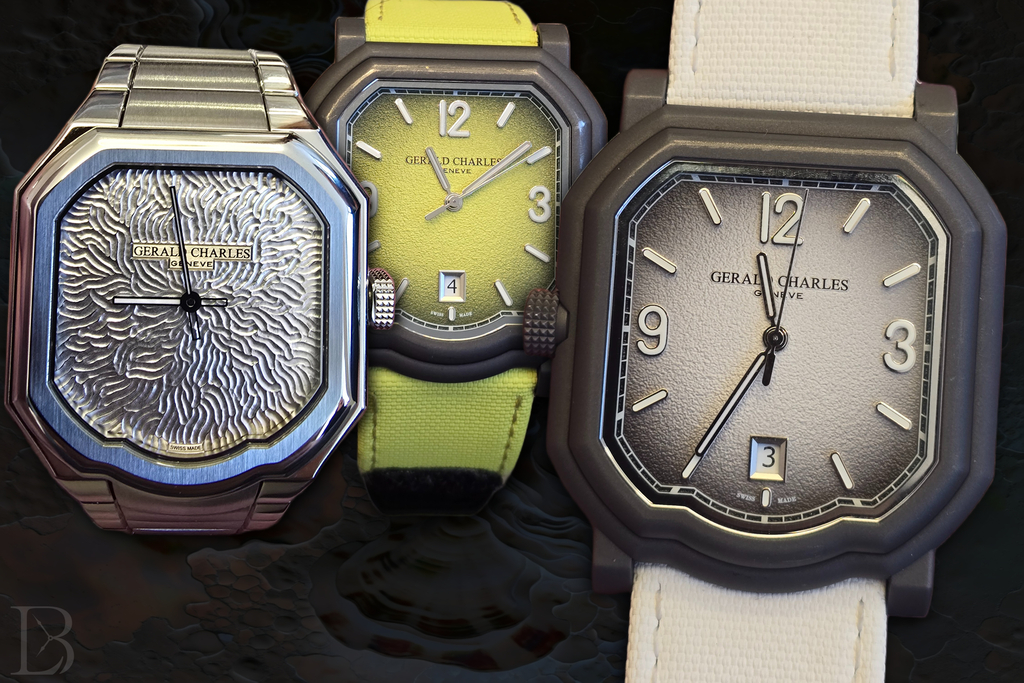
Gérald Charles Genta (1931-2011) is widely regarded as the most influential luxury watch designer ever. From the 1950s-1980s, he penned the Universal Geneve Polerouter, Rolex King Midas, Audemars Piguet Royal Oak, Patek Philippe Nautilus, and countless others before founding his own eponymous watch company. He sold the Gérald Genta brand to a retail chain in 1996 (who in turn sold it to Bulgari) and then founded his final venture, Gerald Charles, in 2000. Nowadays Gerald Charles watches are defined by a stepped case that “lies between a square and an octagon” with a distinctive “smile” at the bottom. They’ve been released in several materials with numerous different complications, and the brand has really hit their stride recently with some sporty tennis-inspired models. Here’s our guide to Gerald Charles watches.
Pre-Maestro Era
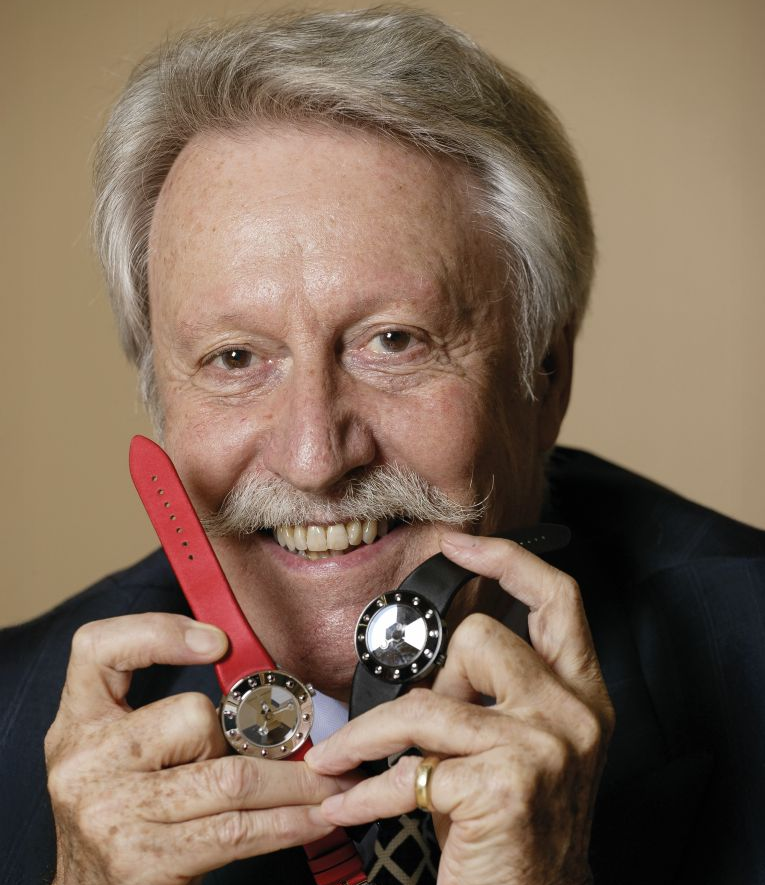
Genta had planned to retire after selling his first company at age 65, but he simply felt compelled to keep designing watches. So he founded Gerald Charles in 2000, but apparently preferred to focus on the design side rather than the business side. Thus, in 2003, Genta sold the company to the Ziviani family–who had distributed Gérald Genta and Audemars Piguet watches in Italy–and remained the brand’s creative director until his death in 2011.
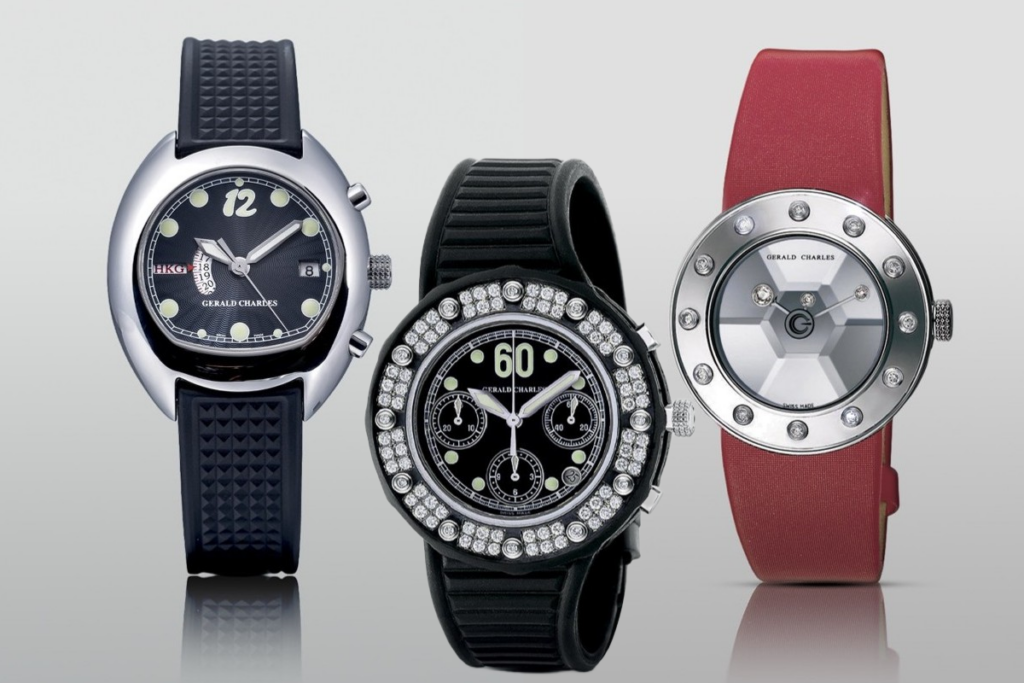
In the early 2000s, Gerald Charles watches looked….very early 2000s.
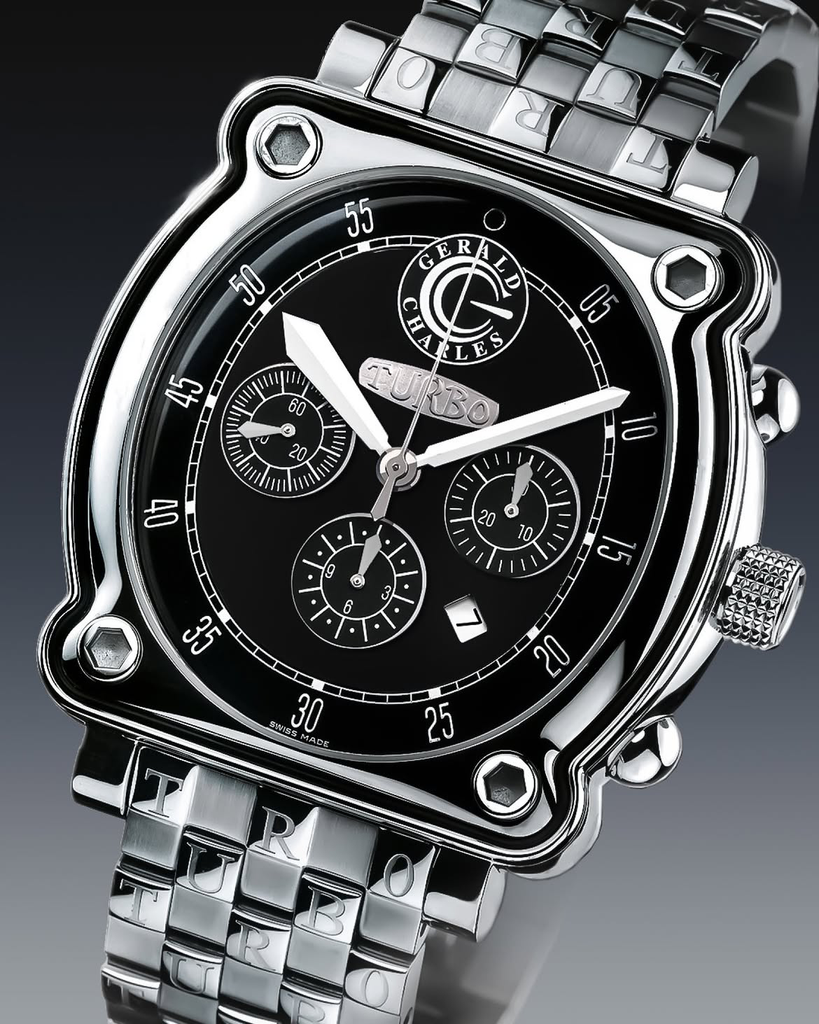
Take the Turbo, for instance. Yes, the word “Turbo” is engraved repeatedly on the bracelet links, because that’s just the kind of thing the world was doing in 2003. What a time to be alive.
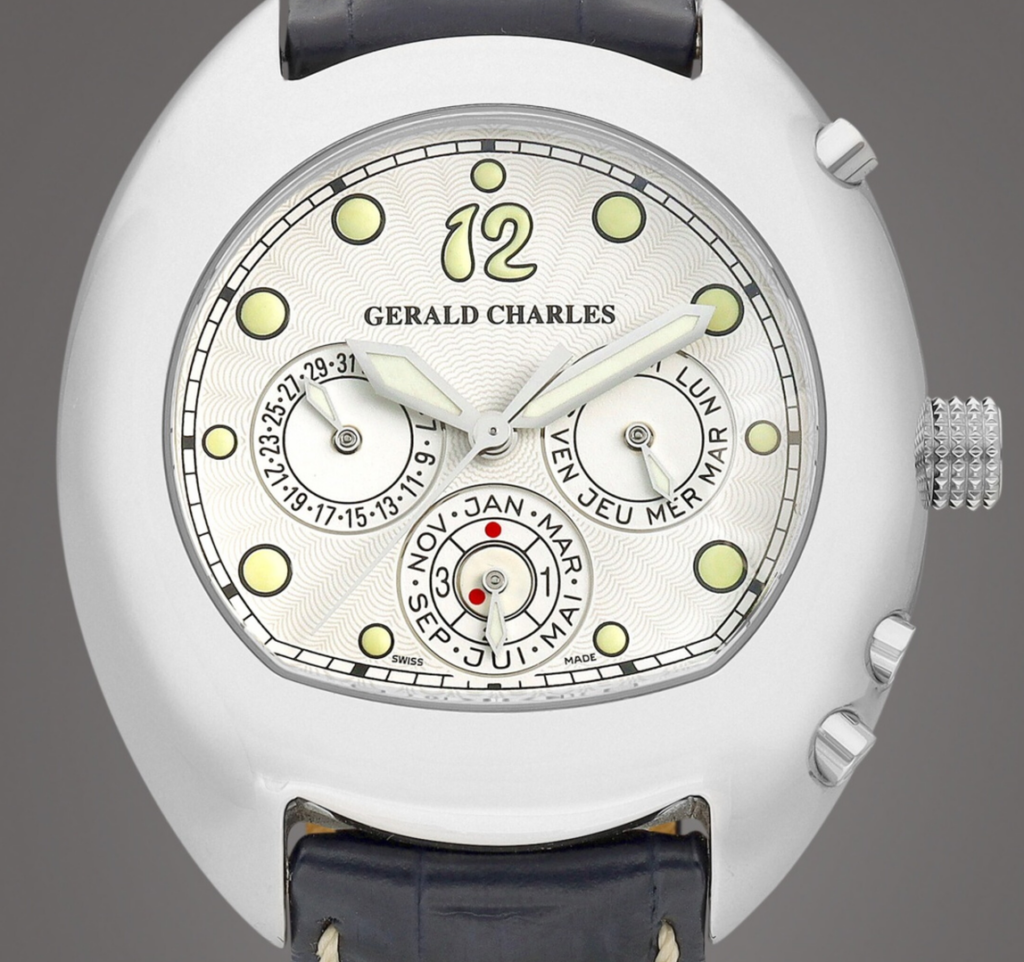
As odd and dated as these designs look, I have to respect that the Gerald Charles brand was absolutely swinging for the fences right out of the gate. I mean, imagine pulling up to the club wearing a Gerald Charles Renaissance perpetual calendar:
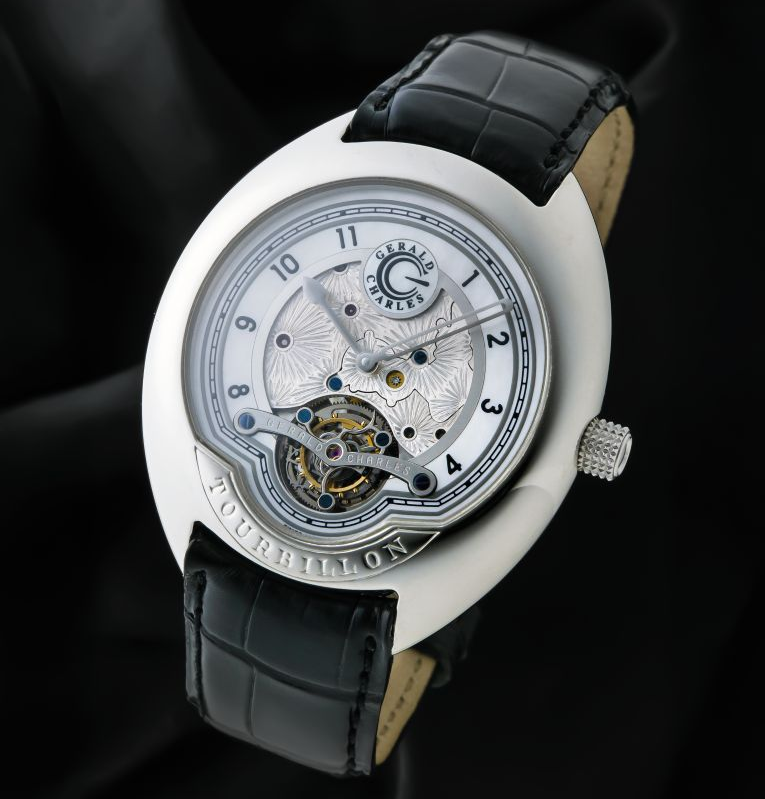
The first Gerald Charles watch with the “smile” curve at 6 o’clock was called the A-Evolution, first seen in 2004:
Maestro: The Early Years (GCxx Era)
Gérald Genta first unveiled the now-definitive Gerald Charles Maestro case shape in 2005: a rectangle with lopped-off curved corners, plus a smile at the bottom and a stepped bezel. Its inspiration was supposedly the Baroque architecture of Francesco Borromini.
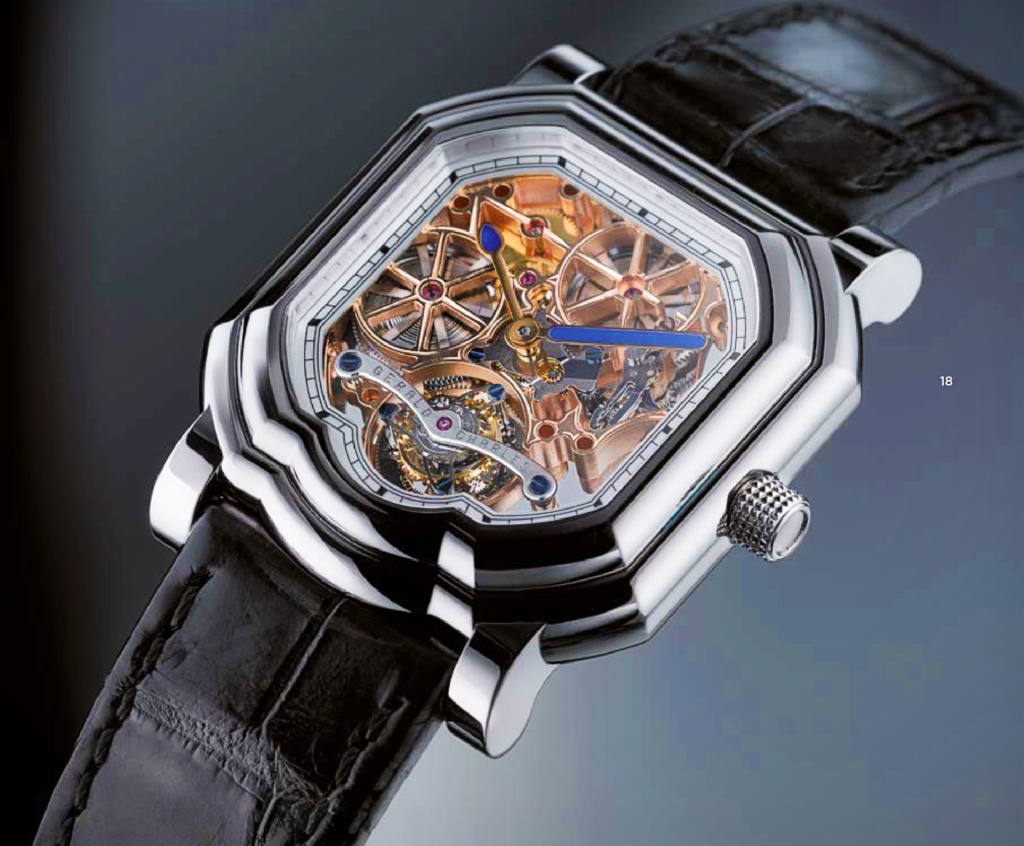
The original 42mm form of the Maestro, the GC35, had a skeletonized tourbillon movement, with a distinctive “mustache bridge” holding the tourbillon in place. The “smile” part of the case helps accommodate the tourbillon.
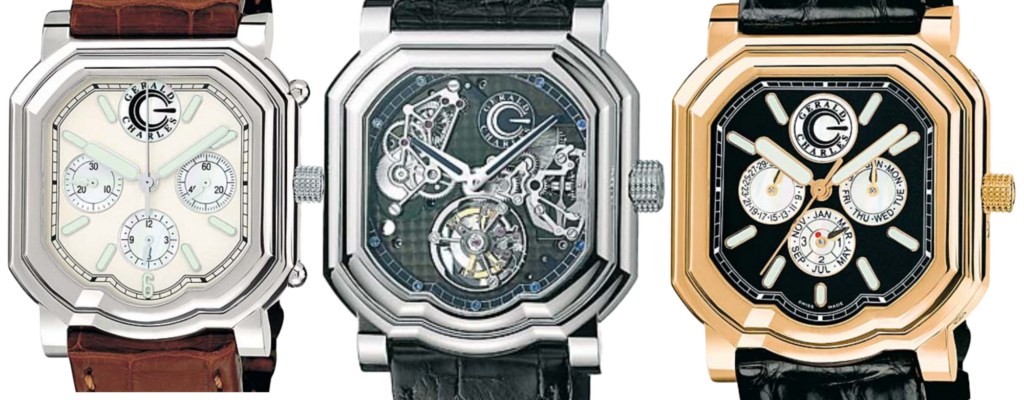
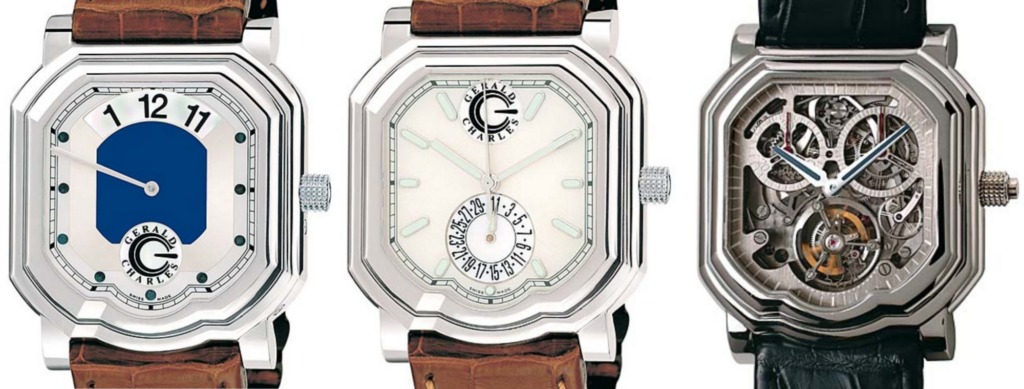
Slowly the brand seemed to abandon all their non-Maestro models. And from 2005-2020, the Maestro was offered with at least nine different complications, in various metals and colors, most often in 39mm, and always in very small numbers:
- GC19, GC20 = Big date
- GC32 = Small pointer date
- GC33 = Chronograph
- GC35 = Skeletonized tourbillon
- GC37 = Perpetual calendar
- GC39 = Jump hours
- GC58 = Ladies’ quartz model (unique piece, predecessor to Mini Maestro)
- GCM2 = Flying tourbillon with power reserve indicator
- GCM3 = Skeletonized tourbillon monopusher chronograph
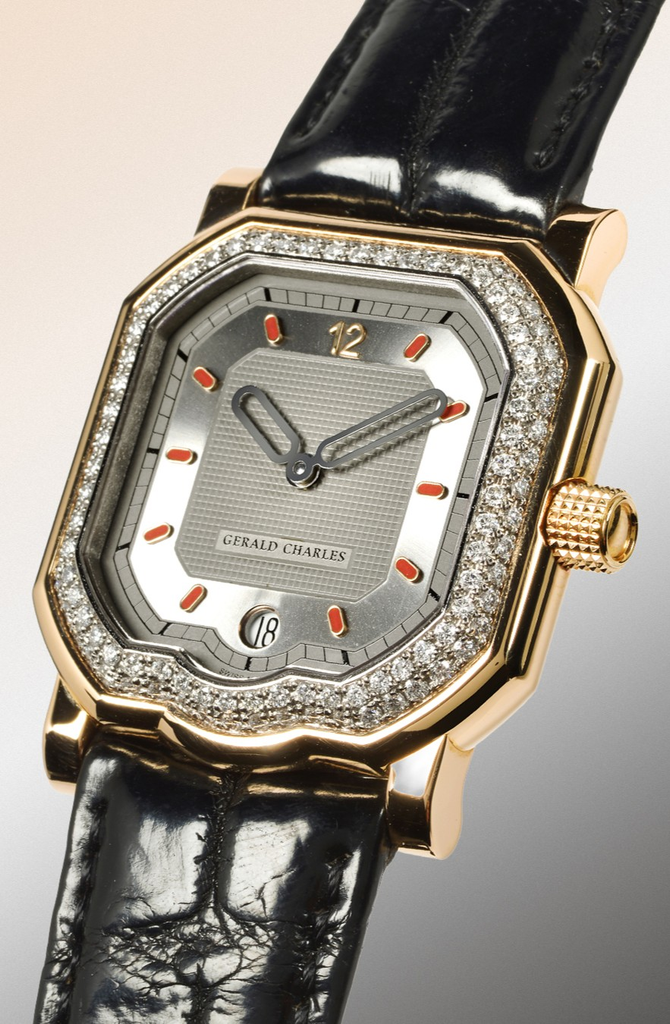
Many of these early Maestro models became the foundation of the Gerald Charles brand today, like this one-of-one GC58 which was the design basis for the Mini Maestro:
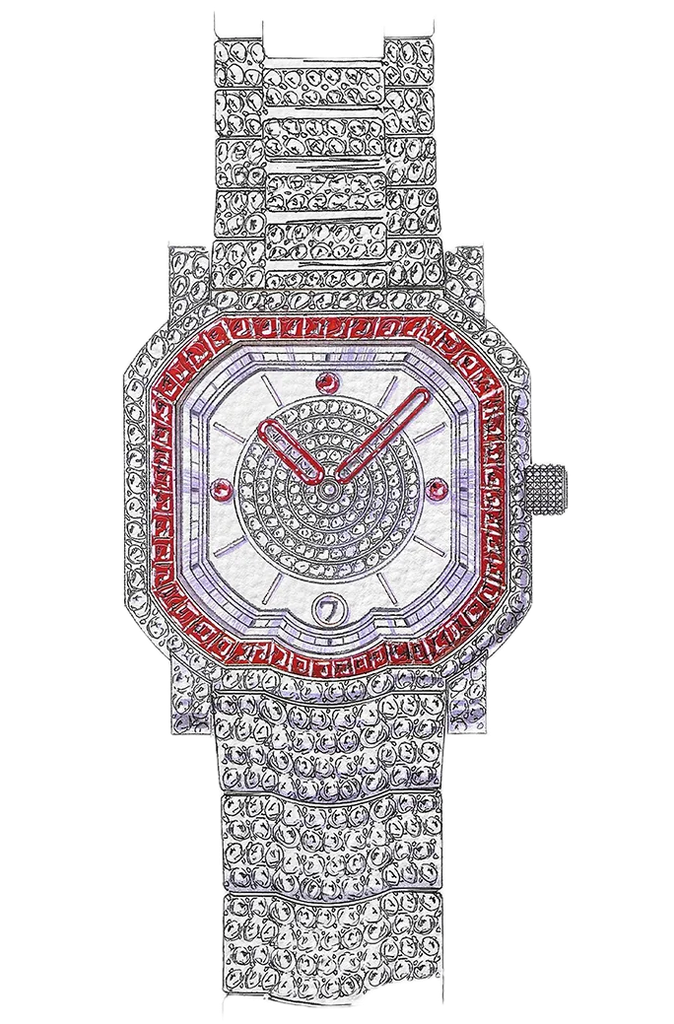
And the first Maestro on an integrated bracelet was a one-of-a-kind watch designed for Malaysian royalty, for example. You can see the resemblance to today’s Masterlink family (I’ll talk about those in a minute):
The first two decades of the Gerald Charles brand were focused on very limited (and sometimes bespoke) high-end watches rather than a “full catalog” of offerings. That began to change in 2019 when a younger Ziviani–Federico Ziviani, nephew of the previous leader, Giampaolo–became CEO of the company. Although Gerald Charles still produces watches in low volumes, today they have a more established lineup of mainstay models.
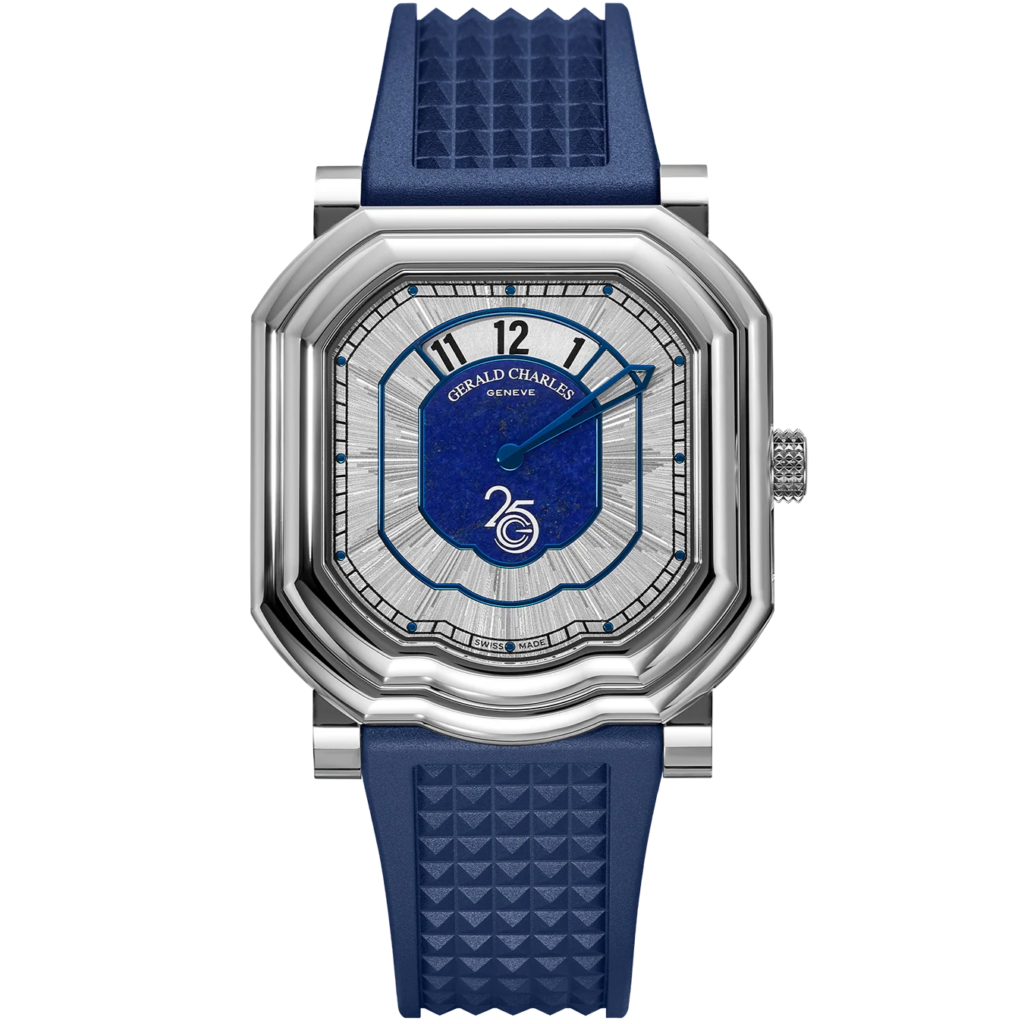
In the early 2020s, the Gerald Charles brand shifted from the “GC##” model format to the “GC #.0” one used today. They still occasionally release limited throwback/reissue models under the old GC## format (like the GC39 25th Anniversary model shown above) but the modern core Gerald Charles watches are the #.0 ones. Let’s go over those now.
Gerald Charles Maestro 2.0 Ultra-Thin
The Maestro 2.0 Ultra-Thin is basically the definitive “base model” of today’s Gerald Charles watch catalog. Launched in 2021, it’s a three-hand model with a date window at 6 o’clock, a width of 39mm and a thickness of only 9mm. All modern men’s Gerald Charles watches have screwdown crowns and water resistance ratings of 100m. And all current Maestro models aside from the Mini Maestro are 39mm wide. Prices for the Maestro 2.0 Ultra Thin start at $18,900 in stainless steel.
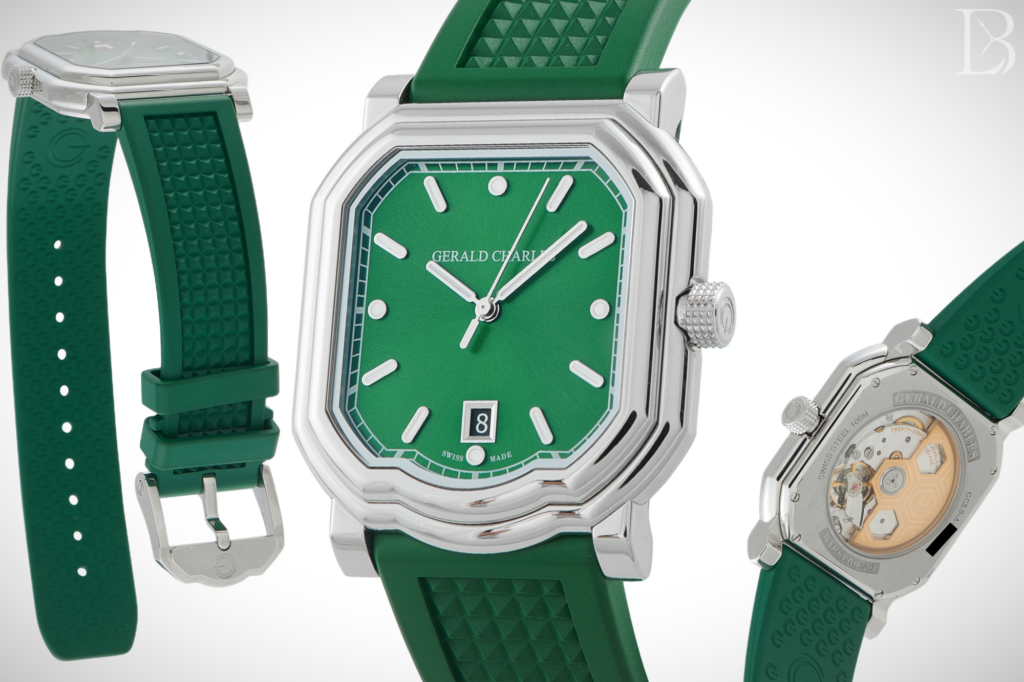
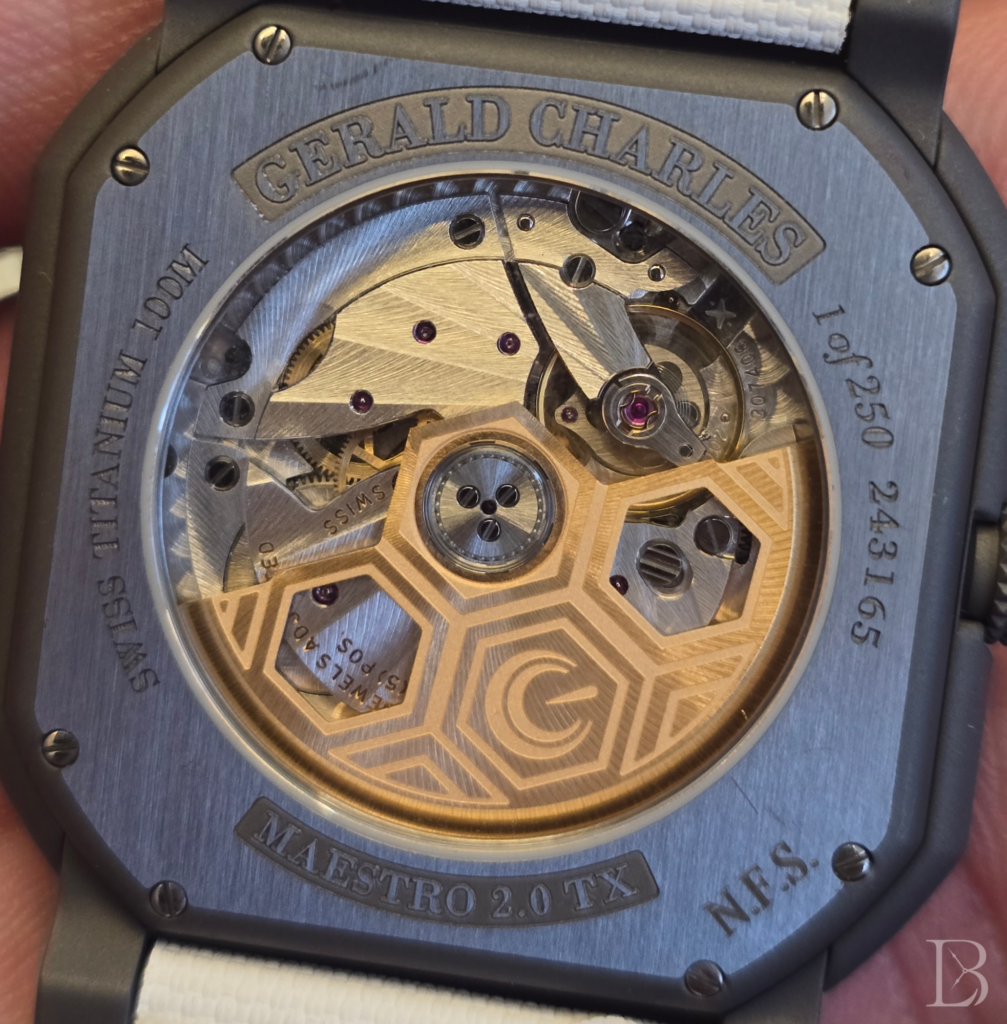
The 2.0 has also been made in 18k rose gold as well as titanium (with or without “Darkblast” DLC coating). The GCA2000 movement inside is built upon the high-end Vaucher VMF 3002 base architecture. It’s an ultra-thin automatic movement measuring just 3.7 mm thick, featuring two barrels that provide a 50-hour power reserve. The “honeycomb rotor” is a visual hallmark of the 2021+ “Federico era” of Gerald Charles:
While early GC watches often came on leather straps, with the Maestro 2.0 the brand really started to prioritize vulcanized rubber straps with a hobnail (Clous de Paris) texture on the front and a GC-logo texture on the back. They’re some of the most comfortable rubber straps I’ve ever tried on.
A Note About GC Sport Watches
In the world of Gerald Charles watches, the term “GC Sport” means it’s a Maestro with a titanium case and left-hand crown. It doesn’t tell you what complication it has; for instance there are both 2.0 Ultra-Thin and 8.0 Squelette GC Sport models. But right now, in particular, GC Sport Maestro 2.0 Ultra Thin models seem to be popular with collectors.
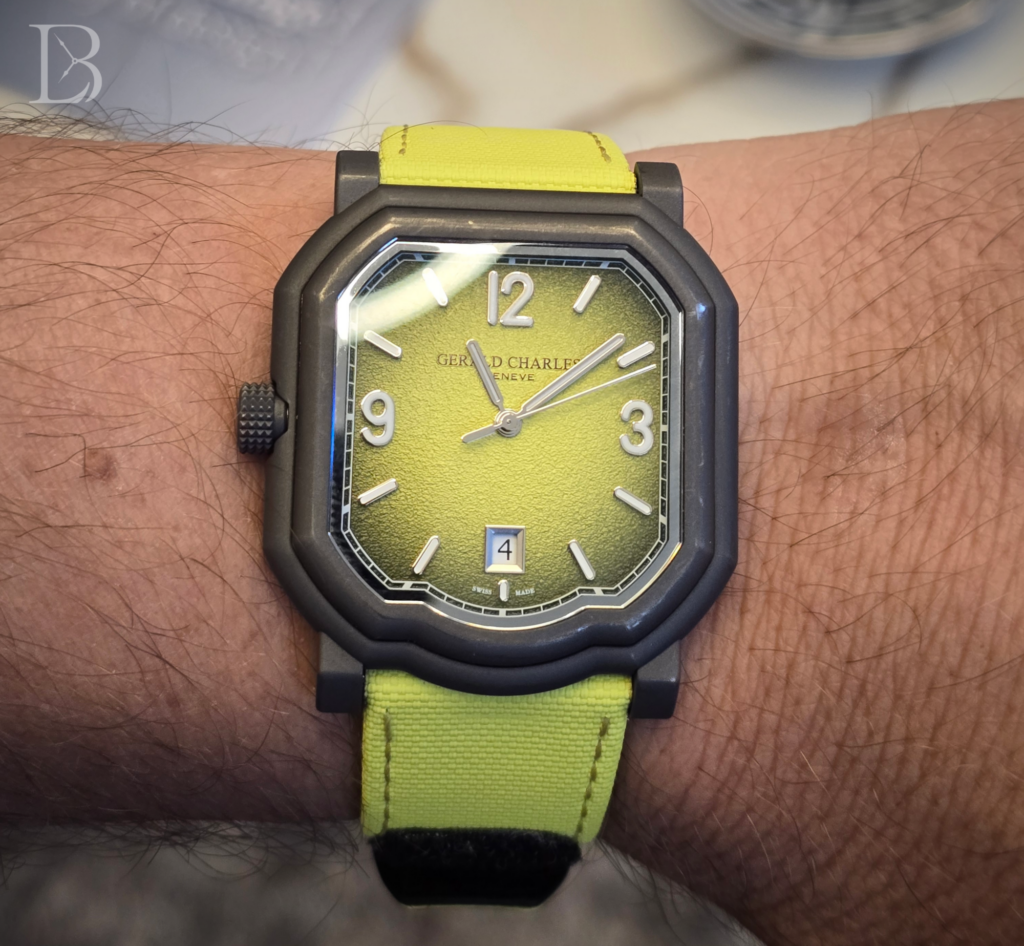
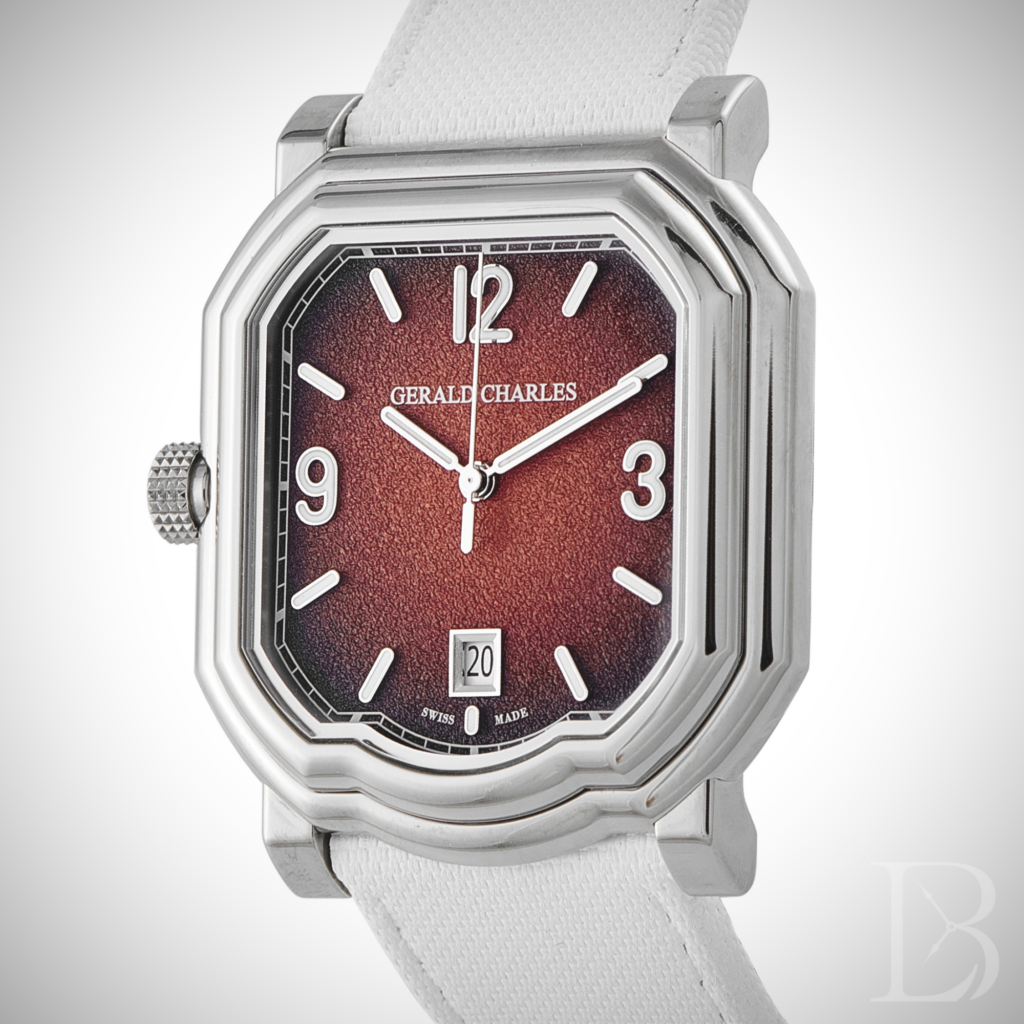
A pair of tennis-themed Gerald Charles watches with Darkblast titanium cases debuted in 2025: one with a tennis-ball-colored textured dial and strap, and one in white.
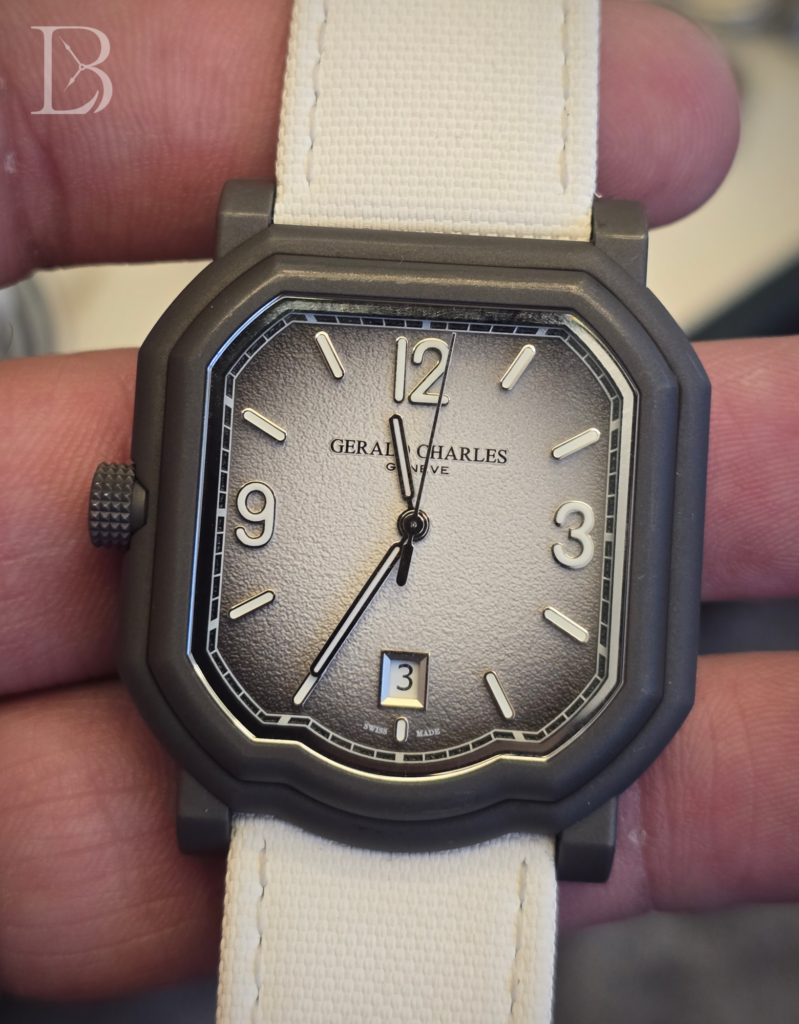
Like some previous GC Sports tennis watches, both have velcro straps, and they’re super comfortable on the wrist.
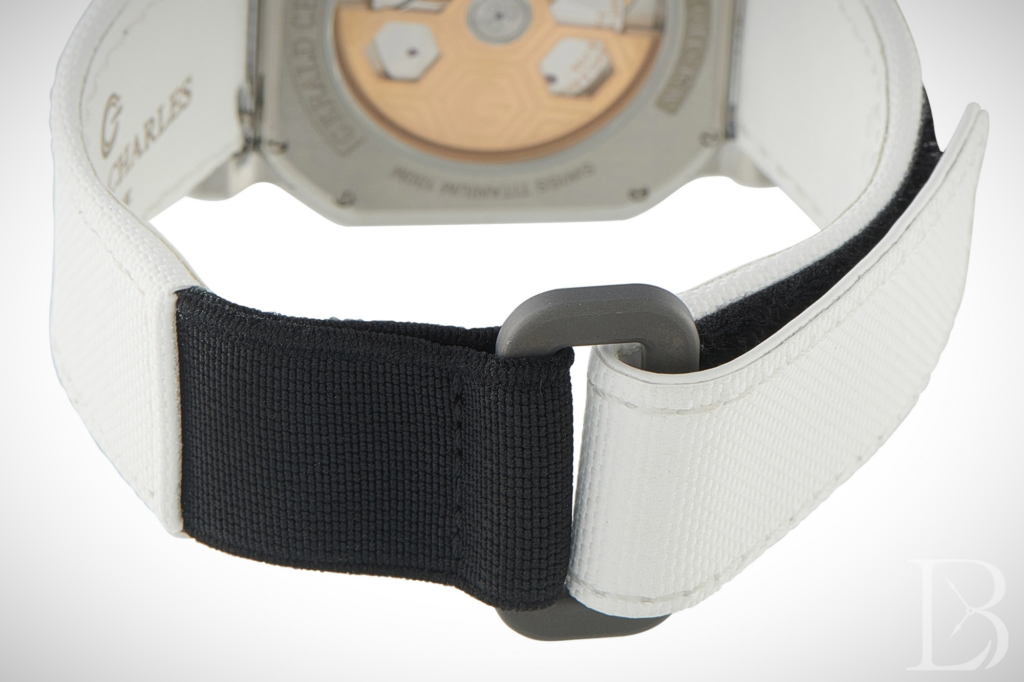
They might be the biggest “hits” Gerald Charles has ever released. You might even see used ones listed above their original MSRP of $23,800. I also really like the earlier clay court-themed model in uncoated titanium, ref. GC2.0-TX-TN:
Maestro 3.0 Chronograph
The Gerald Charles Maestro 3.0 Chronograph really is just a chronograph version of the 2.0 Ultra Thin. It’s almost 3mm thicker, but it’s still under 12mm–less than the thickness of a Rolex Submariner.
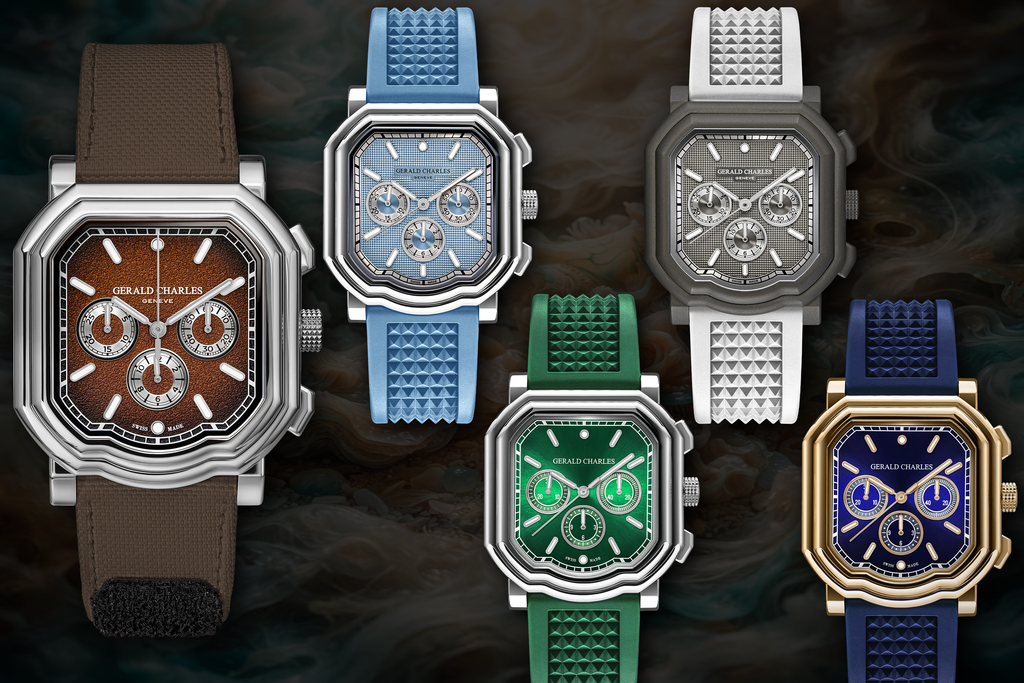
The movement in the Maestro 3.0 Chronograph is the same base movement as in the 2.0 Ultra Thin, with a Dubois Dépraz chronograph module added.
Gerald Charles Maestro 4.0 Jumping Hours
The Maestro 4.0 is essentially the modern downsized version of the GC39 jump hours watch. Limited to 35 pieces and sporting a 39mm forged carbon case, the Gerald Charles Maestro 4.0 Ducati 30° Anniversario 916 retails for $50,000.
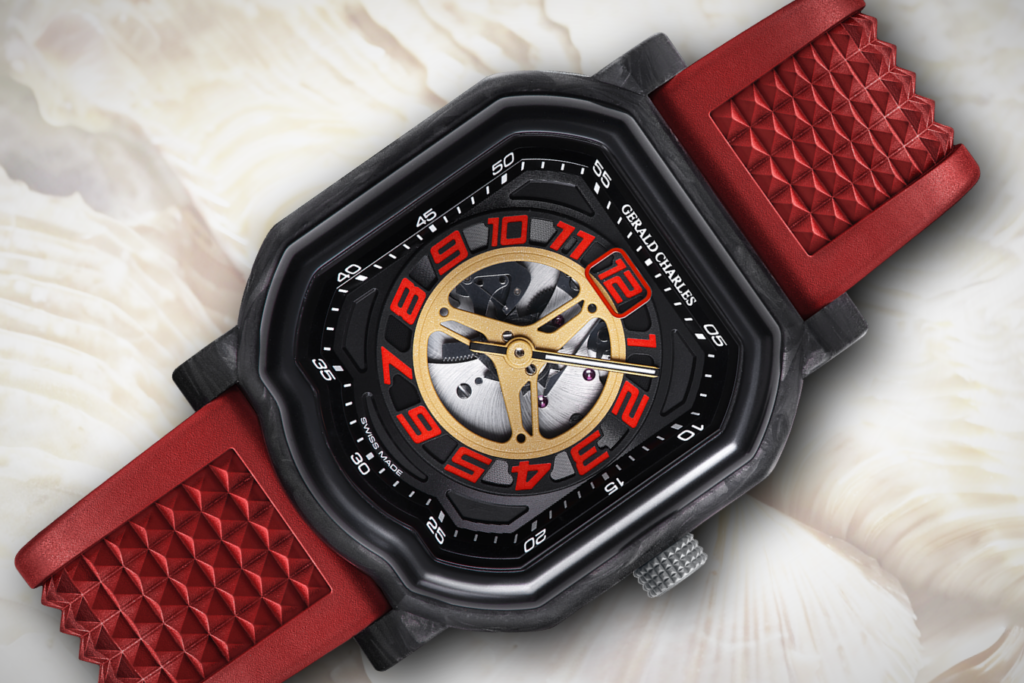
The Ducati version is the only Maestro 4.0 released so far, but given how hot jump hours are these days, I wouldn’t be surprised to see more from Gerald Charles soon.
Gerald Charles Maestro 8.0 Squelette
On skeletonized watches, the bridges are carefully carved away to reveal only the minimal necessary structure of the movement. And on the Gerald Charles Maestro 8.0 Squelette, watch designer Octavio Garcia went all-out. “I know intimately the base Vaucher caliber, which helped considerably in creating the skeleton version that is unique to Gerald Charles,” Garcia said. “It was important to understand just where it could be open-worked from a functional point of view and where I could allow my own aesthetic interpretation to take over.”
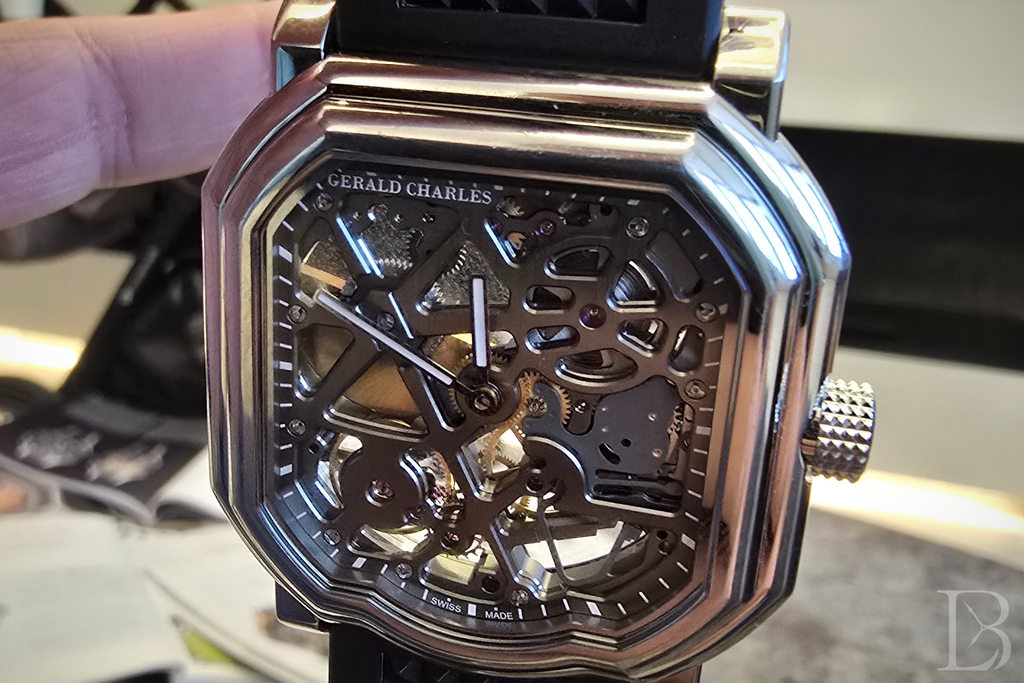
Holding an 8.0 up to the light to see it shine through the watch is truly a pleasure. Caliber GCA 5482 looks great from the back as well:
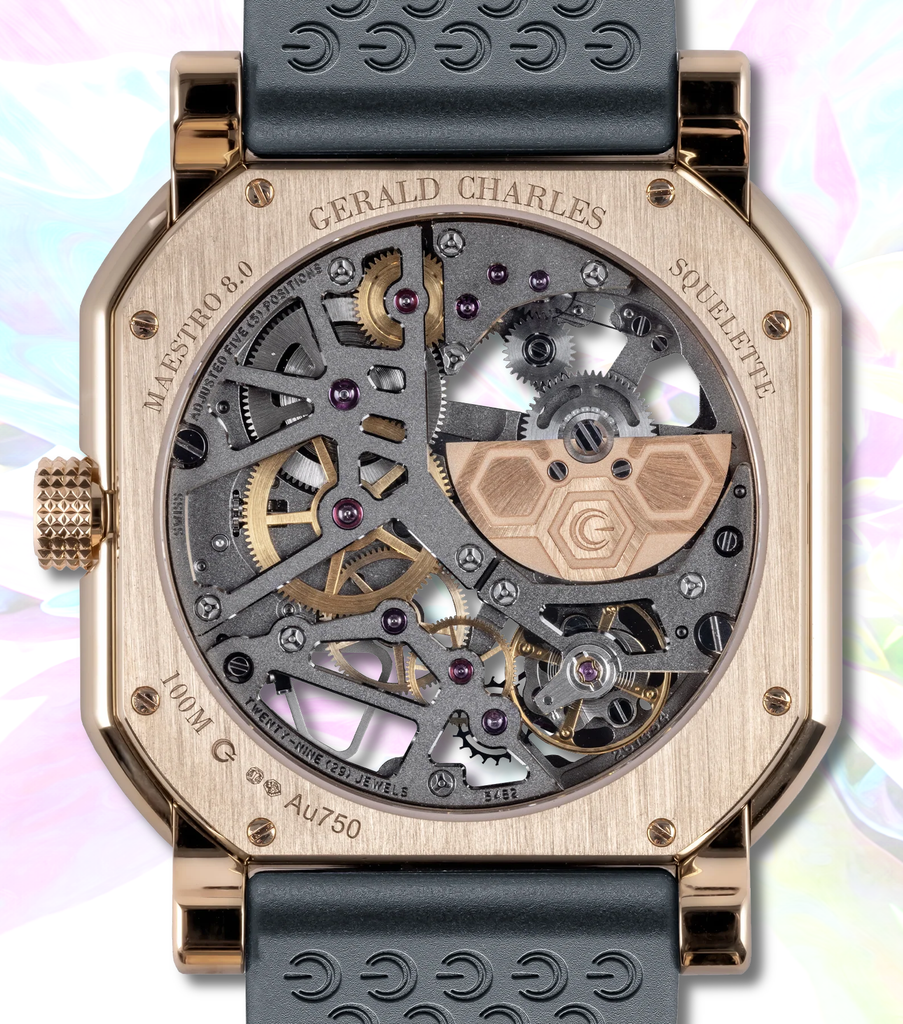
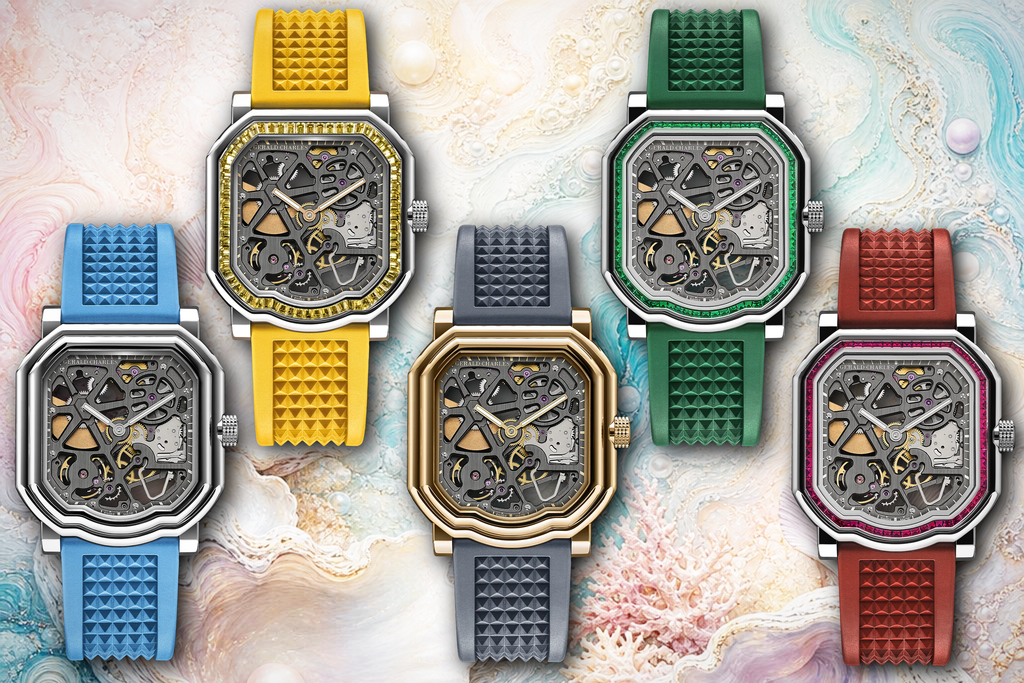
The Gerald Charles Maestro 8.0 Squelette starts at $59,500 in stainless steel, with gold and even gem-set versions reaching into the “upon request” pricing tier.
Maestro 9.0 Tourbillon
The original Gerald Charles Maestro, the GC35, was a tourbillon watch. But it wasn’t a flying tourbillon; its tourbillon was very clearly held in place by a distinctive “mustache bridge.” The Maestro 9.0 Tourbillon, however, debuted in 2024 sporting a Vaucher VMF 3024 flying tourbillon movement.
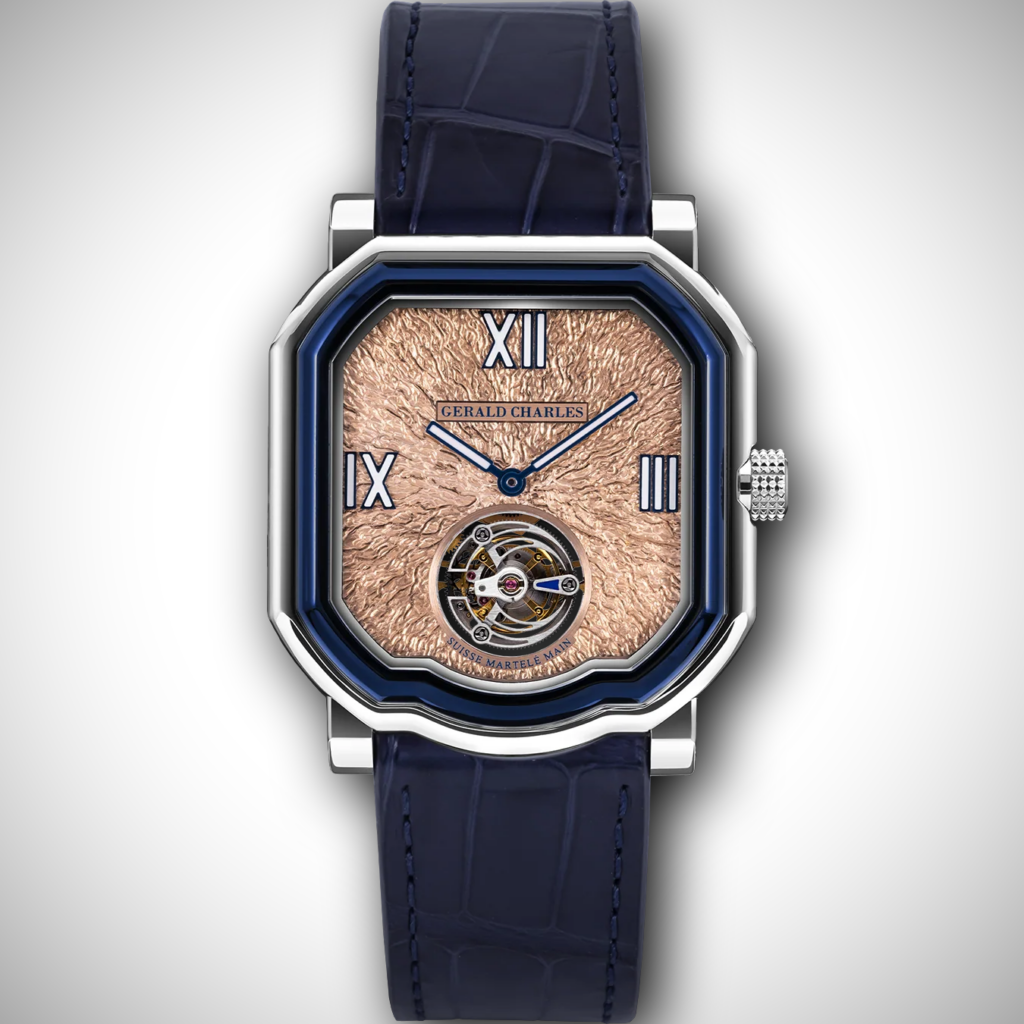
The one-minute tourbillon cage at 6 o’clock forms the GC logo. Some versions of the Maestro 9.0 Tourbillon are already sold out.
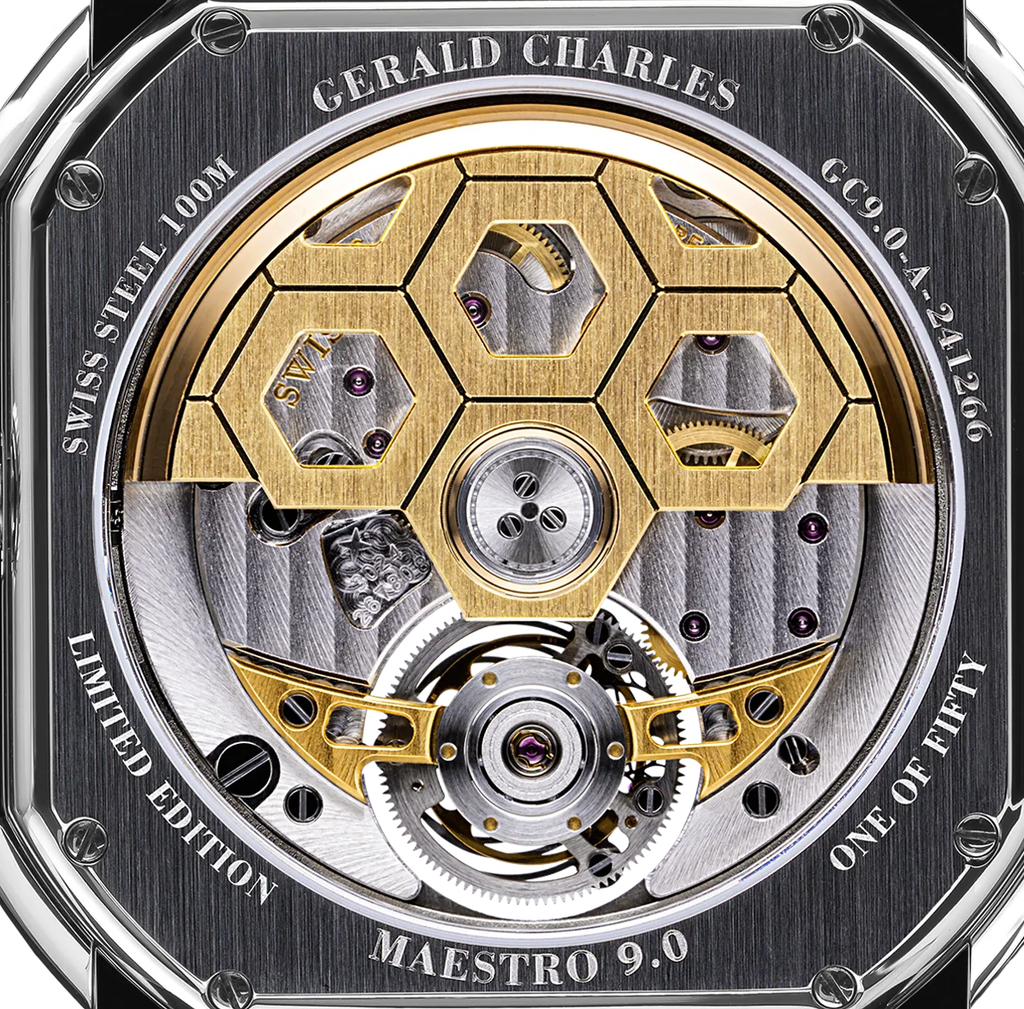
My favorite version of the 9.0 is the limited Tiger’s Eye stone dial with a Colormix steel case. Colormix is Gerald Charles’s proprietary combination of physical and chemical surface treatments that give stainless steel extra scratch resistance and a rich coffee-colored hue:
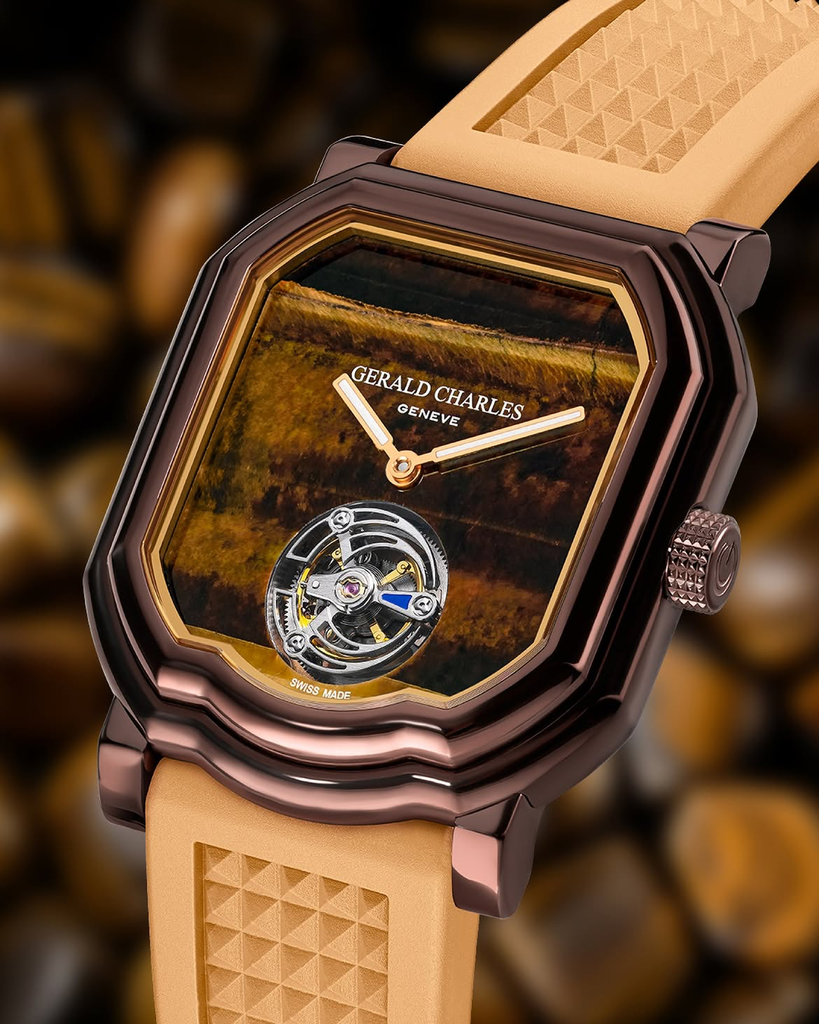
That covers all the main types of men’s Gerald Charles Maestro watches. Now let’s talk about a slightly more modern interpretation.
Masterlink 1.0
The Masterlink, released in 2024, is basically the bracelet version of the Maestro. It’s 38mm instead of 39mm, its dial is slightly more square (rather than rectangular), and its case has sharp angles instead of fluid ones that match the bezel. But it definitely has Maestro vibes. The brand proudly declares that it’s the “last integrated asymmetric bracelet designed by Mr. Genta.”
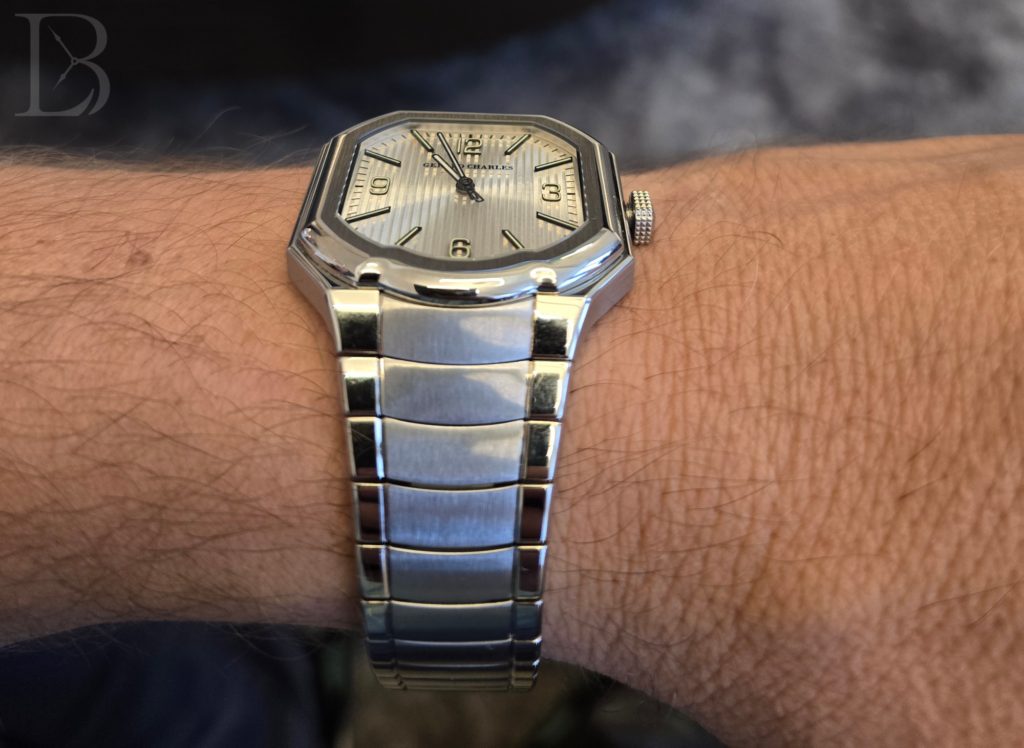
Although it lacks both a quick-release function and a quick-adjust clasp, the integrated bracelet feels great on the wrist, with a satisfying feel to its butterfly clasp. The bracelet delicately tapers from very-curved center links to almost-straight ones. Every link is a differently shaped part, and the ones on the top side of the bracelet are not a mirror image of the ones on the bottom, either–that’s a lot of parts numbers.
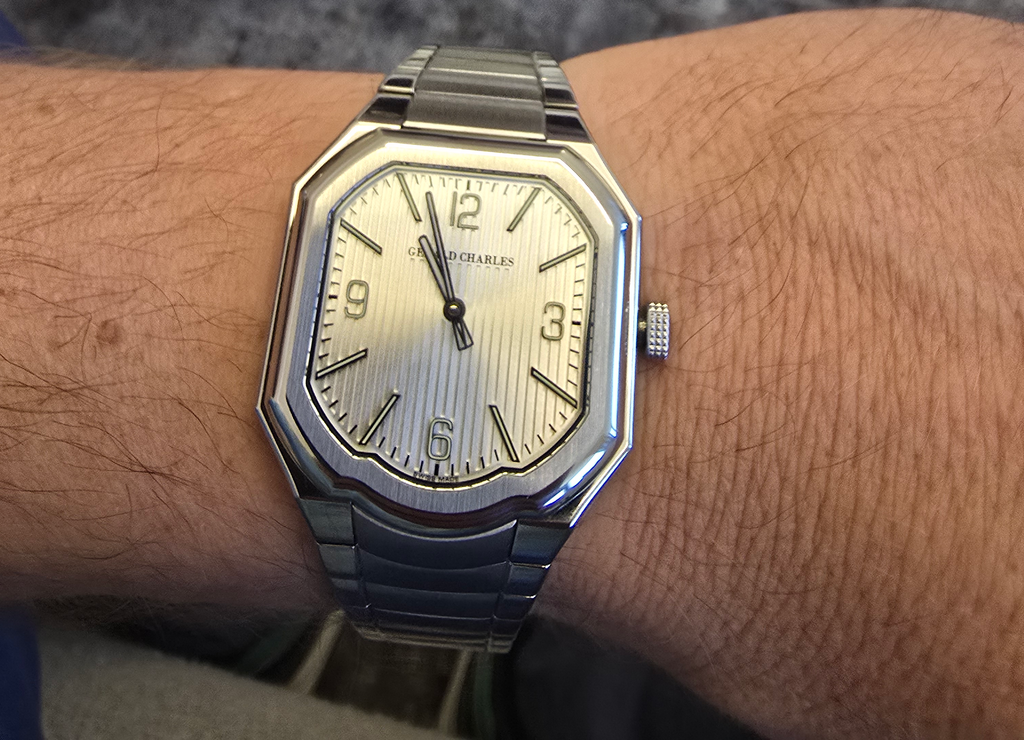
At only 2.7mm thick, the microrotor automatic movement in the Masterlink 1.0 is actually thinner than the one in the so-called 2.0 Ultra Thin. Its 22k gold rotor has the same honeycomb motif seen on full-size rotors.
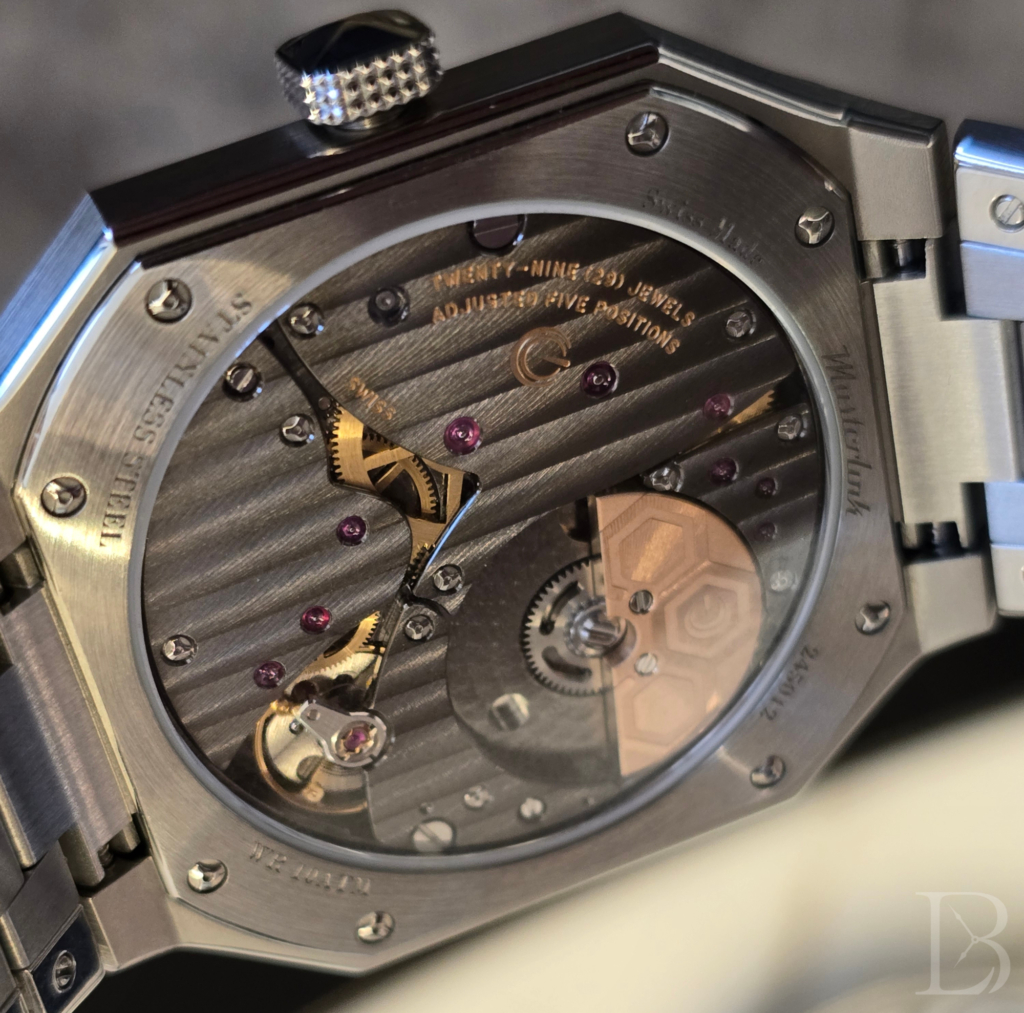
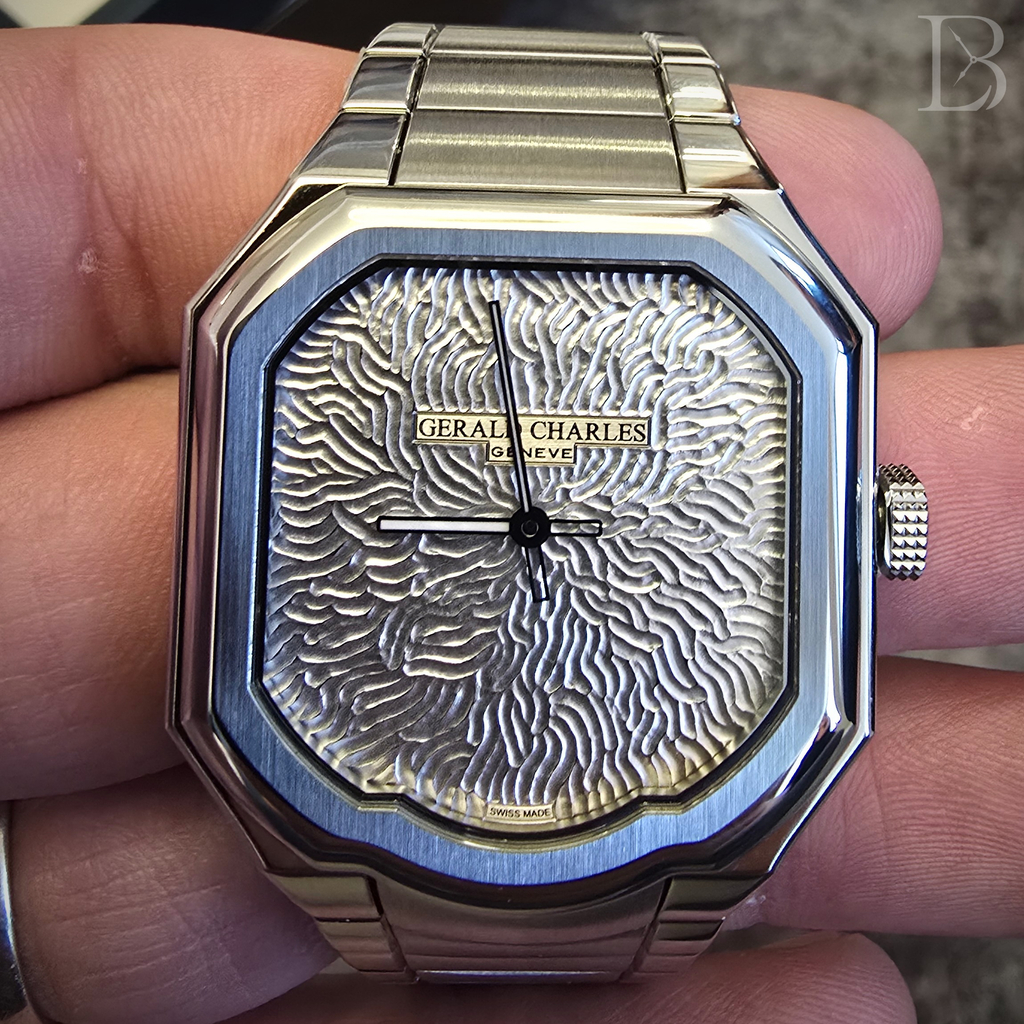
Helping minimize the watch’s thickness–only 7.99mm–is the fact that there are only two hands. No seconds hand, no complications. I think the two-hand look works well with the design, and the hand-hammered German silver dials (“Atelier Editions”) released at Geneva Watch Days 2026 are definitely cool:
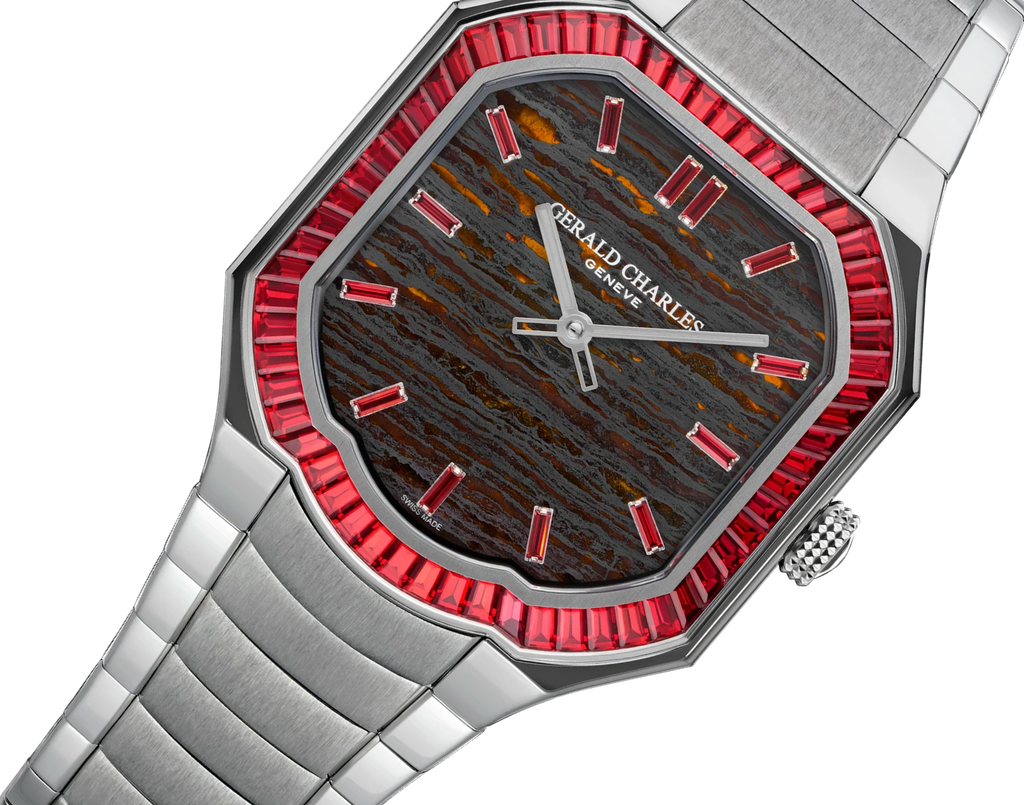
And if that’s not enough you can consider exotic options like an Iron Eye stone dial with a gem-set bezel:
Gerald Charles Masterlink Perpetual Calendar 11.0
Released at Watches and Wonders 2026, the Masterlink Perpetual Calendar 11.0 is the newest men’s family in the Gerald Charles catalog. Even though prices start at $78,800–less than a Maestro 9.0 Tourbillon–this is arguably the true current flagship of the brand.
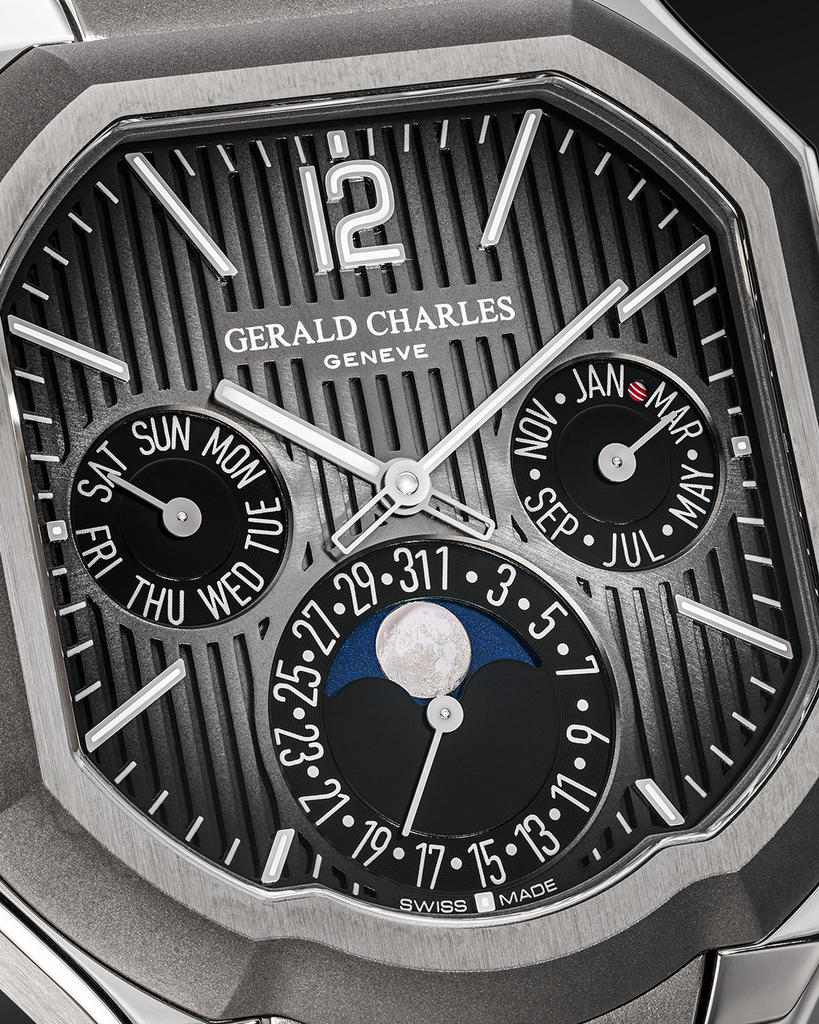
The 11.0 is slightly larger than the 1.0, sporting a 40mm case which is (for now) only offered in titanium, with DLC coating (I’m sorry, I mean “Darkblast®”) on the bezel and center links. A dark grey two-layer fumé dial is standard, while a sapphire-dial version lists for $87,500:
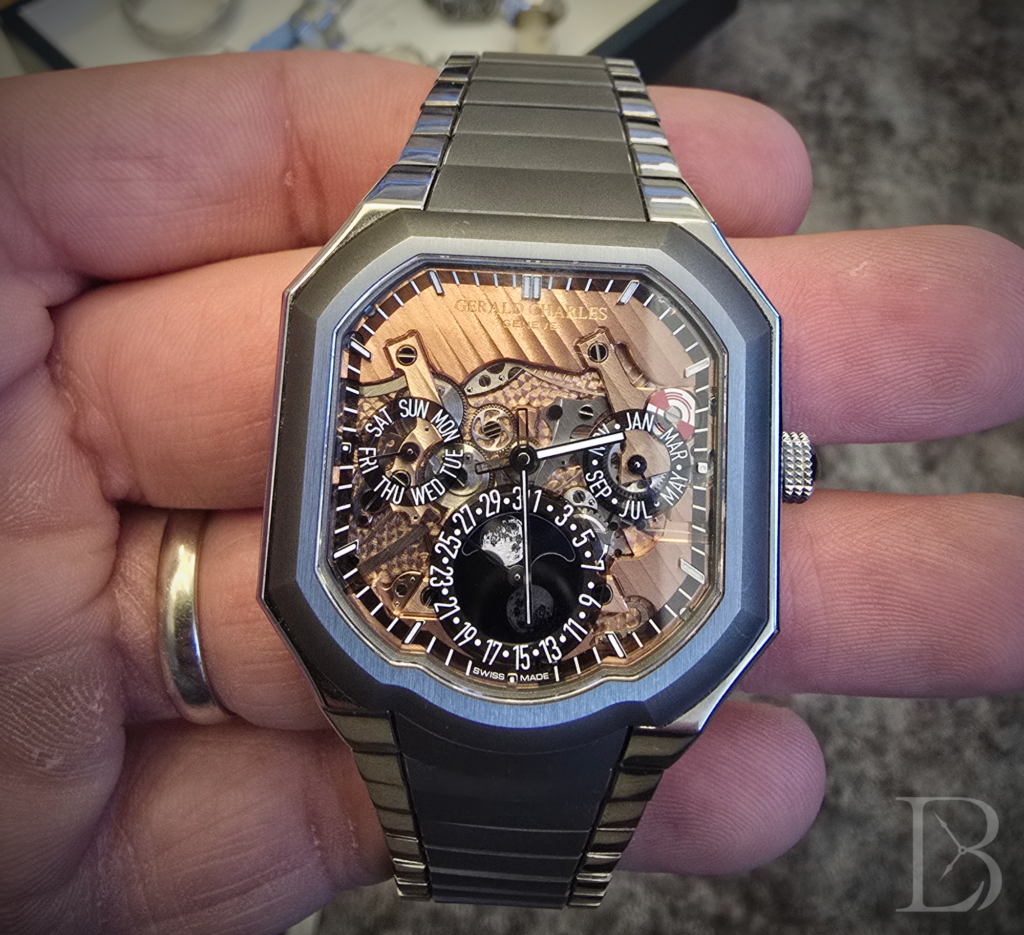
Gerald Charles worked closely with Vaucher to make the GCA11000 movement. Its Vaucher VMF 5401 micro-rotor base sports a Gerald Charles–developed proprietary perpetual-calendar module and, most importantly, the mainplate and bridges are form-shaped to match the case!
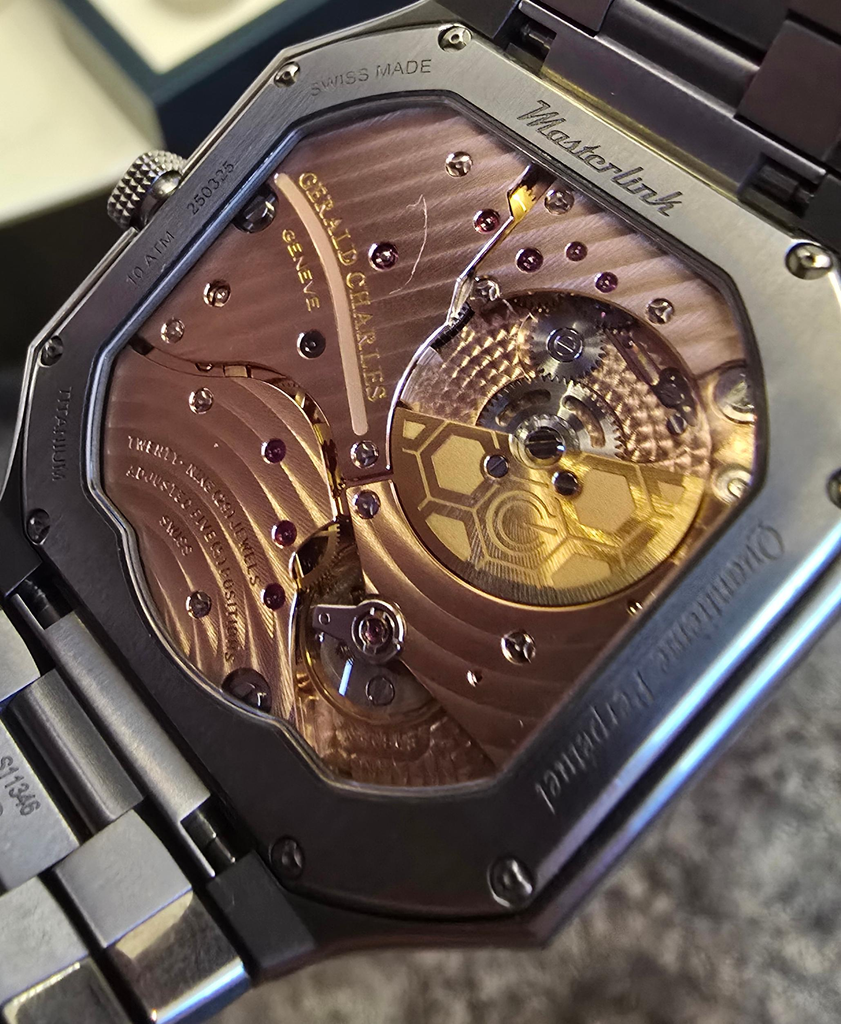
Unusually-shaped movements are kind of a big deal, and if they were easy to do, they wouldn’t be so uncommon. But it gets even better: the entire design and finishing of the movement is meant to mimic a map of Geneva. The gap in the bottom left is meant to mimic The Rhône, while the lone black sapphire represents the location of the Gerald Charles Atelier. Pretty neat.
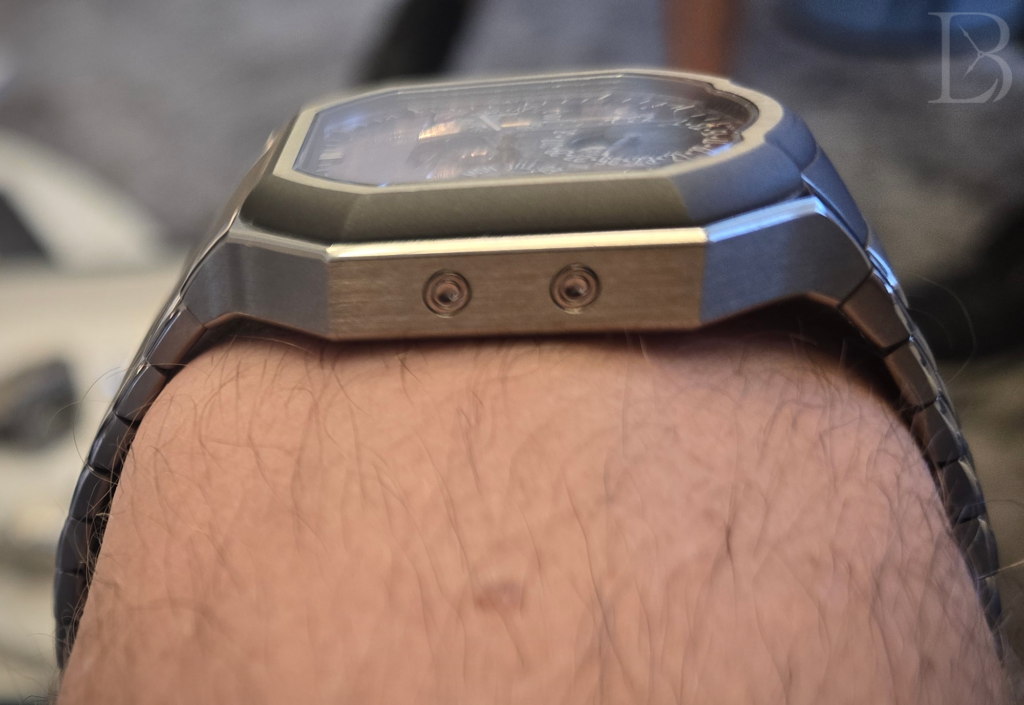
And to top it all off, the watch is only 10mm thick. That’s thin for a perpetual calendar with a 100m depth rating. Because it’s titanium, it feels nice and light on the wrist. A gold version almost feels inevitable, though!
Gerald Charles Maestro Mini
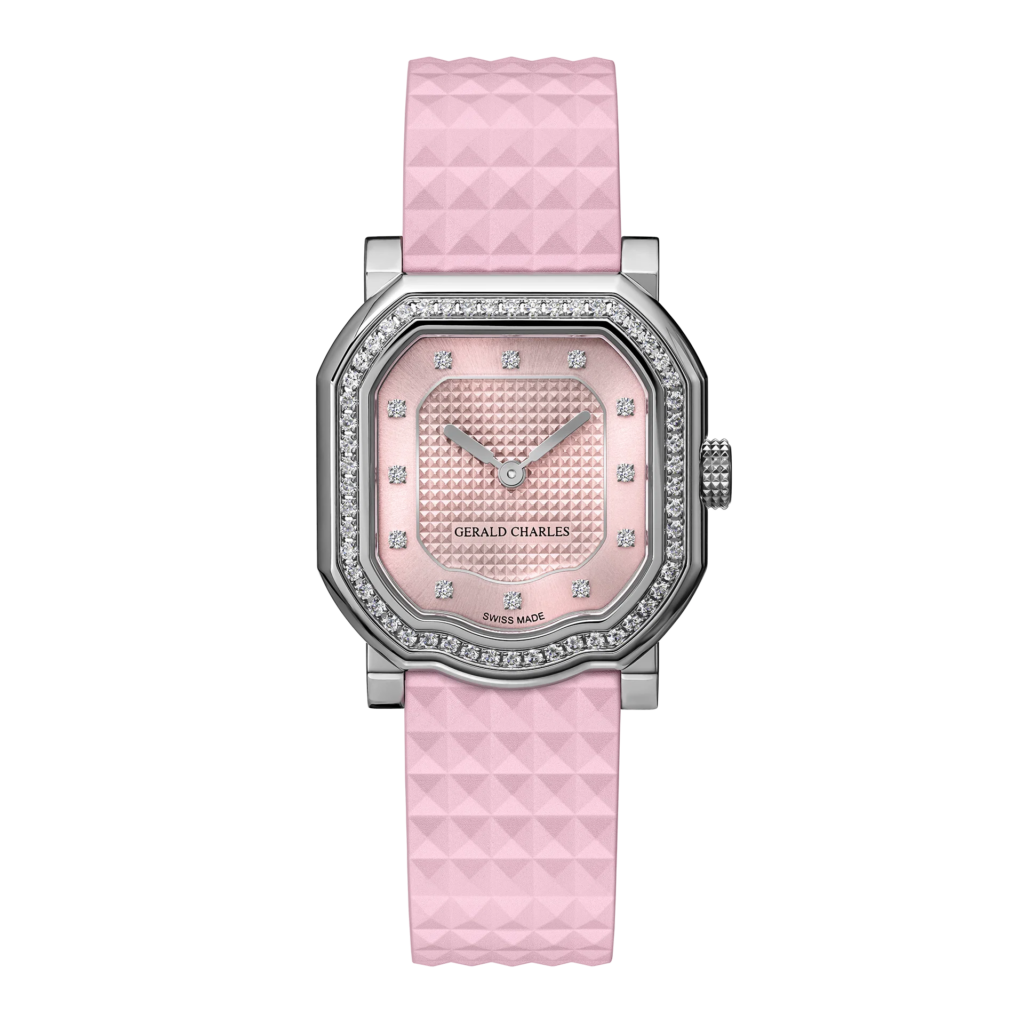
The Maestro Mini, which also debuted in 2026, is a cute little watch that replicates the vision of Genta’s GC58 faithfully. The hobnail dial is attractive and, as on larger Maestros, the vulcanized rubber strap is nice. The 29mm width feels about right.
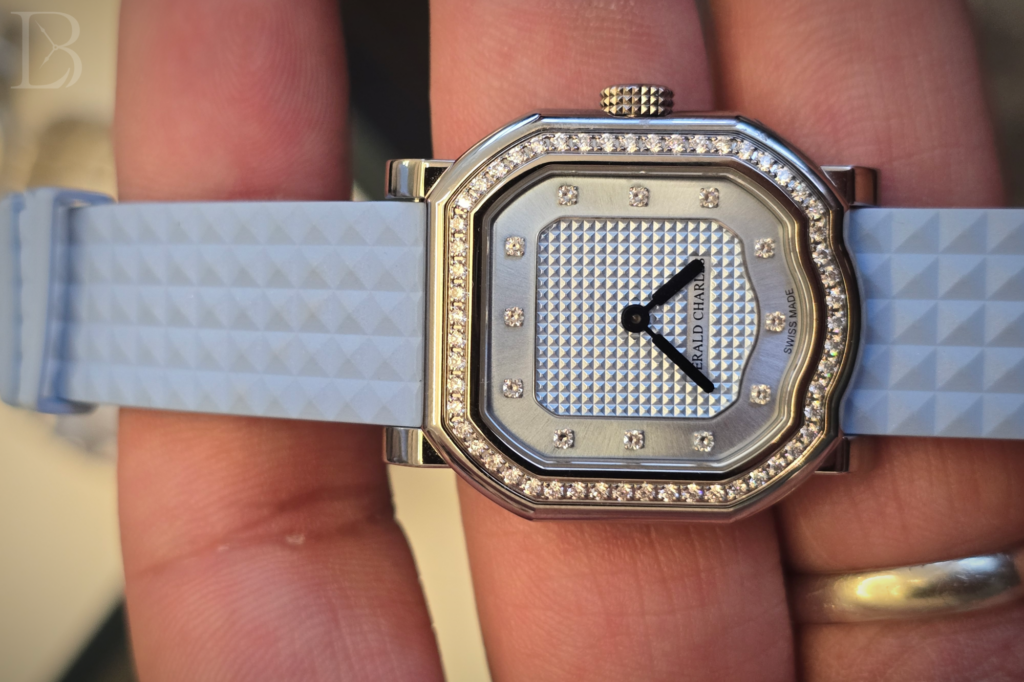
$12,500 is a bit of a tough ask for a non-precious-metal quartz watch in my opinion, but the Mini Maestro is made of grade 5 titanium and comes standard with a diamond-set bezel. Dial options are blue, pink or silver. I would love to see a diamond-free version with a screwdown crown and 100m of water resistance (instead of a push-pull and 50m) to compete more wholeheartedly with the Rolex Oyster Perpetual 28, but it’s a good-looking watch nonetheless.
Ultimately, a brand founded upon the visions of the most legendary watch designer in history has wagered its entire future on one odd, somewhat toilet-lid-like case shape, and…it’s finally paying off. I have to respect that. There really is something to the shape, and it gives Gerald Charles a clear brand identity. Plus these watches feel great on the wrist, and the current management team clearly understands the importance of thinness. If you happen to visit Geneva, I recommend stopping by the new Gerald Charles Atelier and trying one on.
More on High-End Independent Watchmakers:



Leave a Reply