What You Might Not Have Heard About the New Rolex Perpetual Padellone

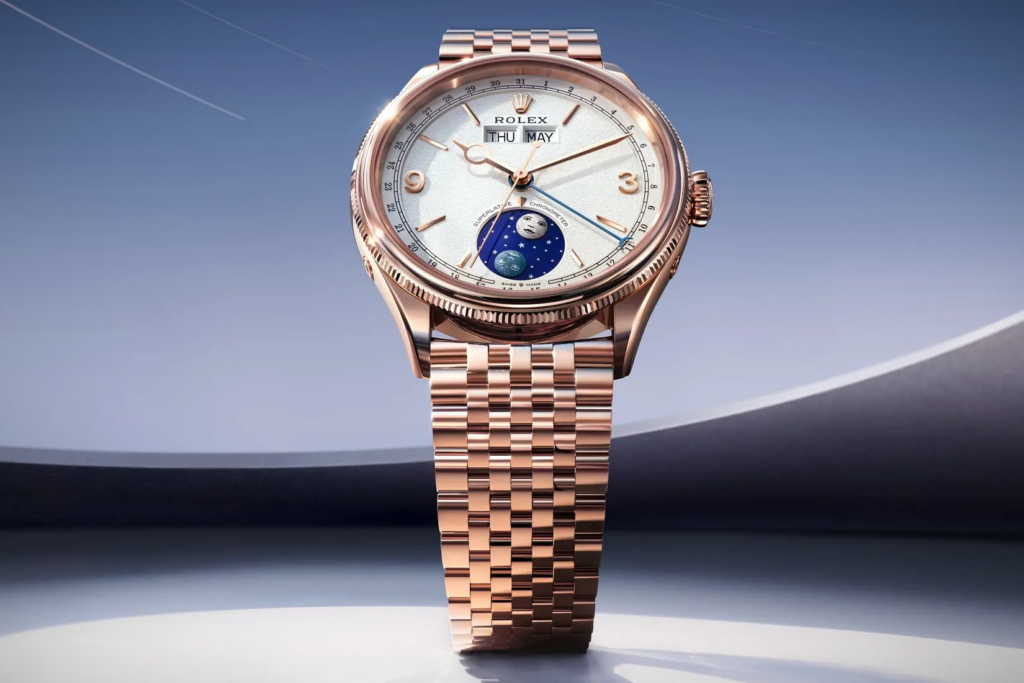
For many decades, Rolex unveiled their new watches once per year in the spring. While they still resist the modern constant-release paradigm, some years, Rolex also does a reveal late in the year. 2026 is one such year, with the Rolex Perpetual Padellone having been released suddenly on September 15. It’s the brand’s first annual calendar with a day window, and it’s only their fourth watch with a moonphase indicator. Let’s take a look at the new Rolex Perpetual Padellone.
Context
Until now, Rolex only ever made moonphase watches from about 1949-1953, and again from 2017-2023. The vintage ones are easily worth six figures today: ref. 6062, with an Oyster case, and ref. 8171, nicknamed “Padellone” (Italian for “large frying pan”) for its big-for-the-time 38mm case.
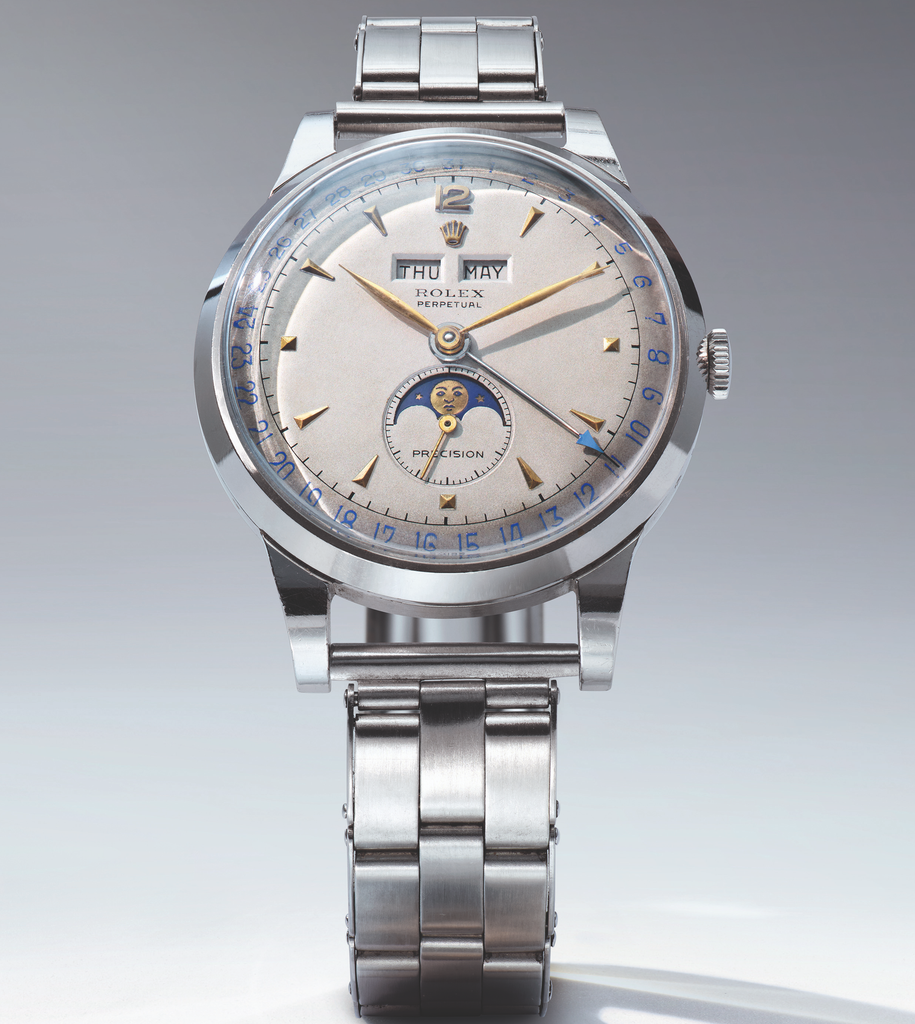
Both had the same basic layout: three-letter day and month indicators at the top of the dial, moonphase at the bottom, and a pointer date around the periphery.
From the spring of 2023 until mid-September 2026, the time-only Perpetual 1908 was the only dress watch in the Rolex catalog. Before that was a six-year run of the similar-looking Rolex Cellini Moonphase, with a 39mm case measuring 45.2mm lug-to-lug, but no day or month indicators.
The Basics of the Rolex Perpetual Padellone
For 2026, the Rolex Perpetual Padellone basically puts the full calendar layout of the 6062/8171 in the 39mm case of the Cellini Moonphase. But it’s not just a complete calendar (a.k.a. “triple calendar”), which treats every month as 31 days long and thus needs adjustment several times per year. It’s an annual calendar, meaning it “knows” the correct length of every month except February (so you just need to adjust it every March 1st).
Although an annual calendar isn’t as “fancy” as a perpetual calendar (which accounts for the length of February), it’s inherently more robust because it requires fewer gears.
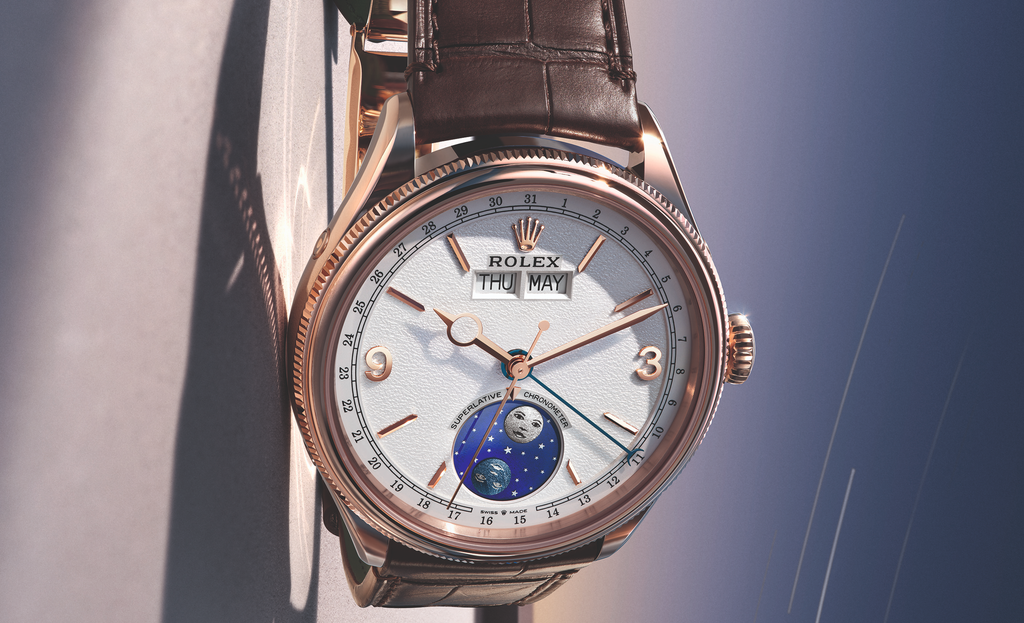
The Rolex Sky-Dweller was the brand’s first annual calendar, but the Perpetual Padellone is their first annual calendar with a moonphase (or with a day display, for that matter). And while the Sky-Dweller is fully controlled with its bezel and crown, the Padellone has more traditional case corrector buttons which you press with a stylus. They all have gaskets, though, so as long as you don’t press them underwater, the watch should be good for its 50m depth rating.
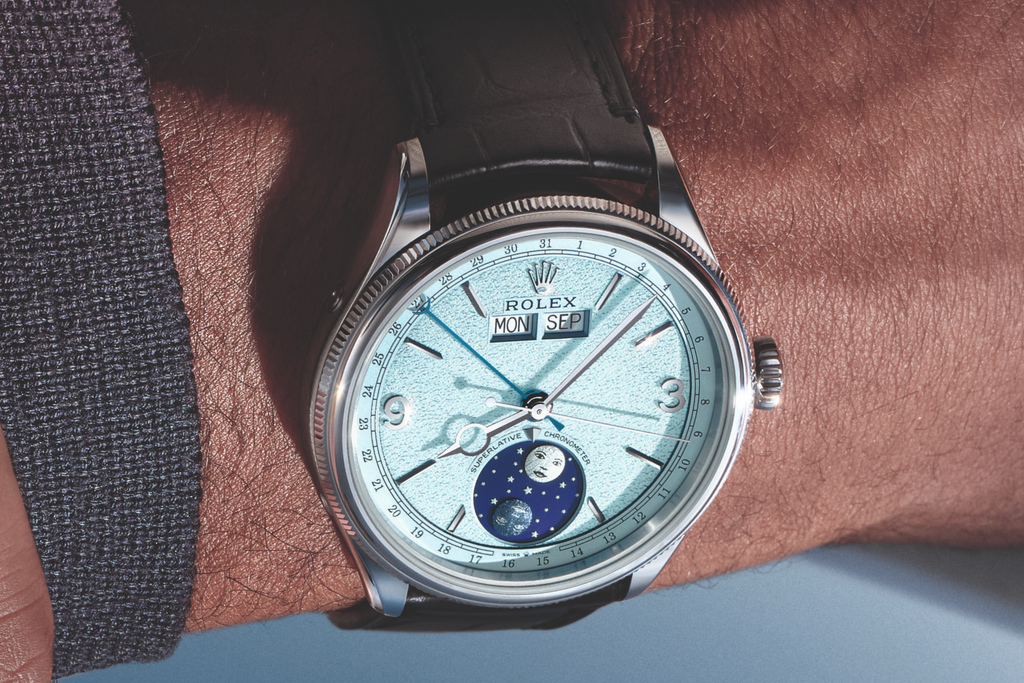
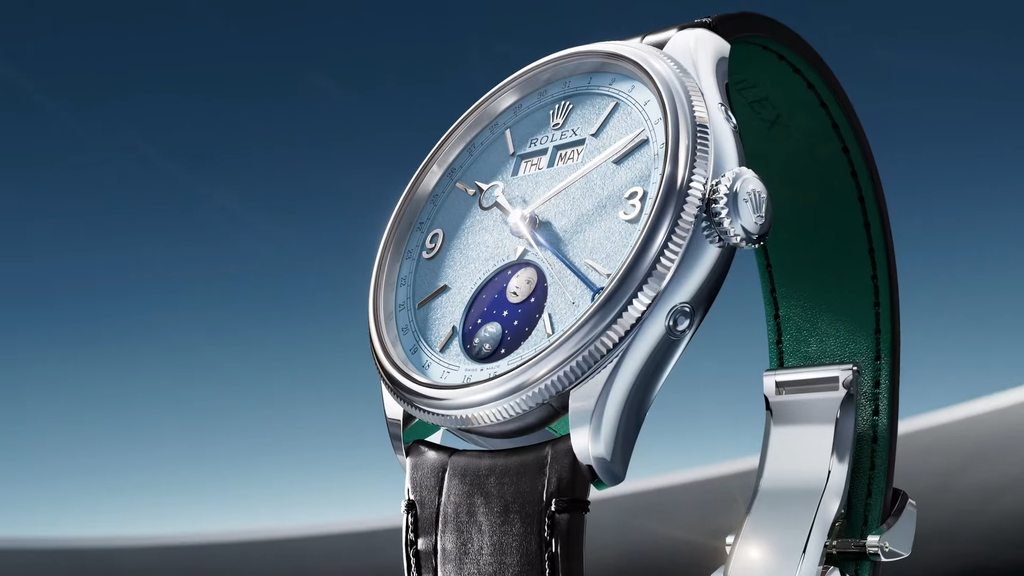
The Padellone comes in only two metals: The rose gold version comes with a white dial, while the platinum unsurprisingly comes with an ice blue one. Both have a grained texture, except around the edge where the date is. An alligator strap with a folding Dualclasp is available on either metal, while a bracelet is only available in rose gold.
More on Rolex:

Price
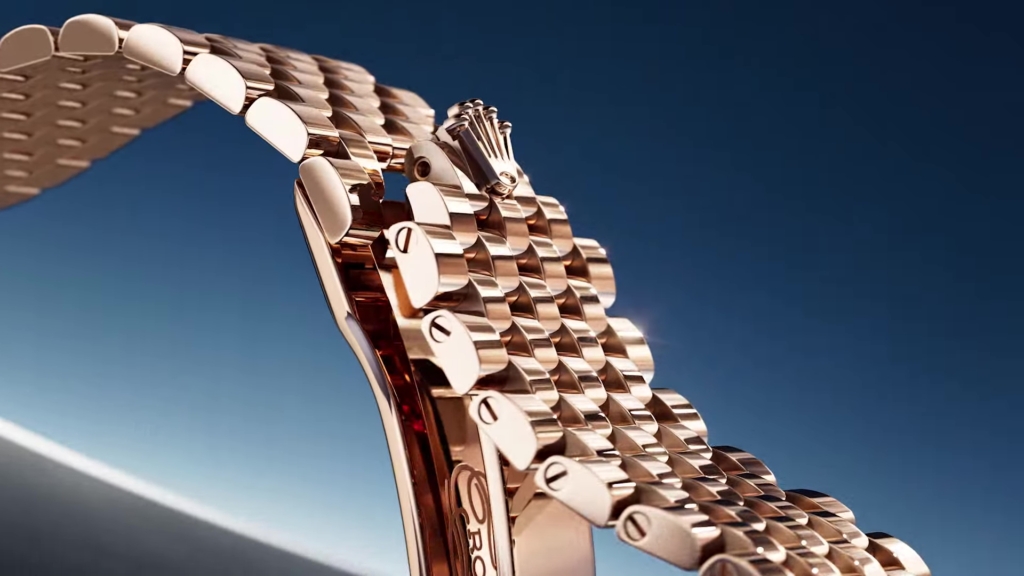
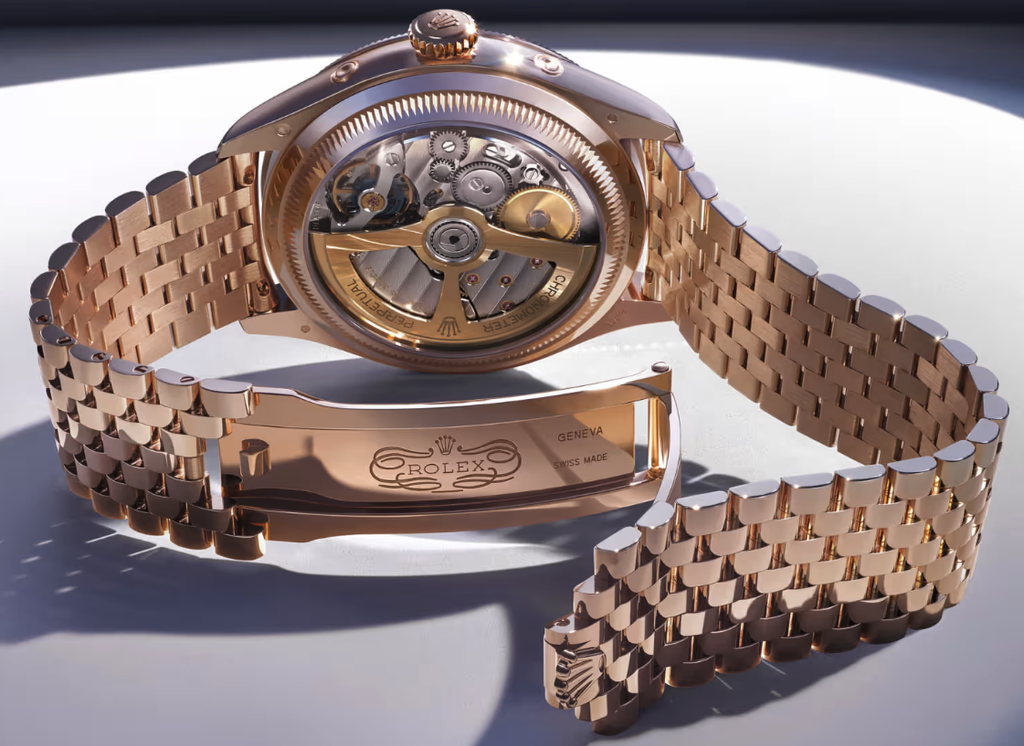
The Rolex Perpetual Padellone is offered in either rose gold ($59,000 on a brown alligator strap) or platinum ($66,200 on a black alligator strap). The rose gold version is also offered on a Settimo bracelet, which was arguably the best thing to come out of the 2025 Rolex releases, for a $13,800 upcharge. The impressive patented seven-link Settimo bracelet was originally only available in yellow gold, though, so this is its first time in rose gold.
How to Set a Rolex Perpetual Padellone
I recommend setting the time on a Rolex Perpetual Padellone first, so you know whether it’s in AM or PM, and go from there. If you advance the time past midnight, the moonphase (along with the date, obviously) advances, so it makes sense to set the moonphase after the time. Aside from that, Rolex assures us the order doesn’t really matter: “These different settings are independent of one another, meaning that they can be performed successively or in isolation, in any order and at any time.” Interestingly, if you press either the date or month corrector on the 31st, both will advance. Here’s the layout:
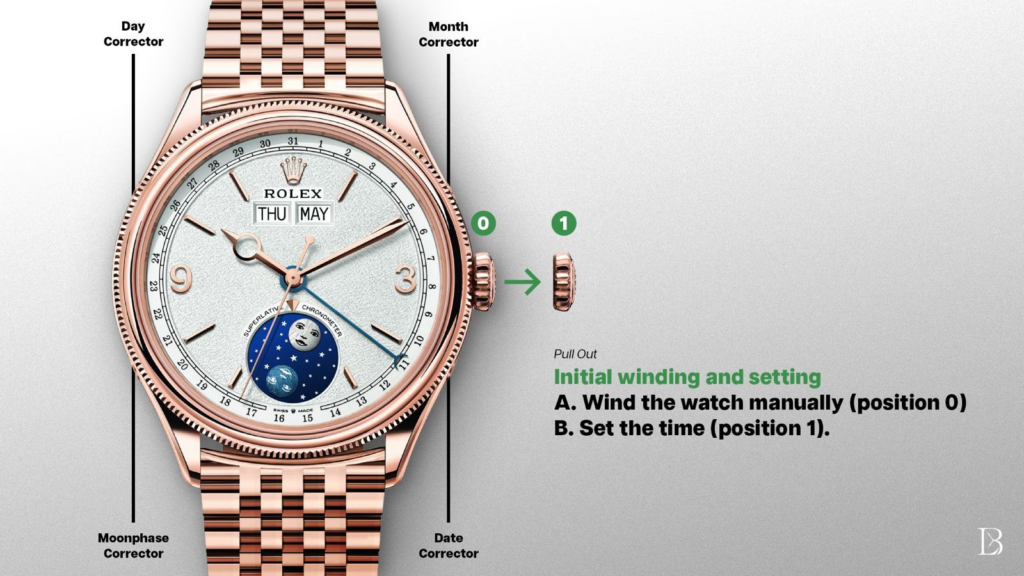
Note that the Perpetual Padellone does not have a screwdown crown. You simply pull it out to the time-setting position and push it back in when you’re done. You can also manually wind it when it’s flush against the case (position 0).
To set the moonphase, Rolex recommends finding out when the last full moon was, and counting how many days it has been since then. The moonphase corrector advances the moon display by one day, so if the full moon was 7 days ago, press the corrector until the full moon is at the very top and then press it 7 more times.
Interestingly, Rolex made their own online “Moon Calendar” to set your moonphase to, and they even brag about it in the instruction manual for the Perpetual Padellone. I saw it; it was pretty cool. But as I publish this, inexplicably, Rolex’s lunar calendar has been removed from the website. Maybe they’re making some tweaks. Anyway, now let’s talk about how to read the moonphase.
How to Read the Moonphase on the Rolex Perpetual Padellone
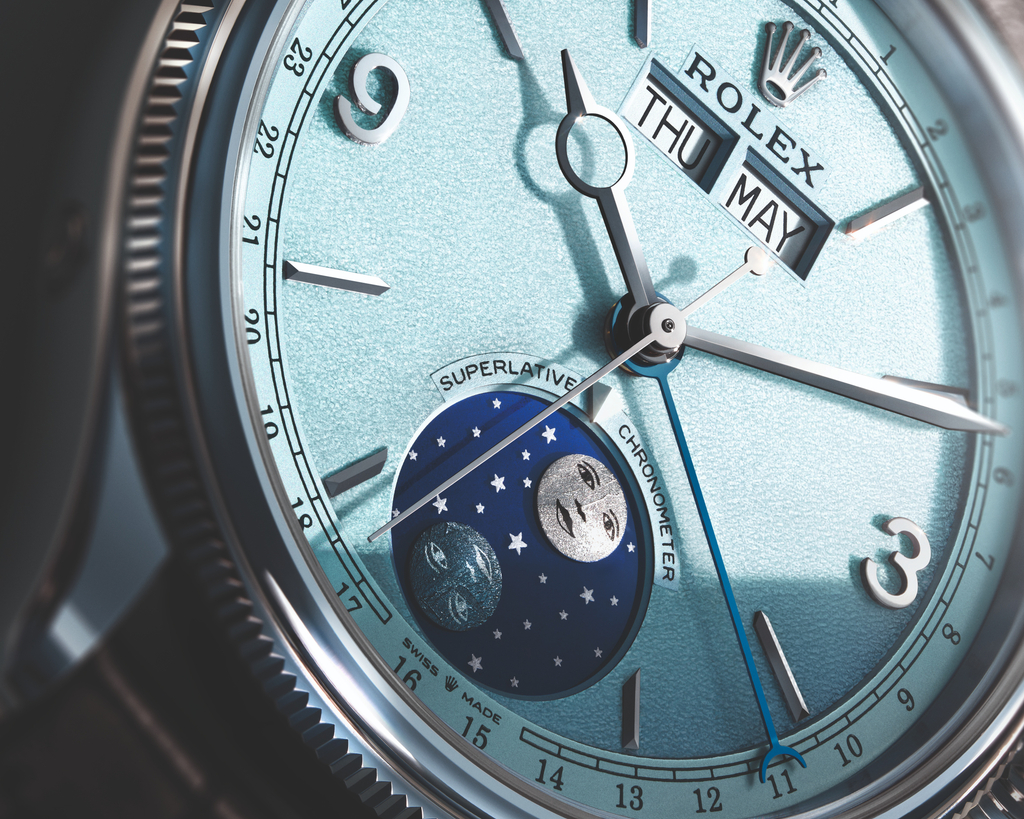
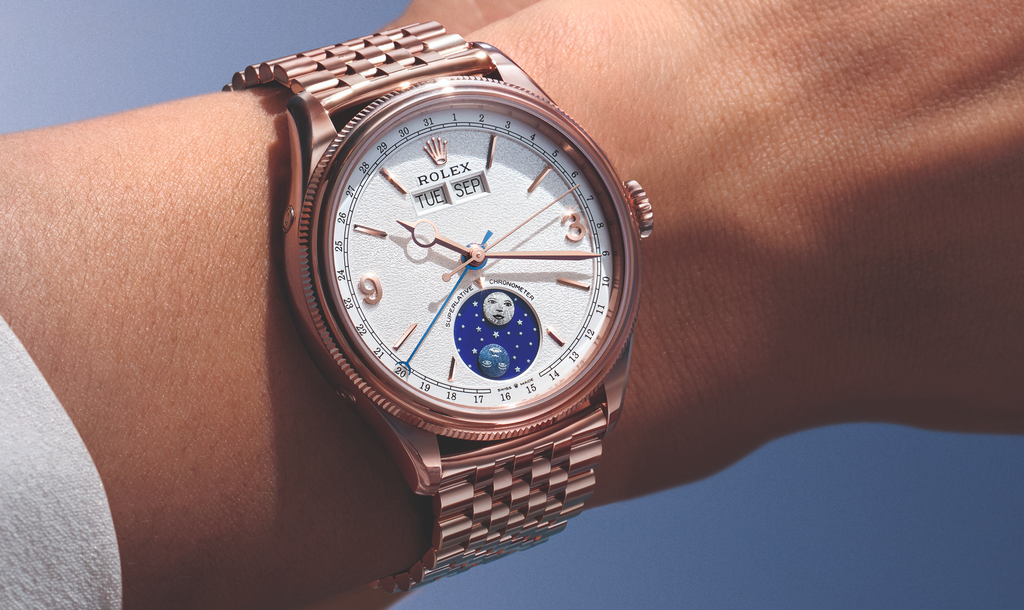
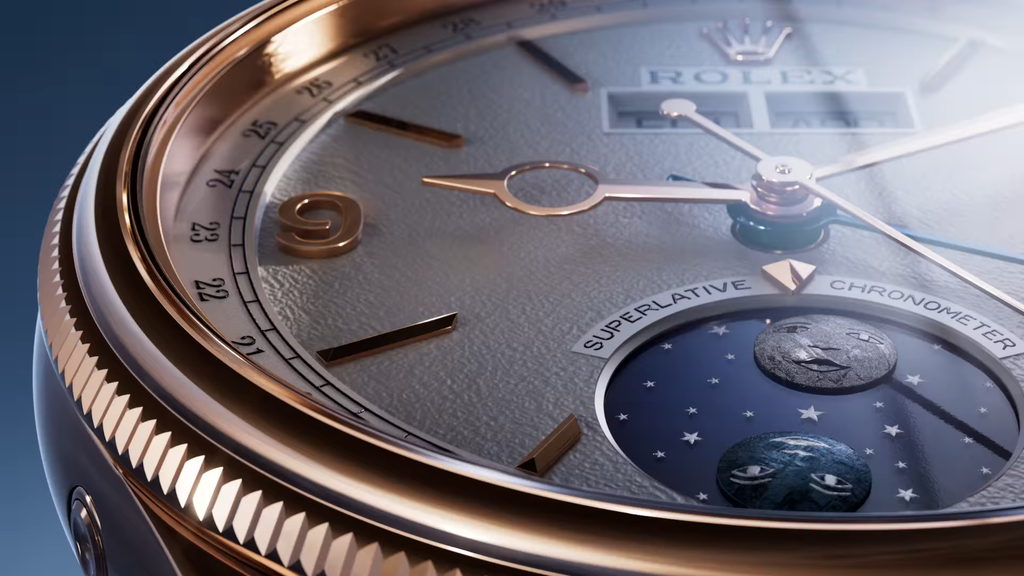
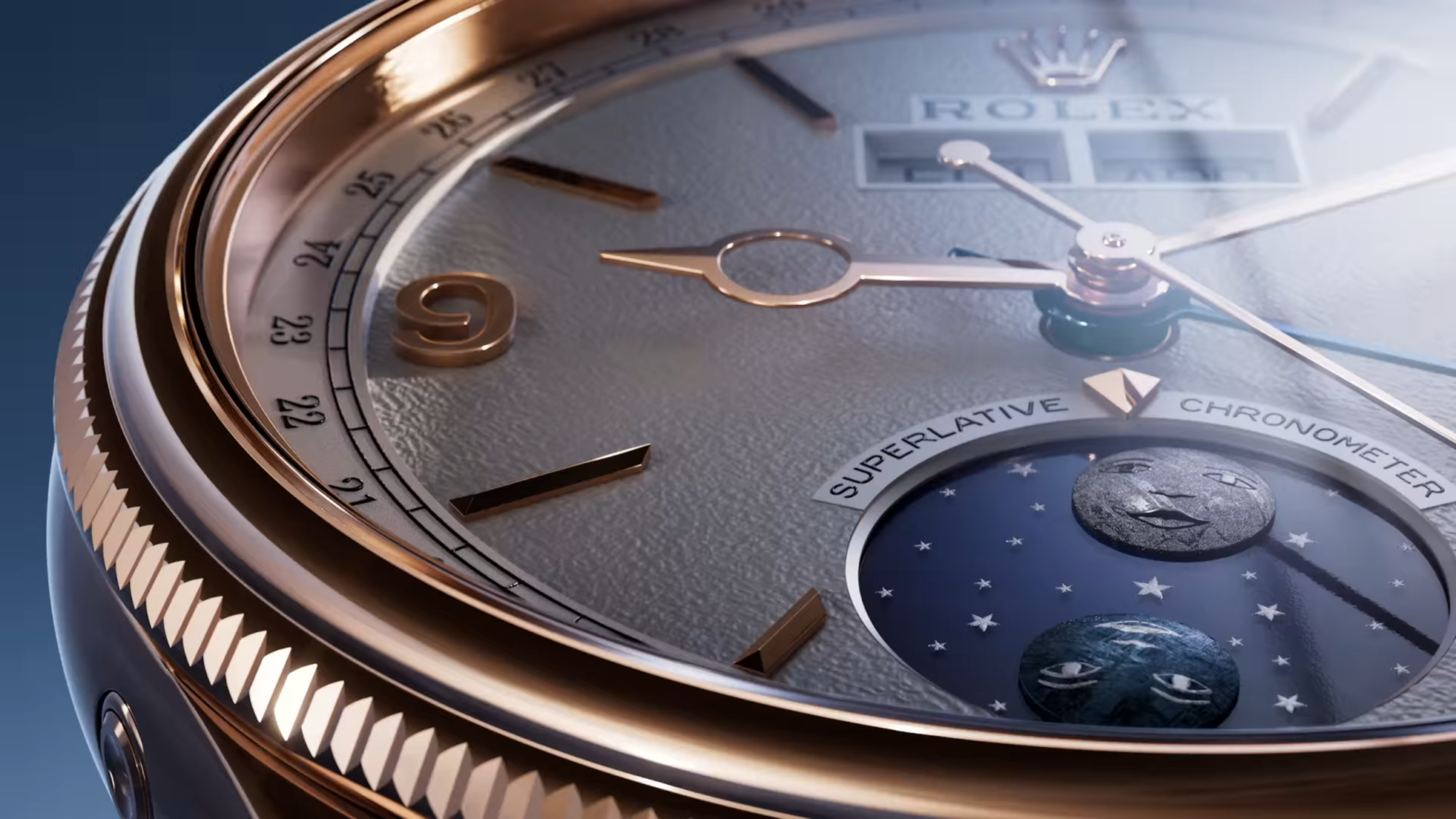
The Cellini moonphase used one piece of meteorite to represent the moon, while the Perpetual Padellone has two: there’s one to represent the new (dark) moon as well. And now they have faces. I can see why Rolex didn’t want to cover up the lovely blue enameled moon disc with the traditional “axe blade” moonphase display, although I don’t find this “pointer” style of moonphase particularly intuitive to read at a glance. But I’ll break it down:
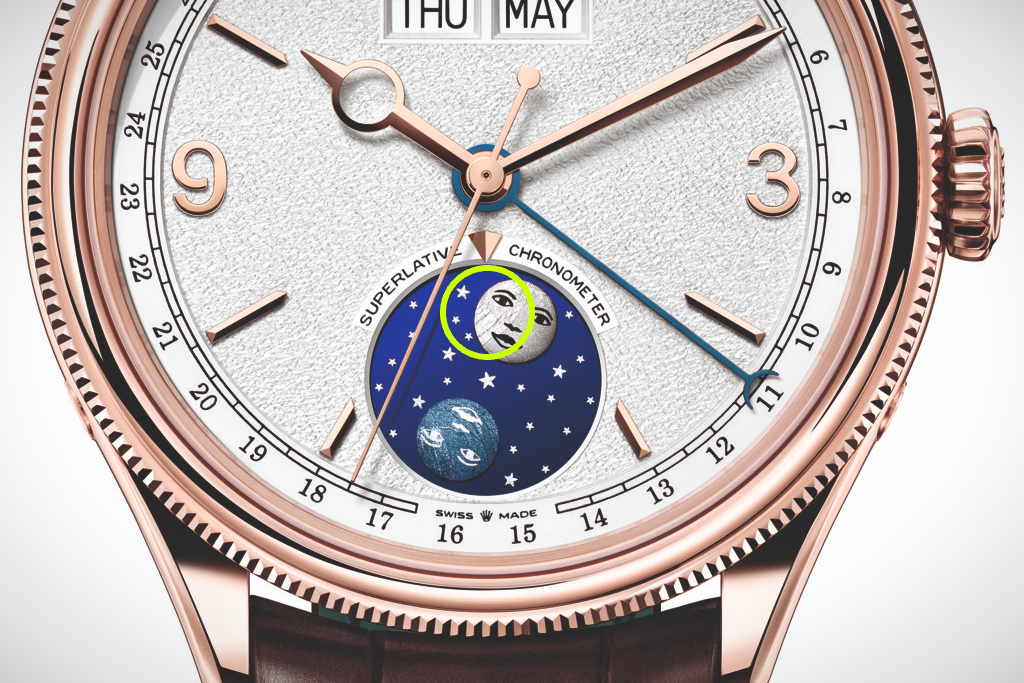
The moon indicators are always going clockwise. If you imagine a moon-sized ring centered directly under the pointer (shown above), well, what’s inside that ring would be the moonphase.
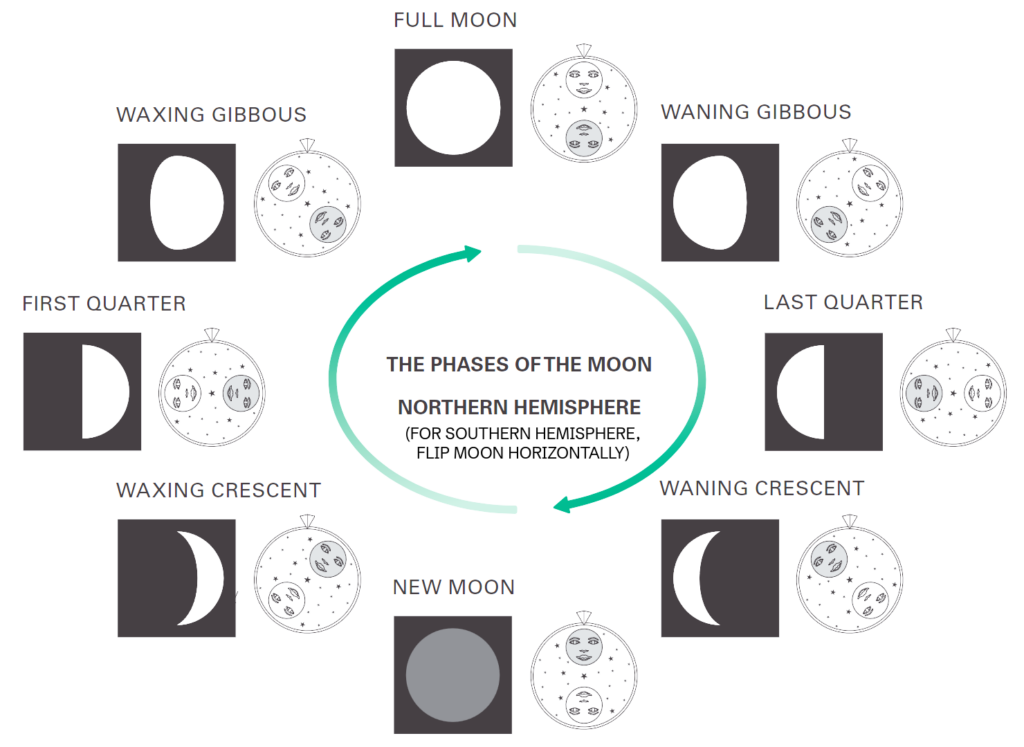
You can think in terms of how far up the left moon is. If the dark moon (new moon) is 1/4 of the way up the left side of the dial, that means 1/4th of the moon is dark and it’s getting darker (waning):
Here’s a full visual of it from the instruction manual:
Movement
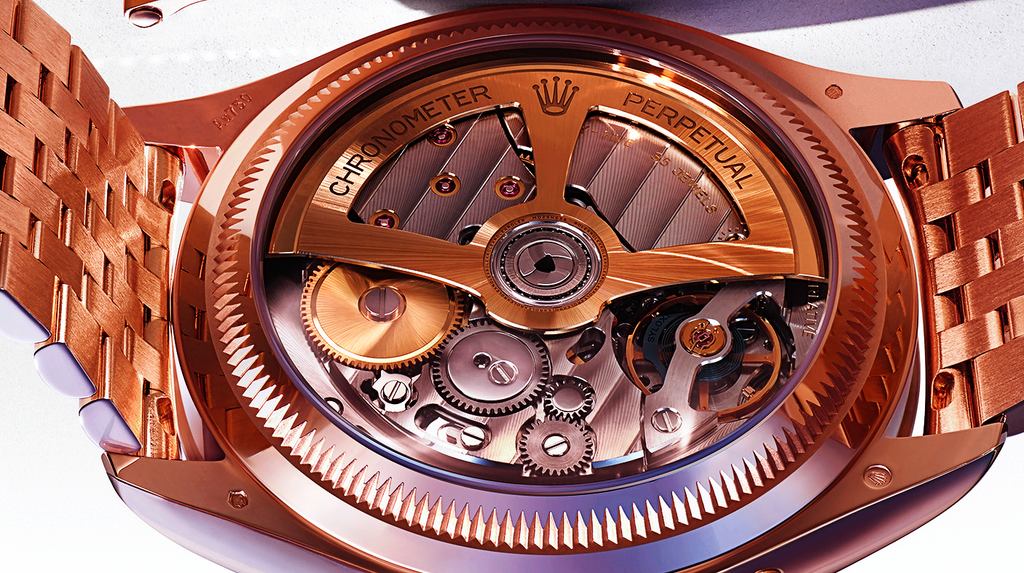
The first watch to feature the Dynapulse dual-indirect-impulse escapement was the Rolex Land-Dweller, one of the 2025 Rolex releases. The caliber 7190 powering the Perpetual Padellone has the same impressive escapement, 66 hours of power reserve, high beat rate (10 ticks per second instead of the typical 8), and skeletonized gold rotor visible through an exhibition caseback:
What further distinguishes caliber 7190 is its Haplos annual calendar system. Rolex had filed for patents for “instantaneous-change” technology related to calendar watches, so we were vaguely expecting something like this, and here it is. Unlike many complicated watches, whose calendar indications creep forward over several hours, the Perpetual Padellone snaps every display cleanly into place at midnight:
Because it’s a Superlative Chronometer movement, caliber 7190 is certified first by COSC to keep time within -4 to +6 seconds per day, then cased in a watch and tested to Rolex’s own ±2 seconds per day standard. And while most moonphase watches use a 59-tooth gear that rounds the length of a lunar cycle to 29.5 days, Rolex uses a 135-tooth gear to round it more accurately to 29.53125 days (the lunar cycle is really about 29.53059 days long). Now let’s go over the full specs:
Rolex Perpetual Padellone Specs
| Model name | Rolex Perpetual Padellone |
|---|---|
| Reference numbers | 53505-0002 — 18k Everose gold, leather strap 53505-0003 — 18k Everose gold, Settimo bracelet 53506-0002 — 950 platinum, leather strap |
| Case material | 18k Everose gold or 950 platinum, domed sapphire crystal with anti-reflective treatment, sapphire display back |
| Case width | 39 mm |
| Case thickness | 12.2 mm (slightly less than the thickness of a Rolex Submariner) |
| Case lug-to-lug | 45.2 mm |
| Movement caliber | Rolex caliber 7190 (Automatic, 10 beats per second, Dynapulse escapement) |
| Movement functions | Hours, minutes, central seconds, annual calendar with day/month windows and pointer date, moonphase |
| Power reserve | 66 hours |
| Water resistance | 50 m |
| Bracelet / strap | Leather strap or rose gold Settimo bracelet |
| MSRP | $59,000 — 18k Everose gold, leather strap $72,800 — 18k Everose gold, Settimo bracelet $66,200 — 950 platinum, leather strap |
The term “Padellone” was originally just a Rolex collector nickname for the beloved ref. 8171 moonphase watch, so it’s interesting that it’s now an official model name. And, ironically, the new watch’s nickname seems to be the “Perpetual Not Perpetual,” with many collectors mocking the fact that Rolex is so hellbent on using their “Perpetual” trademark to refer to their winding rotor when the term is widely understood to mean “perpetual calendar” in the context of calendar watches.
Ultimately, Rolex is a luxury sports watch brand first and foremost. Dress watches simply don’t get the hype that sports watches do, especially when they cost 60 grand or more. But the Perpetual Padellone is well-executed and technically outstanding, making it one more credible counterpoint to any remaining “Rolex doesn’t do complications” sentiment.



Leave a Reply