How to Avoid Buying a Fake Richard Mille Watch

Richard Mille watches are expensive, technically complex, and instantly recognizable, making them a tempting target for counterfeiters. Some fakes are easy to dismiss, but others require a much closer look, and the sheer variety of Richard Mille references means there is no single detail that separates every fake Richard Mille vs. real example. Case materials, movements, markings, documentation, and even construction can vary considerably from one model to another. So, how can you tell if a Richard Mille is fake? Here’s what to look for before putting serious money on the line.
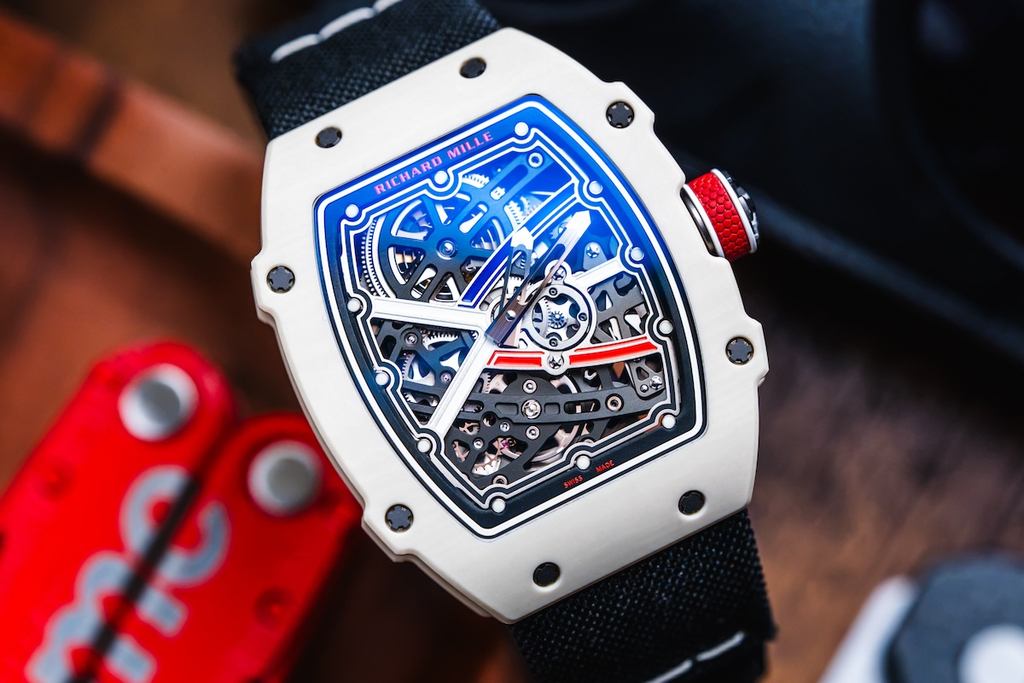
Fake Richard Mille vs. Real: How to Tell
There is no single feature that can determine whether a Richard Mille is authentic. The collection includes everything from ultra-light Carbon TPT sports watches to gold, sapphire, ceramic, and gem-set models, powered by a wide variety of movements and complications. Details that are correct for one reference could be completely wrong for another, which makes knowing exactly what you are looking at the first step.
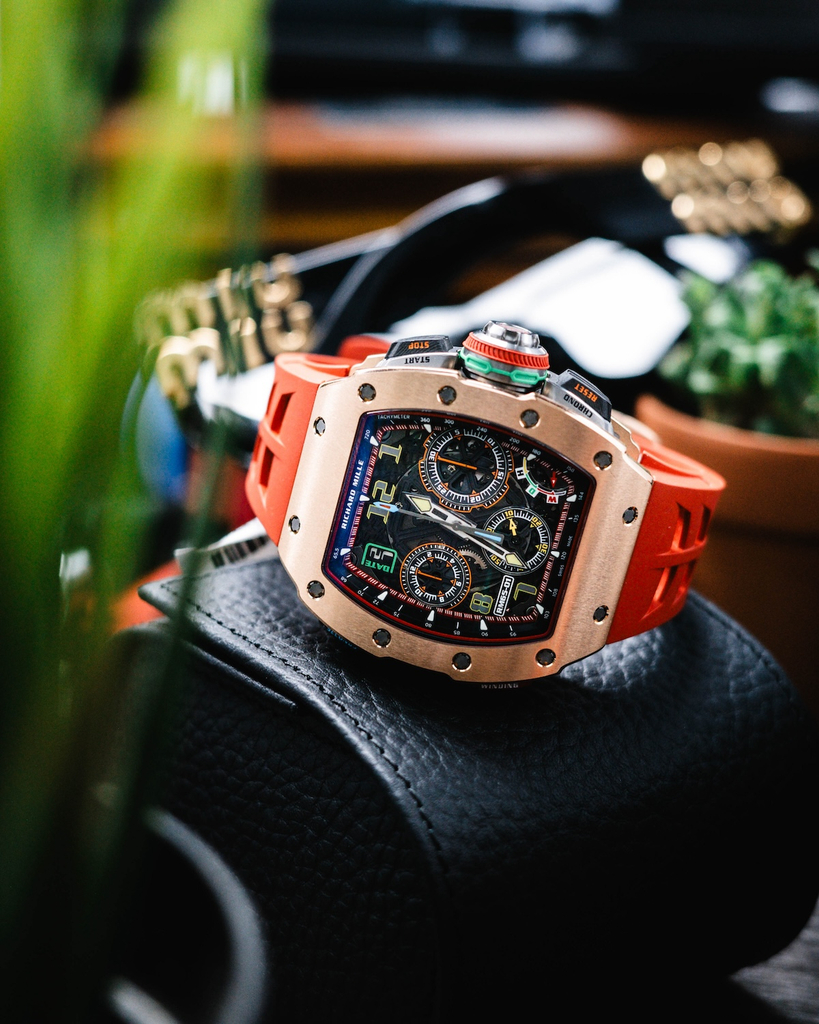
Authentication instead involves checking the watch as a whole. Its case material and construction, dimensions, dial and movement should correspond to the exact reference, while its identifying numbers, documentation, provenance, and service history should tell a consistent story. Even then, there is another possibility to consider: a watch may contain genuine Richard Mille components but have an aftermarket case, gem-setting, or other unauthorized modifications. Richard Mille specifically warns against these types of third-party alterations, which can affect both the integrity and value of a watch.
With that in mind, here are the key areas to examine when evaluating a Richard Mille.
Start With the Exact Richard Mille Reference
Before examining screws, engravings, movements, or paperwork, establish exactly which Richard Mille reference the watch is supposed to be. The brand has produced watches in titanium, gold, Carbon TPT, Quartz TPT, ceramic, sapphire, and other materials, with different movements, complications, case constructions, and dimensions. Our guide to the latest Richard Mille releases gives you an idea of just how varied the current catalog can be. What is correct for one Richard Mille may be completely wrong for another.
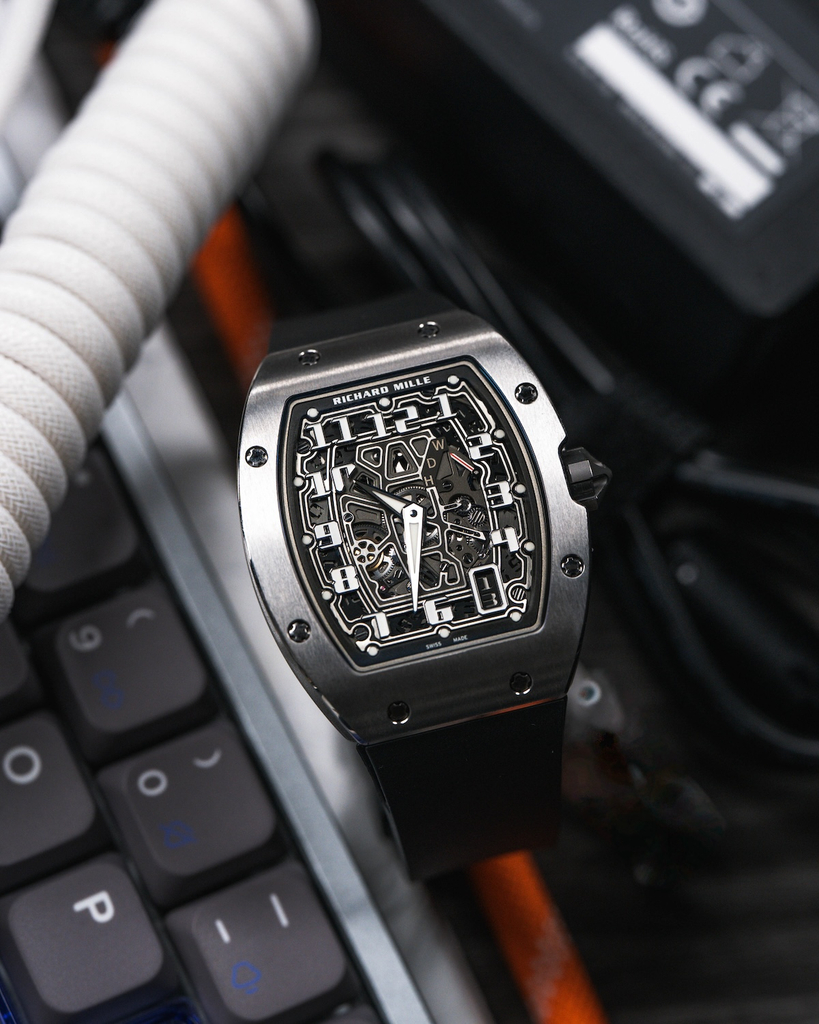
Richard Mille publishes detailed specifications and images for many current and past models, making those a useful starting point for comparison. We’ve also gone deep on quite a few Richard Mille families here at Grey Market Magazine. Depending on the watch you’re researching, these guides may help:
- Understanding Richard Mille Skull Watches
- Understanding Richard Mille RM 11 Watches
- Understanding Richard Mille Rafael Nadal Watches
- Understanding Richard Mille Ferrari Watches
- Understanding Richard Mille Bubba Watson Watches
- Understanding Pharrell Williams’ Richard Mille Watches
Once you’ve identified the watch, check that its case material, dimensions, dial configuration, functions, movement, and other visible details correspond to that exact reference. Comparing a questionable watch with a random Richard Mille photo online isn’t particularly useful. Compare like with like: the same reference, material, and configuration, using Richard Mille’s own specifications and imagery whenever possible.
Examine the Case, Materials, and Construction
Once you’ve confirmed the reference, the case is a logical place to start looking for discrepancies. Richard Mille uses an unusually broad range of materials, including titanium, gold, ceramic, Carbon TPT, Quartz TPT, and sapphire, and producing those complex cases requires extremely precise machining. Even the brand’s familiar tonneau-shaped cases can involve hundreds of separate machining operations before finishing and assembly.
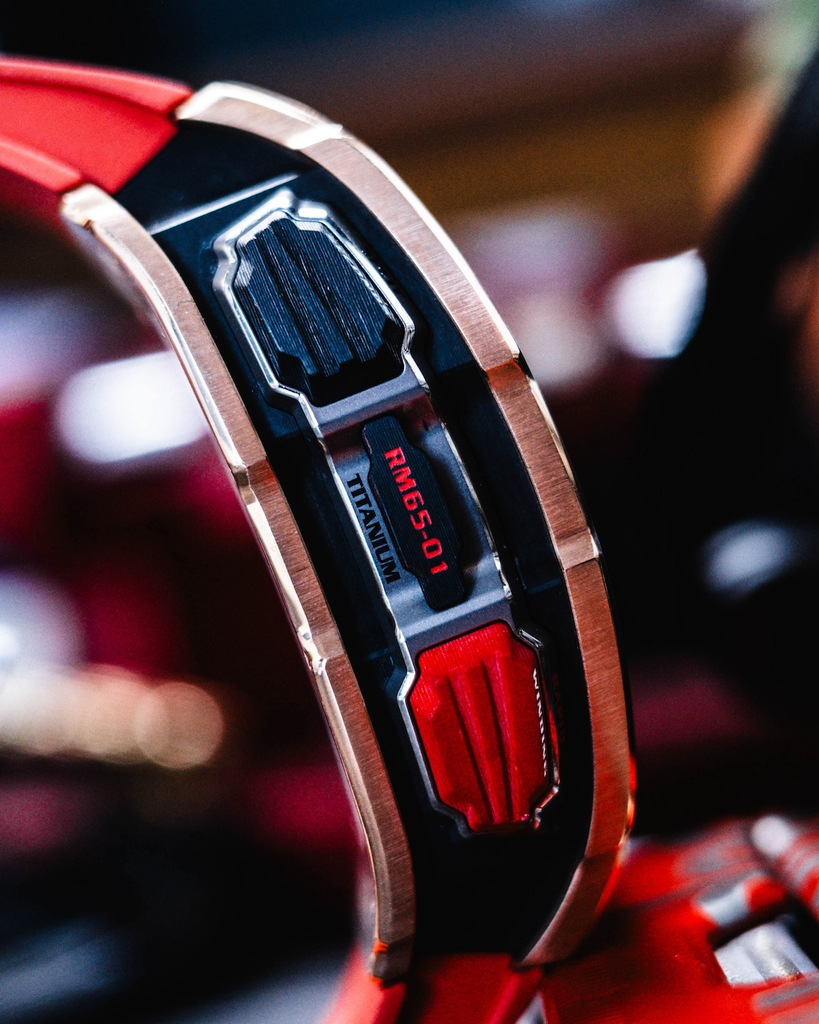
When comparing the watch with the genuine reference, look closely at:
- Case material: Is it actually a material offered for that reference and configuration?
- Dimensions and proportions: Do the case measurements and overall shape match Richard Mille’s specifications?
- Crown and pushers: Check their shape, placement, materials, and design against the genuine watch.
- Screws: Richard Mille commonly uses distinctive spline screws, but their number and placement vary by reference.
- Fit and finishing: Look at how cleanly the bezel, caseband, caseback, crystal, and other components fit together, along with the quality of the machining and finishing.
Weight can provide another clue, but don’t fall for the often-repeated claim that a real Richard Mille should always feel extremely light. Many of the brand’s sports watches were specifically engineered to minimize weight, but Richard Mille also works with gold, platinum, sapphire, and other materials that produce very different results. What matters is whether the watch’s weight makes sense for the reference and materials it claims to use.
And don’t assume that a genuine movement necessarily means a completely original watch. Richard Mille has specifically warned about genuine calibers being transferred into unauthorized replacement cases, including aftermarket sapphire cases. The company says these cases may have inferior finishing and can compromise water resistance. That makes case authenticity important in its own right, particularly when evaluating rare and extremely valuable sapphire models.
Check the Dial, Hands, and Visible Components
Richard Mille’s largely openworked designs put much of the movement architecture on display, which gives you plenty to compare with images of the genuine reference. Look closely at the position, proportions, colors, and finishing of everything visible from the front of the watch, rather than focusing solely on the Richard Mille name.
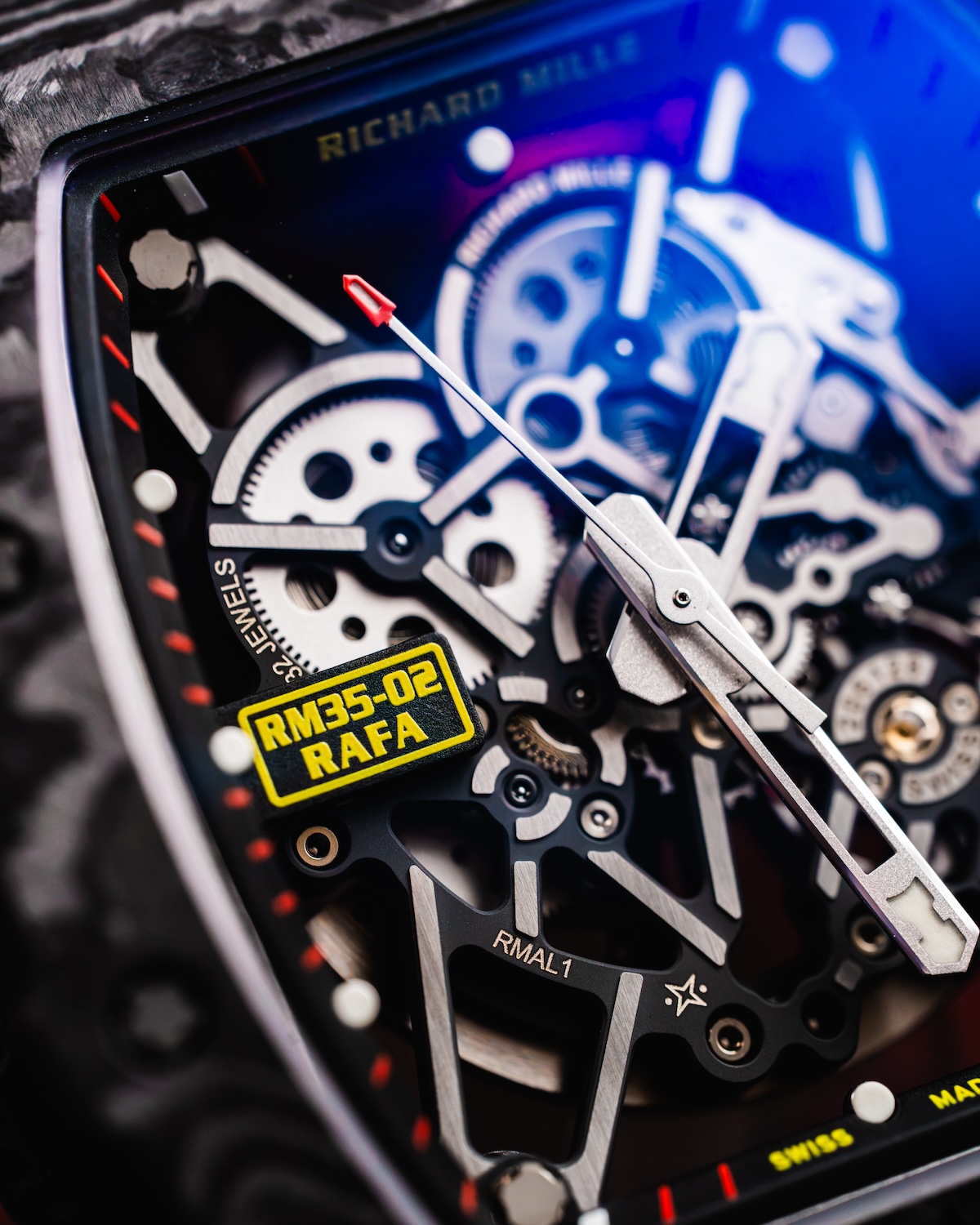
Details to compare include:
- Logos and text: Check the typeface, size, spacing, position, and quality of the printing.
- Hands and hour markers: Make sure their shape, color, finish, and placement correspond to the reference.
- Displays and indicators: Dates, chronograph counters, function selectors, power reserve indicators, tourbillons, and other complications should appear in the correct positions and operate as intended.
- Visible movement components: Bridges, gears, screws, and other exposed components should match the architecture of the genuine caliber.
- Colors and materials: Check that accents, components, and decorative elements correspond to the specific version you’re examining.
Don’t expect every counterfeit RM to announce itself with crooked printing or an obviously misplaced logo. Small discrepancies become much more meaningful when several appear on the same watch, and some of the most useful differences may only become apparent through a side-by-side comparison with high-resolution images of the exact reference.
Check the Movement
The movement can reveal some of the most useful discrepancies in a questionable Richard Mille, particularly because so many of the brand’s watches expose much of their mechanics through an openworked dial or sapphire caseback. Start by establishing exactly which caliber should power the reference, then compare its architecture, components, functions, and finishing with Richard Mille’s specifications and official imagery.
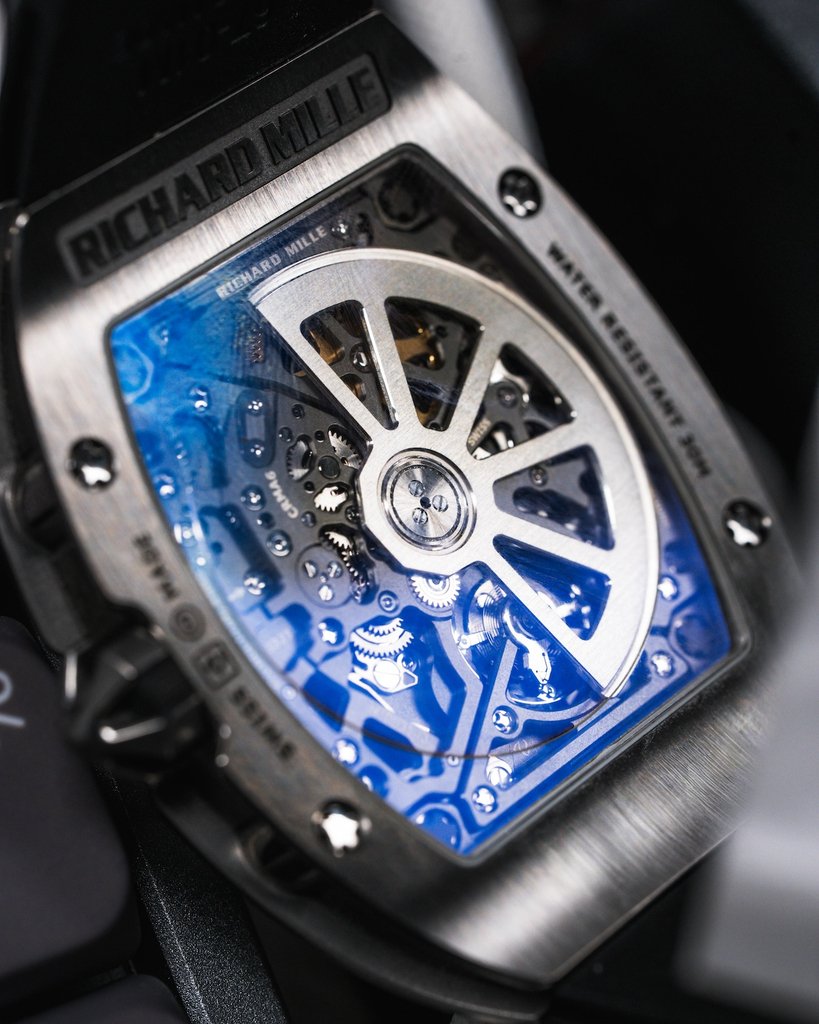
Richard Mille publishes unusually detailed information about its movements. Depending on the caliber, that can include the materials used for the baseplate and bridges, jewel count, frequency, power reserve, component layout, and specific finishing techniques. The RM 55-01’s manual-winding movement, for example, uses grade 5 titanium for its baseplate and bridges, with Richard Mille specifying individual finishing treatments for numerous components.
When examining the movement, look for:
- Correct caliber: Does the movement match the one specified for that exact reference?
- Architecture and layout: Compare the positions and shapes of bridges, gears, barrels, rotors, tourbillons, and other major components.
- Functions: The movement should perform the complications and displays the watch claims to have.
- Materials and finishing: Compare visible surfaces and components with Richard Mille’s description and high-resolution images of the genuine caliber.
- Movement markings: Check that visible engravings and inscriptions correspond to those found on the correct movement.

Some cheap fakes make this easy. The fake pictured on the left, for example, mimics the appearance of a Richard Mille tourbillon, but flipping it over reveals a battery inside rather than the mechanical movement it claims to have. But don’t expect every fake to be that obvious. A movement that looks convincing through the crystal isn’t proof of authenticity, and determining exactly what is inside the watch may require examination by an experienced watchmaker or authenticator.
Check Engravings and Identifying Numbers
Richard Mille uses identifying numbers to track its watches, but don’t assume there is one universal set of markings to look for. Richard Mille’s current warranty system pairs each watch with its serial number, while brand documentation has historically recorded information including the model, reference, case number, movement number, and warranty number.
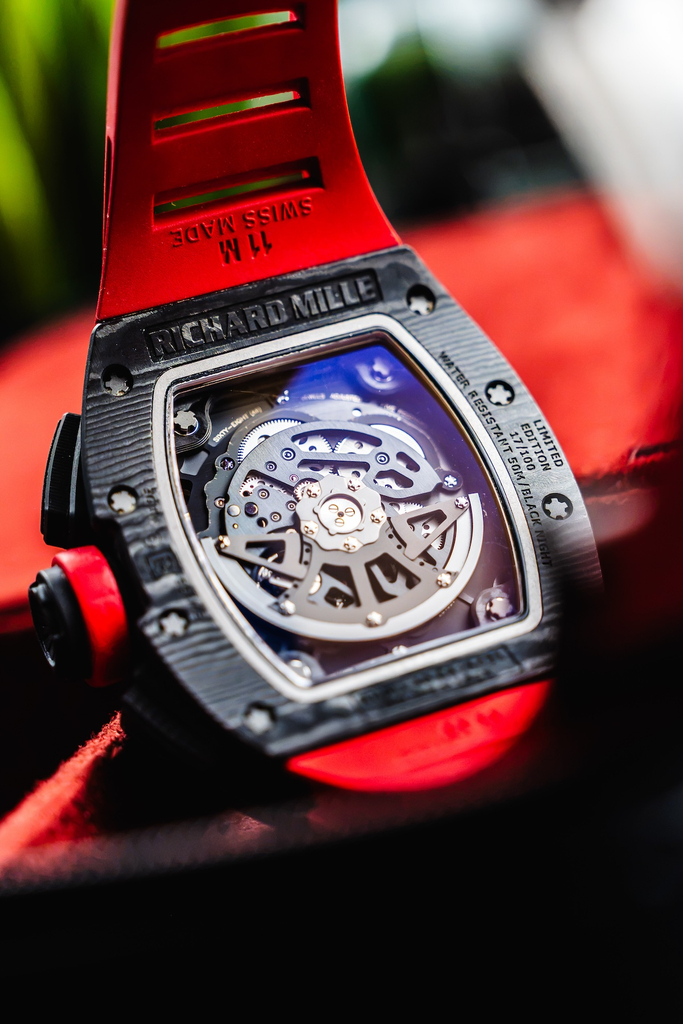
When examining a watch, compare any visible reference numbers, serial numbers, engravings, and other identifying marks with its documentation and the exact model you’re researching. Pay attention to the quality and placement of the markings, but more importantly, make sure the information tells a consistent story.
A serial number that looks legitimate isn’t proof that a watch is authentic. Numbers can be copied, and Richard Mille does not provide a public serial-number database or decoder that consumers can use to authenticate a watch. Be wary of online guides claiming that every genuine Richard Mille follows one particular numbering format or has its serial number engraved in one universal location.
Richard Mille Box, Papers, and Warranty Documentation
Original documentation can provide valuable evidence when evaluating a Richard Mille, but papers alone don’t authenticate the watch. Documentation has also changed over the years, so what you should expect to receive depends partly on when the watch was sold.
Richard Mille’s traditional physical warranty documentation includes a warranty card issued by the manufacture in Les Breuleux and protected by a holographic security seal. At the time of purchase, the card is signed and dated by staff at an official Richard Mille boutique, while an activation card included in the warranty folder is paired with the watch’s serial number. Earlier Richard Mille documentation could also record details including the model, case number, movement number, warranty number, servicing, and previous owners.
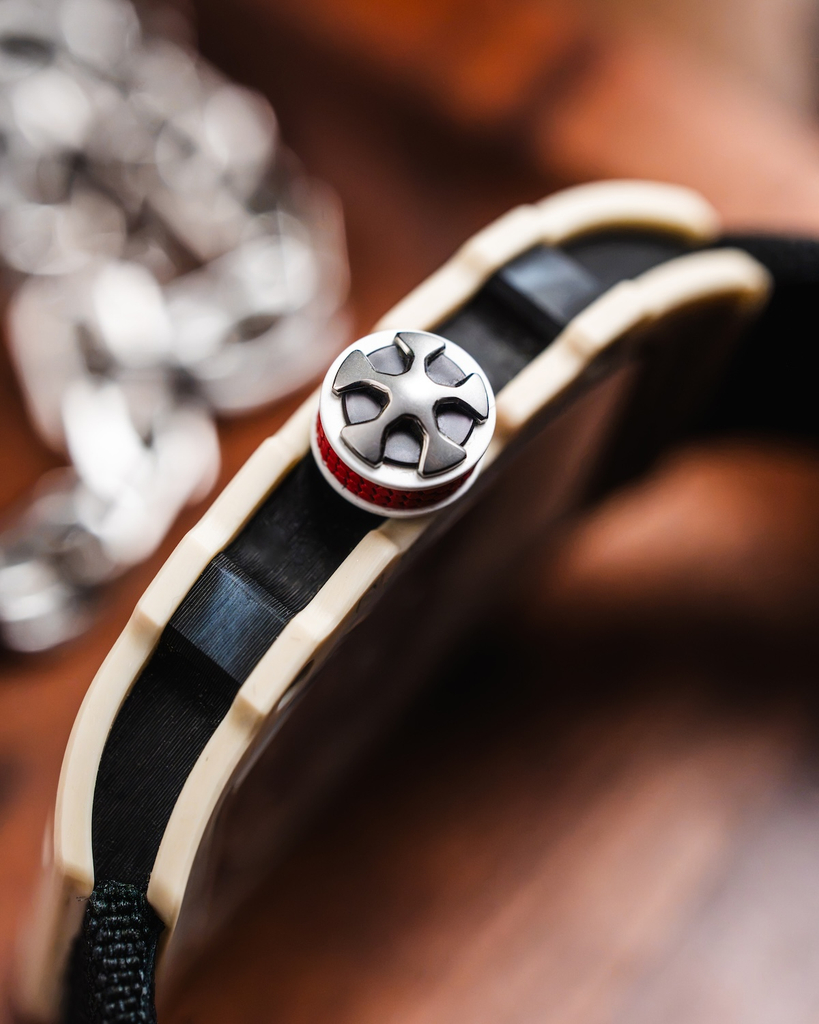
That makes the paperwork useful for checking whether the watch, its identifying information, and its history agree with one another. But a box and apparently correct papers should still be treated as supporting evidence rather than proof of authenticity. Documentation can become separated from a watch, and the absence of a particular card or booklet isn’t automatically evidence of a fake, especially when comparing watches sold in different periods.
Richard Mille Digital Certification
For newer watches, however, Richard Mille is beginning to change the system entirely. The company is introducing a fully digital warranty platform designed to replace its traditional physical guarantees. Built on blockchain technology, the system is intended to provide a secure record of a watch’s authenticity and history.
The RM 43-01 Ferrari and RM UP-01 Ferrari were the first references to receive full digital certification, with Richard Mille planning to expand the system. Owners can use the platform to access information about their watch, view its user manual, book a boutique appointment, securely transfer ownership, and report the watch as lost or stolen.
Richard Mille also has a dedicated Certification app, with full functionality available to owners of registered watches. For buyers, that makes digital certification another piece of the provenance puzzle for watches covered by the new system. It shouldn’t, however, be expected on every Richard Mille: most pre-owned RM watches on the secondary market predate the rollout and will have the physical documentation appropriate to their era.
Check the Watch’s Service History and Provenance
A documented service history can be particularly valuable when evaluating a pre-owned Richard Mille. The company’s after-sales network maintains records of watches it services, while warranty and activation information is associated with a watch’s serial number. Those records can help establish a history that goes beyond simply having a box and set of papers, and authorized servicing may also uncover evidence of previous unauthorized intervention.
None of this means that a Richard Mille without an extensive authorized service history is necessarily fake. But when you’re considering a watch worth tens or even hundreds of thousands of dollars, a documented history connected to the watch itself provides considerably more reassurance than a collection of loose paperwork with no verifiable trail.
If the Price Looks Too Good to Be True
RM watches command some of the highest prices in the luxury watch market, with the most expensive Richard Mille watches reaching well into seven figures. An unusually low asking price should therefore warrant closer scrutiny. Before buying, research what the exact reference and configuration typically sells for on the secondary market rather than relying solely on its original retail price.
Price alone can’t tell you whether a Richard Mille is fake. But if a watch is being offered for a fraction of what comparable examples normally sell for, don’t treat that as a lucky break. Treat it as a reason to investigate the watch, its history, and the seller much more carefully.
Get a Richard Mille Professionally Authenticated
Even a careful comparison can’t replace a professional inspection. Sophisticated counterfeits may require the watch to be opened and its movement, components, and construction examined by someone with extensive experience handling genuine Richard Mille watches.

If you’re buying privately and have any doubts about a watch, arrange for professional authentication before completing the purchase. Alternatively, buy from an established dealer with the expertise and procedures to authenticate its inventory before it ever reaches the sales floor. For a watch this valuable and complex, knowing who has authenticated it and what stands behind the sale matters as much as what you can determine from photographs.
Buy From a Trusted Seller
Who you’re buying from matters enormously when dealing with a watch as valuable and technically complex as a Richard Mille. An established pre-owned dealer should have the expertise to authenticate the watches it sells, clearly disclose condition and any known modifications, and stand behind the sale if a problem emerges later.

Look for a seller with an established reputation, extensive experience buying and selling Richard Mille watches, a clear authentication process, transparent policies, and meaningful guarantees behind the watches it sells. Those safeguards are particularly important with Richard Mille, where the difference between a factory-original watch, a sophisticated counterfeit, and a genuine watch containing aftermarket components may not be obvious to the buyer.
The Bottom Line on Fake Richard Mille Watches
There is no single shortcut for determining whether a Richard Mille is authentic. Start with the exact reference, compare the details carefully, and make sure the watch, its documentation, and its history tell a consistent story.

When in doubt, professional authentication and a reputable seller provide an additional layer of protection. With the sums involved, a little extra due diligence before buying is time well spent.
More on Richard Mille:



Leave a Reply