Custom Rolex Guide: Popular Mods and Modders

In the luxury watch world, originality is so sacred that the word “custom” is like a dirty word to many enthusiasts. One of the basic tenets of Rolex collecting is that custom (aftermarket) parts majorly reduce value. But there are some exceptions to that rule, and in this custom Rolex guide we’ll talk about all the high-end modifiers that collectors should know. We’ll also cover some noteworthy custom Rolex styles of the past, as well as some legality issues.
Major High-End Rolex Customizers
There are a handful of high-end Rolex customizers that are well-known to enthusiasts. I would argue that today’s Rolex customization industry was kick-started by the black-coated watch trend of 2005-2012.
PVD-treated or DLC-coated custom black Rolexes were all the rage when T-Pain was topping the charts. Around 2010 I even thought about getting one. I’m not sure why it was such a thing, but it was. And the trend can be traced back to one company in particular.
Bamford
An English watch enthusiast named George Bamford first black-coated a couple of his own Rolexes in 2003, just to make something more distinctive for himself. The overwhelming responses he got, particularly from Italian collectors, led him to start customizing Rolexes for clients. Ultimately he formally opened the Bamford Watch Department in London in 2009.
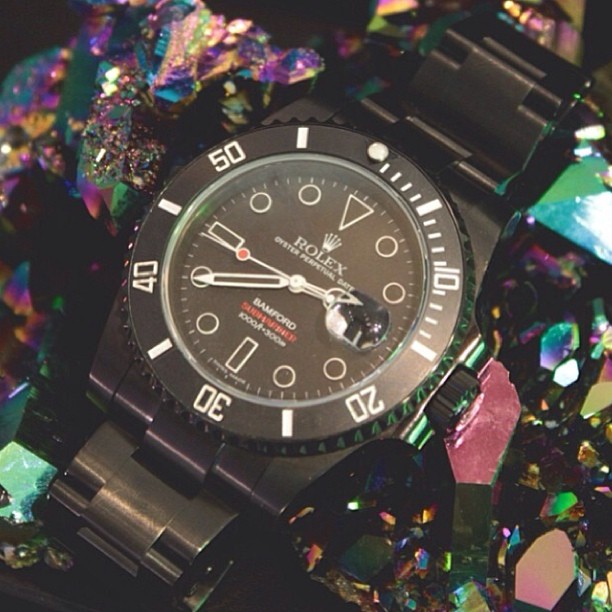
Bamford was purchased by LVMH in 2017, so now they mostly do officially sanctioned customization work for LVMH-owned watch brands like TAG Heuer, Zenith, and Bulgari. While they also maintain official partnerships with Franck Muller, Chopard, Bremont and Girard-Perregaux, Bamford no longer does custom Rolex watches.
Pro-Hunter et al
Pro-Hunter, which was launched in 2008, is probably the second-most recognized brand after Bamford when it comes to blackening custom Rolexes.
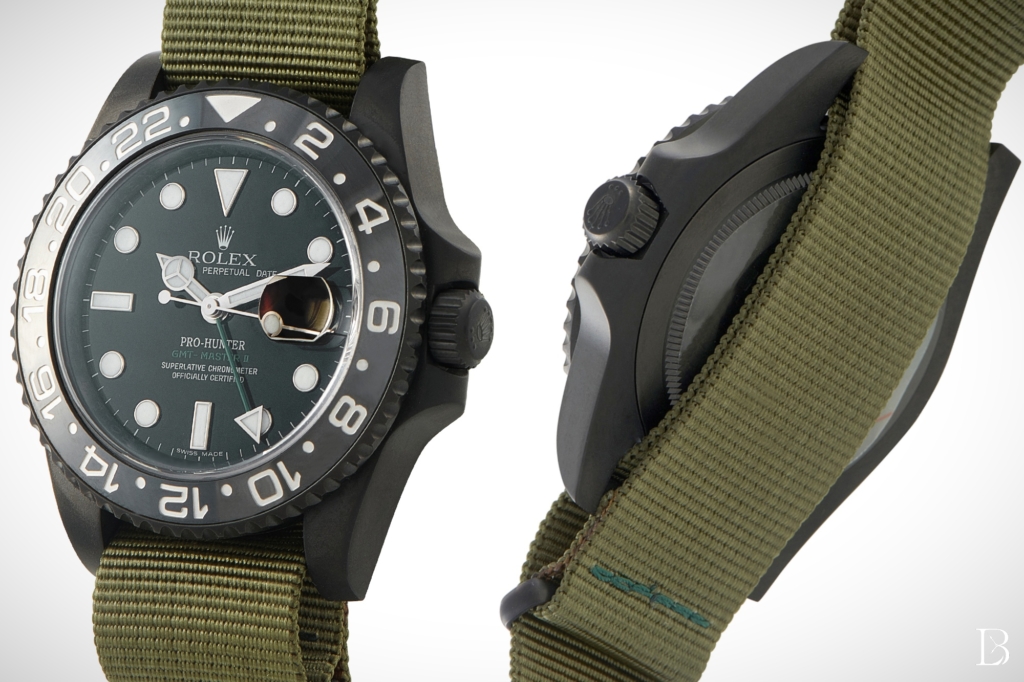
Titan Black does similar modifications, too, and interestingly, all three of those watch-blackening firms are based in London, England. Meanwhile Blaken is the most noteworthy such customizer in Germany.
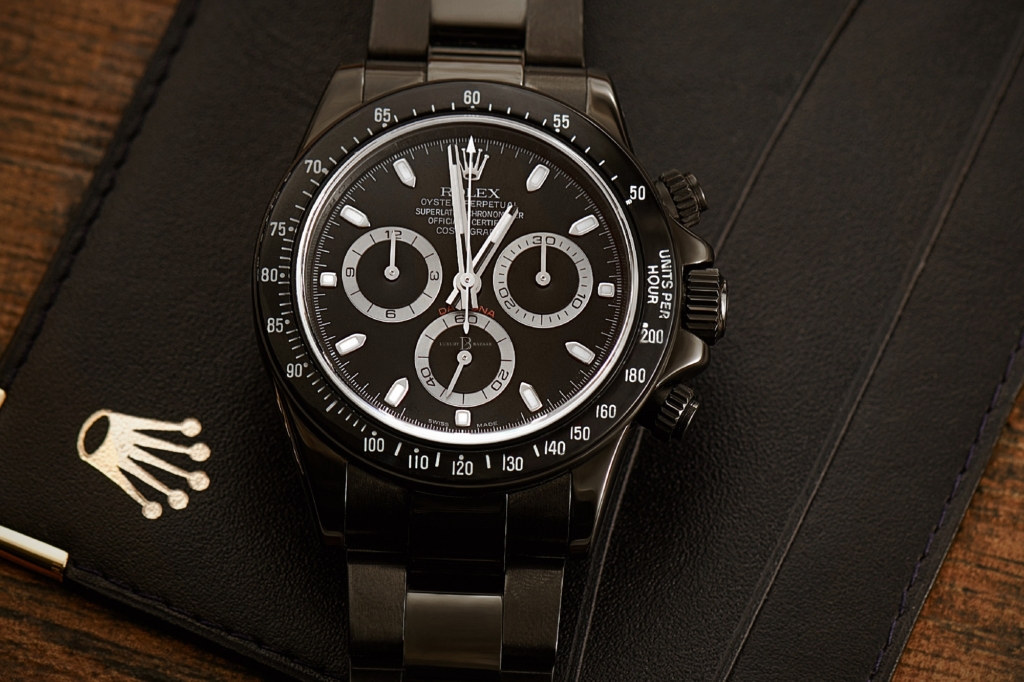
Other customizers like Label Noir largely established their brands by blackening Rolexes, too. I should note that Label Noir even made a Rolex Milgauss with a tourbillon, although like Bamford, they have since abandoned the custom Rolex world in favor of an official brand partnership (in this case, with Maurice LaCroix).
A Note About PVD vs. DLC
PVD (Physical Vapor Deposition) is a vacuum‑based process for depositing thin films, while DLC (Diamond‑Like Carbon) refers to a particular carbon‑based coating with diamond‑like properties. DLC can be deposited using PVD‑type methods, but in watch‑collector shorthand “PVD” usually means basic PVD coatings while “DLC” means the harder carbon coating.
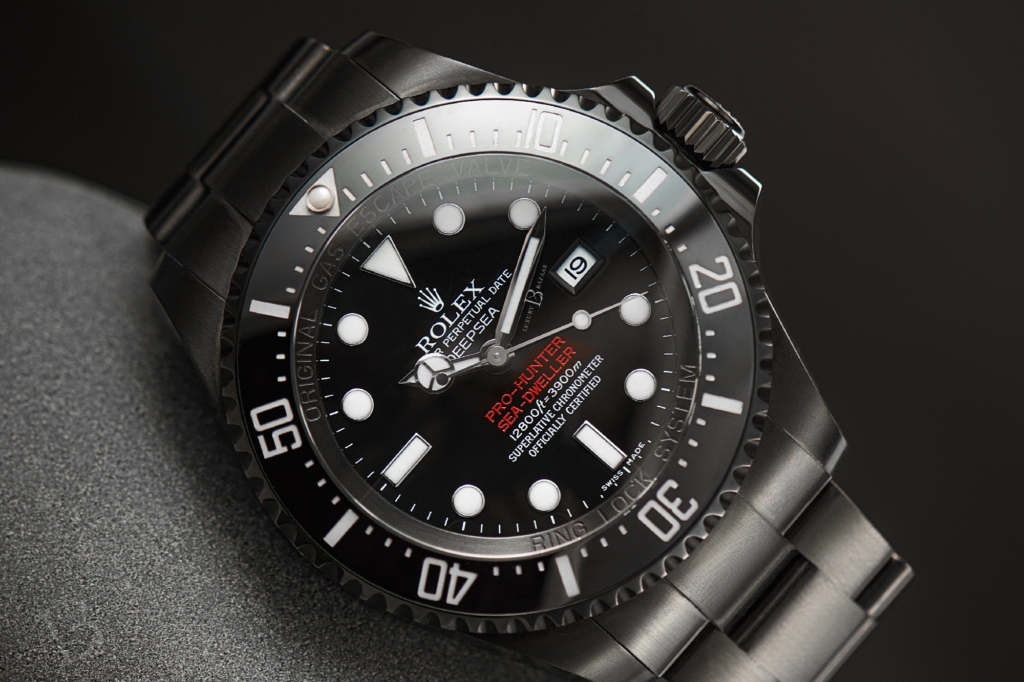
DLC is always black, but other colors are possible with PVD. DLC is generally more costly and regarded as more scratch-resistant. Years ago DLC was marketed as a way to “protect” your Rolex from scratches, and indeed it can reduce the quantity of scratches. The downside is, the scratches that do pierce the black coating are particularly noticeable and annoying.
Artisans de Genève
Now that Bamford is an LVMH brand, I would say the undisputed #1 name in the Rolex customizing world is Artisans de Genève. While other Rolex customizers are mostly about changing colors and/or adding gems, ADG goes way beyond that. They’ll manufacture entirely different hands, bezels, dials or even cases as needed. Skeletonization is also one of their strengths.
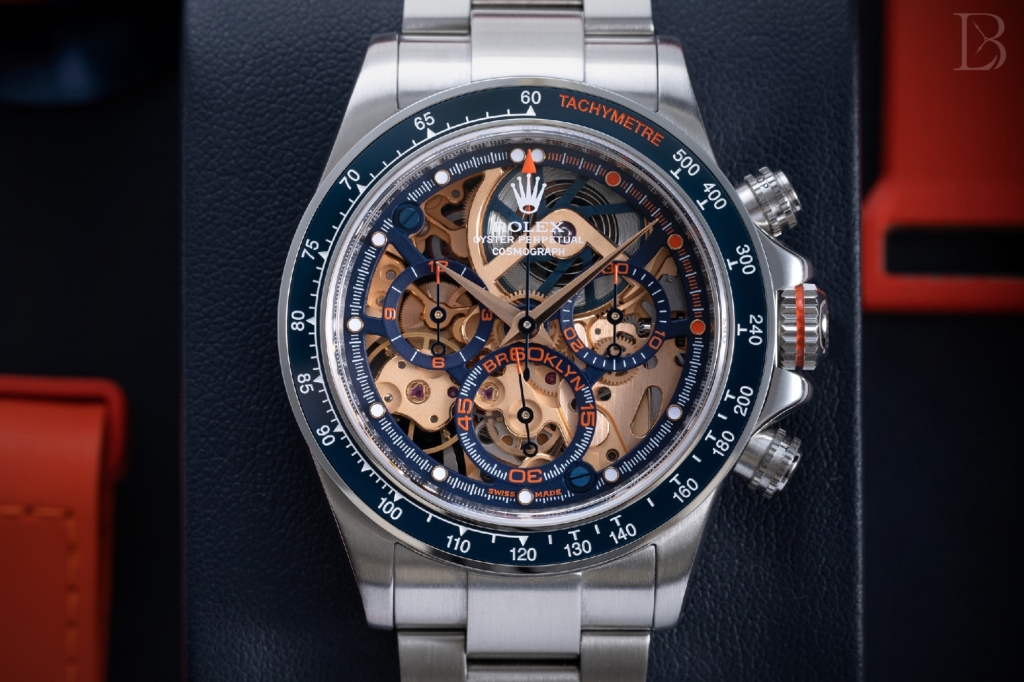
Rolex collectors generally regard custom dials, bezels and cases as counterfeit, but after over two decades in business, ADG’s own Swiss-made parts have proven to be of high enough quality that enthusiasts generally accept them for what they are. Their work is exceptional, and their high prices reflect that.
MAD Paris
The leading French firm in the world of custom Rolex watches is undoubtedly MAD Paris. They started customizing Rolexes around the same time as Pro-Hunter, and also were largely known for doing black coatings. But over time they grew to be more upmarket and Artisans de Genève-like, offering things like exhibition casebacks and skeletonized movements in some instances.
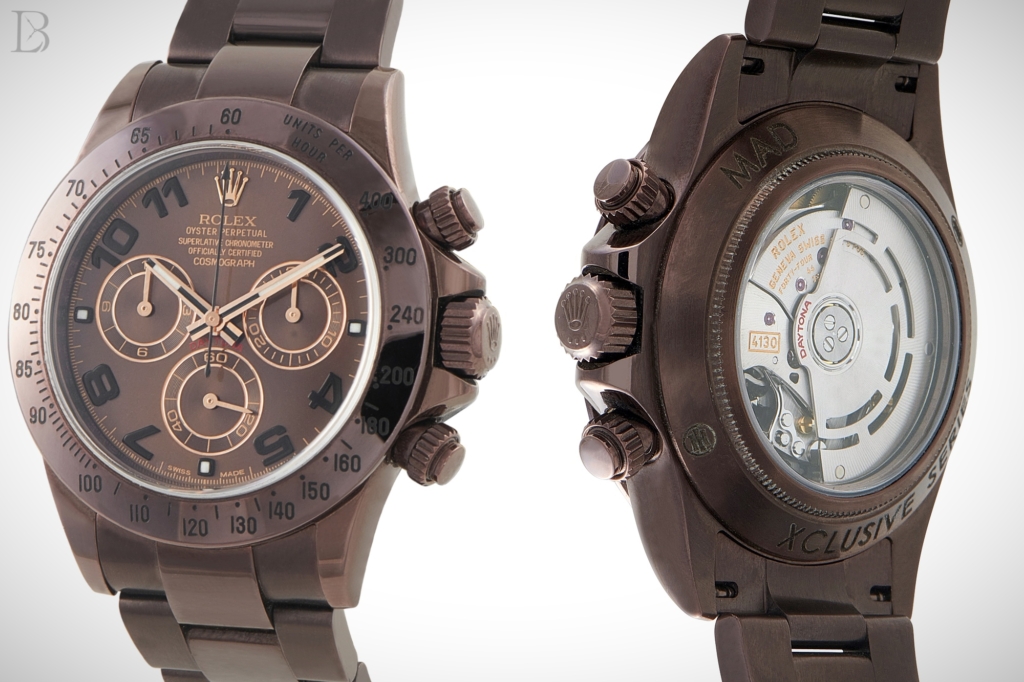
MAD Paris does gun-esque engraving work on watches too. But the custom Rolex that MAD Paris is best known for is the Who Cares I’m Already Late Rolex. They only made five examples, but by 2023, aftermarket dial producers were copying the style en masse and now this nihilist aesthetic is part of the Rolex collector zeitgeist:

From Authorized Dealer to Custom Rolex Dealer: Asprey
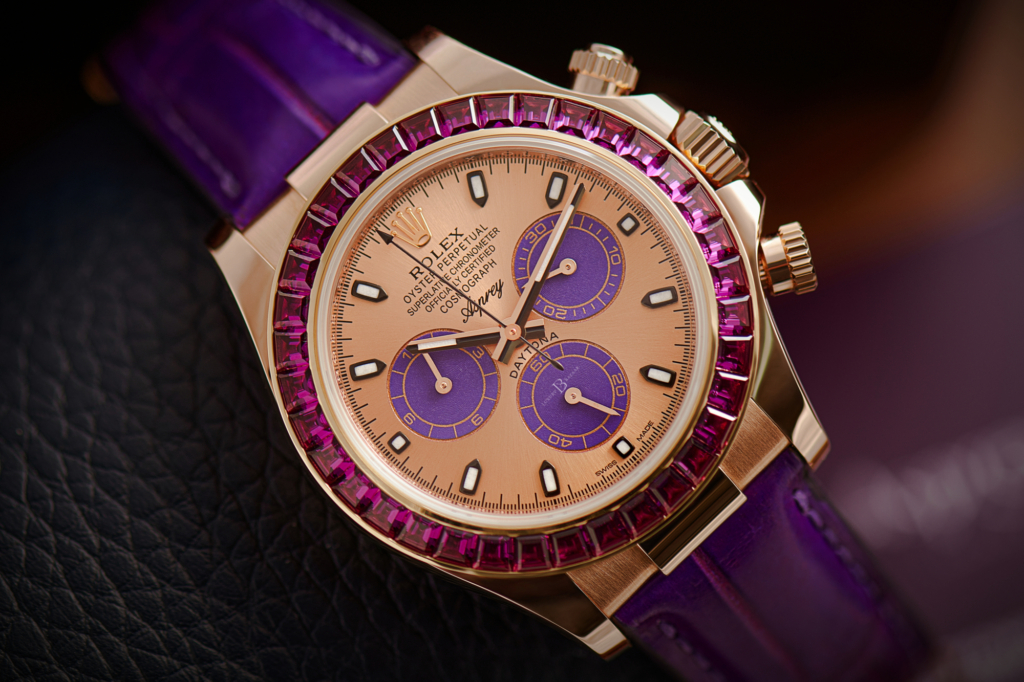
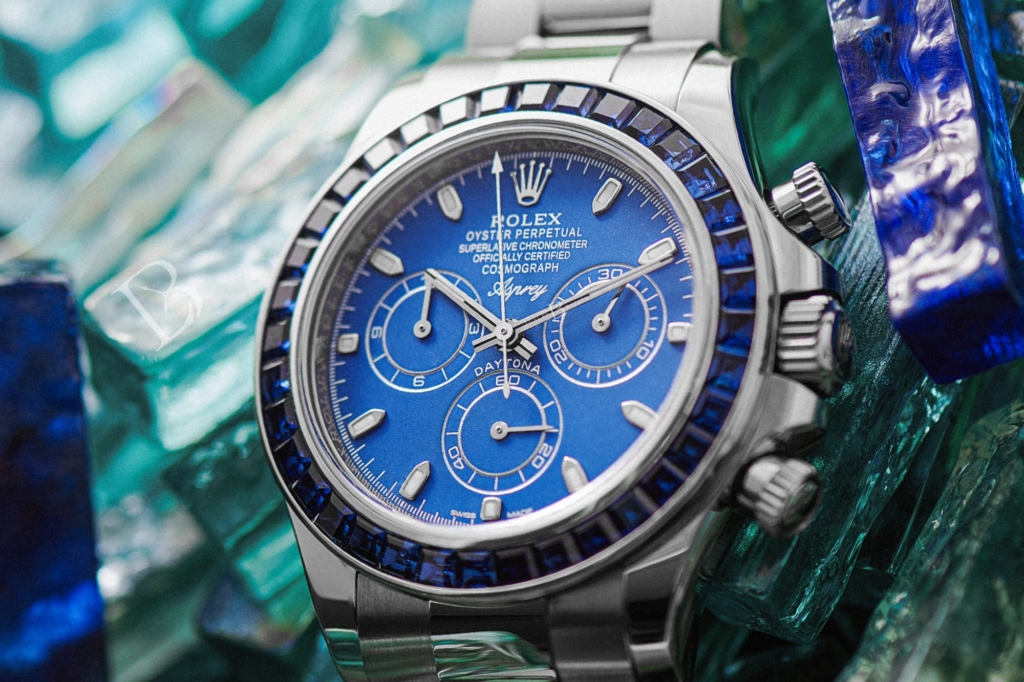
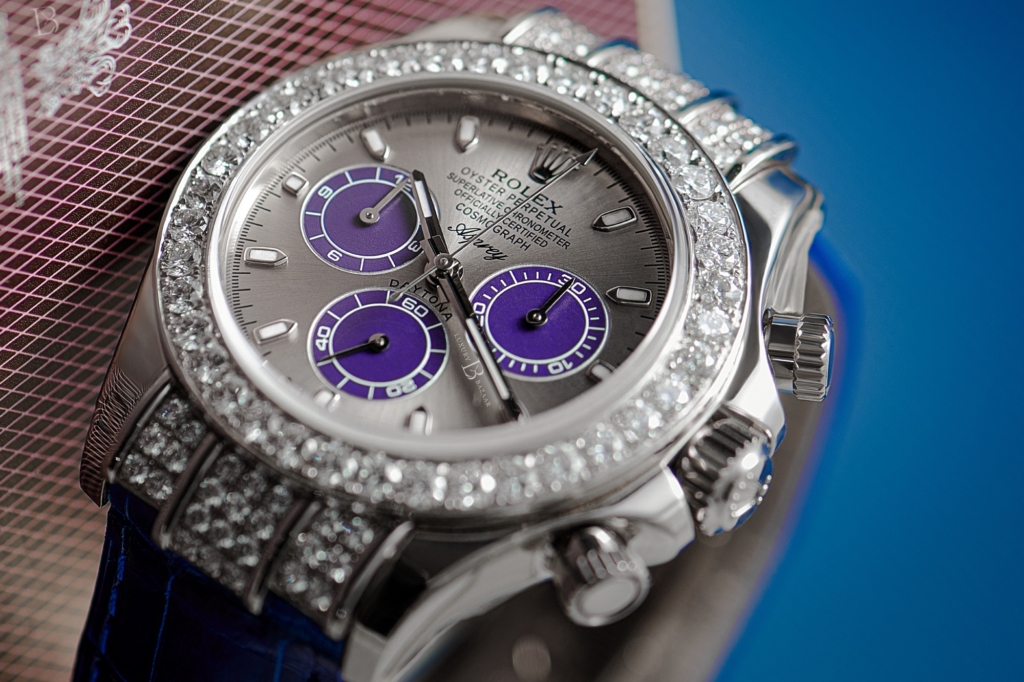
Asprey, who was an authorized Rolex dealer for about 85 years, is the jeweler that stamped the famous Khanjar Rolex dials for the Sultan of Oman years ago. (Most Rolex logo dials were actually from the factory!) Asprey sold a handful of high-end custom Rolex watches done by Bamford in 2012, along with a batch of 25 Daytonas and some Sky-Dwellers they did themselves in 2022.
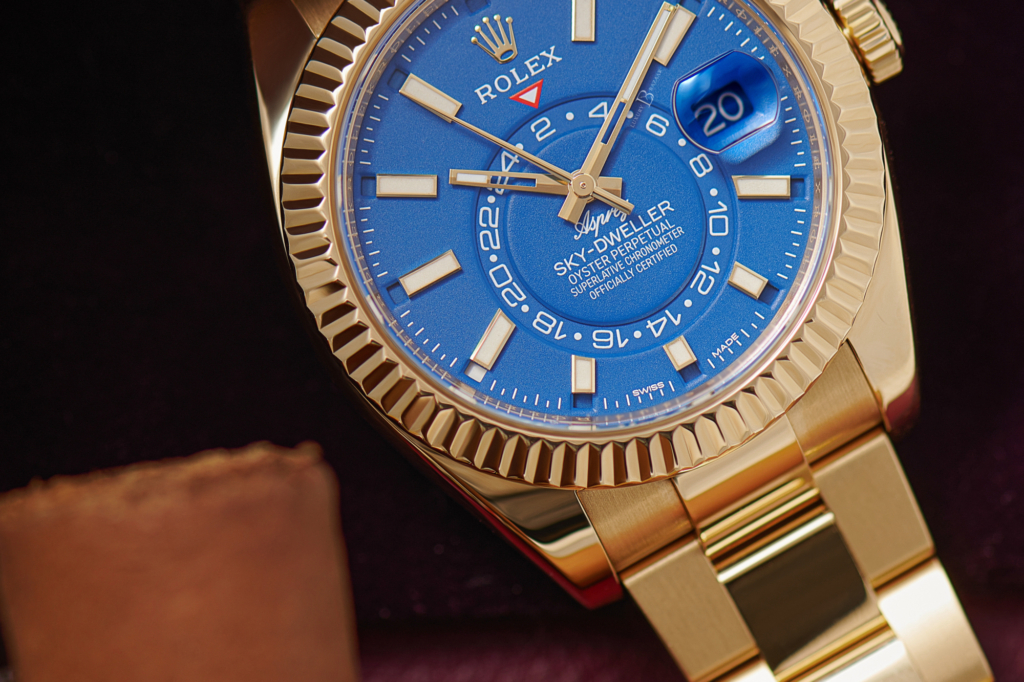
Asprey isn’t customizing Rolexes anymore, but when Asprey-branded colorful Daytonas come up for auction they generally sell for well into six figures.
More on Custom Rolex Watches:

That pretty much covers the most oft-mentioned names when it comes to customizing Rolex watches today. Now let’s talk about some popular customizations of yesteryear.
Popular Custom Rolex Mods of the Past
In the 1980s-1990s, originality wasn’t so sacred among Rolex owners. Some rather “loud” custom Rolexes were borne out of that era.
Golden Nugget Rolex
A Gold Nugget Rolex has a custom gold bracelet, sometimes irreversibly fused to the watch, with the texture of raw gold nuggets.
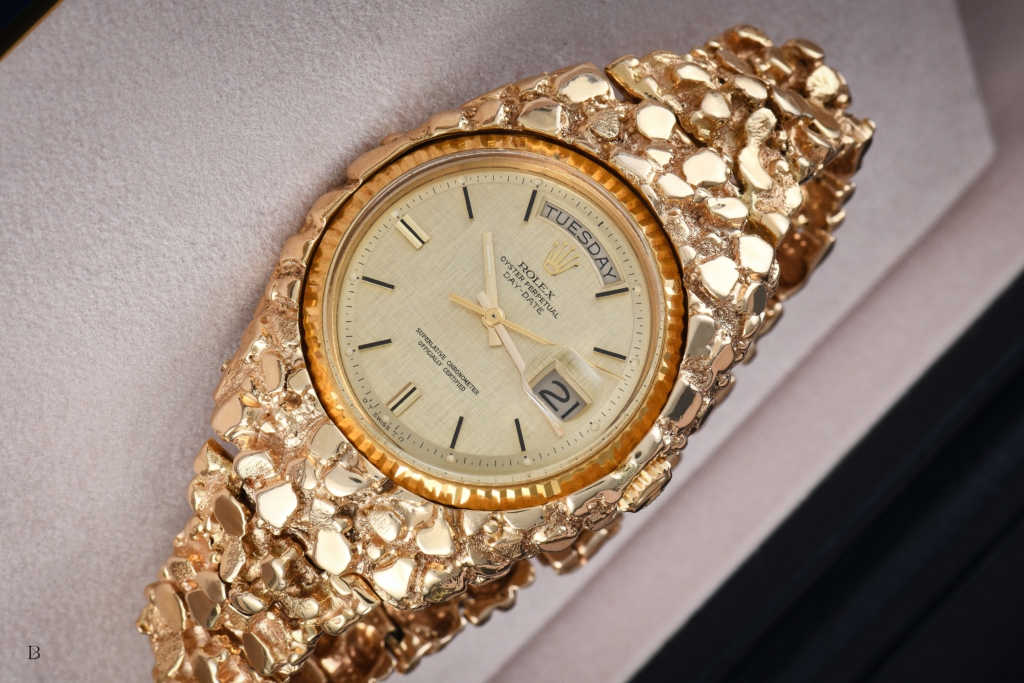
Gold nugget jewelry can be made with a mold, with actual raw gold nuggets, or by hammering. Gold nugget Rolexes are of the hammered variety. Eminem famously owns one.
John Bull Rolex
If you hear somebody mention a “John Bull Rolex,” that’s a Rolex with a custom hand-applied case/bracelet texture done by Günter Miethe. Mr. Miethe was the in-house watchmaker at John Bull, the only authorized Rolex dealer in the Bahamas.
In addition to the style shown above, Miethe also did an “orange peel” texture. The heyday of these “John Bull specials” was from about 1987-2001, and rumor has it they were popular within a certain subset of the drug dealing world. Nowadays they sell for a slight premium over a comparable original Rolex. Although his engraving styles have been copied, the examples actually done by Miethe generally look far better (and are worth more).
Custom Diamonds on a Rolex
By far the most common way to customize a Rolex is to add diamonds to it. The practice really blew up in the 1990s, and the amount of old ladies’ Datejusts with aftermarket diamonds on them is massive.
One way to tell if a Rolex’s diamonds are custom is if they have the wrong settings. Rolex used pretty simple square diamond settings until about 1997, when they switched to the more modern octagonal settings. So if you see a watch from before that with the octagonal type, you can be confident it’s custom. And Rolex’s factory diamond alignment is usually pretty much perfect.
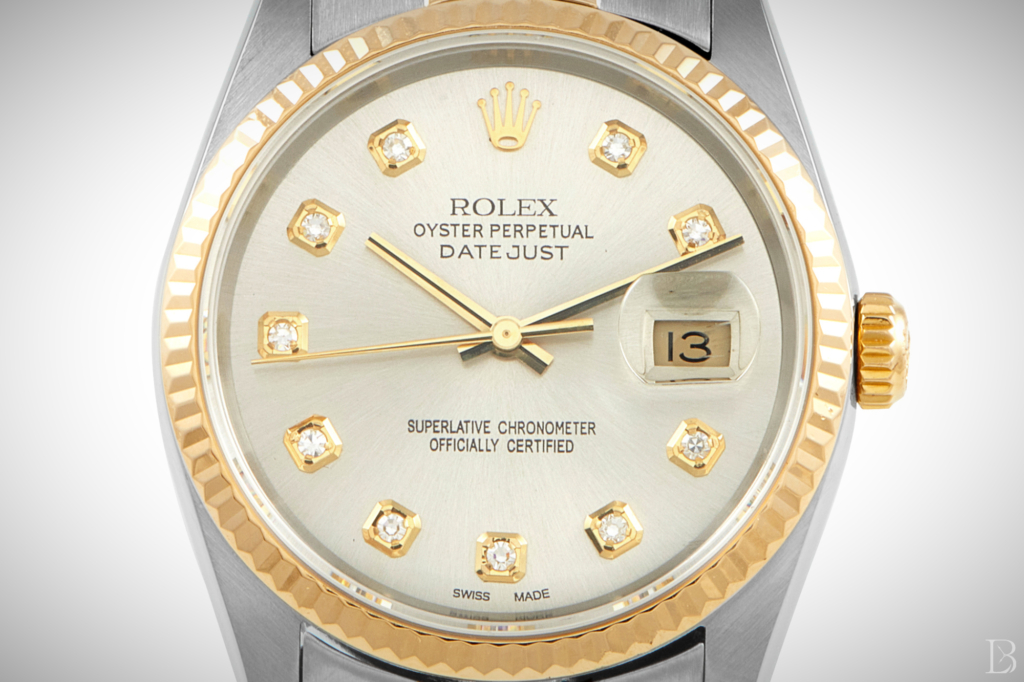
Also, custom-added diamonds on Rolex dials are often farther in towards the center than factory ones, because in some cases the regular full-size minute markers are still there. And if you see trapezoidal diamond hour markers at 6 and 9 o’clock, that was a popular custom look for a while, but Rolex never did that from the factory.
If you see “TDC” written near the 9 o’clock marker of a Rolex dial, that means the dial was refinished by Time Delay Corp. in Dallas, TX–one of the biggest Rolex dial customizers in the industry. It’s worth noting that they write “TDC” on there because of some lawsuits that Rolex filed. Let’s get more into that now.
Legality of Custom Rolex Watches?
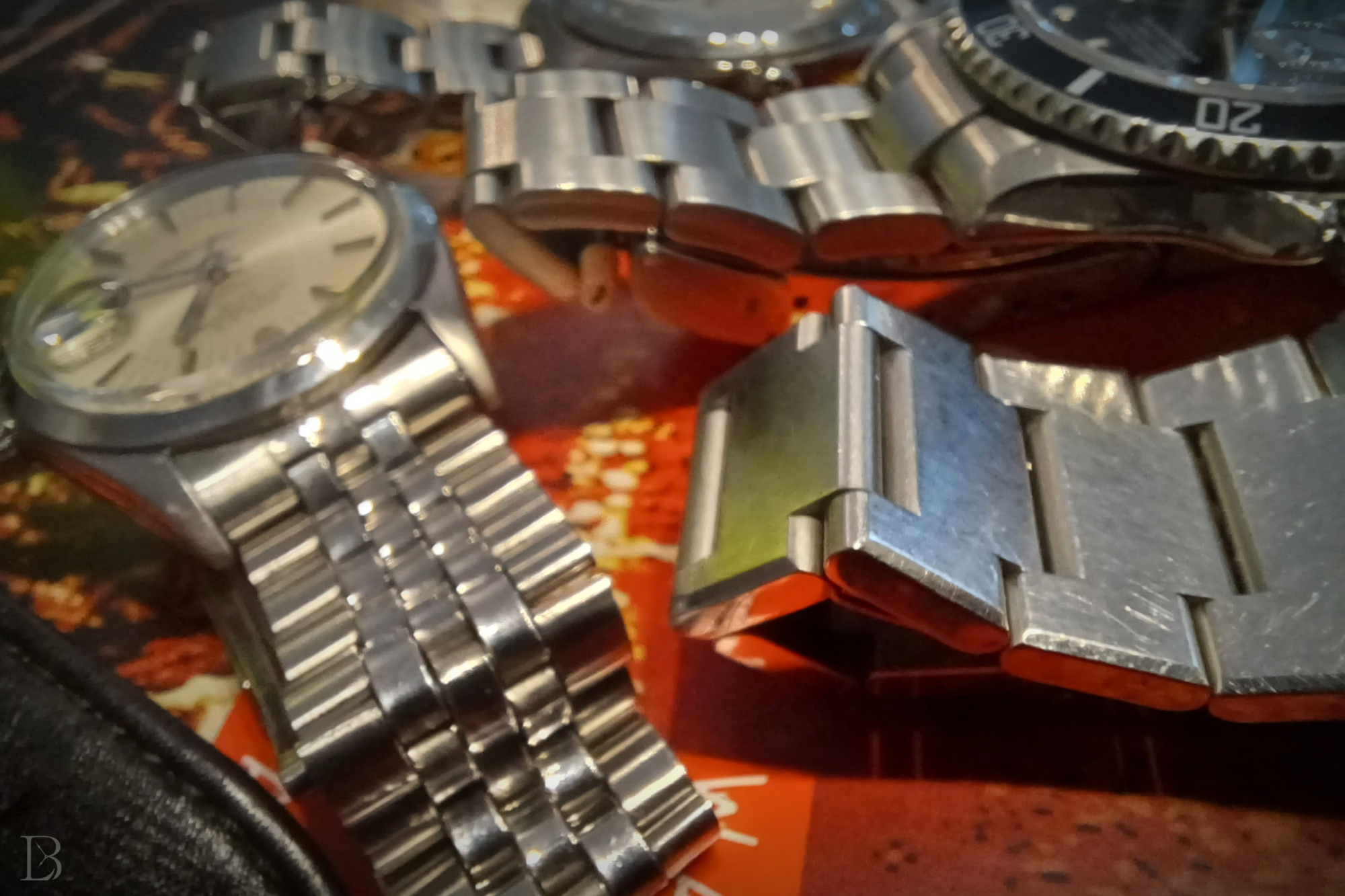
Customizing your own Rolex to your own taste is perfectly legal, but watch customizers quickly get into hot water when they openly advertise the “Rolex” trademark related to anything they sell with non-Rolex alterations. Rolex’s lawsuit against Time Delay in 1998 was partly about aftermarket bracelets being combined with genuine Rolex clasps–a legitimately confusing and murky area. That’s also when Time Delay started clearly marking their customized dials to avoid any ambiguity. You may also notice that TDC’s website explicitly mentions that their dials are only available on a trade-in basis; you can’t just buy a custom Rolex dial outright. You need to send one in.
Multiple cases and settlements follow a similar pattern: Rolex argues that replacing dials/bezels/bracelets, adding diamonds, or recasing watches while retaining Rolex marks creates “counterfeit” or materially different goods that confuse buyers. Rolex even sued a Brooklyn deli formerly known as “Rolex Deli” in 2011.
Since 2019, Rolex has been particularly aggressive about suing firms that customize Rolex watches. That’s why Artisans de Genève photoshopped the Rolex logos off of all the watches on their website and moved to a “send us your watch and we’ll customize it” model rather than selling customized watches outright. It’s also presumably why some other firms like Label Noir simply moved on to customizing other brands.
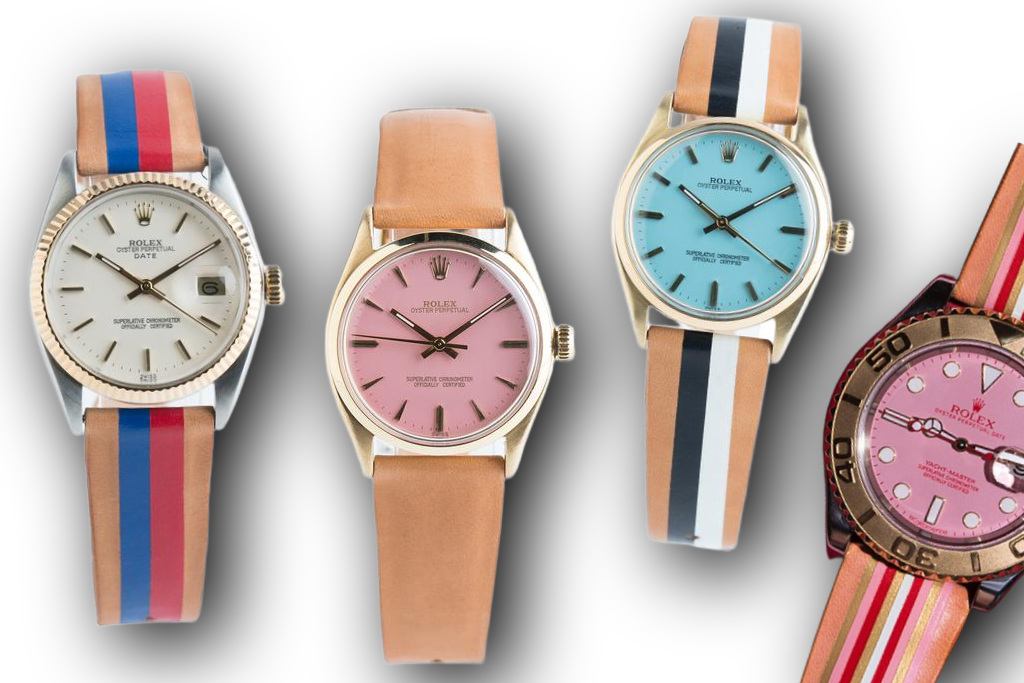
LaCalifornienne put their name on the map by colorfully customizing vintage Rolex watches, but a lawsuit and injunction from Rolex put a stop to that business model entirely by 2020. Now they make watches under their own brand with the same pastel-heavy aesthetic their custom Rolexes were known for.
Pro-Hunter is still doing their thing, but the very first thing you see on their website is a giant disclaimer that “We are an independent customisation company and we have no affiliation or partnership with Rolex or any of its subsidiaries.” Clearly they are sensitive about angering Rolex, who won a €740,000 lawsuit against the ADG-like Skeleton Concept in February 2025.
Skeleton Concept appears to have ignored a 2022 cease-and-desist from Rolex. Plus they used language about “Limited Editions” and were re-applying “Swiss Made” on the dial (in France), which were all factors in the judgment. So, the level of flagrance/transparency about the customization definitely matters.
For the most part, I understand where Rolex is coming from, and as a consumer I’m not a fan of things like aftermarket bracelets being slyly combined with real Rolex clasps. But they got a little too heavy-handed and the Rolex vs. Beckertime lawsuit didn’t go the way they wanted it to. While the lawsuit affirmed that things like re-applying Rolex’s trademarked logo do constitute infringement, the courts thankfully ended up codifying (to Rolex’s chagrin) that minor replacement parts like third-party gaskets do not make a watch “counterfeit.” Kudos to Beckertime for having the balls to refuse settlement and go all the way to trial with Rolex. I don’t think the watch industry as a whole fully appreciates how epic that was.
Anyway, that should just about cover everything an enthusiast should know about custom Rolex watches. While seasoned collectors generally warn new buyers to stay away from custom Rolexes, if you know what you’re getting and are OK with the difficult/lackluster resale value and utterly void warranty, there are plenty of shops still willing to tweak a Rolex to your taste. You can even buy custom Minecraft-inspired hands for your vintage Rolex. What a time to be alive.




Leave a Reply