An Ode to the Speidel Twist-O-Flex: The First Watch Bracelet in Space

Stretchy, expandable watch bracelets were massively popular from the 1950s until the 1990s. Instead of unfolding a clasp, you simply slide your hand in and the bracelet expands. The Speidel (pronounced “spy dell”) Twist-O-Flex, produced in Providence, Rhode Island, was particularly ubiquitous in the United States and is known for its ability to be “flipped” inside out without being damaged. Although these stretchy bracelets–jokingly (or not) known as “hair pullers”–are almost entirely disregarded by collectors today, decades of engineering and iterative improvements went into developing them, and they were practically the “default” replacement watch bracelet for decades. Here’s our guide to the Speidel Twist-O-Flex.
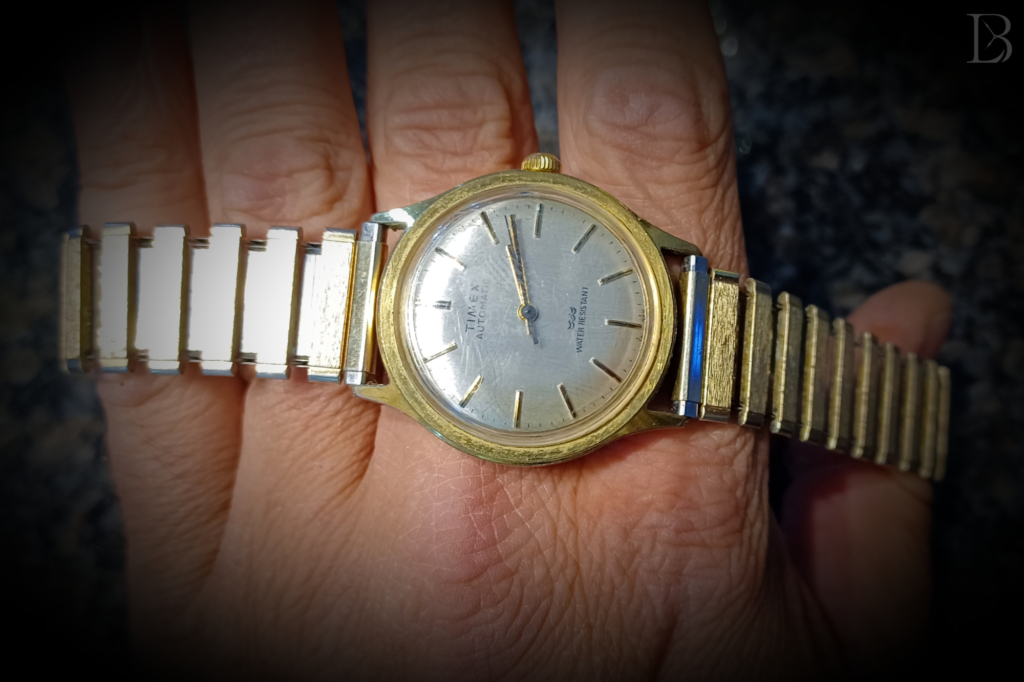
The Twist-O-Flex was made with many finishes, colors and platings, but the underlying bracelet is always stainless steel.
Can You Really Flip It Inside-Out?
It’s true that you can in fact readily flip a Speidel Twist-O-Flex inside-out. It feels like it’s elastic! But no elastic is involved; it’s all interlocking metal and springs.
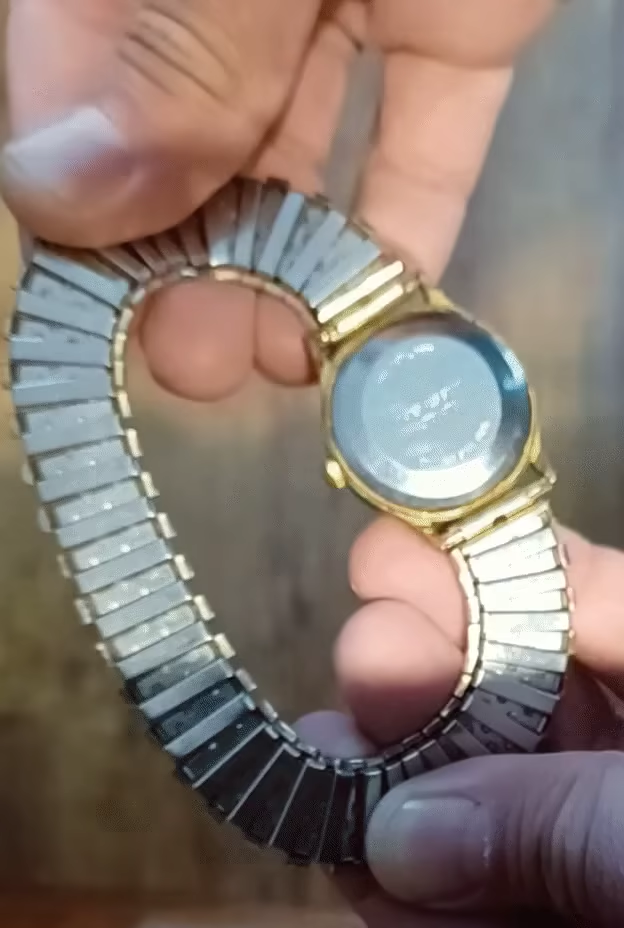
The Twist-O-Flex wasn’t the first such bracelet, however. Let’s talk about the history of expansion watch bracelets now.
History of Expansion Watch Bracelets
Art Hadley filed for a patent in 1914 that is widely considered the nexus of stretchy expansion bracelets. In patent filings from that time, Hadley contrasted his own invention to “the ordinary expansion bracelet formed of sliding links.” So, expansion bracelets did already exist, but in Hadley’s opinion they did not expand nor contract sufficiently, nor were they spring-loaded like his. Note that these early expansion bracelets were worn as women’s jewelry, not watch attachments.
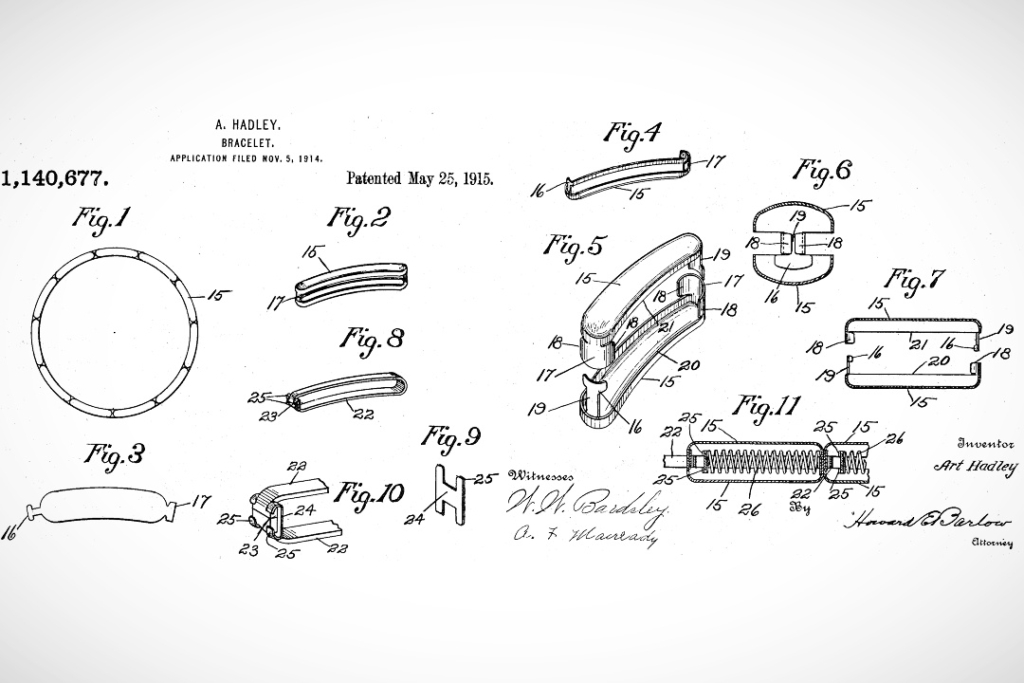
By 1916 Hadley had filed a patent for an updated design, which he further improved upon in 1925. By the 1930s, Hadley was using this concept to make watch bracelets. And soon, another Providence, Rhode Island-based company would make their own innovations in the stretchy watchband industry.
In 1936, Speidel released a scissor-link expansion bracelet based on a patent licensed from German inventor Karl Spiegele. And in 1947 they released an improved version of that design called the Golden Knight, which was quite successful.
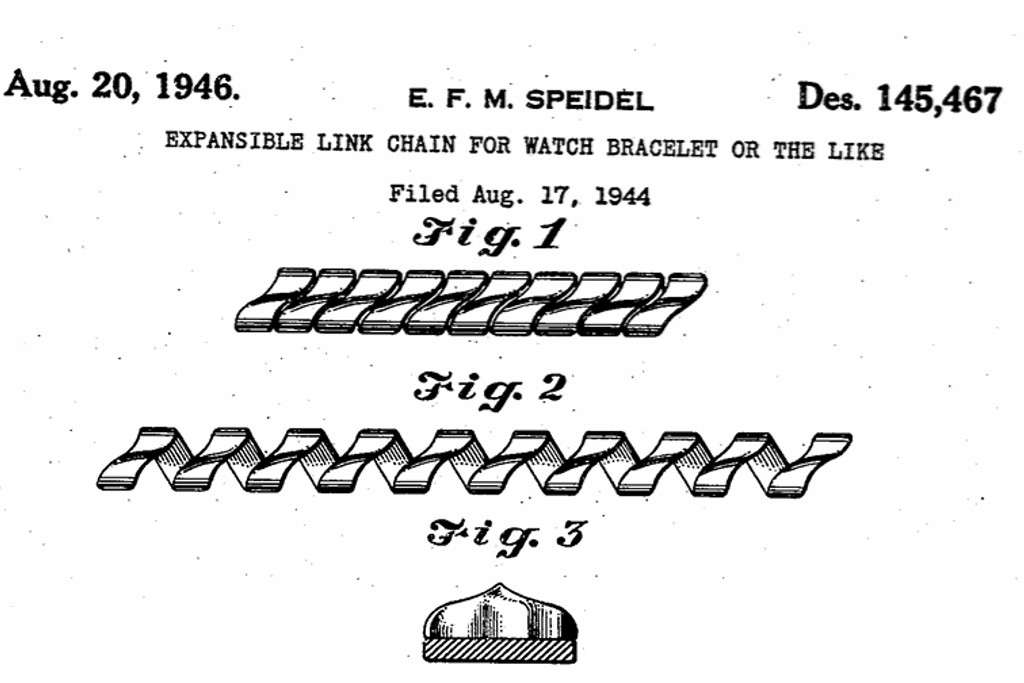
But in 1951, a product based on another Spiegele patent (German patent DE896575C, equivalent to US Patent #2,689,450) became top dog of the expansion watch bracelet world: The German-made Fixoflex was extremely successful and sold 100 million bracelets by the year 2000. Much like the competing American Twist-O-Flex that followed, the Fixoflex is a stretchy expansion bracelet with no clasp: it can be stretched over your hand and even twisted around axially.
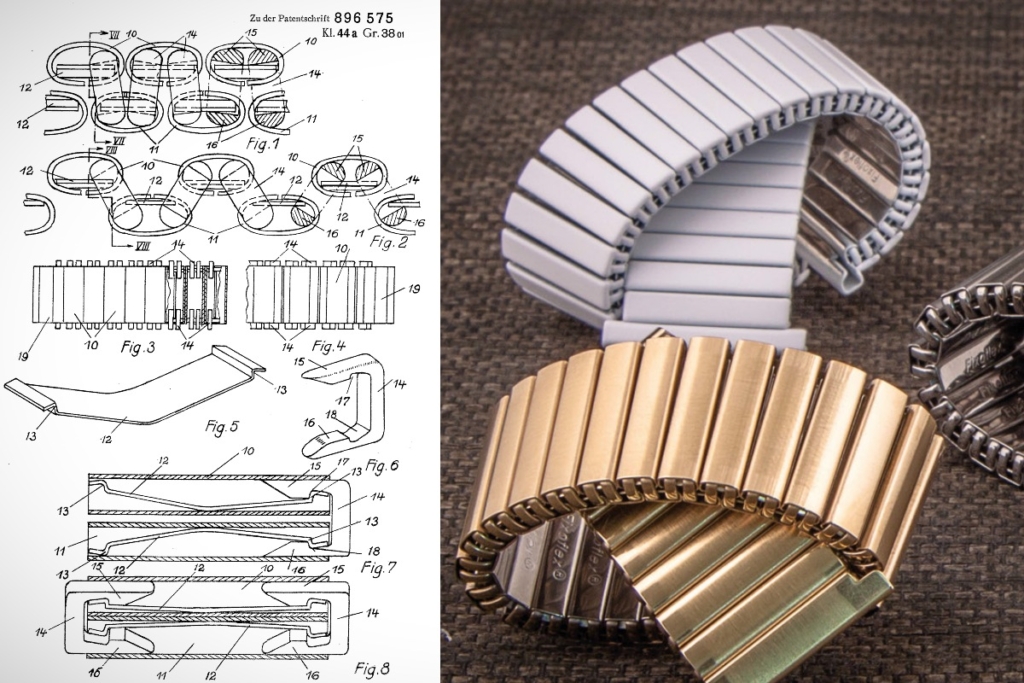
The Speidel Twist-O-Flex, which debuted in 1959, was an updated design based on that same Spiegele patent. Its slightly improved geometry (namely rounded edges) made it less prone to permanent warping than a Fixoflex. So, while some people feel the Twist-O-Flex is superior because it’s more “flexible,” the Fixoflex is slightly thicker and heavier, which some prefer.
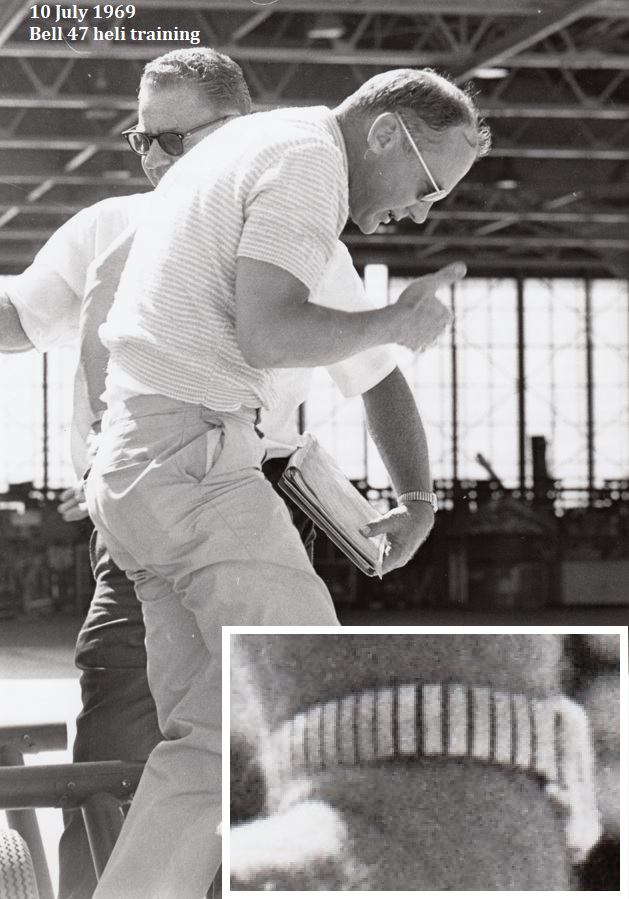
Plus, some high end Fixoflex products (like the ref. 558 Fixoflex-S bracelets with nice flush endlinks) were even sold as OEM bracelets for top luxury watch brands like Omega. SpeedyPhill of the OmegaForums spotted what is undoubtedly a Fixoflex on astronaut John Glenn’s wrist in a 1969 photo:
The Speidel Twist-O-Flex in Space and in the Zeitgeist
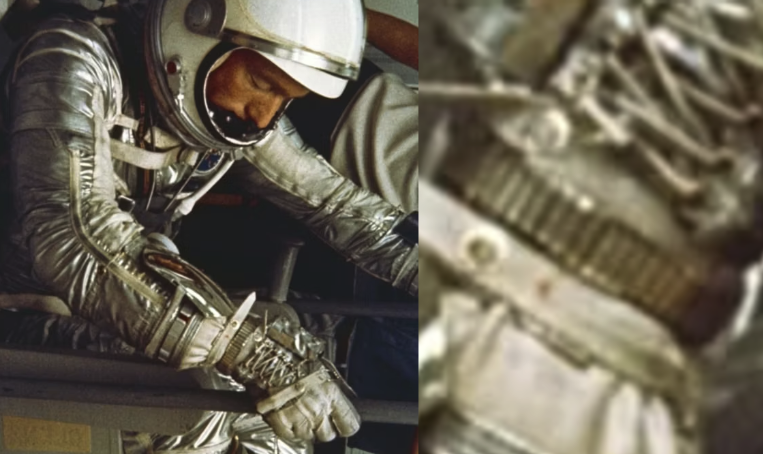
Other Fixoflex-like stretchy bracelets have been spotted in various NASA photos as well, but it appears to have been a Speidel Twist-O-Flex attached to Scott Carpenter’s Breitling Cosmonaute when he launched into space as part of the Mercury Atlas 7 mission in May 1962. He was the fourth man in space, but the first three either wore no watch, or a watch on a fabric strap of some kind. Thus we believe the Twist-O-Flex was the first watch bracelet in space.
The Twist-O-Flex was hardly a niche product for scientists and aviators, however. As a random example, in her autobiography, the late comedic actress Kirstie Alley recalled an anecdote in which she destroyed a man’s watch bracelet while cheerfully pretending to think it was a Twist-O-Flex. Everyone was aware of Twist-O-Flex.
More of the Basics:
| ➢ | Types of Watches |
| ➢ | What is a GADA Watch? |
| ➢ | A Primer on Watch Hands |
| ➢ | A Primer on Watch Case Shapes |
| ➢ | What is a Considered a Vintage Watch? |

When the Zayre department store submitted testimony to the US Congress in 1964 in opposition of price-fixing laws, they included a price chart of ten common goods they sold, noting the difference between suggested retail price and the (lower) price they actually sold it for. The Speidel Twist-O-Flex was one of the goods listed, and at that time, they sold it for $7.96, while MSRP was $9.95.
Speidel Twist-O-Flex Today
After changing hands multiple times, in 2009, with their heyday long behind them, Speidel went bankrupt. Fixoflex suffered the same fate a decade later. A private equity firm bought Speidel for $1.65 million and nowadays you can find classic Twist-O-Flex bracelets (along with some other more standard bracelets) on the current iteration of the Speidel website for around $30.
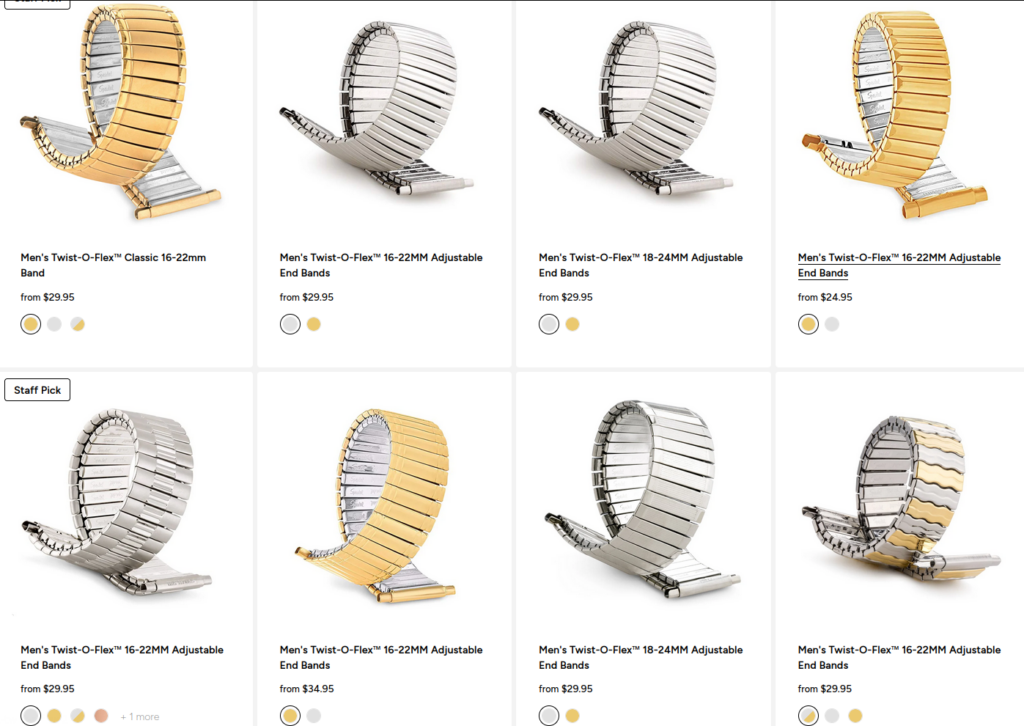
They’re still based in Providence, Rhode Island, where bracelet production was a significant part of American watchmaking history, although most of the actual manufacturing has been done overseas since 1999.
Why So Popular?
In the heyday of the Twist-O-Flex (roughly 1960-1980), watch bracelets in general weren’t as durable as they are now. It was pretty normal for the rattly OEM bracelets of the time to be considered “trash” after 10-15 years or even less. And if you lived in the US, the most logical affordable and cool (or so people thought at the time) option was the Speidel Twist-O-Flex. When the original bracelet on my grandfather’s Girard-Perregaux wore out, he put it on a Twist-O-Flex. And there’s a very good chance yours did too.
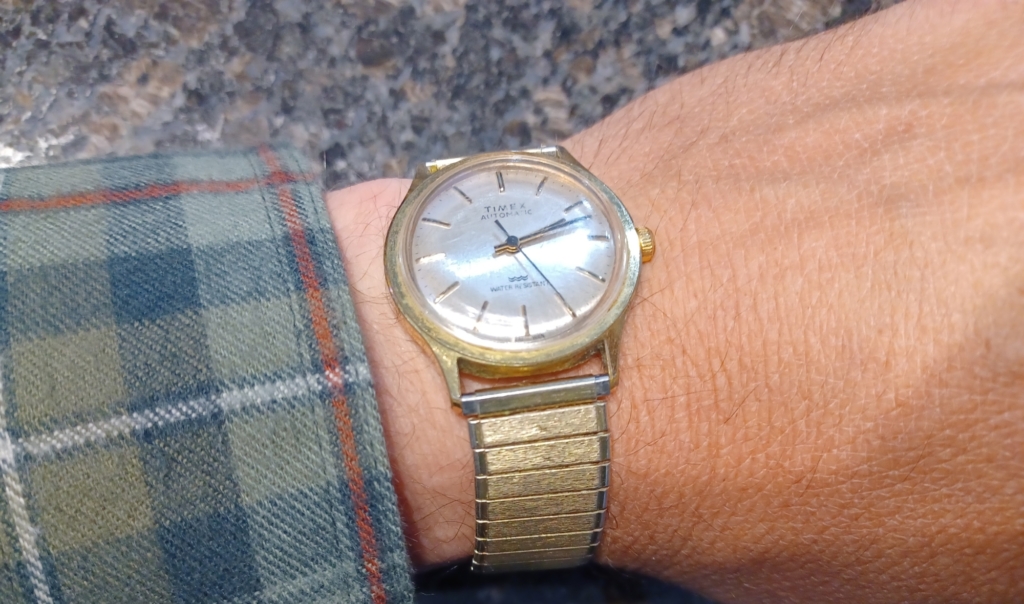
Downsides of the Speidel Twist-O-Flex
Stretchy metal watch bracelets can be hard on a watch’s lugs, plus they can get very dirty over time (though an ultrasonic bath or even just soap and water should handle it). And some people do complain about the hair-pulling aspect, although on my relatively non-hairy arm the Speidel Twist-O-Flex is perfectly comfortable.
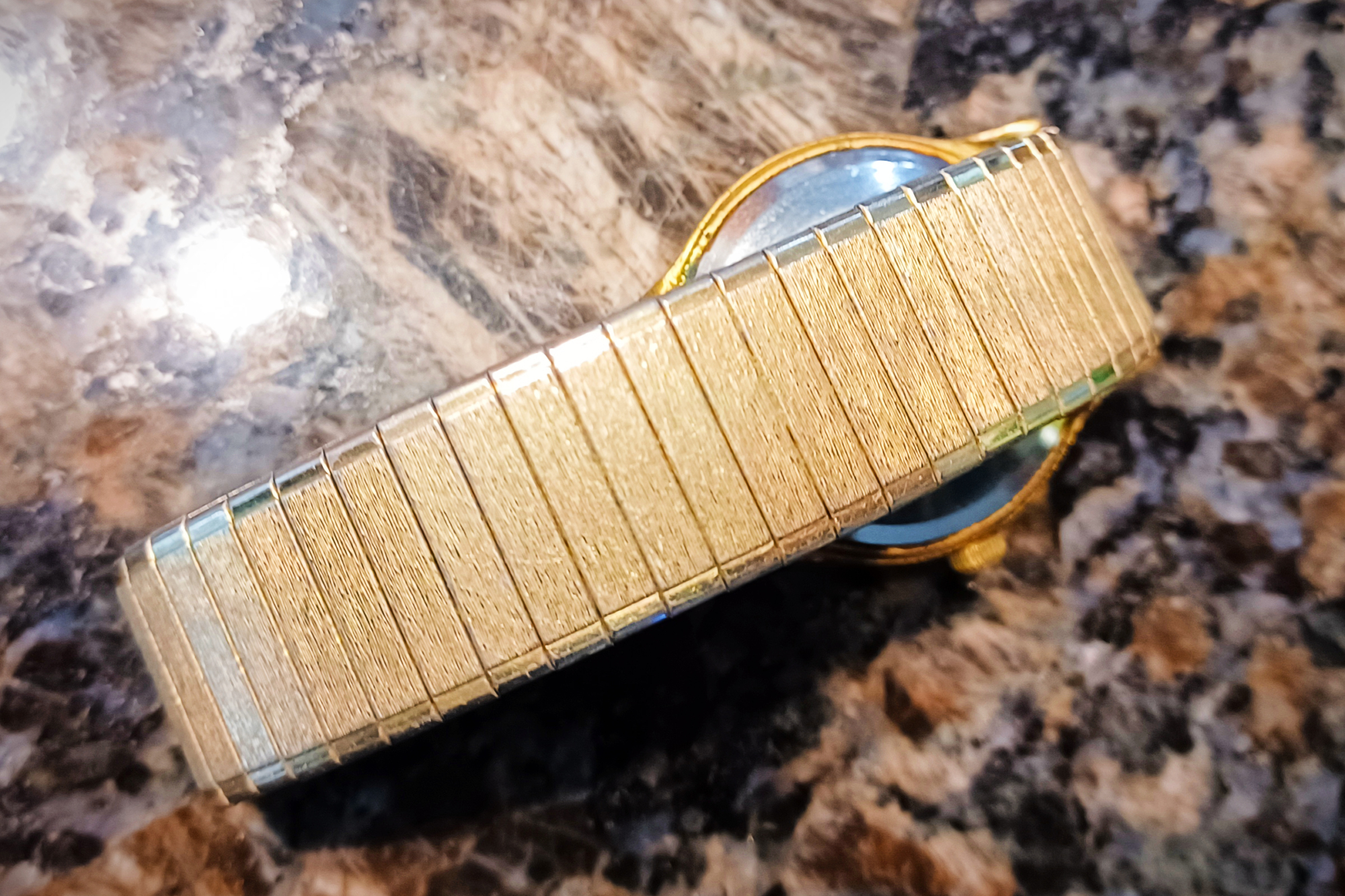
So there are downsides to expansion bracelets. Still, it’s interesting to me how they were once considered an engineering marvel purchased by hundreds of millions of people, and are now largely regarded as trash to be immediately replaced. There’s little doubt that the peak of the expansion watch bracelet’s popularity is decades behind us, never to return. But I think the level of collective disregard for bracelets like the Speidel Twist-O-Flex has gone too far. They’re pretty neat.
Grey Market Magazine articles about bracelets:


Leave a Reply