Audemars Piguet Timepieces Explained, By Model

Few would disagree that Audemars Piguet is best known for the Royal Oak, and that the collection dominates how the brand is perceived today. Some critics point to an overreliance on a single flagship collection and describe the brand as a one-trick pony operation. But that view overlooks the broader range of Audemars Piguet timepieces that have defined the manufacture for more than a century.

Beyond the Royal Oak, Audemars Piguet has produced everything from ultra-thin dress watches and shaped chronographs to experimental concept pieces and modern reinterpretations of its own archive. As one of the so-called Holy Trinity of Swiss watchmaking and consistently ranked among the world’s top ten luxury watch brands, the brand’s continued relevance suggests that while one model may be the most popular and recognizable, other collections continue to resonate with collectors.
Below is a closer look at Audemars Piguet timepieces by model, breaking down the key collections, both current and discontinued, and highlighting the history, evolution, and defining design traits of each lineup.
Royal Oak
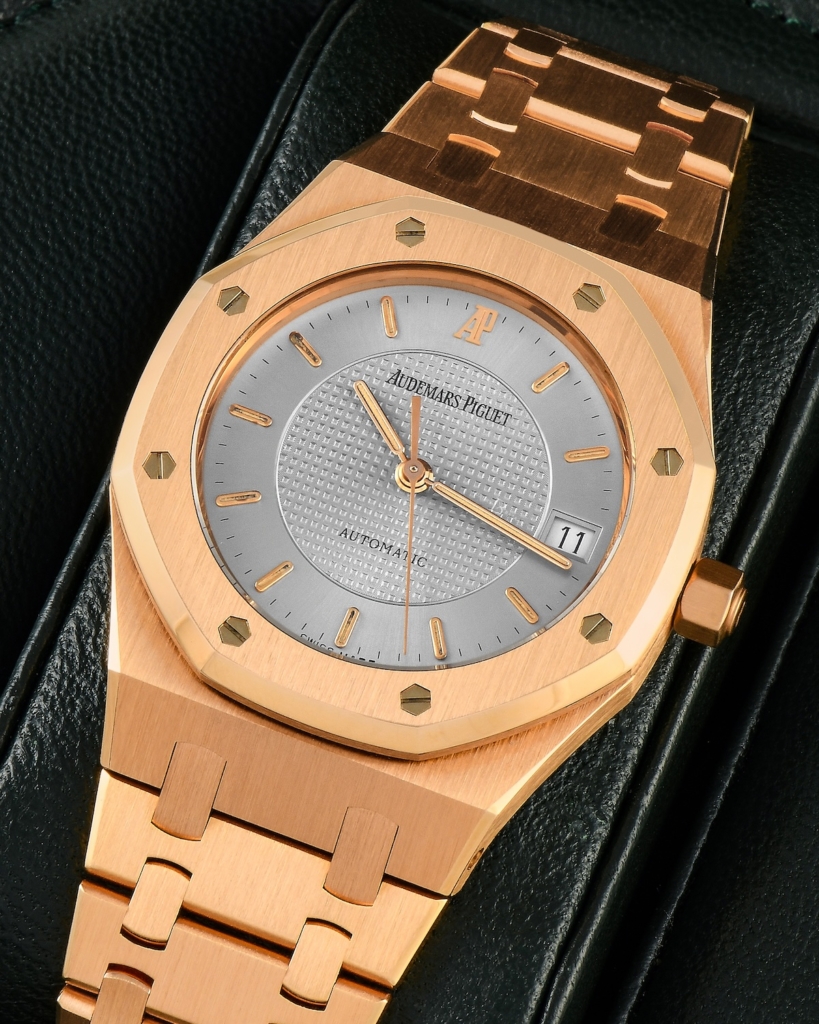
Introduced in 1972, the Audemars Piguet Royal Oak fundamentally changed how luxury watches were perceived. Designed by Gérald Genta and launched as reference 5402, the Royal Oak paired a slim automatic movement with a stainless-steel case and matching integrated bracelet, priced higher than many gold watches of the era. Its debut was controversial, but the design ultimately became one of the most influential luxury sports watches ever made.

The original Royal Oak established the blueprint that still defines the collection today. Key design elements include the octagonal bezel secured by eight exposed hexagonal screws, an integrated bracelet with tapered links, and a thin, angular case profile that emphasizes sharp transitions between brushed and polished surfaces. The dial, featuring the tapisserie pattern (often described as a hobnail motif), added texture while maintaining legibility.
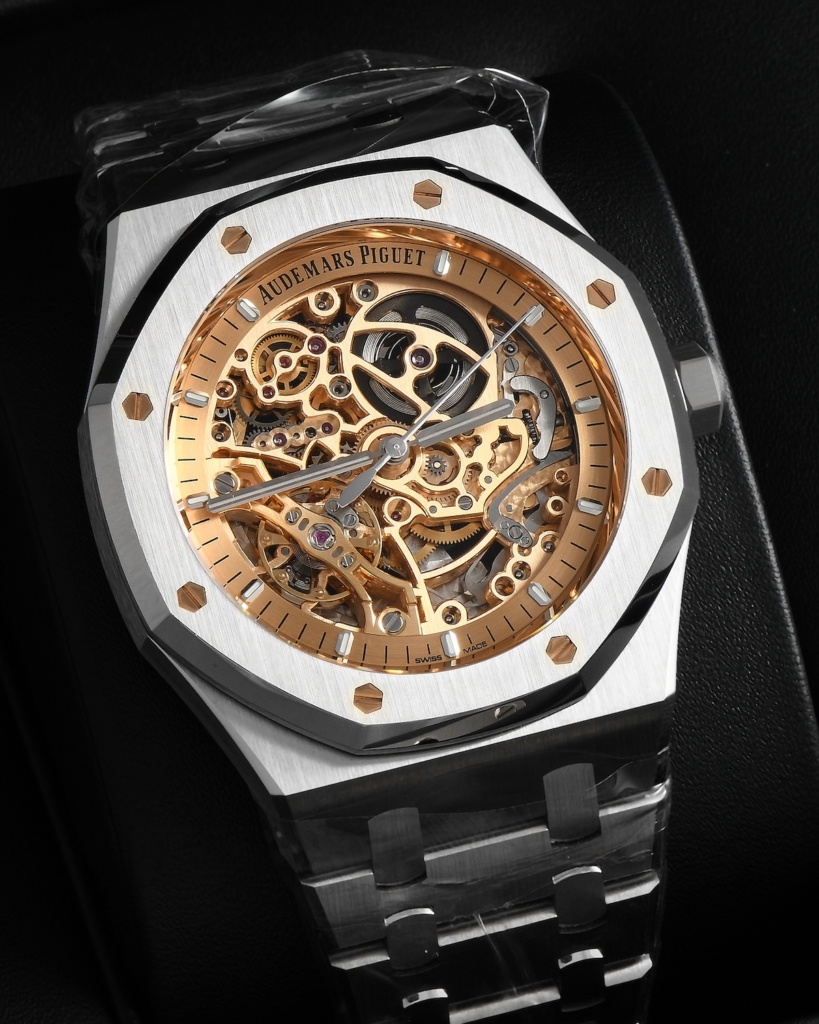
Over the decades, the Royal Oak evolved from a single two-hander and date reference into a broad collection encompassing three-hander models, chronographs, perpetual calendars, tourbillons, ultra-thin executions, open-worked variations, and even grand complications. Case sizes expanded beyond the original 39mm “Jumbo” format to include a wide range of both smaller and larger versions.
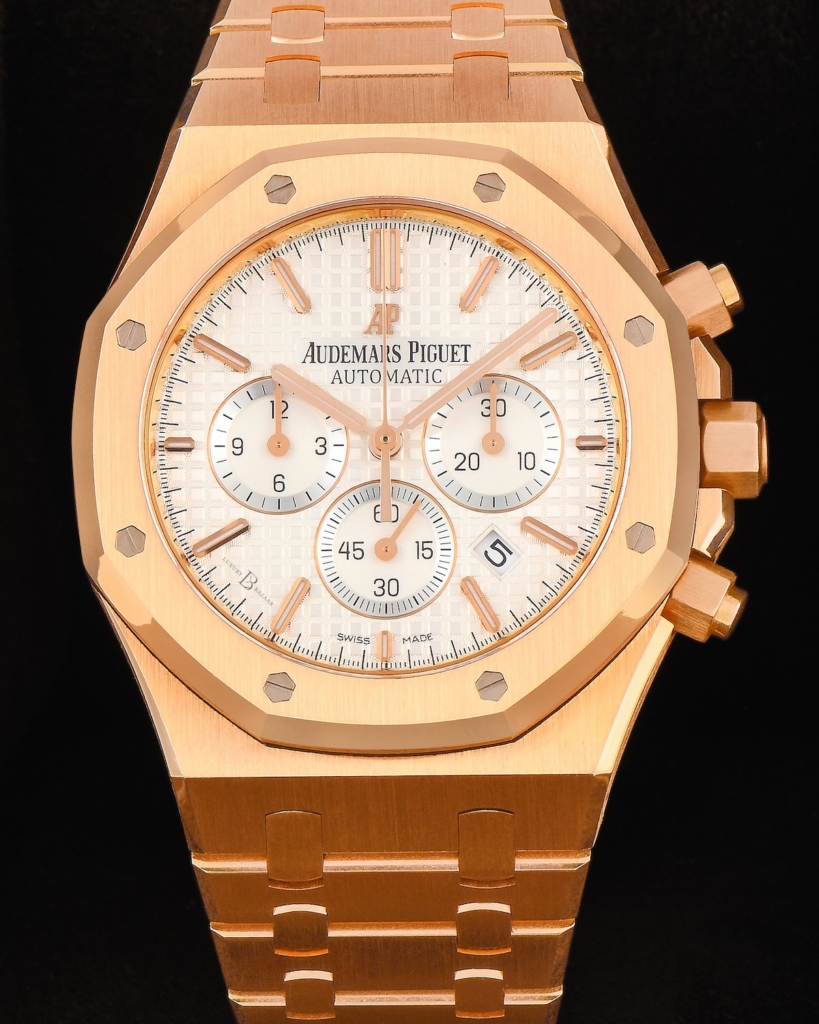
Material experimentation has also played a major role in the Royal Oak’s evolution. While steel remains central to the collection’s identity, Audemars Piguet has introduced versions in yellow gold, rose gold, white gold, platinum, ceramic, titanium, and various mixed-material combinations.
Dial colors and finishes have likewise expanded, though the tapisserie pattern has mostly remained a defining visual signature.

Among the most popular and collectible Royal Oak Audemars Piguet timepieces are the “Jumbo” Extra-Thin models, which stay closest to the original 1972 concept. The backbone of the collection is the Royal Oak Automatic Selfwinding line, while the Royal Oak Chronograph has become another long-standing pillar. More recent references, such as the Royal Oak Perpetual Calendar Ultra-Thin and the Royal Oak Openworked Double Balance, highlight the collection’s technical range.

Price-wise, the least expensive current-production Royal Oak at retail is the stainless steel 33mm version powered by a quartz movement, which costs $18,700. Mechanical entry-level Royal Oak models include the Royal Oak Self-Winding 34mm at $27,400, the Royal Oak Self-Winding 37mm at $28,700, and the Royal Oak Self-Winding 41mm at $30,000.
More on the AP Royal Oak:

Royal Oak Offshore
Introduced in 1993, the Royal Oak Offshore was originally conceived as a 20th anniversary model for the Royal Oak, though its launch ultimately came a year later than planned. Designed by Emmanuel Gueit, the Offshore took the core Royal Oak architecture and exaggerated it, increasing case size, thickness, and overall visual presence at a time when oversized sports watches were still uncommon in the upper echelons of high-end watchmaking.

The Offshore’s defining traits include a thicker case with pronounced crown guards, a wider octagonal bezel secured by exposed screws, and a more muscular integrated strap or bracelet system. Early models, which were all chronographs, were typically 42mm in diameter, earning the nickname “The Beast” among collectors. Rubber elements, used in gaskets, pushers, and straps, became a key part of the Offshore’s identity, emphasizing its positioning as a sport-oriented evolution rather than a refinement of the original design.
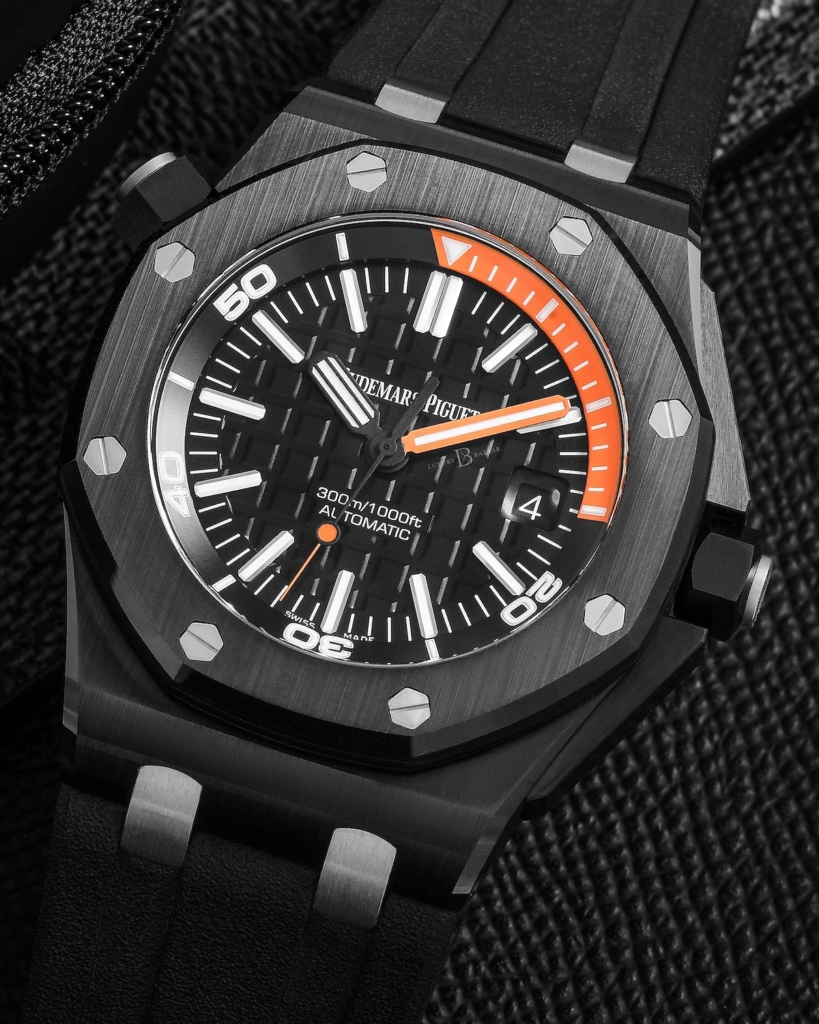
As the Offshore lineup expanded beyond just chronographs, Audemars Piguet added Offshore Divers, tourbillons, and high-complication references that prioritized imposing design as much as mechanical chops. With case sizes commonly reaching 43mm and 44mm, the Offshore Audemars Piguet timepieces established themselves as a deliberate departure from the slimmer proportions of the standard Royal Oak.
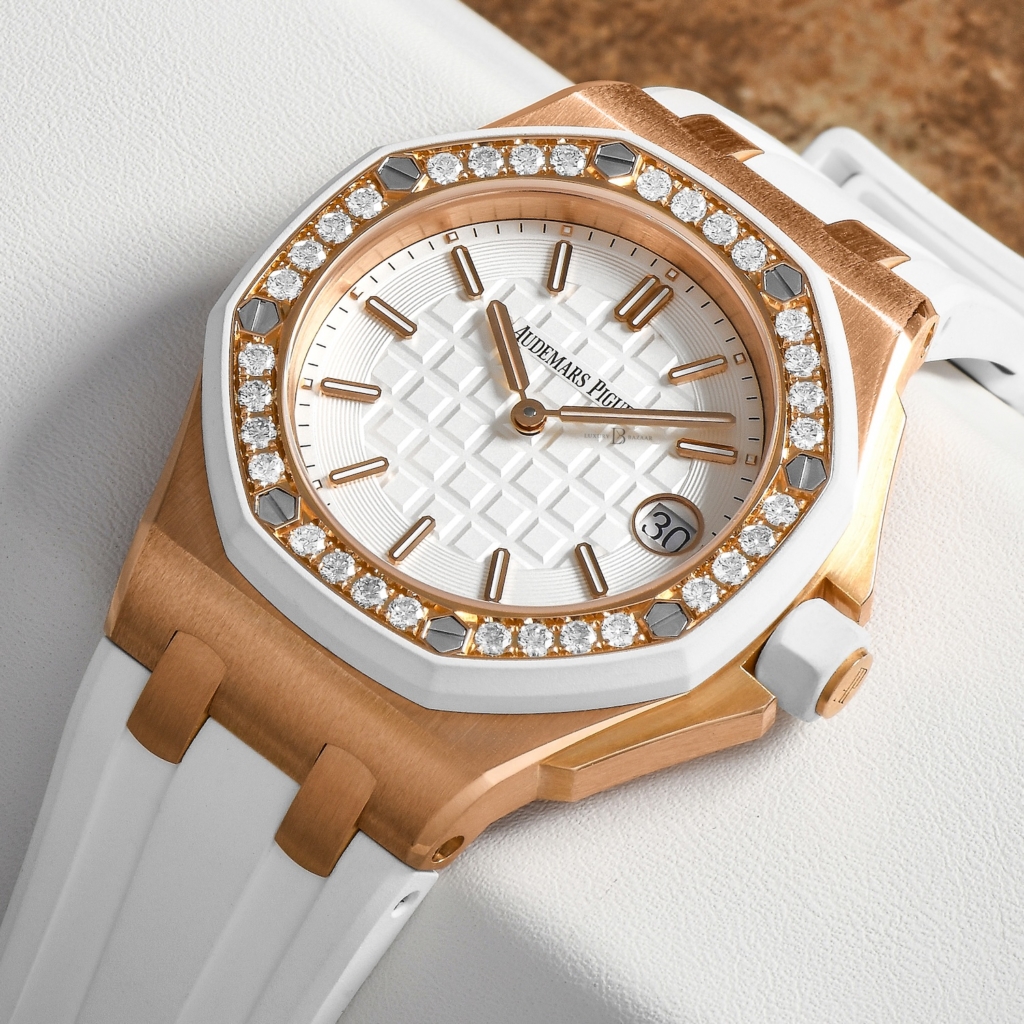
The Offshore also became AP’s primary outlet for experimentation with modern materials, bolder colorways, and collaborations. Forged carbon, ceramic, titanium, rubber-clad, and mixed-material cases appeared here long before they became widespread elsewhere in the catalog. Limited editions tied to athletes, teams, and cultural partnerships further shaped the Offshore’s identity.

The entry point to the current production Royal Oak Offshore collection is the Royal Oak Offshore Selfwinding (non-chronograph), which retails for $28,700. Two of the other least expensive variants are the Royal Oak Offshore Diver at $32,000 and the stainless steel Royal Oak Offshore Selfwinding Chronograph with a rubber strap at $41,100.
Audemars Piguet’s Most Advanced Timepieces: Royal Oak Concept
Introduced in 2002, the Royal Oak Concept was created as an experimental arm of Audemars Piguet. While it borrows the Royal Oak name and general geometry, the Concept line operates on a fundamentally different premise, prioritizing technical development, unconventional materials, and forward-looking design.
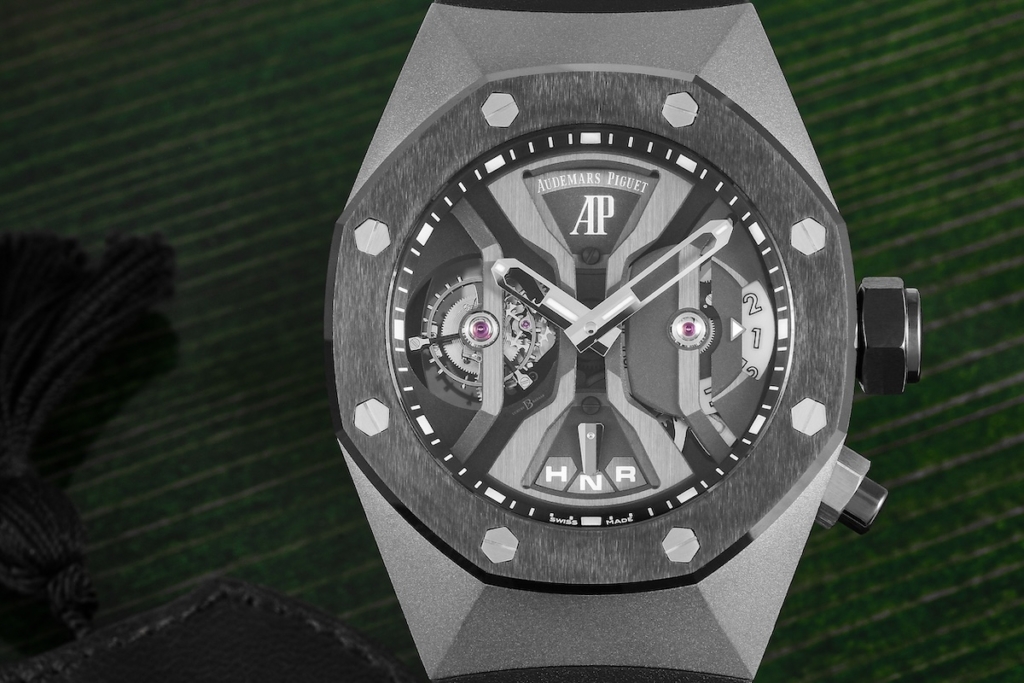
Royal Oak Concept watches are defined by highly sculptural cases, exposed architectural elements, and movements designed specifically for the collection rather than adapted from existing calibers. Large case dimensions, openworked constructions, and multi-layered dials are standard, as are advanced materials such as forged carbon, ceramic, titanium alloys, and high-tech composites. The aesthetic is deliberately technical and futuristic.

From a mechanical standpoint, the Concept line has served as a proving ground for cutting-edge complications. Early models focused on shock resistance and chronometric stability, while later references introduced tourbillons, minute repeaters, GMT systems, and high-performance chronographs.
Many technical solutions developed for the Concept line have eventually informed Audemars Piguet’s broader catalog, though Concept models themselves remain produced in small numbers.
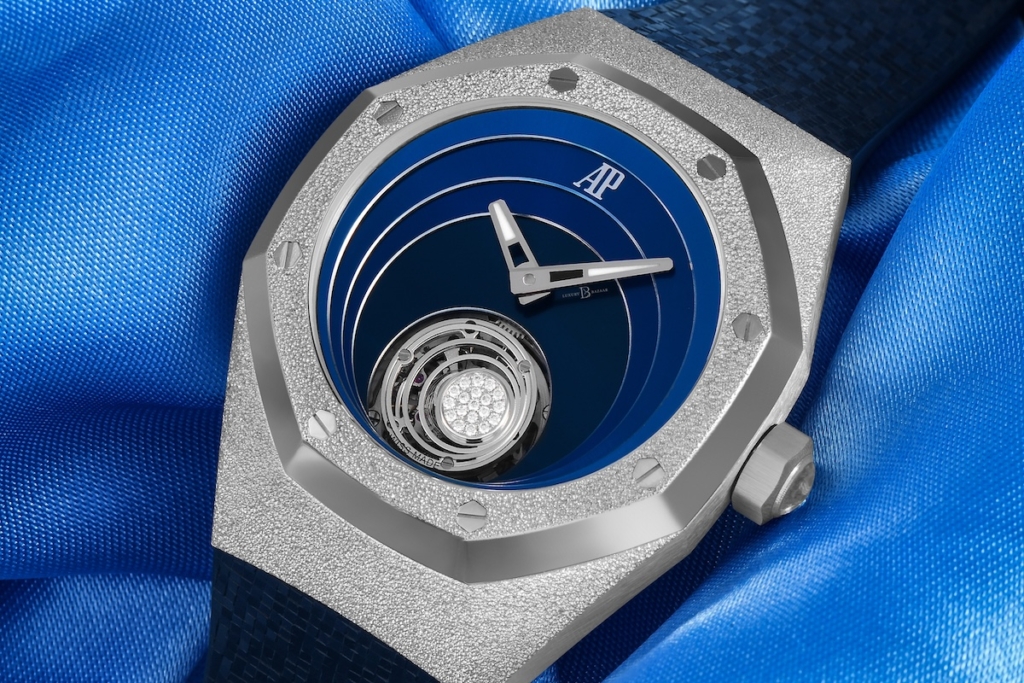
Royal Oak Concept models sit at the very top of Audemars Piguet timepieces, with official retail prices in the six-figure territory. As an example, the Royal Oak Concept Flying Tourbillon GMT carried a retail price of approximately $200,000 at launch, and all Royal Oak Concept references are listed as “price upon request” underscoring the collection’s exclusivity and cost.
Code 11.59
Introduced in 2019, Code 11.59 was Audemars Piguet’s first entirely new collection in decades and a deliberate step outside the Royal Oak’s long shadow. Unlike the brand’s sports-watch icons, Code 11.59 was conceived as a contemporary round watch, built to showcase modern case construction, new in-house movements, and a different design language altogether.

At first glance, Code 11.59 appears restrained (or boring, as others have claimed), but its complexity becomes apparent upon further inspection. The case construction is intricate, combining a round bezel, an octagonal mid-case inspired by the Royal Oak, skeletonized lugs that are welded to the bezel and caseback, and a double-curved sapphire crystal.
Extensive hand-finishing contrasts brushed, polished, and satin surfaces across multiple planes, making the watch far more involved than its simple silhouette suggests. This is a perfect example of a watch that is far more impressive in person than in press photos.
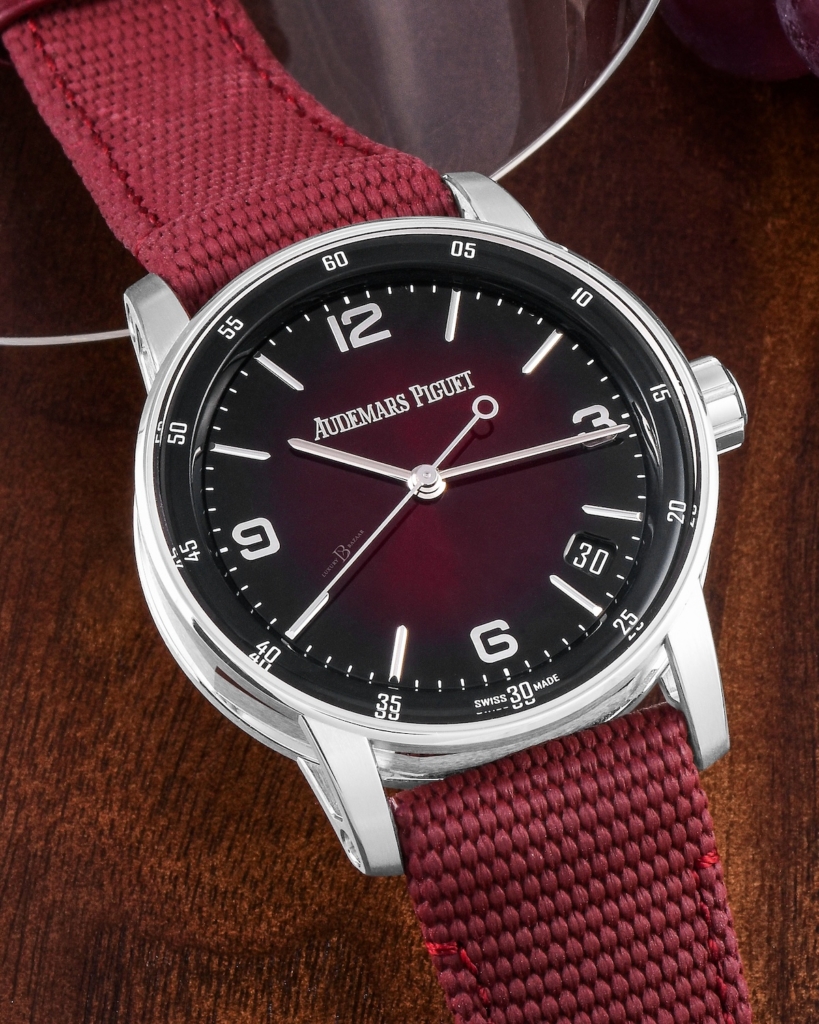
Early reception to Code 11.59 was quite contentious, largely due to conservative dial designs and pricing that invited inevitable comparisons to the Royal Oak. In response, Audemars Piguet steadily refined the collection. The introduction of smoked lacquer dials, embossed textures, and stronger color palettes improved the watch’s visual impact, while continued movement development strengthened its technical credibility.
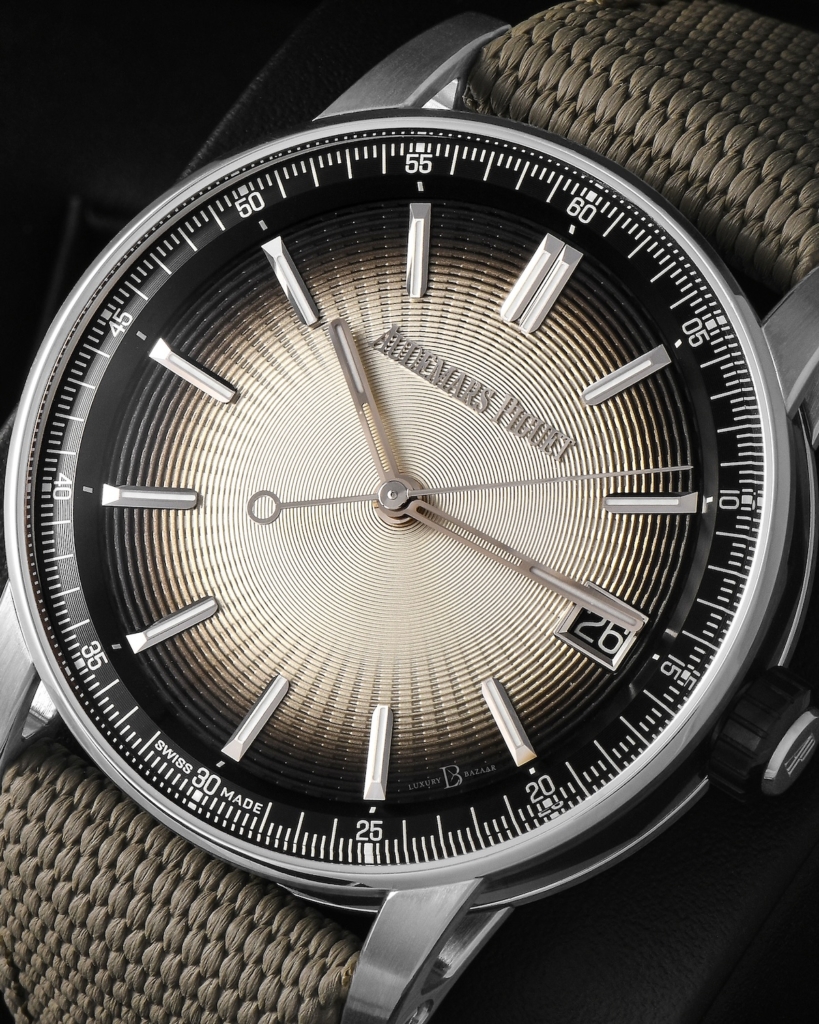
Today, Code 11.59 encompasses time-only models, chronographs, perpetual calendars, tourbillons, minute repeaters, and ultra-complicated references such as the Universelle RD#4. While it may never rival the Royal Oak in popularity, Code 11.59 has matured into a serious pillar of the brand’s catalog, appealing to collectors who want Audemars Piguet timepieces without the integrated-bracelet format.
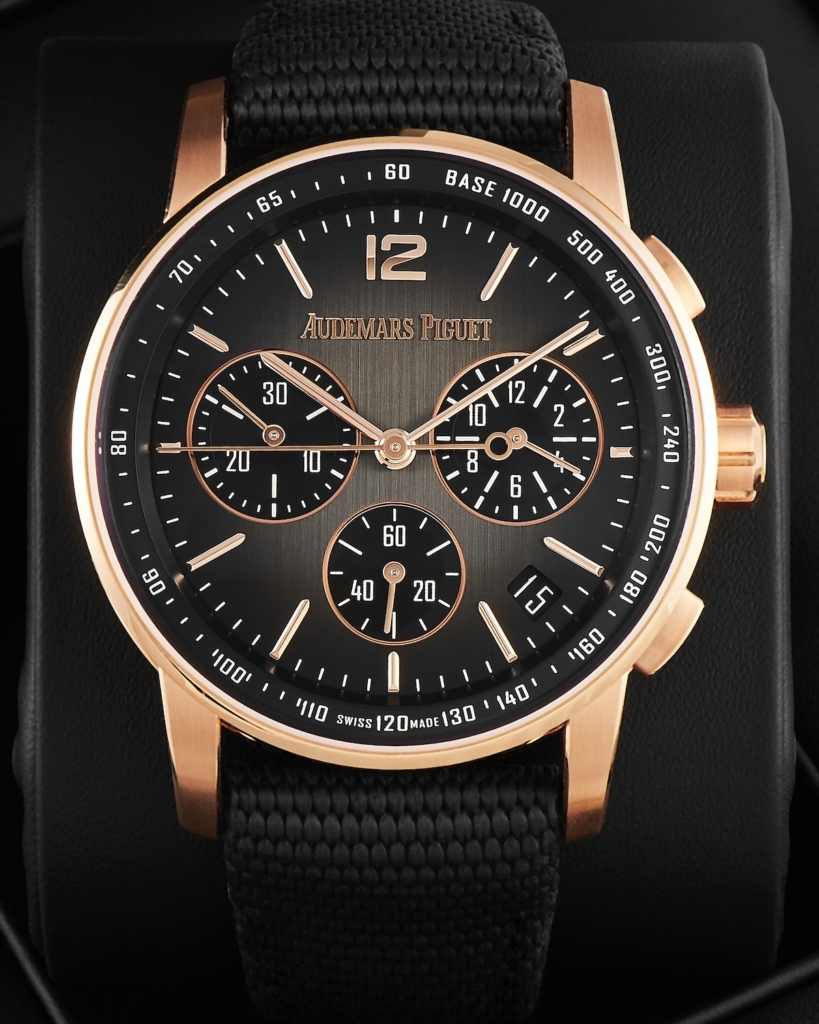
At retail, Code 11.59 models span a wide price range depending on material and complication. The entry point is the stainless steel Code 11.59 Selfwinding 41mm at $27,400, while prices rise quickly into the six-figure range for precious-metal executions and highly complicated variants.
Re[Master]
The ReMaster collection represents Audemars Piguet’s approach to archival reinterpretation, drawing directly from historical references and reissuing them in modernized form. Rather than forming a permanent or regularly updated lineup, ReMaster operates as a selective series of low-production releases, each based on a specific vintage model from the manufacture’s past.
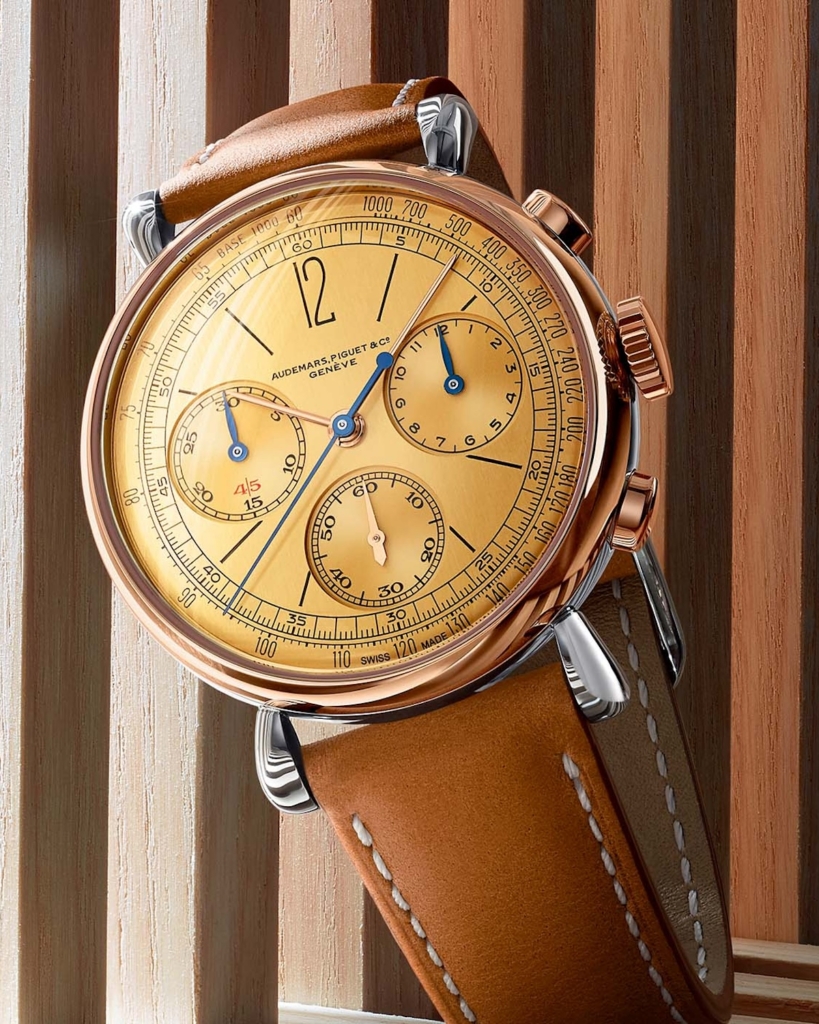
The collection debuted in 2020 with the ReMaster01 Chronograph, inspired by a 1943 Audemars Piguet chronograph and updated with contemporary proportions, modern movement architecture, and subtle dial refinements. This was followed by the ReMaster02 in 2024, which drew inspiration from a Brutalist-influenced asymmetrical case design found in Audemars Piguet’s mid-century archives.

To date, only two ReMaster models have been released. The ReMaster01 carried a retail price of $73,400, while the ReMaster02 was priced at $49,600, emphasizing the collection’s niche positioning.
Discontinued Audemars Piguet Timepieces
While Audemars Piguet’s current catalog is tightly focused around a handful of core collections, the manufacture’s past lineup was considerably broader. Over the decades, AP produced a range of timepieces that explored classical dress watch design, shaped cases, and more experimental layouts alongside its sports models. Although these collections are no longer in production, they remain an important part of the history of Audemars Piguet timepieces, offering insight into how the brand’s design language and technical priorities evolved.
Millenary
Introduced in 1995, in anticipation of the turn of the new millennium, the Millenary collection marked one of Audemars Piguet’s most distinctive departures from traditional round watch design. Defined by its elliptical case and off-center dial layout, the Millenary was conceived as a showcase for movement architecture, placing mechanics front and center.
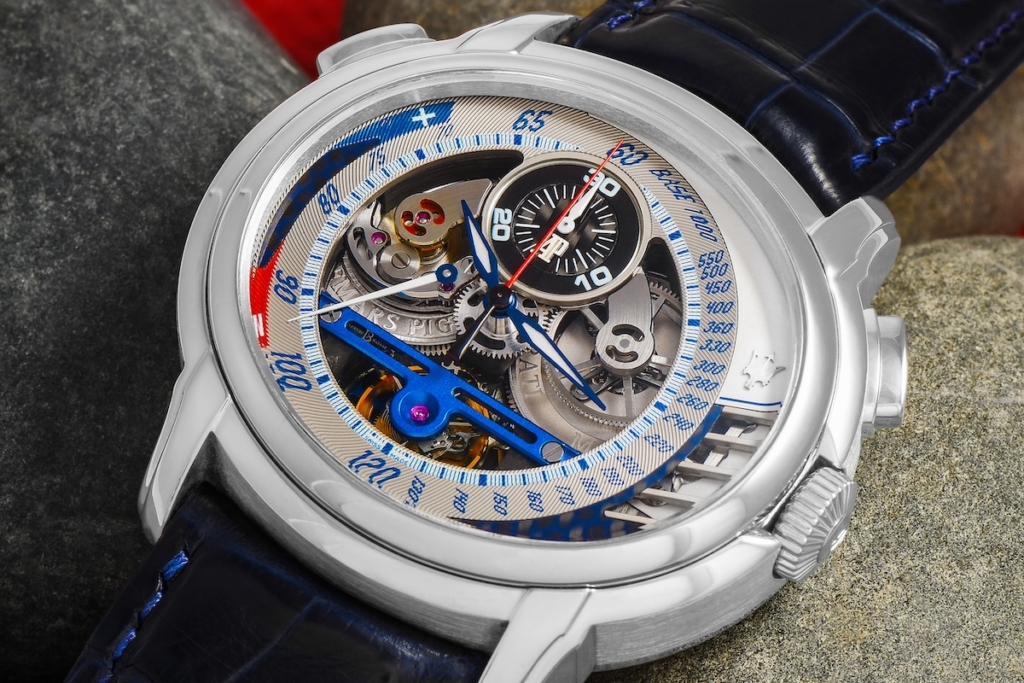
Most Millenary models featured partially exposed movements viewed from the dial side, with bridges arranged along the long axis of the case. This asymmetrical layout created a strong visual identity and allowed Audemars Piguet to highlight finishing techniques typically reserved for the caseback. Time indications were often offset to one side, underscoring the idea that the movement itself was the focal point.
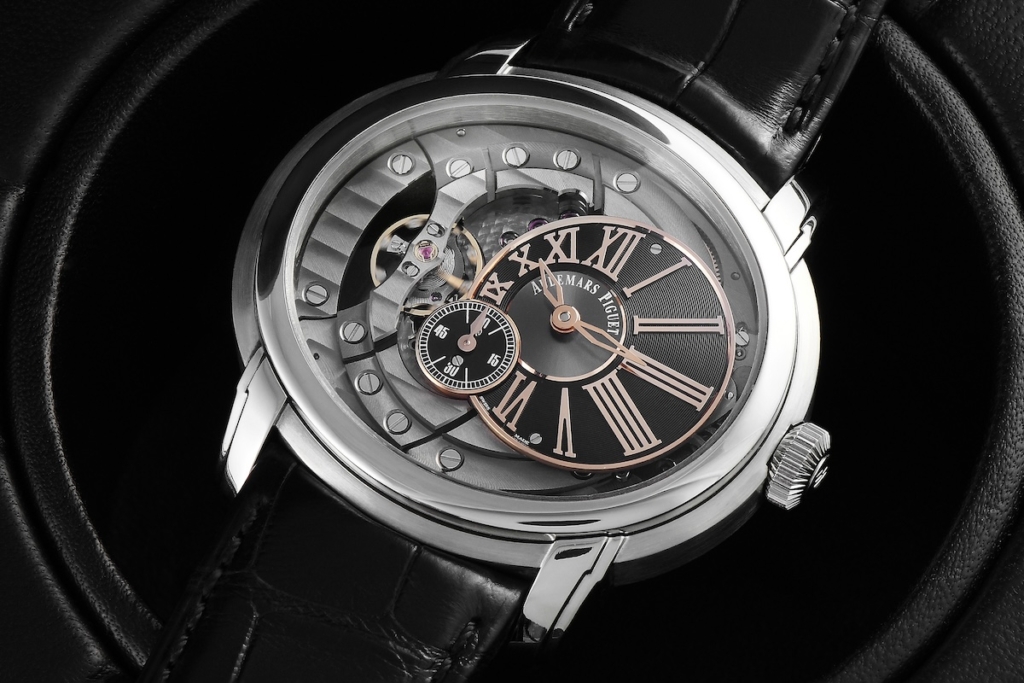
Over the years, the Millenary collection encompassed a wide range of complications, including automatic and manual-wind models, chronographs, tourbillons, and ultra-high-end skeletonized references. Case materials ranged from stainless steel to gold and platinum, and the collection also played a notable role in AP’s women’s lineup, where the elliptical case found a particularly receptive audience.

While production of the Millenary was gradually phased out, it remains one of the most distinctive Audemars Piguet timepieces available on the secondary market, appealing to collectors drawn to unconventional case shapes and visible mechanics.
Jules Audemars
Named after one of the manufacture’s founders, the Jules Audemars designation came to represent Audemars Piguet’s most classical approach to watchmaking. While collectors today often use “Jules Audemars” to describe earlier round-cased Audemars Piguet dress watches, the name was formally adopted by Audemars Piguet in the late 1990s as a distinct collection focused on traditional complications and classic proportions.
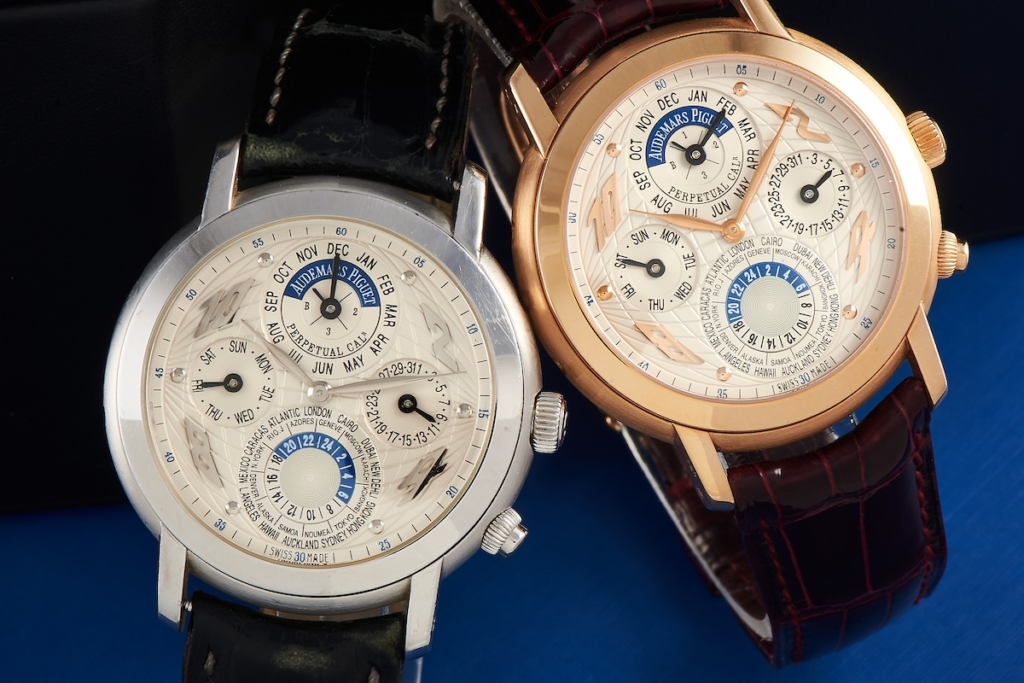
Jules Audemars watches emphasized classical round cases, slim profiles, and balanced dial layouts, standing in deliberate contrast to the Royal Oak’s industrial aesthetic. Most references were produced in precious metals and favored restrained design details such as applied markers, guilloché or enamel dials, and understated typography. The collection also served as a showcase for Audemars Piguet’s long-standing expertise in ultra-thin movements and high complications.

Within the Jules Audemars line, the company produced some of the most technically accomplished Audemars Piguet timepieces outside the Royal Oak family, including perpetual calendars, tourbillons, minute repeaters, and grand complications such as grande sonnerie and carillon repeaters. As Audemars Piguet gradually narrowed its catalog to focus on sport and contemporary collections, the Jules Audemars line was phased out in the mid-2010s.
Edward Piguet: Audemars Piguet’s Most Tank-Like Timepieces
Named after the company’s other co-founder, the Edward Piguet collection was home to some of the most distinctive-shaped Audemars Piguet timepieces, defined by elongated rectangular silhouettes. Like the round Jules Audemars pieces, Edward Piguet models often showcased complicated watchmaking, including manual-wind chronographs, split-seconds chronographs, perpetual calendars, and tourbillons, with movements frequently arranged vertically to suit the case’s narrow proportions.
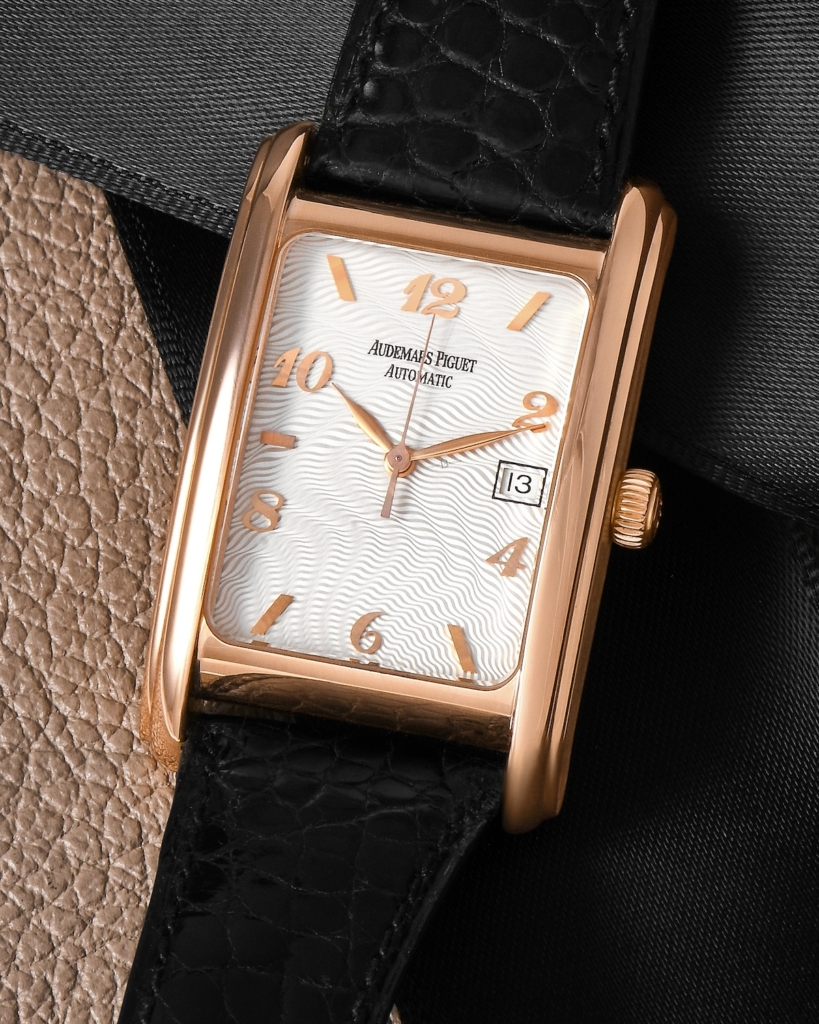
Dials typically featured elongated layouts with applied numerals or markers, while curved cases improved ergonomics despite the watch’s unconventional shape. Precious metals were the norm, reinforcing the collection’s positioning alongside Audemars Piguet’s high-complication dress pieces. The Edward Piguet collection was eventually discontinued as the brand streamlined its catalog and shifted focus toward fewer core families.
Notable Vintage Audemars Piguet Timepieces
Not all notable Audemars Piguet timepieces fit neatly into the brand’s modern collection structure. Audemars Piguet produced a number of distinctive designs that explored unconventional case shapes, integrated bracelets, and flashier aesthetics. Think swinging sixties and cool-cat seventies aesthetics. Today, these vintage references are often discussed outside the context of current collections, yet they offer valuable insight into how Audemars Piguet was experimenting with form and identity during pivotal moments in its history.
Cobra
The Audemars Piguet Cobra is one of the most distinctive vintage Audemars Piguet timepieces of the early 1970s, designed by Gérald Genta during the same period that produced the Royal Oak. While the Cobra name itself is collector-assigned rather than official, it has become shorthand for the watch’s defining feature: a fluid, scale-like integrated bracelet that visually evokes the movement of a snake.
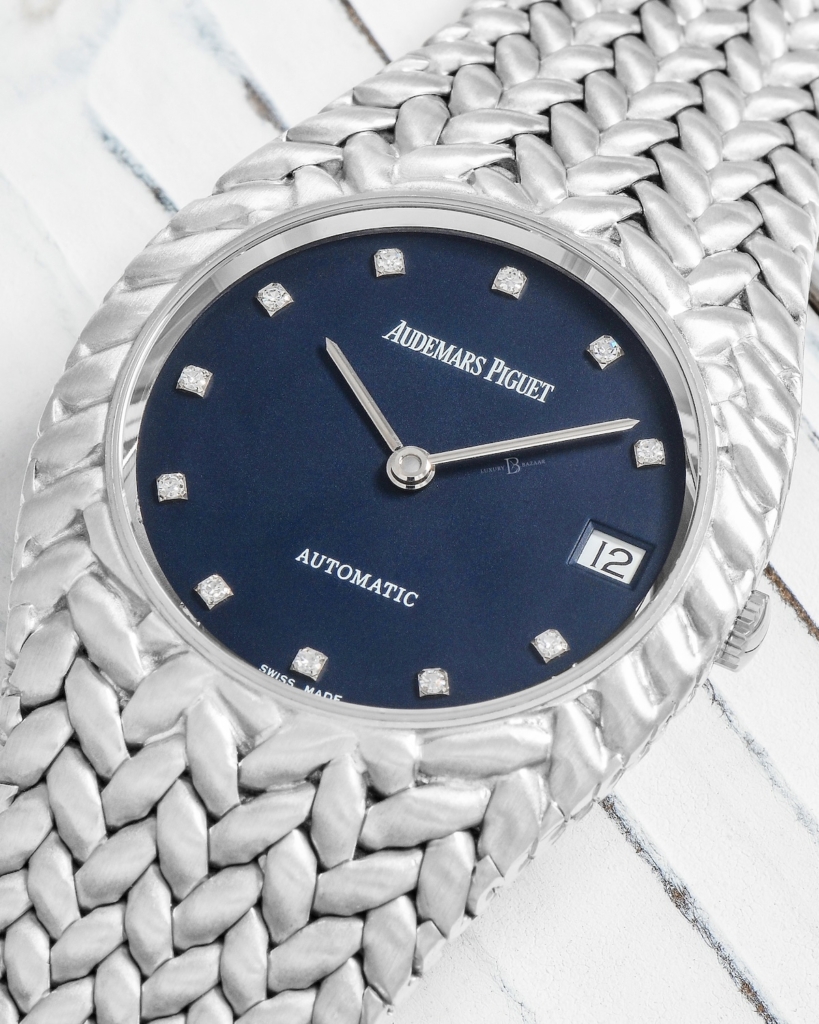
The Cobra’s woven gold bracelet, produced by specialist bracelet makers, flows seamlessly into the case to create a single continuous form. More jewelry than tool watch, the design reflects a moment when Audemars Piguet was openly experimenting with integrated bracelets, precious metals, and unconventional silhouettes.
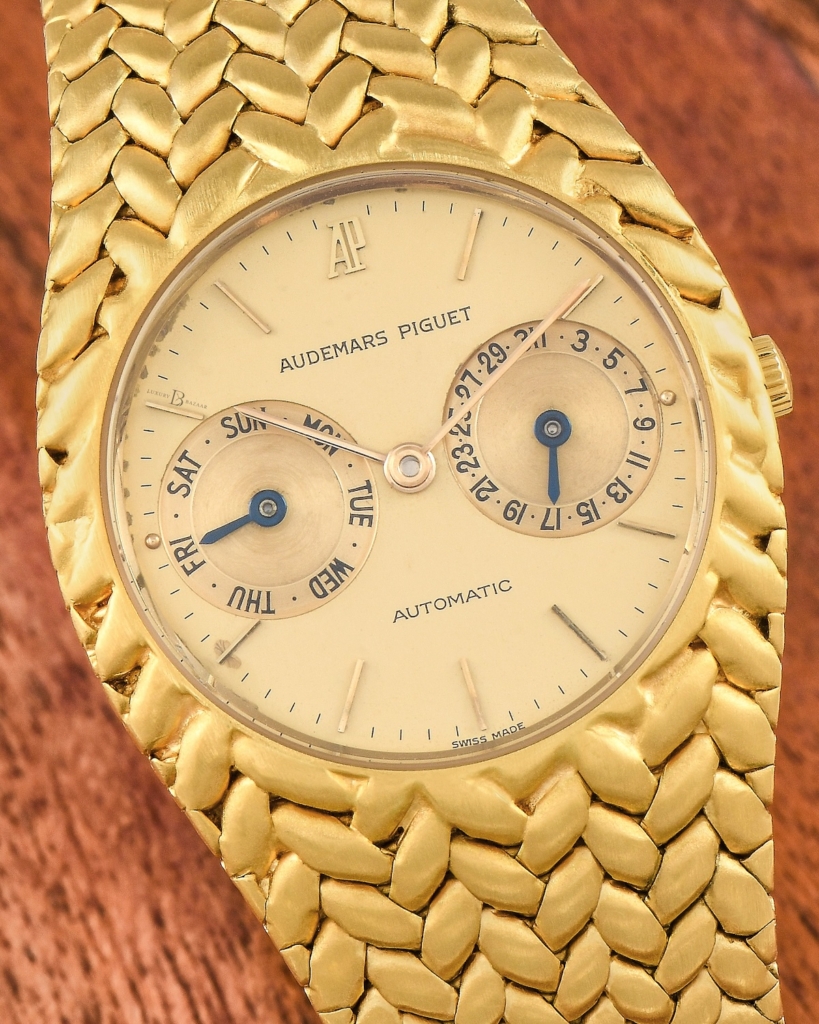
Although it never achieved the commercial success of the Royal Oak, the Cobra occupies an important place in Audemars Piguet’s design history. Today, it remains a niche but highly collectible vintage piece (and might I add, a super cool “geezer watch”), valued for its rarity, craftsmanship, and its role in the brand’s early integrated-bracelet experimentation.
Bamboo
The Bamboo is one of the most original vintage Audemars Piguet timepieces, emerging during a period of bold design exploration in the 1970s and 1980s as Swiss makers responded to the rise of quartz watches and shifting tastes in luxury wristwatches. Unlike conventional round dress watches, the Bamboo (which is a nickname given by collectors) is defined by its textured integrated bracelet, with links that resemble sections of bamboo stalks.
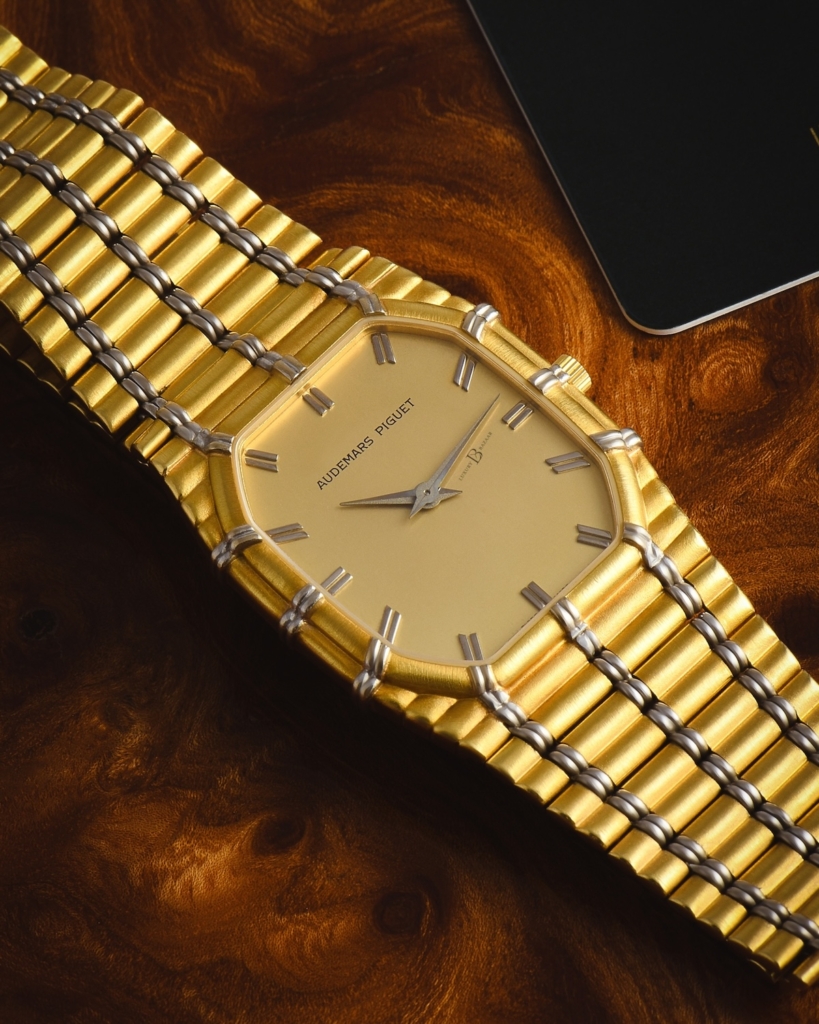
Most examples were executed in precious metals and paired with ultra-thin movements, keeping the watches slim and wearable despite their sculptural construction. Dials were typically restrained, allowing the bracelet and overall form to carry the design, though gem-set variants also existed and leaned further into the jewelry-watch category.
Long overshadowed by sportier Audemars Piguet designs from the same era, Bamboo has gained renewed attention among collectors in recent years. Its low production numbers, labor-intensive bracelet construction, and distinctive aesthetic have positioned it as a niche but increasingly sought-after vintage option within the broader landscape of Audemars Piguet timepieces. As a GQ article mentioned, it’s what the “cool kids” are after.
Disco Volante
The Disco Volante is one of Audemars Piguet’s most unusual and historically significant vintage designs, produced in the mid-20th century and notable for its flat, saucer-like case profile that earned it the Italian nickname meaning “flying saucer.” Unlike more conventional round watches of its era, the Disco Volante paired an ultra-thin case with clean, open dial layouts that emphasized simplicity.
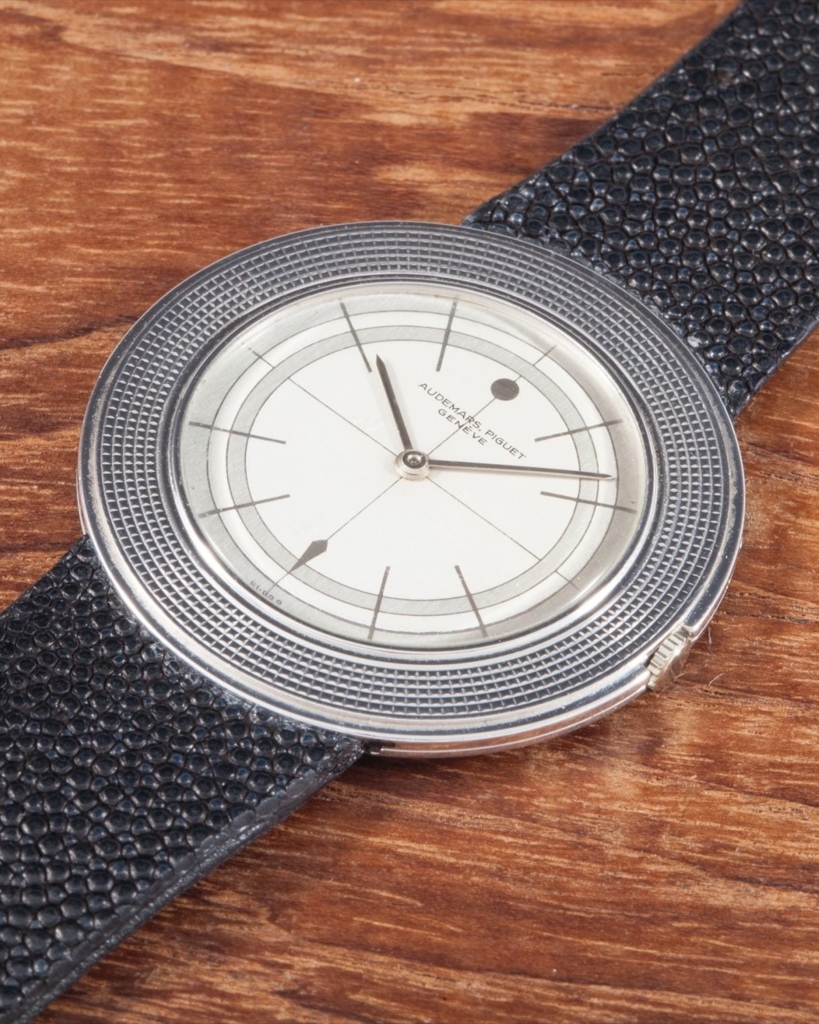
At the heart of many Disco Volante examples is Audemars Piguet’s manual-winding ultra-thin caliber 2003, a movement measuring just 1.64 mm thick and designed in collaboration with other Swiss firms. When it was introduced, the caliber was among the thinnest of its kind, allowing the case to remain exceptionally low-profile for a mechanical watch of the period.
Disco Volante watches were produced in precious metals, typically with minimalist dials and a focus on proportion and wearability. Today, the offbeat Disco Volante remains a coveted vintage piece among collectors, prized for its distinctive design and the technical achievement represented by its slim movement.
Audemars Piguet Timepieces, In Context
Audemars Piguet’s catalog is broader and more layered than its modern reputation sometimes suggests. While this article does not attempt to document every reference the manufacture has ever produced, it does cover the most influential and recognizable Audemars Piguet timepieces across different eras, design philosophies, and use cases.
From the Royal Oak and its offshoots to archival reinterpretations like ReMaster, classical lines such as Jules Audemars, and experimental vintage designs like Cobra, Bamboo, and Disco Volante, these collections help explain how Audemars Piguet arrived at its current identity. Together, they show a brand that has consistently moved between tradition, experimentation, and commercial reality rather than following a single linear path.

For collectors, understanding Audemars Piguet timepieces by model provides useful context when evaluating both modern production watches and vintage references. Each collection reflects a specific moment in the brand’s history, offering insight into how design priorities, materials, and technical ambitions have shifted over time — often well beyond the Royal Oak alone.
More on Audemars Piguet:



Leave a Reply