Luxury Chronographs That Can Be Used Underwater

Screwdown pushers are common on chronograph watches for a simple reason: even on most generally waterproof chronographs, pressing one of the pushers underwater could allow water ingress. There are, however, a relatively small number of luxury chronographs that can be used underwater fully–meaning the chrono timer can be started, stopped, and reset safely underwater. You may see these watches given a “dynamic” water resistance rating. Here’s our complete list of them.
The First Chronograph Fully Usable Underwater: Aquastar Deepstar
Designed for the French Navy (Marine Nationale) in 1962, the original Aquastar Deepstar Chronograph was notable for two historical firsts in watchmaking: the first chronograph function usable underwater, and the first bezel marked with “no decompression” dive times. The Deepstar’s bezel is basically a built‑in dive chart: the inner scale times your dive in minutes, and the outer “no‑deco” scale is a simplified version of the French Navy tables that tells you when it’s safe to do another dive. If your C-value (outer scale) is above 1.4, you still have too much nitrogen in your body to do another full-length dive.
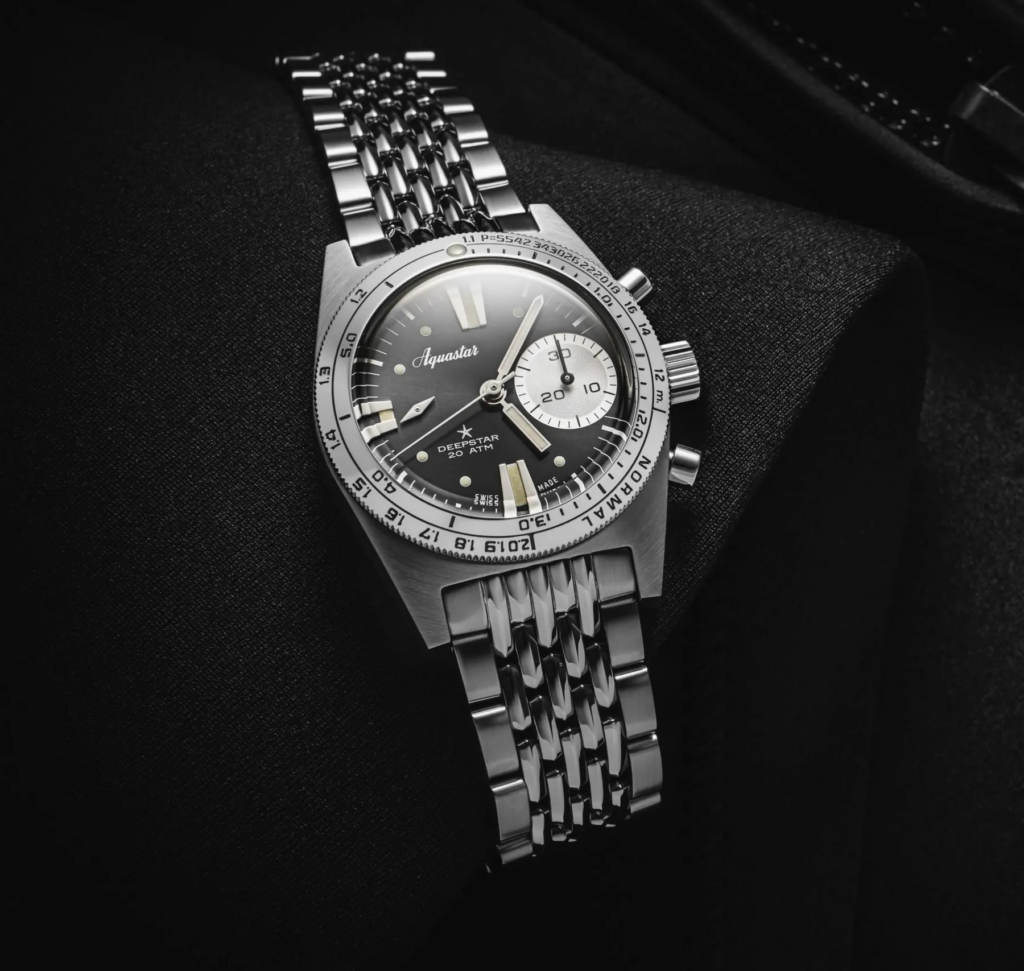
Doxa released their take on the no-deco scale a few years later (more on them in a moment) and they’re arguably more strongly associated with that aesthetic today. Regardless, a modern-day iteration of the Aquastar brand revived the Aquastar Deepstar Chronograph in a 41mm size in 2020, remaining remarkably faithful to its original design.
The conspicuous “big eye” 30-minute counter is on the right side of the dial while a subtle running seconds hand is on the left side.
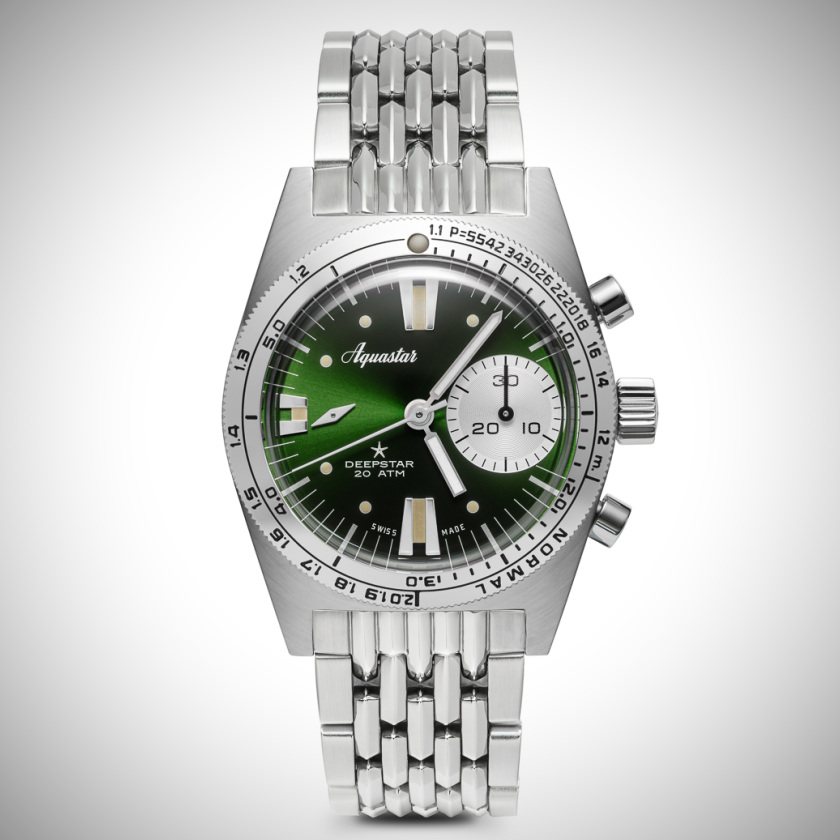
A 39mm version came out in 2022, and all modern Aquastar dive chronographs have La Joux‑Perret column‑wheel chronograph movements. On modern Deepstars, the depth rating is 200m instead of 100m, and the pushers are usable at depth.
The 39mm size is available in automatic or manual-wind, while the now-discontinued 41mm size is only automatic. All versions sell for under $3,000, even on an attractive beads-of-rice bracelet.
Omega “Big Blue” Seamaster Chronograph 120m
In 1972, Omega released a massive Seamaster dive chronograph that they boasted was the first chrono fully usable at a depth of 120m (as the original Deepstar was only rated to 100m). It’s not hard to see why collectors refer to the Omega ref. 176.004 as the “Big Blue.”
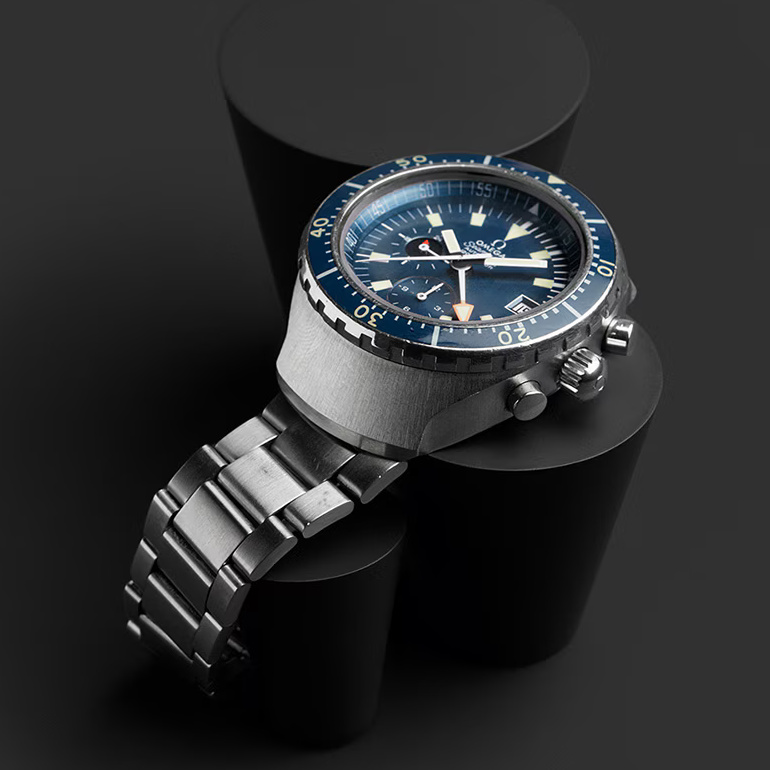
By the late 1970s, though, in the heat of the quartz crisis, both the Big Blue and the Deepstar were discontinued. The watch industry apparently had other priorities besides chronographs you can activate underwater.
To my knowledge, another such chronograph was not produced for another 15 years, and it was Omega themselves who broke that drought.
Omega Seamaster Diver 300M Chronograph
1993 was a big year for the Omega Seamaster. That was when the Seamaster 300M Diver debuted in three main forms: quartz time-and-date, automatic time-and-date, and chronograph. Every Omega 300M chronograph model can be started, stopped and reset safely underwater.
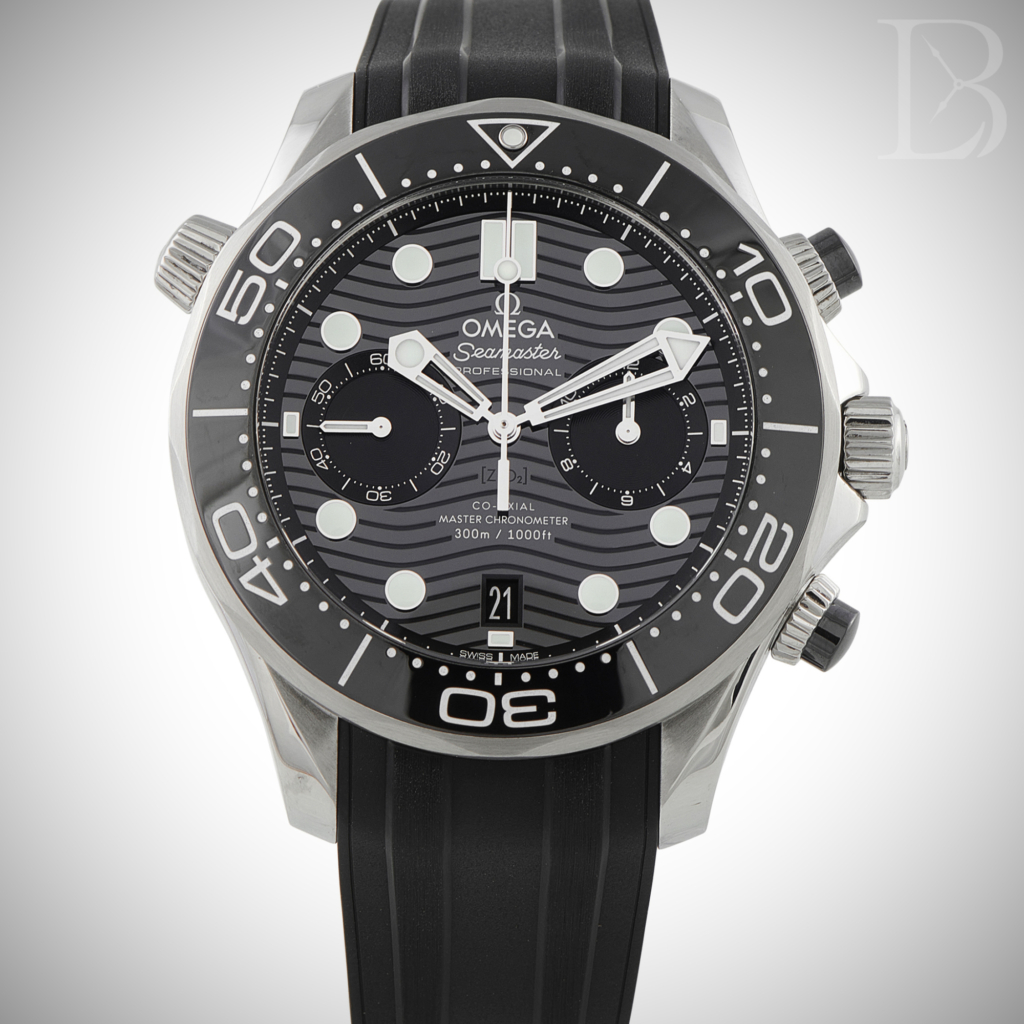
This is true for all generations, including the first-gen ETA-based 42mm models like ref. 2599.80, second-gen models with coaxial escapements added to those ETA bases like ref. 2225.80, third-generation models with coaxial in-house movements like ref. 212.30.44.50.01.001, and also today’s 44mm Master Chronometer two-register variants like ref. 210.30.44.51.01.001.
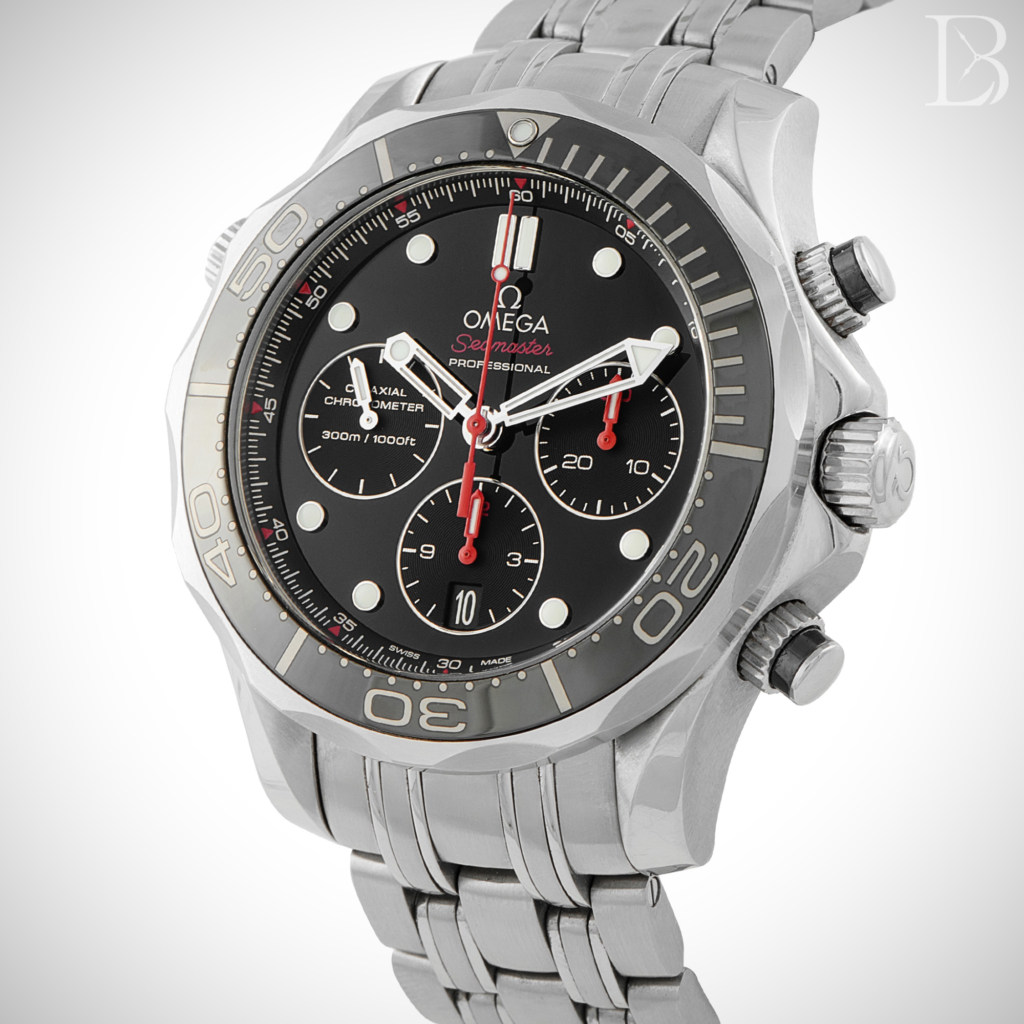
Omega Seamaster Planet Ocean Chronograph (2006-2024)
Omega made chronograph versions of their popular Seamaster Planet Ocean 600M from 2006 until about 2025. As with Omega’s 300M chronographs, the chrono timers on all 600M models can be used freely underwater.
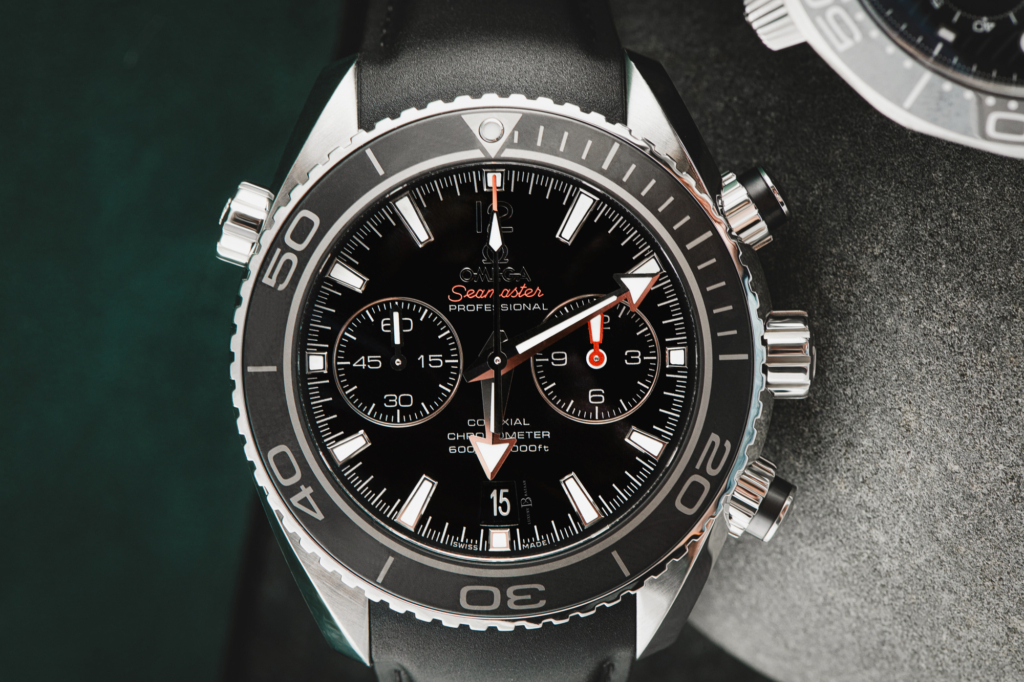
The first-generation Planet Ocean chronographs were powered by Omega’s caliber 3313, the successor to caliber 3303, which was in turn based on Frédéric Piguet 1285 architecture. Later models were given two-register layouts and Master Chronometer-certified in-house movements. Currently there is no Planet Ocean chronograph in Omega’s lineup, but given that a new generation of Planet Ocean was among Omega’s 2025 releases, perhaps we’ll see an updated chrono equivalent soon.
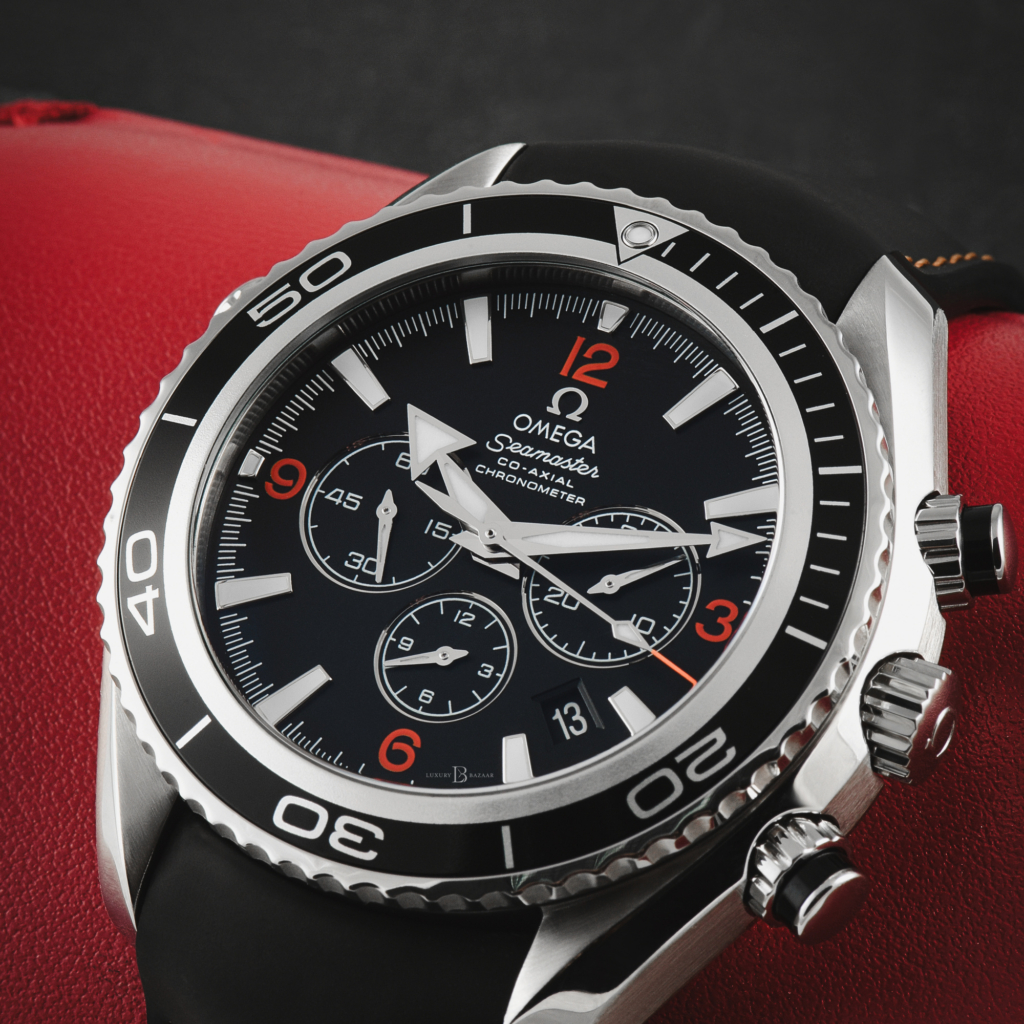
Many variants of the Omega Planet Ocean Chronograph can be found for under $6,000 pre-owned, which is a solid value if you can handle the 45.5mm width.
More on Omega:

TAG Heuer Aquagraph 2000 CN211A
The TAG Heuer Aquagraph 2000 was made from 2003-2009 and, well, that’s exactly the era it looks like it’s from. With a chunky three-link stainless steel bracelet, a 43mm diameter and a prominent angular dive bezel, it has strong neovintage TAG Heuer design language.
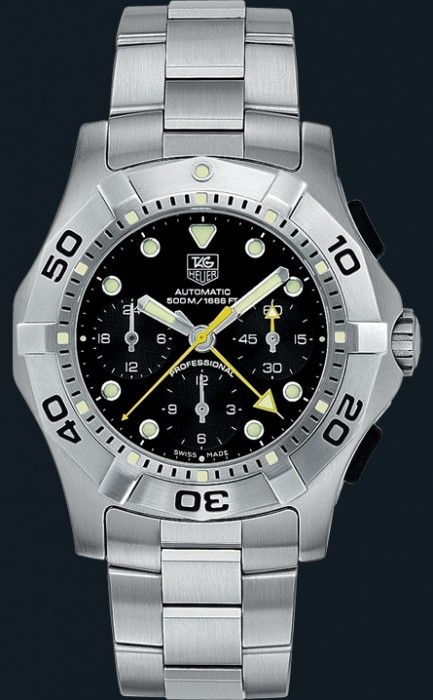
The CN211A is powered by the ETA 2892-2-based TAG Heuer Calibre 60. Interestingly, thanks to its Dubois‑Dépraz chronograph module, it has a central chronograph minute hand in addition to the typical central chrono seconds hand. So, one of the three subdials is free to display 24-hour time instead. Depth rating is 500m and nice pre-owned examples can be found for under $2,000.
More on TAG Heuer:
| ➢ | The Best TAG Heuer Watches |
| ➢ | TAG Heuer x Kith Watches: What You Need To Know |
| ➢ | Long-Term Review: TAG Heuer Monaco Calibre 12 Final Edition |
IWC Aquatimer Chronograph
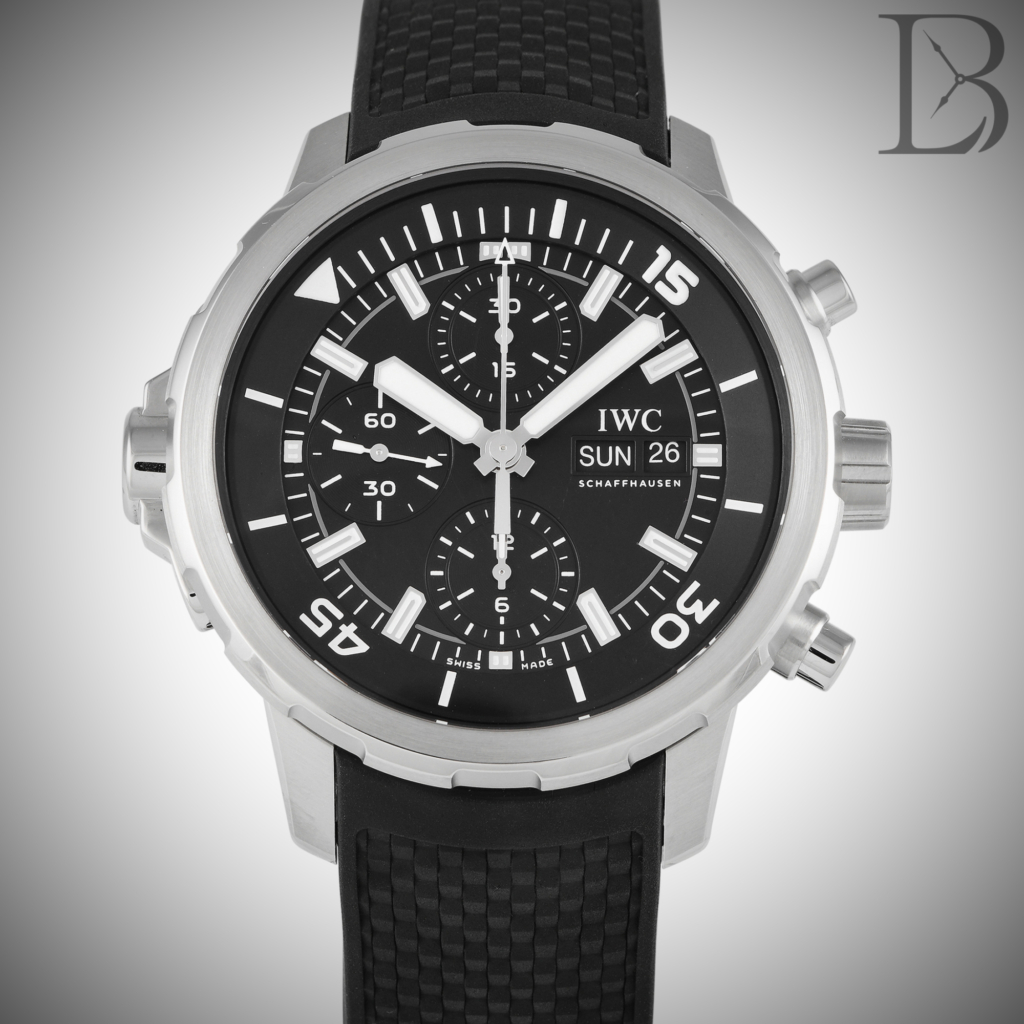
For large wrists, I think a pre-owned IWC Aquatimer is one of the best luxury watches available under $5,000. A few generations of chronographs have been made since the IWC Aquatimer was reborn in 2004, almost always in 44mm cases. There are two main types: Valjoux 7750-based ones with day/date displays and three subdials, and two-register flyback chronographs with in-house movements, which debuted in 2014. Both versions are still offered on IWC.com as of June 2026.
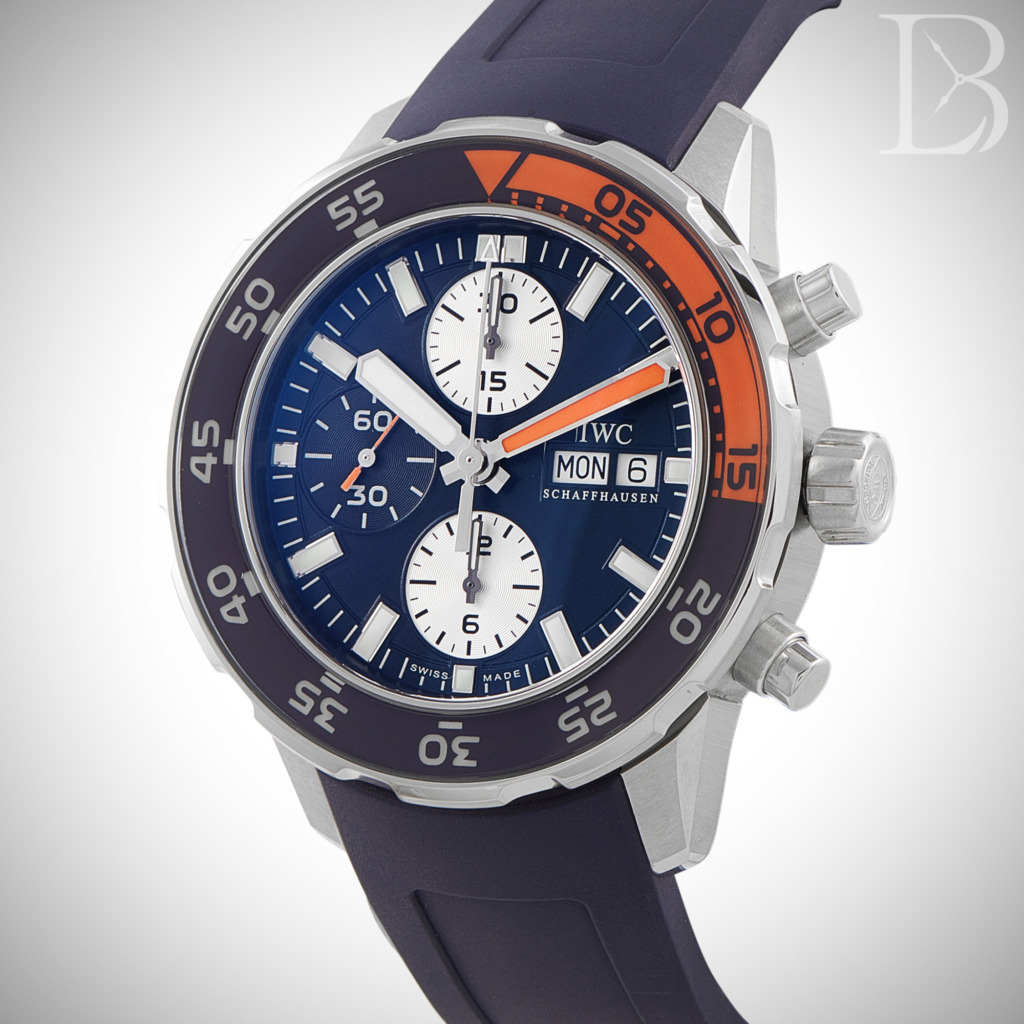
There are also some oddball Aquatimer Chronographs like IW3723, which has a “split-minute” function. It has an additional chronograph minutes hand which can be stopped with a slider on the left side of the case, to mark/record that time (like the beginning of a decompression stop) while continuing to time your dive/event.
All Aquatimer chronographs were designed so the pushers can be operated underwater to rated depth.
More on IWC:
| ➢ | Is IWC a Good Watch Brand? |
| ➢ | Fact vs. Fiction in IWC’s Ingenieur 1832 Promo |
| ➢ | Review: IWC Pilot’s Watch Chronograph Top Gun Edition “Lake Tahoe” |
| ➢ | The Best IWC Watches |
Jaeger-LeCoultre Master Compressor Diving Chronograph
The signature feature of Jaeger‑LeCoultre’s Master Compressor line is its patented compression key system, which replaces a traditional multi‑turn screw‑down crown with a short‑throw rotating collar around the crown. A simple half‑turn compresses internal O‑ring gaskets to lock the crown watertight, while red/white (or blue/silver) arrows indicate if the crown is locked or not. The Master Compressor Diving Chronograph, made from about 2007-2017, uses that same locking system for its pushers.
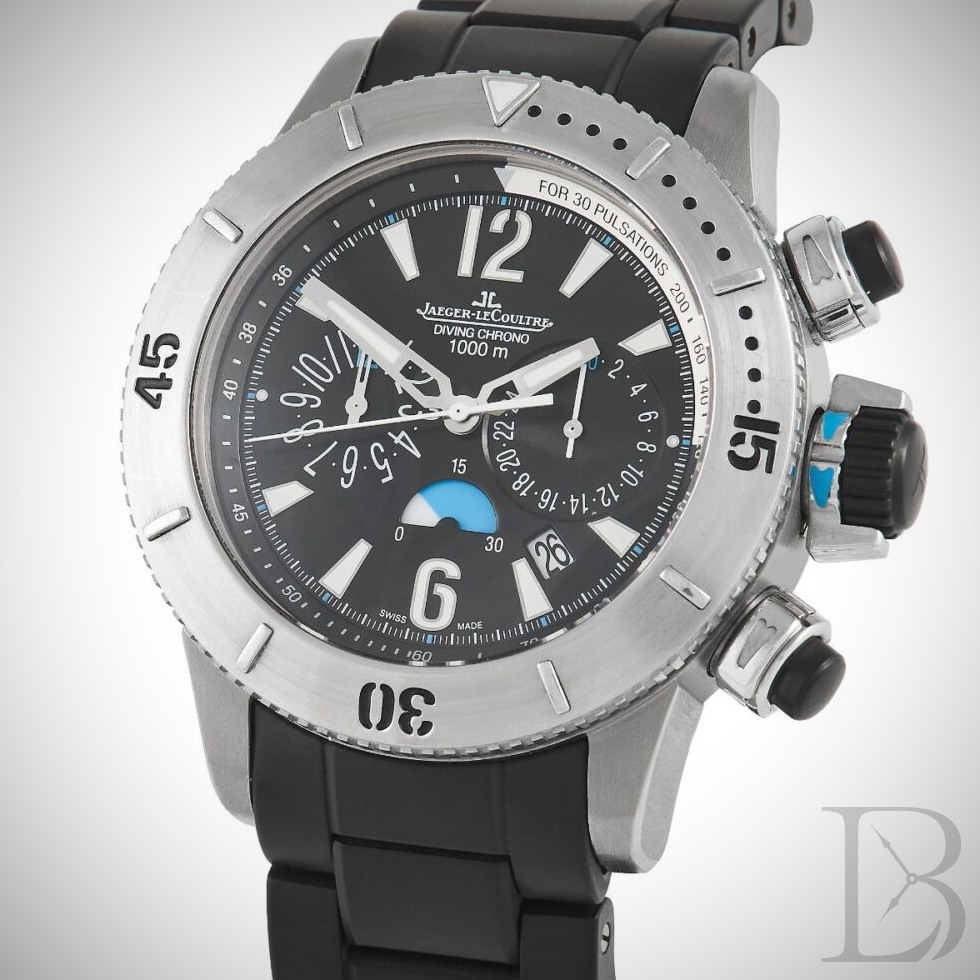
Officially, JLC marketed the keys as the way to safely lock the controls before a dive–they didn’t officially state that the pushers can be used underwater. And while one forum user reported talking to a JLC rep who confirmed the pushers can be used underwater, others reported the opposite. However, a diver and watch enthusiast tested the pushers at a depth of 60m–and everything was fine. Other divers have reported the same.
The 44mm case of the JLC Master Compressor Diving Chronograph was offered in either titanium or red gold. The two-color semicircle at the bottom of the dial is essentially just a dramatic small running seconds hand. Nice pre-owned examples typically start around $8,000.
Jaeger-LeCoultre Deep Sea Chronograph
The Jaeger-LeCoultre Deep Sea Chronograph, which was produced from 2012-2018, does not have screwdown pushers nor a screwdown crown. And, like the Master Compressor, it is apparently (unofficially) able to handle underwater pusher activation regardless.
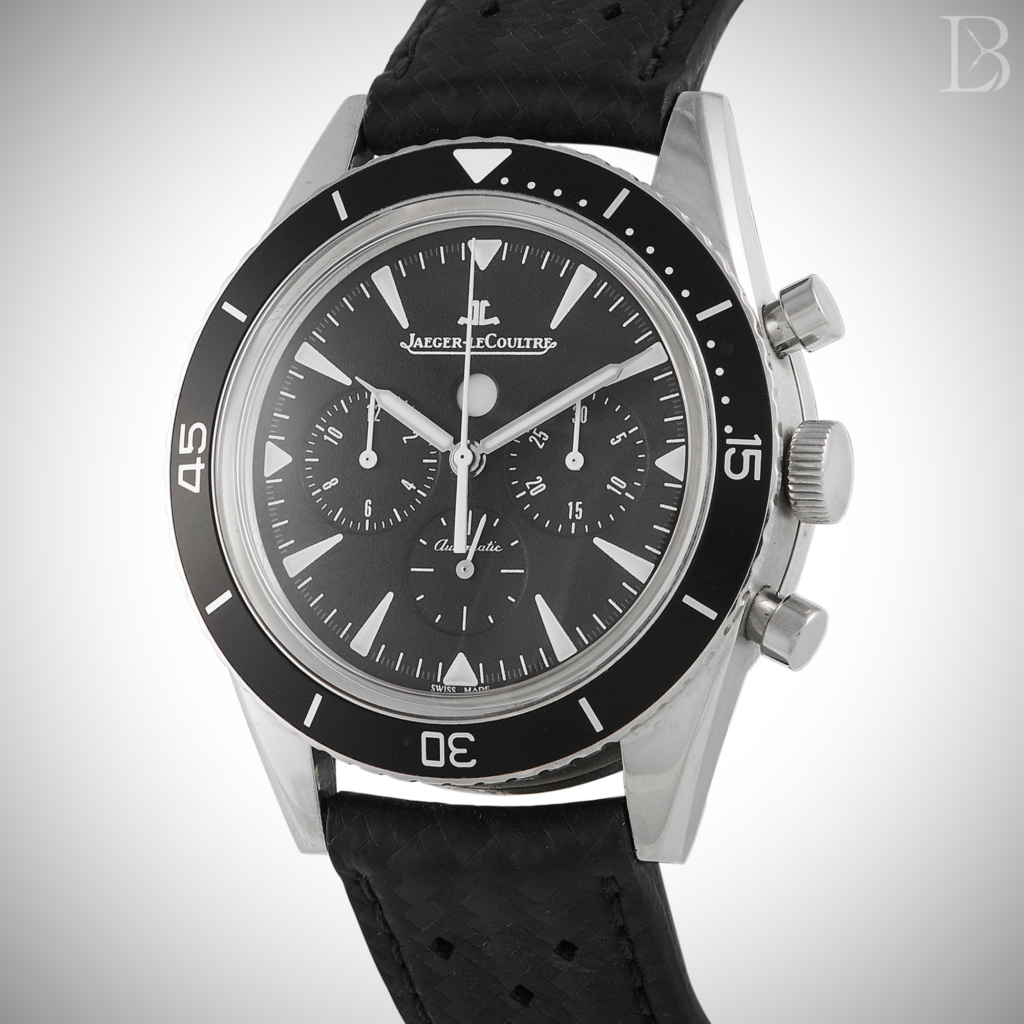
While some enthusiasts readily include these JLC’s in the “you can use the pushers while submerged” club, and some have even had success doing so, others are more skeptical/cautious and feel that it relies on very healthy gaskets.
More on Jaeger-LeCoultre:
Breitling Avenger SuperQuartz Chronographs
In 2002, the titanium 44mm Chrono Avenger M1 SuperQuartz became the first Breitling chronograph with pushers that can be activated while submerged (ref. E73360). Its replacement, the Avenger Seawolf Chronograph (ref. A73390), arrived in 2008 with a 45.4mm stainless steel case. A DLC-coated version (ref. M73390) came two years later.
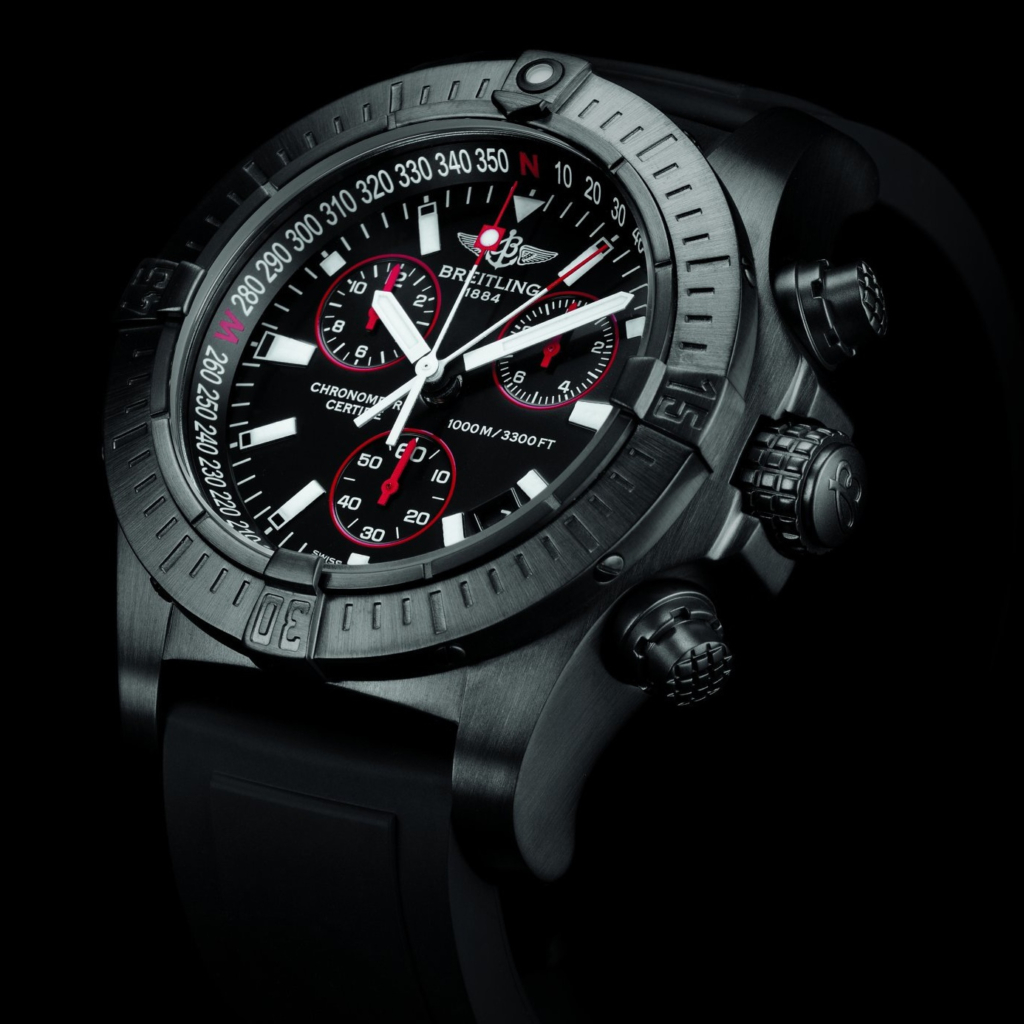
As you might recognize by the equilateral-triangle layout of its widely spaced subdials, inside each Avenger chronograph is an ETA SuperQuartz chronograph movement. Breitling took a unique approach to maintaining water resistance during chronograph usage: magnetic pushers. So the case itself stays totally sealed. The Avenger Seawolf Chronograph is over 18mm thick, so it’s a beast, but I can appreciate the feel of a hefty Breitling. This is certainly a fun choice in the $3,500 range.
Breitling SuperOcean Chronograph M2000
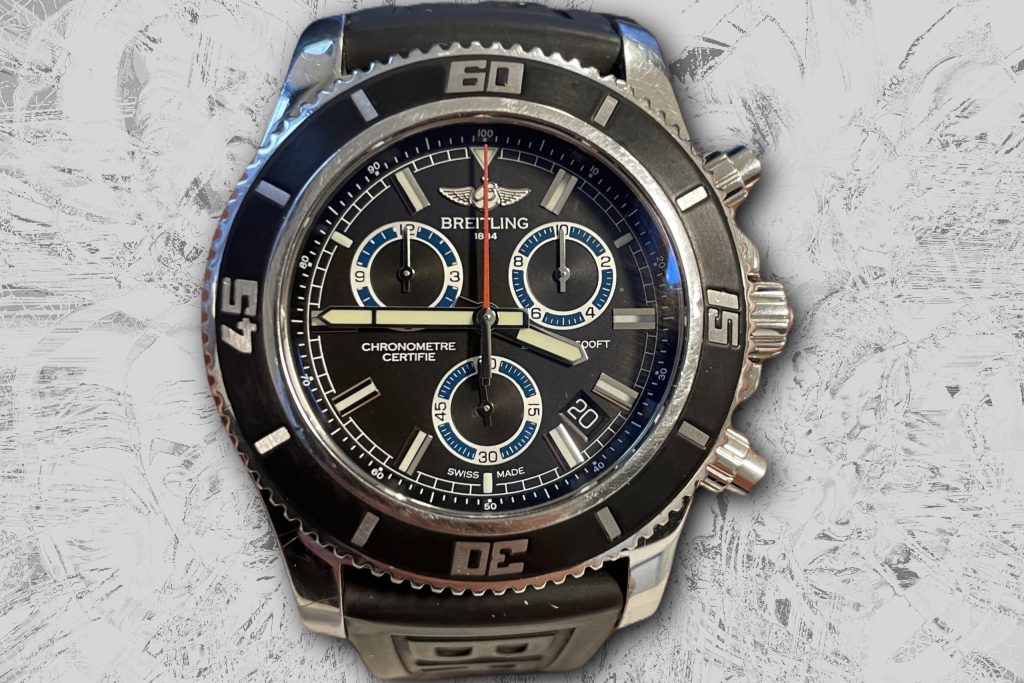
One of the more interesting Breitling SuperOcean models is the M2000 SuperQuartz chronograph. It effectively replaced the above SuperQuartz Avenger chronograph. It is similarly sized, and has the same movement and magnetic pushers. But in this form it has a rubberized dive bezel like those found on many 2010s-era Breitling divers.
More on Breitling:
| ➢ | A Timeline of Breitling Superocean Models |
| ➢ | The Best Entry-Level Breitling Watches |
| ➢ | The Best Breitling Watch |
| ➢ | 2025 Breitling Releases |
| ➢ | Who is Universal Genève and Why Did Breitling Buy Them? |
Blancpain Fifty Fathoms Flyback Chronograph
The Blancpain Fifty Fathoms, widely recognized as the original dive watch with a rotating bezel in 1953, first appeared in chronograph form in 2007. All Fifty Fathoms chronographs have full underwater pusher functionality. They’re also all flyback chronographs.
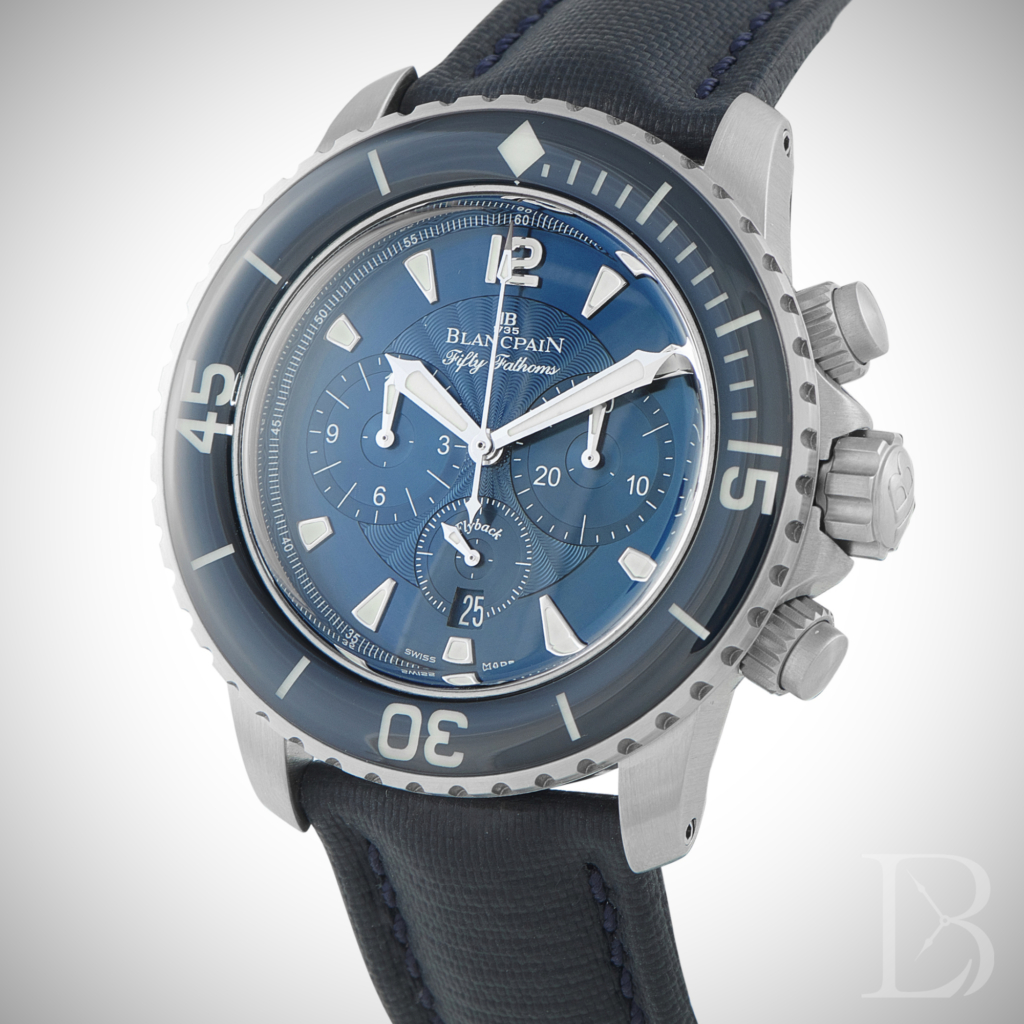
Fifty Fathoms chronos are 45mm wide and about 15.5mm thick. Expect to pay about $15,000 for a decent pre-owned stainless steel one. While must buyers choose the classic sailcloth strap, a three-link bracelet is an option as well.
Blancpain Fifty Fathoms Bathyscaphe Flyback Chronograph
The 43mm Blancpain Fifty Fathoms Bathyscaphe Flyback Chronograph lineup has the same underwater-pusher functionality as the more retro-styled regular FF Chrono.
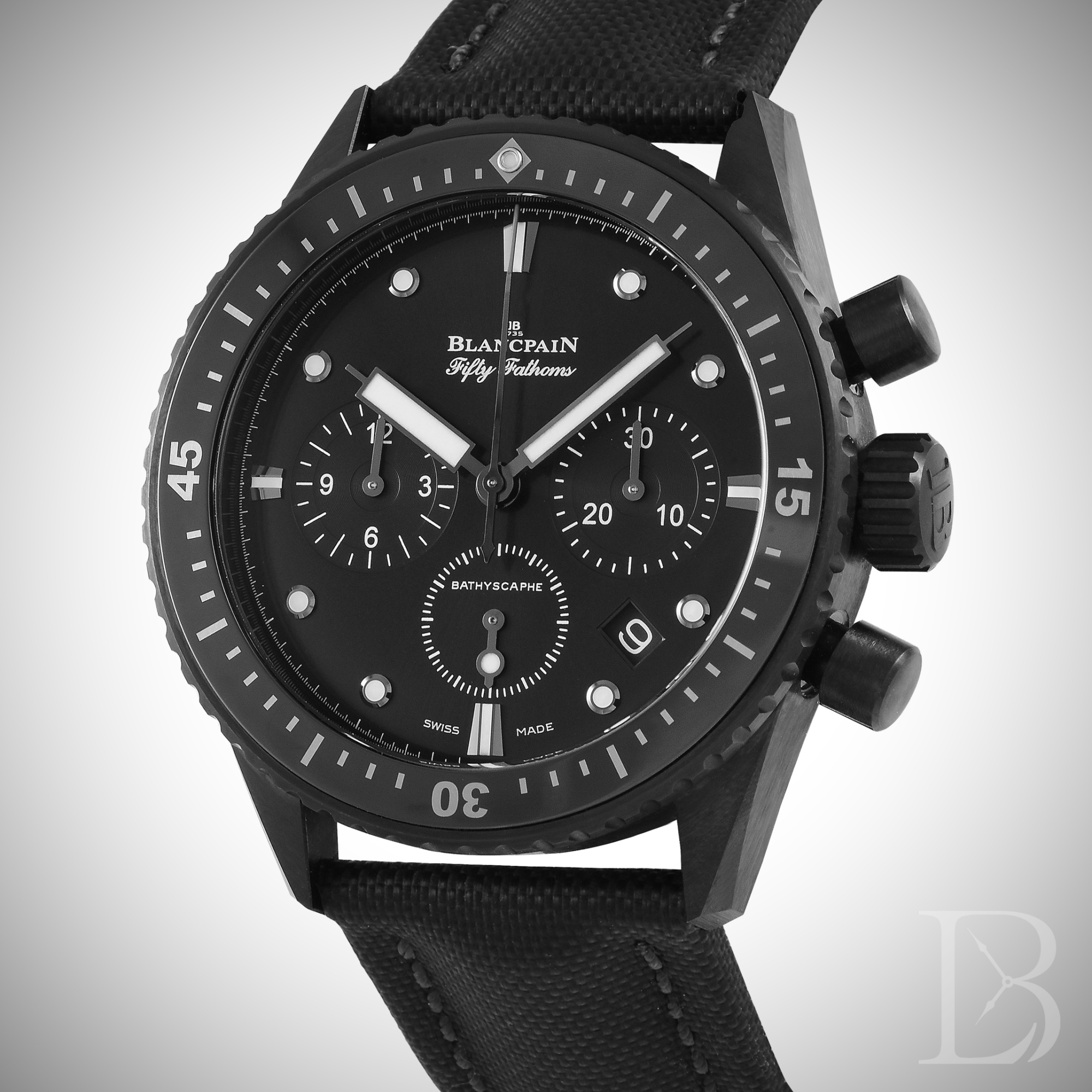
$15,000-$20,000 will get you a good example of most variants of the Fifty Fathoms Bathyscaphe Chrono. There are more expensive ones, however, like ceramic models with full ceramic bracelets which sell for closer to $25,000. Full gold bracelet models can top $50,000. As with the standard Fifty Fathoms, though, the sailcloth strap option is much more common.
Glashütte Original SeaQ Chronograph
In 2019, Glashütte Original launched their attractive SeaQ line of dive watches. Three years later they unveiled the SeaQ Chronograph, featuring a 43.2mm stainless steel case rated to 300m, and a ceramic bezel insert.
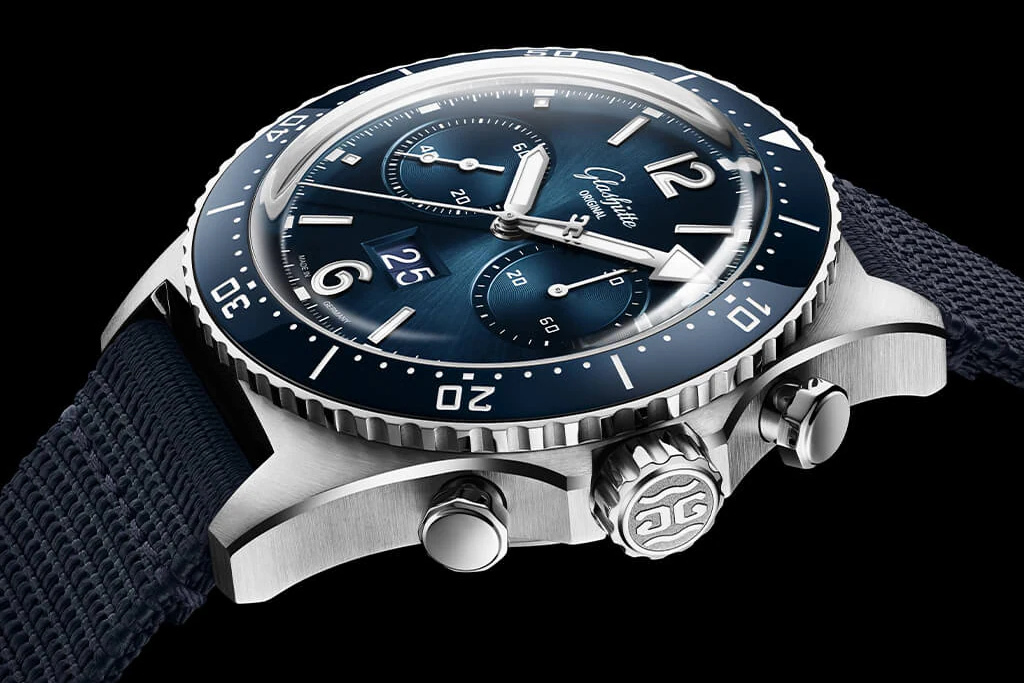
With a starting list price of $15,800 (less than a Rolex Daytona), given its underwater-capable chrono functionality and high degree of finishing, the Glashütte Original SeaQ Chronograph is a strong choice at its price point. Bracelet versions start at $17,100.
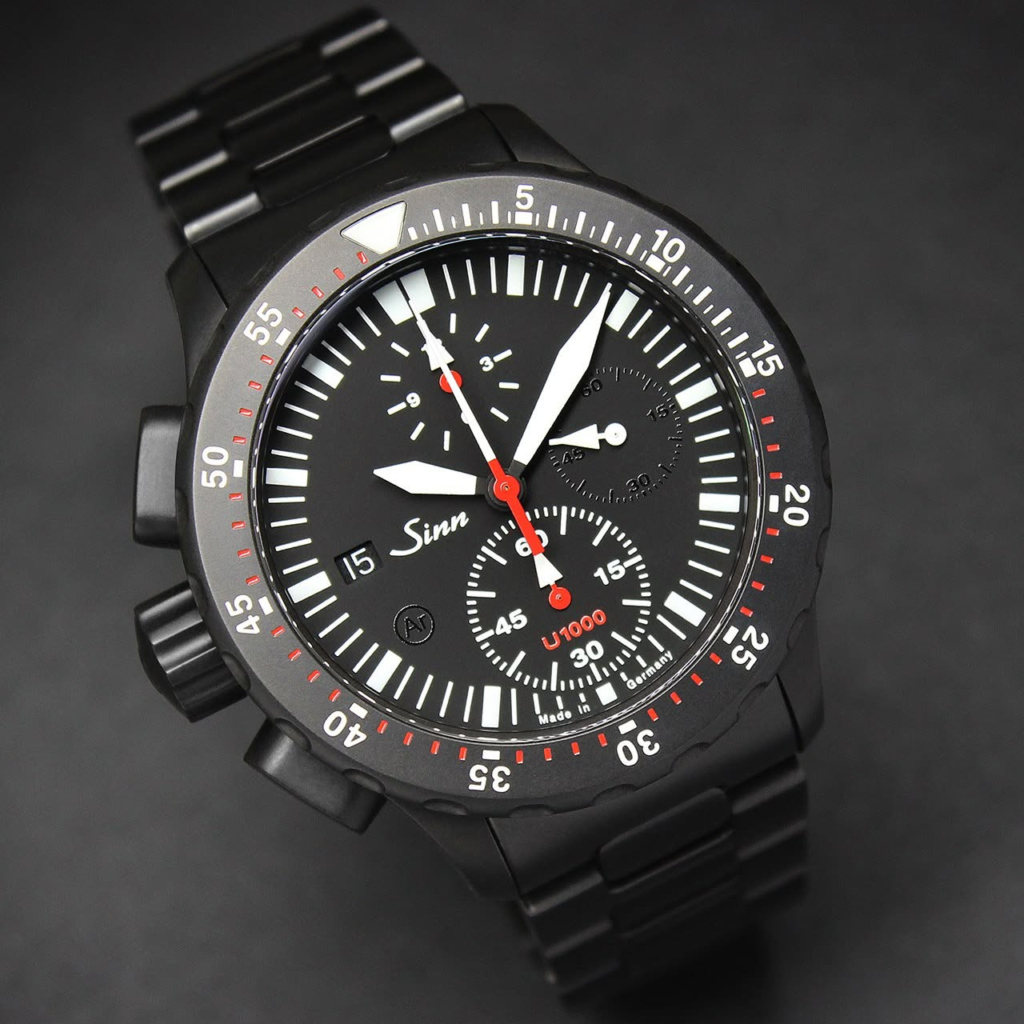
Sinn D3-System Chronographs
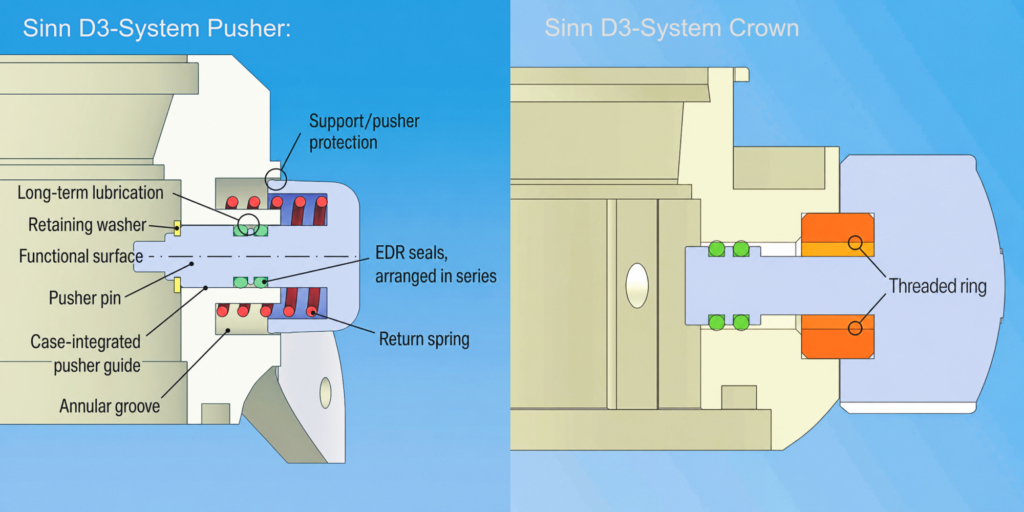
In most watches, the crown and pushers sit inside small tube inserts in the case, which add extra seals and weak points where moisture can get in, especially if the parts get knocked around. The D3-System skips those tubes and mounts everything directly into precisely machined holes in the case, making it stronger, simpler, and usable underwater.
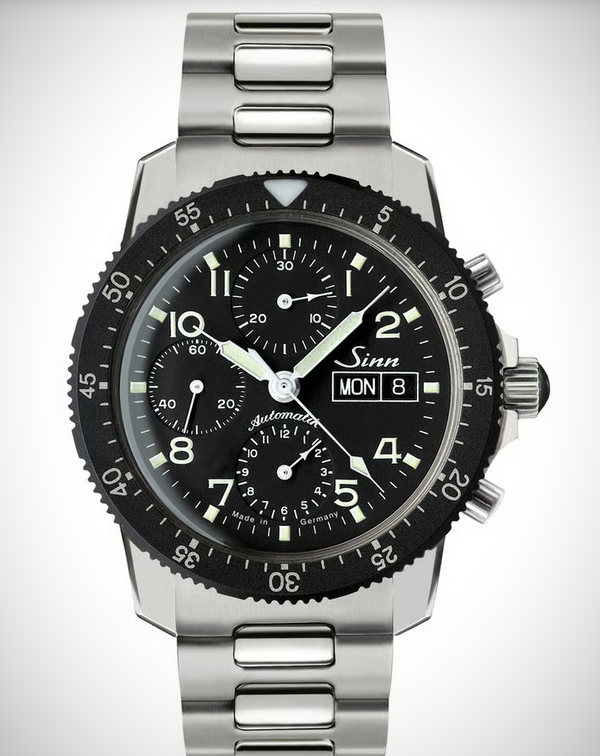
Sinn model families like U1000 (first launched in 2008), EZM 13, 206, 613 St, 936 and 308 all use D3 pushers and thus are all usable underwater to their full depth rating.
Sinn seems to be the brand with the greatest number of luxury watch offerings with full underwater chronograph functionality (perhaps unless you count Omega’s back catalog).
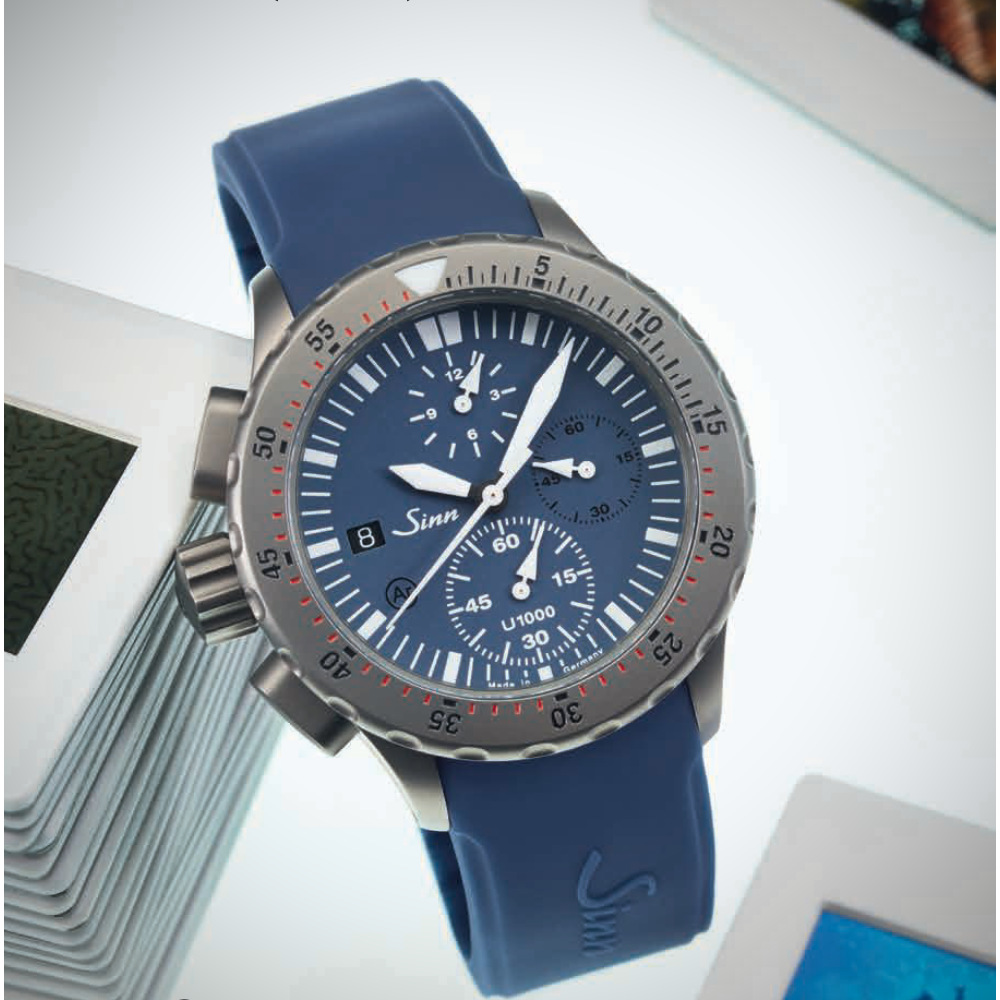
Nice examples of Sinn U1000’s and other similar chronographs tend to sell around the $4,000 price point.
Doxa 300T-Graph
The SUB 300T‑Graph, made from about 2012-2015, is the only Doxa watch I’m aware of with a chronograph that can be used underwater. Although the watch itself is rated to 300m, the chrono can “only” be used up to 100m deep. Its 44mm stainless steel cushion case contains a Valjoux 7750 movement. Only 300 pieces were made (150 each in black and orange).
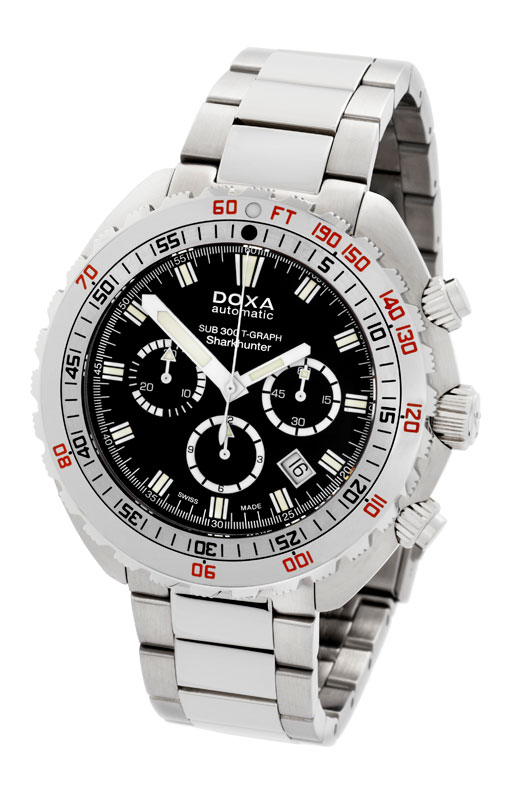
The Sub 300T-Graph has the key aesthetic hallmarks of a Doxa, like well-lumed hands, high contrast, and (in most cases) a dual-scale bezel. The inner scale on the bezel is a typical 0-60 scale, while the numbers on the outer ring correspond to maximum “no compression” times at various depths. “100” is written at the 25-minute mark, for instance, because a diver can remain 100 feet deep for a maximum of 25 minutes without needing to make a decompression stop.
Interestingly, the Sharkhunter (black dial) version of the 300T-Graph was offered with a sapphire bezel insert over a classic 60-minute dive bezel, which gives it much less of a typical vintage Doxa vibe.
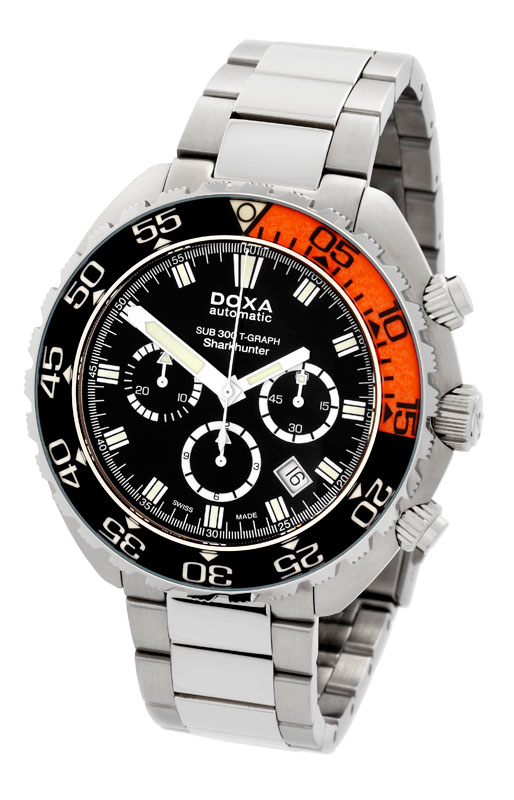
If you’re looking for a quality mechanical chronograph that can be used underwater, and you don’t mind the 44mm width and 17mm thickness, the Doxa Sub 300T-Graph is well worth a look. Expect pre-owned prices to be under $4,000–if you can find one for sale, that is.
H. Moser & Cie Streamliner Chronograph
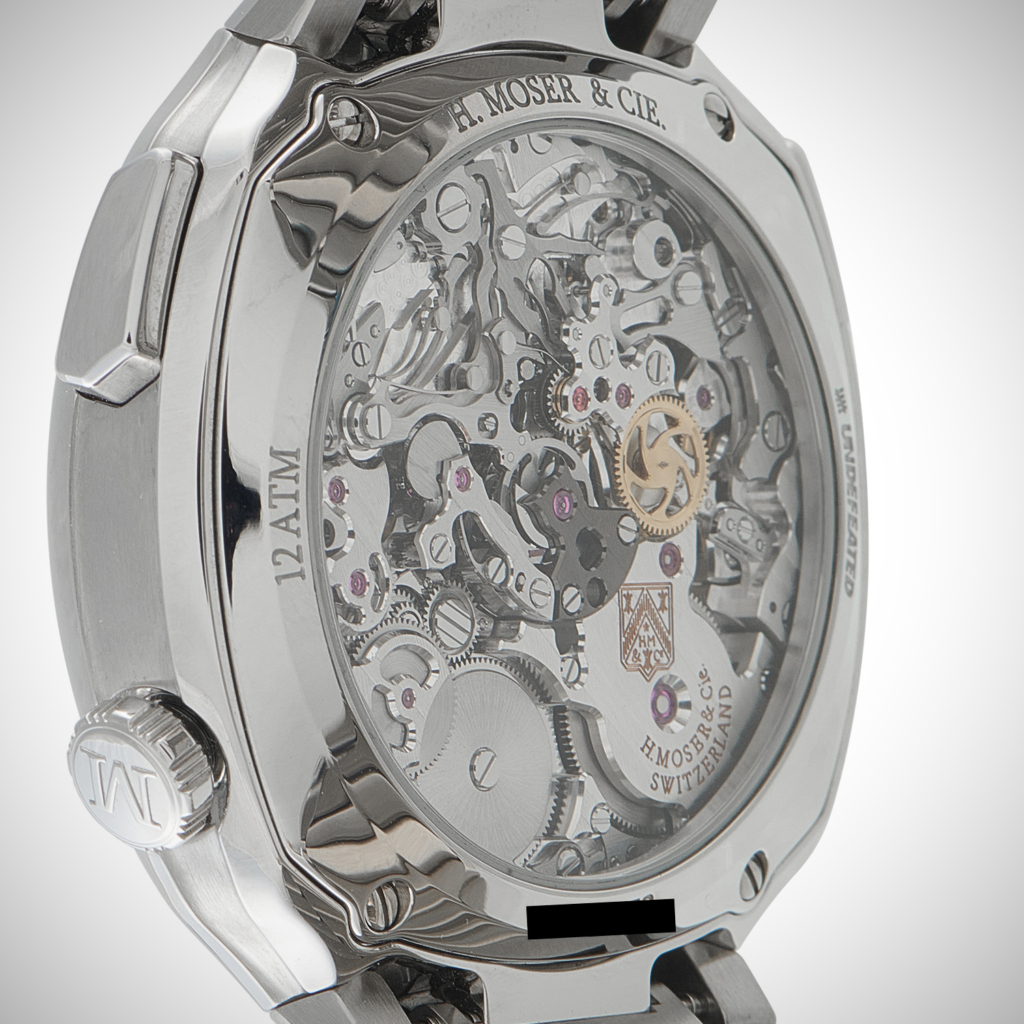
H. Moser & Cie, long known for clean minimalist dials with classic (and rather dressy) cases, launched their version of the integrated-bracelet luxury sports watch, the Streamliner, in 2020. Although many variants now exist, like time-only models, tourbillons, perpetual calendars and minute repeaters, the original Streamliner was a deceptively simple-looking flyback chronograph.
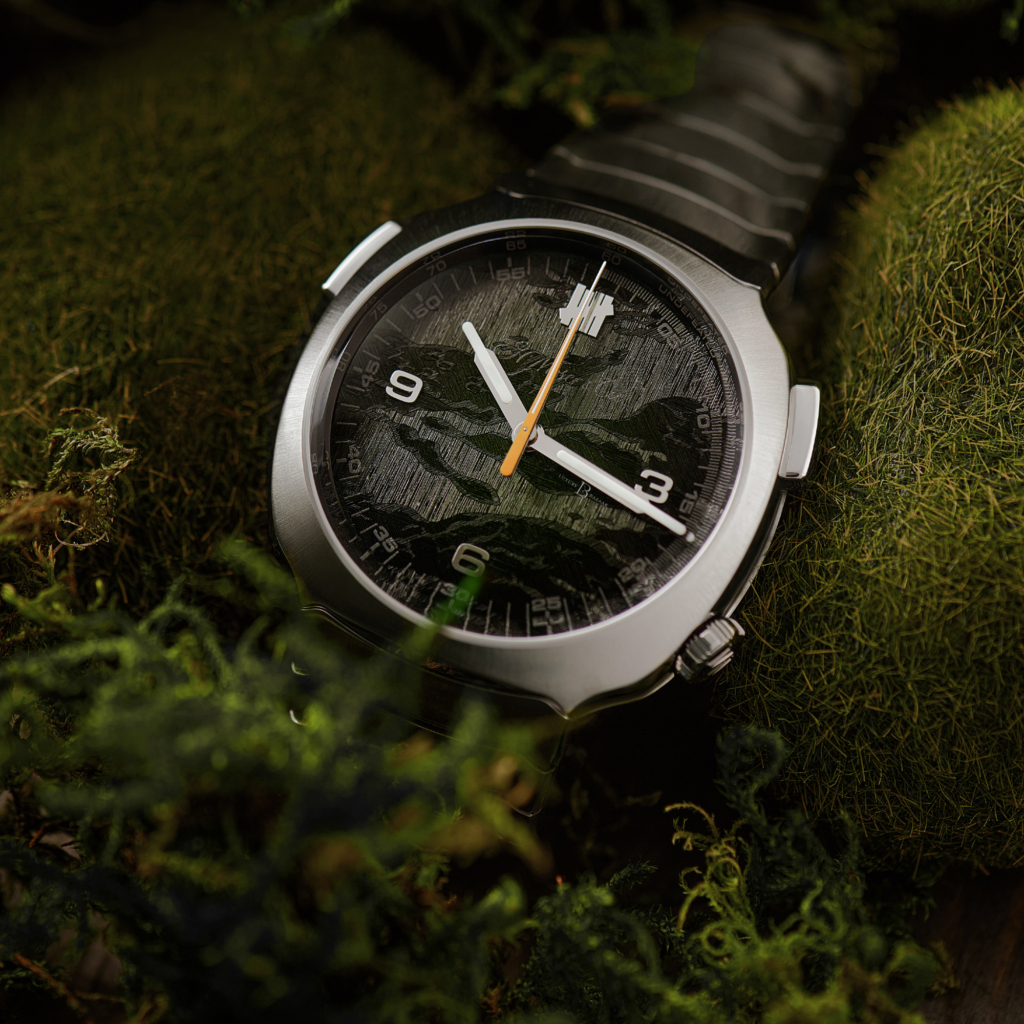
Its AgenGraphe movement has central chrono minutes and chrono seconds, and it foregoes running seconds entirely–so there are no subdials at all.
Damasko DC8x
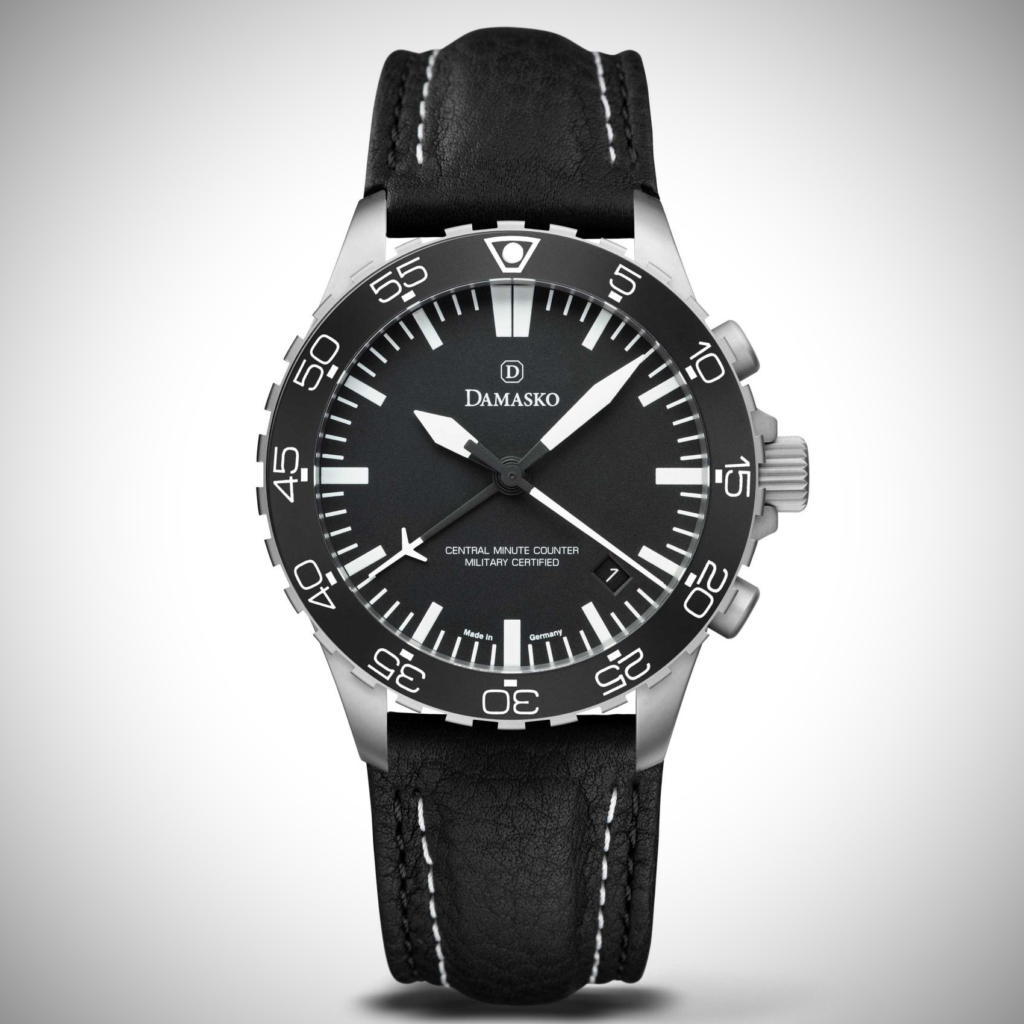
If you want an underwater-capable chronograph with a central chrono minutes hand but H. Moser prices are a bit too steep for you and the TAG Heuer Aquagraph 2000 is too “loud” for you, you can consider a German-made Damasko DC80, DC81, or DC82. All of them can safely be used underwater and sell for around $4,000. The movement, Damasko’s caliber C51, is a heavily modified Valjoux 7750.
If you prefer a more traditional chronograph layout, subdials and all, you can consider the Damasko DC86, which also has a chronograph that can be safely used underwater.
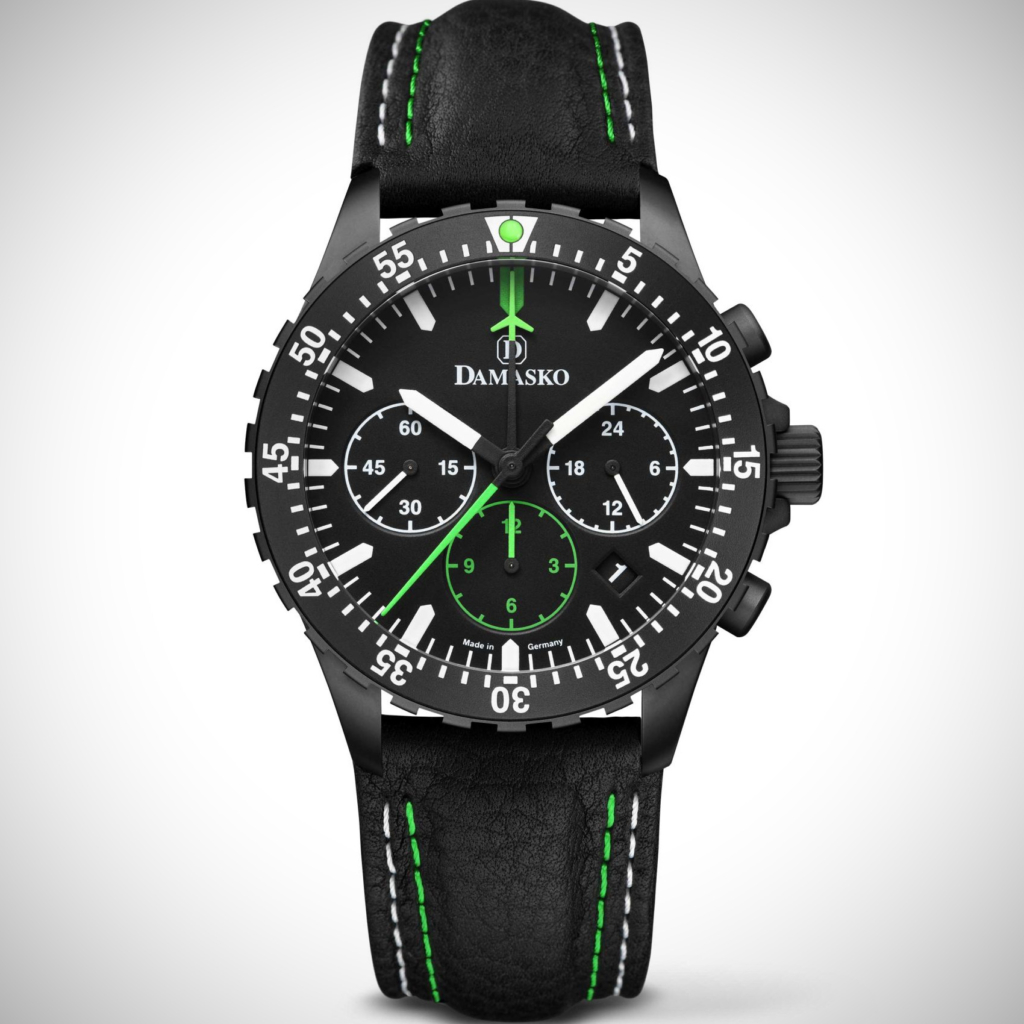
All of these Damasko chronographs are made of ice-hardened stainless steel produced by Damasko Metallbearbeitung, the industrial metalworking company that the Damasko watch brand was spun off from in 1994.
Kerbedanz Maxspor GR8
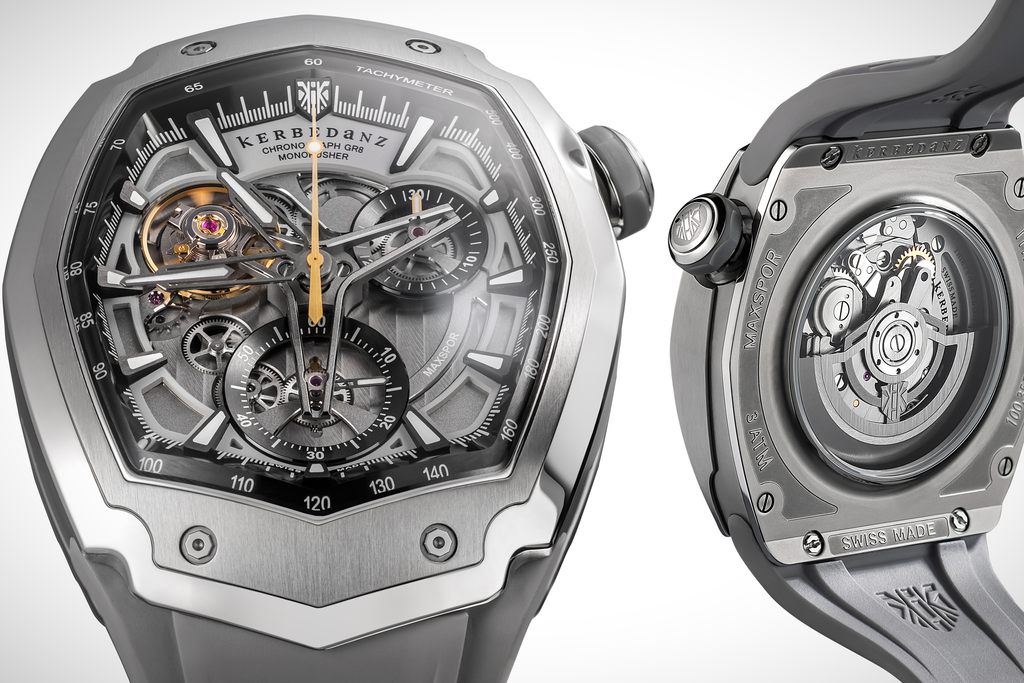
Around the same price point as the H. Moser Streamliner is the ~$40,000 Kerbedanz Maxspor GR8 monopusher chronograph, released in 2024. Kerbedanz says they have “developed a double-gasket sealing system around the chronograph pusher, allowing it to be actuated underwater while maintaining the integrity of the watch.” Look for big things from this brand in the future.
Porsche Design Chronograph 1
The Porsche Design Chronograph 1, effectively a “reissue” line of the brand’s 1970s chronographs, first appeared in 2022. Several variants have been released in the years since, but they all share deep slanted rehauts, grade 5 titanium cases with strong 1970s vibes, and full underwater chronograph functionality.
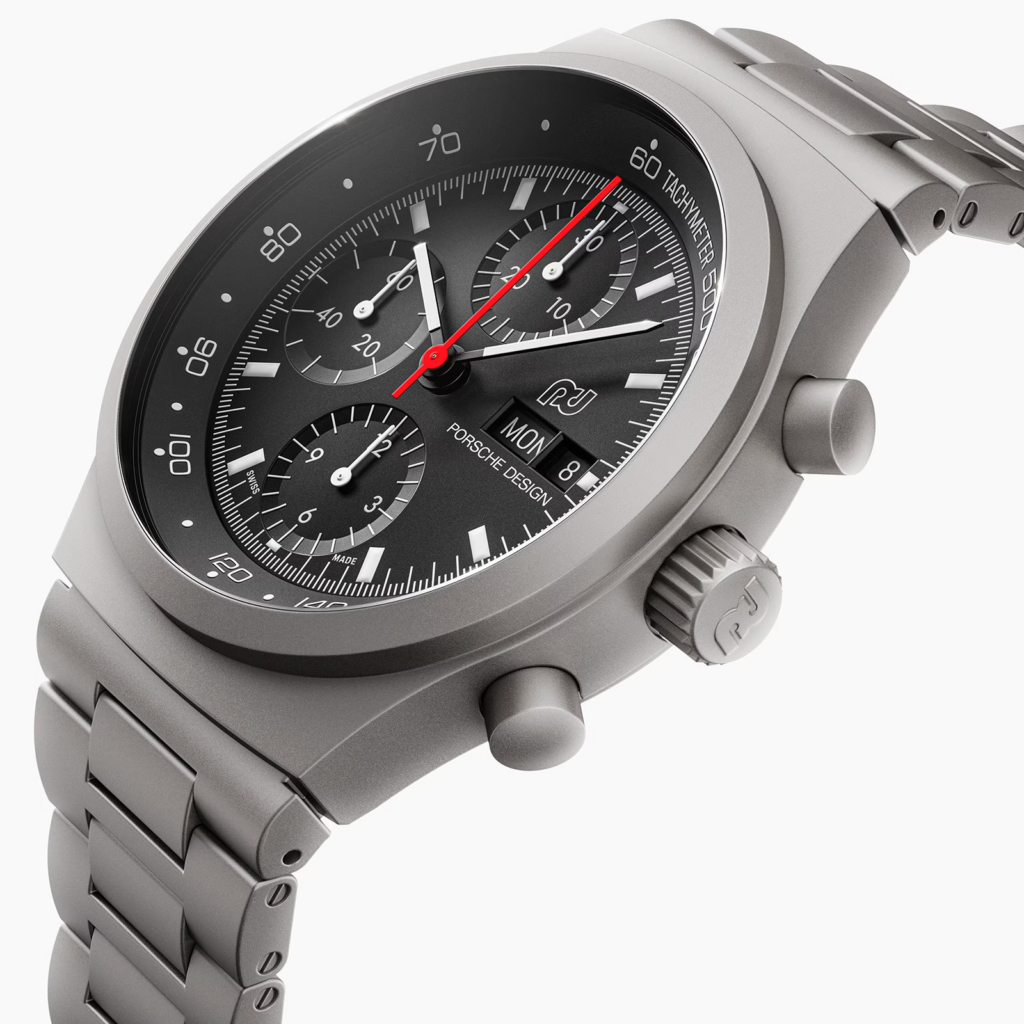
But Porsche Design takes things one step further: even the crown can be pulled out and safely operated underwater. I’m not aware of any other mechanical watch where you can set the time underwater.
More Affordable Chronographs That Can Be Activated While Submerged
For some slightly more affordable options, the UTS Chrono Diver 600, Ball Hydrocarbon Trieste, Ball EM II Diver, and Ebel 1911 Discovery chronograph all offer underwater pusher functionality as well. (Shout out to Bidle of Watchuseek for digging those up.)
That should just about cover all analog chronographs (so no Casio G-Shocks and the like) that are effectively waterproof with their pushers activated while submerged. If we’ve missed any luxury watches with chronographs that can be activated underwater, feel free to let us know! In my opinion, it continues to be an underappreciated (and under-marketed) segment of the market.
More on High-End Independent Watchmakers:



Leave a Reply