The Hierarchy of Audemars Piguet Royal Oak Complications

For most watch collectors, even a basic time-and-date Audemars Piguet Royal Oak is a grail. But, as they say, there are levels to the watch game, and AP has released Royal Oak watches with so many exotic complications (often several on the same watch) that it can be hard to keep track of the pecking order. So, we’ve coherently ranked every type of Royal Oak movement, from most complicated to least.
I sorted these by watchmaking complexity/prestige and not “most expensive to least expensive,” although that is indeed roughly (but not exactly) how it tends to play out. Let’s get into it.
AP Royal Oak Grande Complication Openworked
First seen: Early 2000s
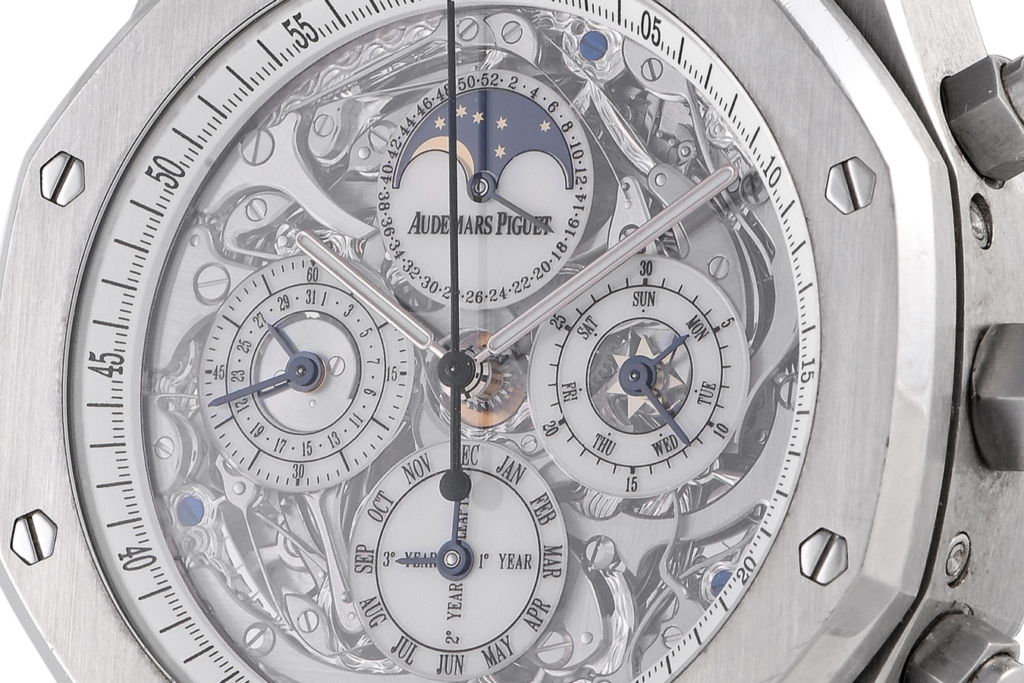
A “grand complication” can refer to all sorts of exotic and fancy complications in the watch world, but in the context of Audemars Piguet, a Grande Complication is a combo of three particular complications: Minute repeater, rattrapante (split-seconds) chronograph, and perpetual calendar with moonphase.
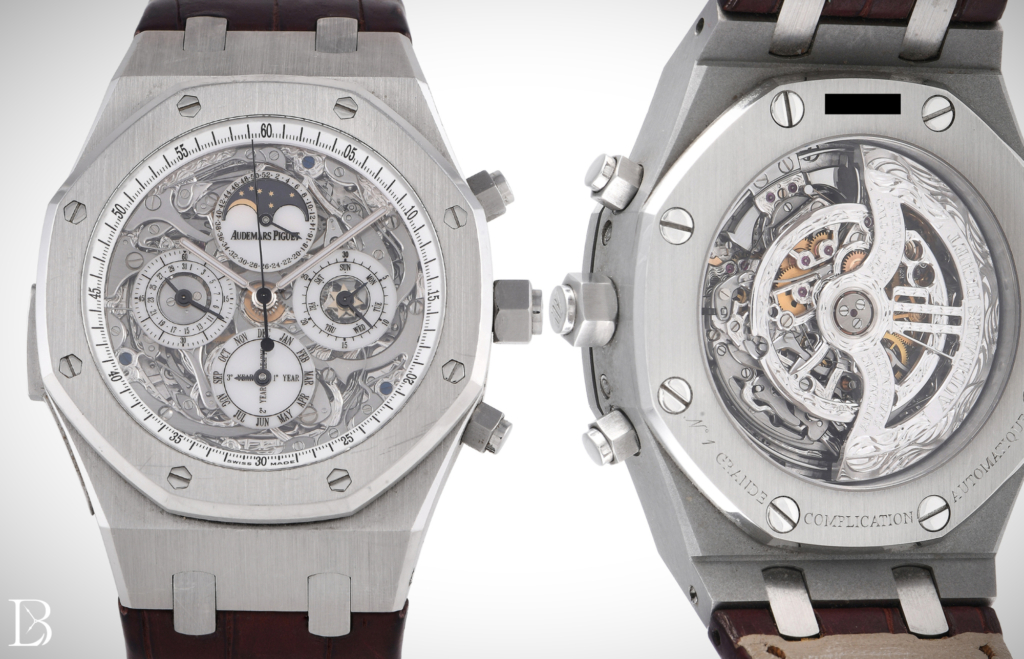
One of the few ways to get more extreme than that is to skeletonize it. Openworked Grand Complications have been part of the Royal Oak lineup since the early 2000s, and you can expect to pay over $600,000 dollars for one.
AP Royal Oak Grande Complication
First seen: 1997

The first AP Grande Complication wristwatch was actually a Jules Audemars model from 1996. The first Royal Oak with that movement came the next year. Even in non-skeletonized form, Grande Complication Royal Oaks can easily sell for a half-million dollars or more. According to AP’s website, they only make about eight grande complication watches per year–total, not just Royal Oaks.
Minute Repeater Supersonnerie + Tourbillon + Chronograph
First seen: 2015
Another impressive trio of complications debuted on the AP RD1 in 2015, and first saw serial production the next year with the similar Royal Oak Concept ref. 26577TI. It has a tourbillon, chronograph, and minute repeater. Some argue that a tourbillon isn’t a “complication” because it doesn’t display any additional information, but whatever.

Mechanical chiming watches are among the most demanding complications to make, so a minute repeater is almost always going to be near the top of any ranking of complications. But I should mention that this isn’t just any minute repeater; it uses Audemars Piguet’s “Supersonnerie” design, which features a dedicated soundboard attached to its gongs, along with attachment points engineered to allow it to vibrate efficiently. Although almost all Royal Oaks are automatic, these are manual-wind.
AP Royal Oak Minute Repeater Supersonnerie Complication
First seen: 2016

Even without any other complications, a minute repeater with AP’s Supersonnerie acoustic architecture is impressive enough to take the next spot in this list. Royal Oak minute repeaters, which are also manual-wind, have been made with either ceramic or titanium cases.
Equation of Time + Perpetual Calendar + Sunrise/Sunset + Moonphase
First seen: 2010
Royal Oak Equation of Time models combine perpetual calendar, equation of time, sunrise/sunset times, and moonphase indications. Even on its own, an equation of time complication–which tells you the difference between solar time (i.e. what time it “should” be based on the sun) and official time–is impressive.

The sunrise/sunset calculation varies depending on your latitude, so the cams that drive the sunrise and sunset hands are machined/adjusted for the owner’s home city. That’s why “Le Brassus 12h35” is written on the rehaut of the example above. You can find Equation du Temps Royal Oak models for about $100,000. When your watch has celestial complications, you’re doing well.
Split-Second Chronograph + GMT + Large Date
First seen: 2023
A split-seconds (rattrapante) chronograph is one of the most prestigious non-chiming complications in watchmaking. The AP Royal Oak Concept ref. 26650 combines it with a second time zone (in the 3 o’clock subdial), a big date and a chronograph. And it’s skeletonized, and automatic. Prices are generally north of $200,000.

Extra-Thin Flying Tourbillon + Flyback Chronograph
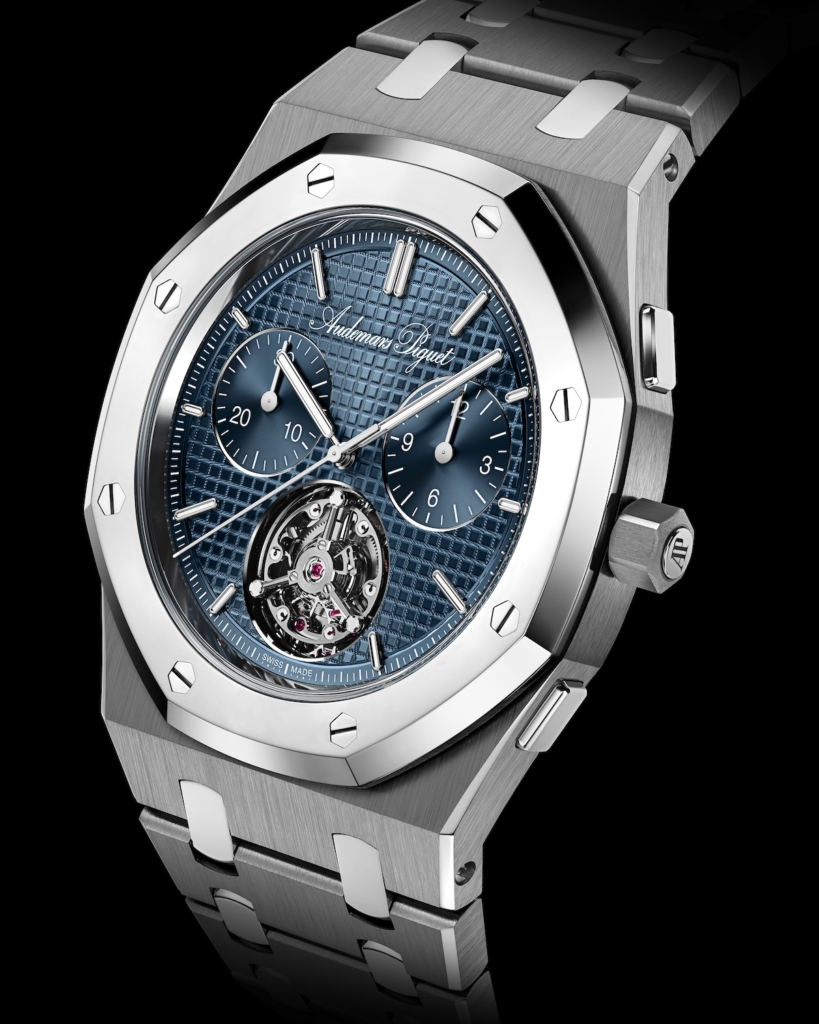
The only Royal Oak so far to combine a tourbillon with a flyback chronograph is the RD5, one of the most impressive 2025 Audemars Piguet releases. As the fifth and final installment of AP’s RD series, the RD5 is a great way to spend a quarter-million dollars. The movement is only 4mm thick, certainly earning its official title of “Extra-Thin Selfwinding Flying Tourbillon Chronograph.”
Tourbillon + Linear Chronograph + PR
First seen: late 2008
The distinctive 44mm Royal Oak Concept Carbon 26265FO made waves in 2008 because it isn’t just an automatic chronograph; it’s a linear chronograph. The chronograph minutes are displayed on a 30-minute vertical scale on the right side of the dial, where you read the indicated right digit as the minutes and the left digit as the tens of minutes.

Mechanically it’s very complicated, and I can’t think of another luxury watch brand doing anything similar. The tourbillon and power reserve indicator are just gravy. You should be able to find a 26265FO (or the later 26223TI) for $175,000 or so.
More on Audemars Piguet:
| ➢ | 2025 Audemars Piguet Watch Releases |
| ➢ | Guide to Audemars Piguet Nicknames |
| ➢ | Audemars Piguet Gold Watches: An Overview |
| ➢ | Hands-On: AP Royal Oak Offshore 37mm Review |
| ➢ | Guide to Selling an Audemars Piguet Watch |

The Original AP Royal Oak Concept’s Complications: Dynamograph + Tourbillon + Linear PR
First seen: 2002
The first Audemars Piguet Royal Oak Concept, known as the Concept Watch 1 or CW1, is very unusual. It has a dynamograph (torque indicator) along with a tourbillon and a linear power reserve indicator. The crown function indicator (“H/N/R”) on the dial tells you what mode your watch is in, and you cycle through those modes with the button at 4 o’clock. R = winding, N= neutral, and H = setting position.
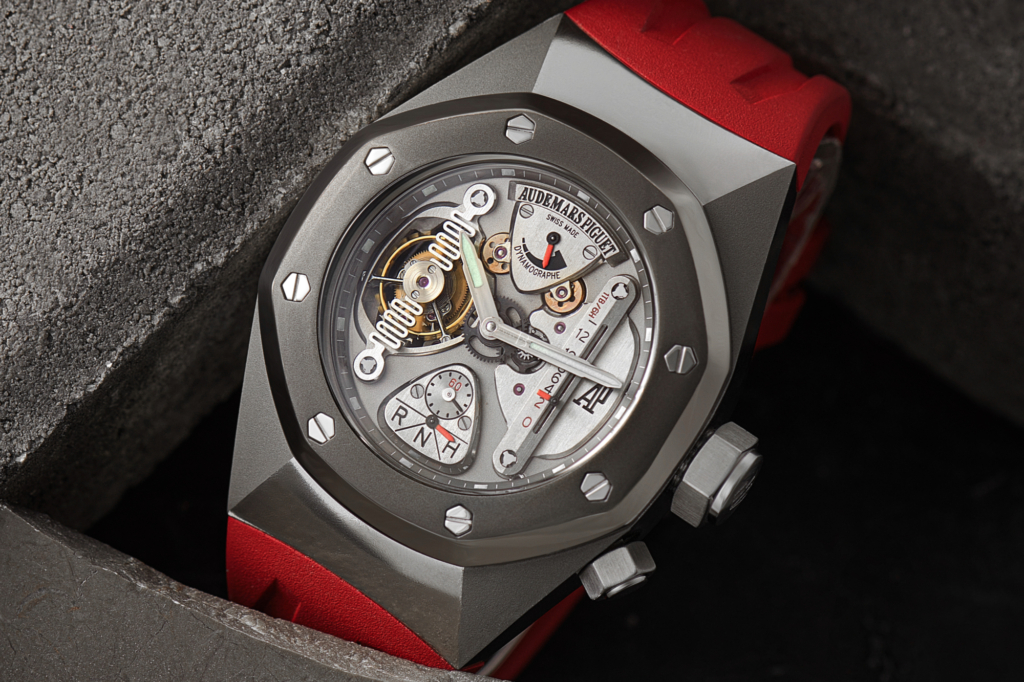
With this design, the crown is simply in or out–no need to delicately pull the crown out to a specific position. Note that while a power reserve indicator tells you how much power you have left, a torque indicator tells you how much power is currently being transmitted by the mainspring.
Perpetual Calendar + Chronograph
First Seen: 1997
The Royal Oak Offshore ref. 25854, introduced in 1997 as part of the 25th‑anniversary Royal Oak celebrations, is the only Royal Oak with both a perpetual calendar and chronograph, other than the Royal Oak Grande Complication which first appeared the same year.
Ref. 25854 is powered by caliber 2226/2839, an automatic modular movement combining a JLC 889 base with a Dubois Dépraz module for the perpetual calendar and chronograph. You can find examples for about $65,000, which is actually far less than most non-chronograph perpetual calendar AP’s.
Tourbillon Chronograph
First seen: 2002
Caliber 2889, a manual-wind (non-flying) tourbillon chronograph movement, debuted in 2002 and has since been used on over a dozen models. The Las Vegas Strip version of the Royal Oak, for example, can be purchased for about $100,000 today.

Extra-Thin Flying Tourbillon
First seen: 2022
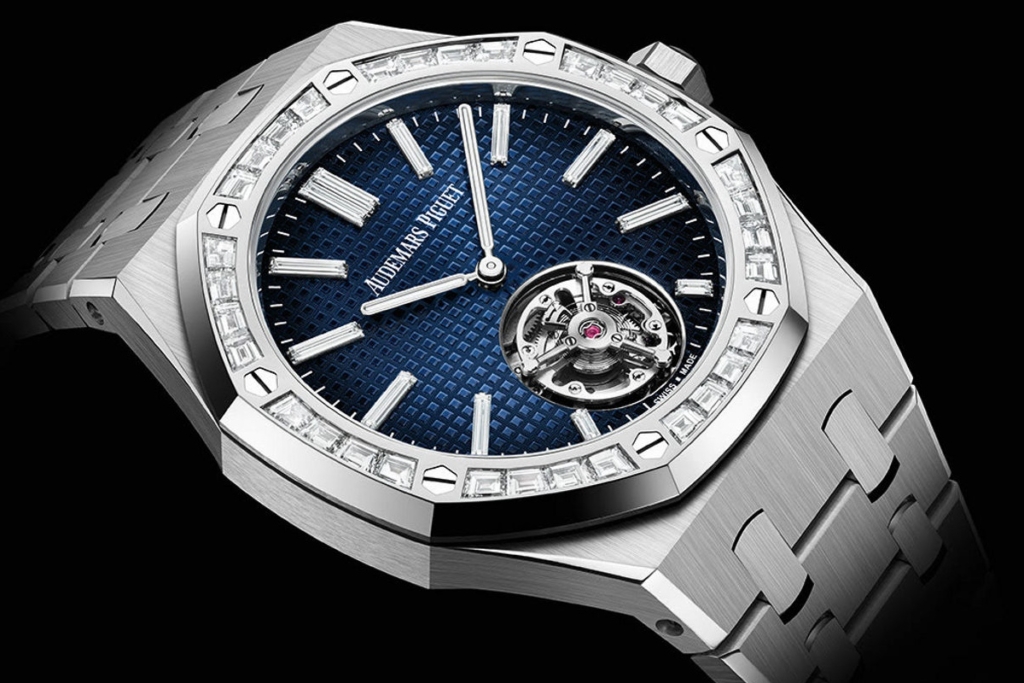
The RD3, which debuted in 2022 for the Royal Oak’s 50th anniversary, was essentially the non-chronograph predecessor to the RD5. Its extra-thin flying tourbillon movement puts it pretty high up in the ranking of AP Royal Oak complications.
Perpetual Calendar Openworked
First Seen: 1986
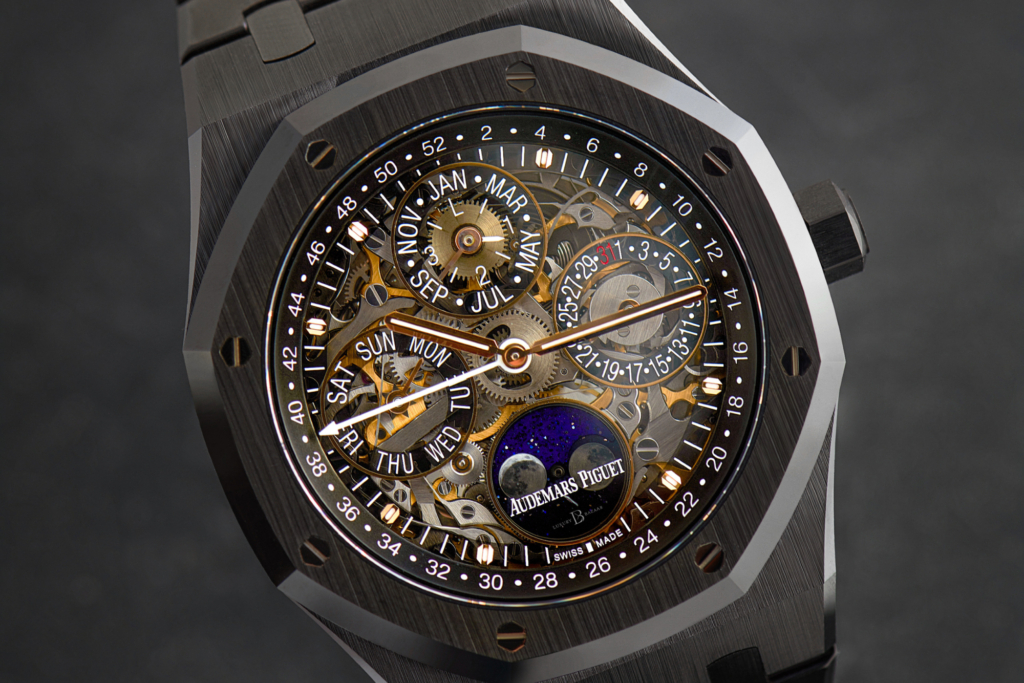
Skeleton watches are hot these days, but Audemars Piguet isn’t new to them. The first skeletonized Royal Oak Perpetual Calendar debuted in 1986, and AP continues to make openworked QP Royal Oaks to this day. The attractive “150th Anniversary” model, ref. 26585XT.OO.1220XT.01, sells for over $500,000.
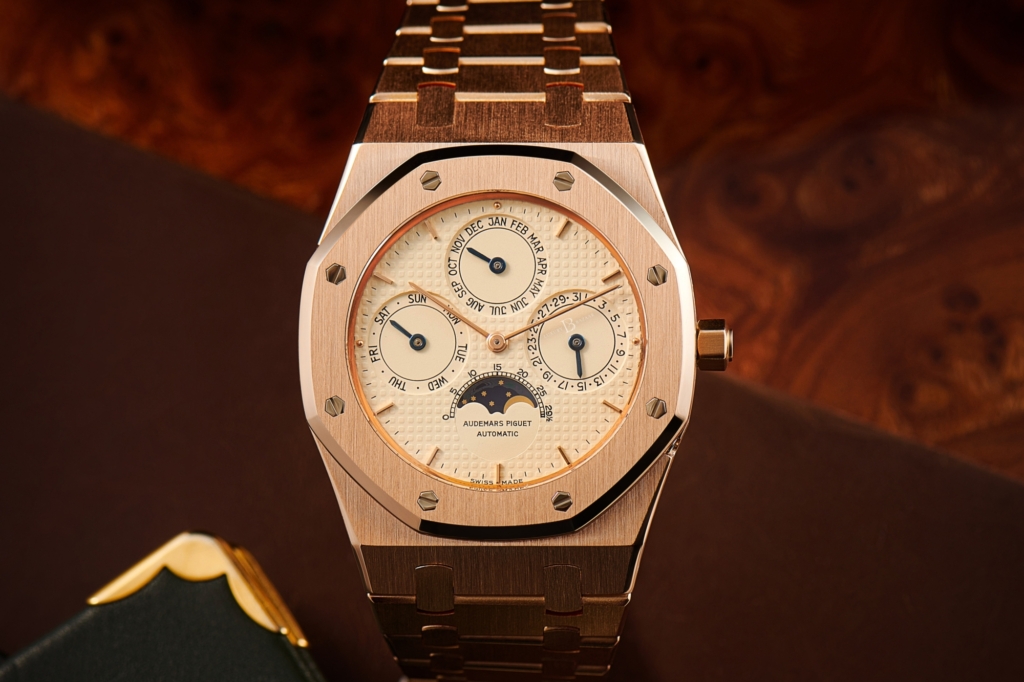
The First High AP Royal Oak Complication: Perpetual Calendar
First seen: 1984
The Royal Oak Perpetual Calendar, featuring a leap year display and moonphase, first appeared in 1984. You may hear collectors simply refer to it by its French abbreviation, “QP” (quantième perpétuel). It was the first Royal Oak with any sort of month complication. Current versions are 41mm, but you can find some previous-generation 39mm models on leather straps for as little as $75,000.
Double Balance Wheel Openworked (DBWOW)
First seen: 2016
Royal Oak Double Balance Wheel Openworked models have two balances and two hairsprings on a shared axis, and the caliber 3132 is fully skeletonized. The point of this duplication is not to “average” two separate rates, but rather to make the oscillator more stable and less sensitive to positional errors and shocks.
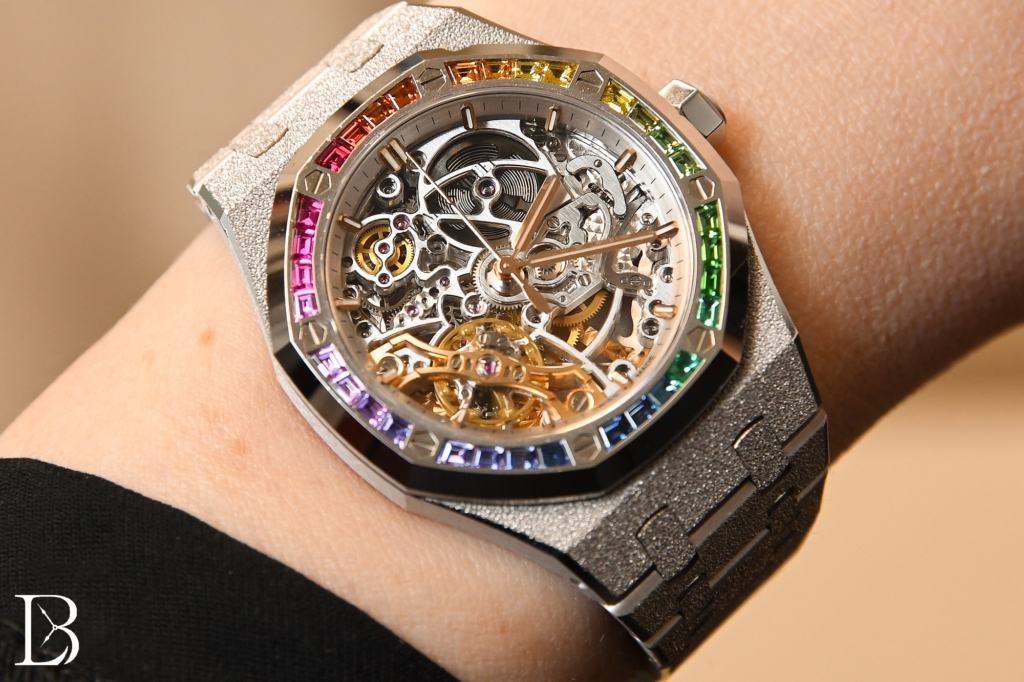
Despite technically being time-only, the Royal Oak DBWOW is regarded as a highly desirable complication. AP has already made several versions spanning steel, gold and ceramic cases. Secondhand, prices range from about $120,000 all the way up to $1 million for baguette diamond-slathered models.
More on Audemars Piguet:
Tourbillon + GMT
First seen: 2011
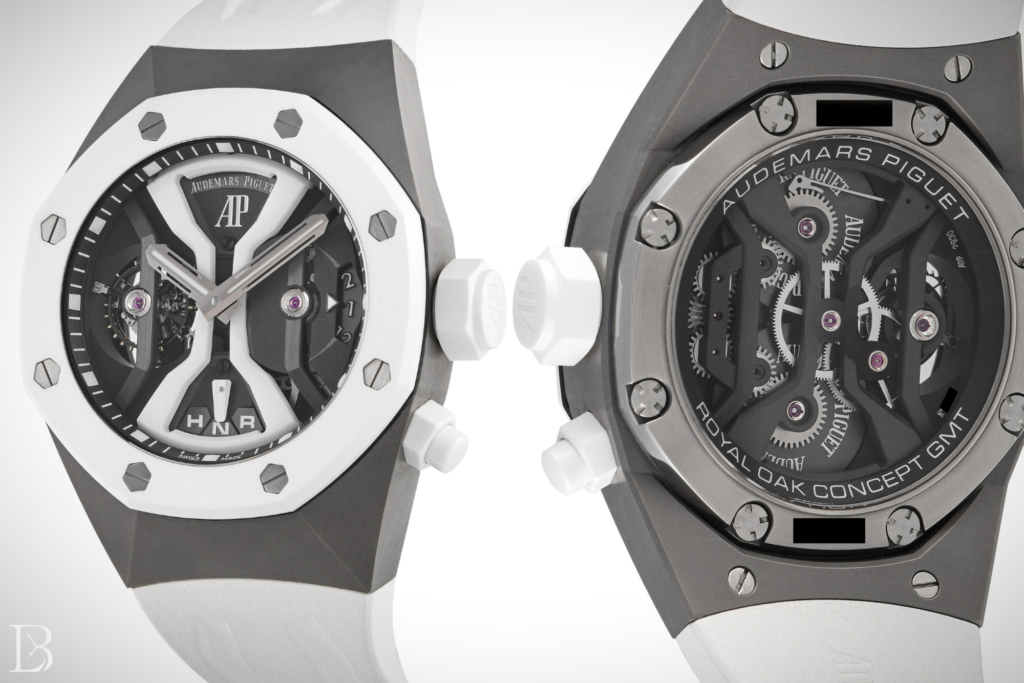
Royal Oak Concept pieces pairing a traditional tourbillon with a disc‑based second time zone first appeared in 2011. A 2018 update made it a flying tourbillon. A flying tourbillon is cantilevered and supported from only one side (i.e. the back) which is why it appears “flying” from the front. A standard tourbillon is held from both sides.
Tourbillon Self-Winding
First seen: 1997
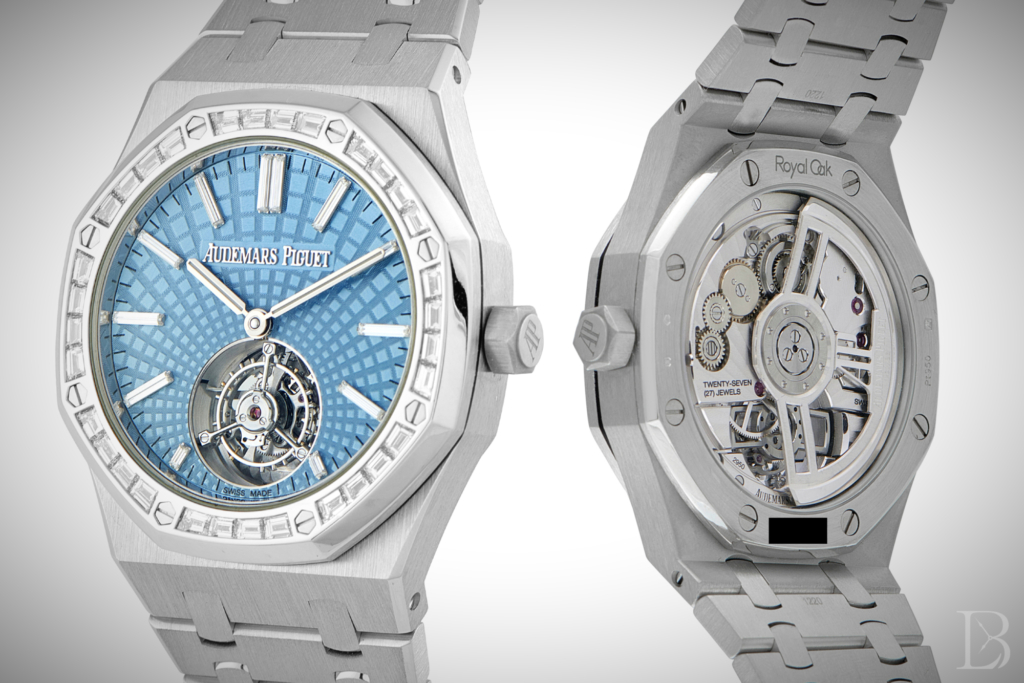
Time‑only Royal Oak tourbillons, unlike the tourbillon chronographs, are automatic. focusing on the tourbillon regulator plus hours/minutes (and sometimes back‑side PR), in both classic and Concept cases.
Annual Calendar
First seen: 1999
Royal Oak annual calendar models first appeared in 1999. Although they don’t get as much love as perpetual calendars, in a way I would argue annual calendars are superior–they are inherently far more robust because of their simpler gearing, and for that advantage you’re only giving up the mild inconvenience of adjusting the date once per year. Annual calendars were actually invented by Patek Philippe in the 1990s–much, much later than perpetual calendars–and it’s a pretty clever piece of engineering. I could do without a “leap year indicator” cluttering up my dial anyway, but that’s just personal preference.
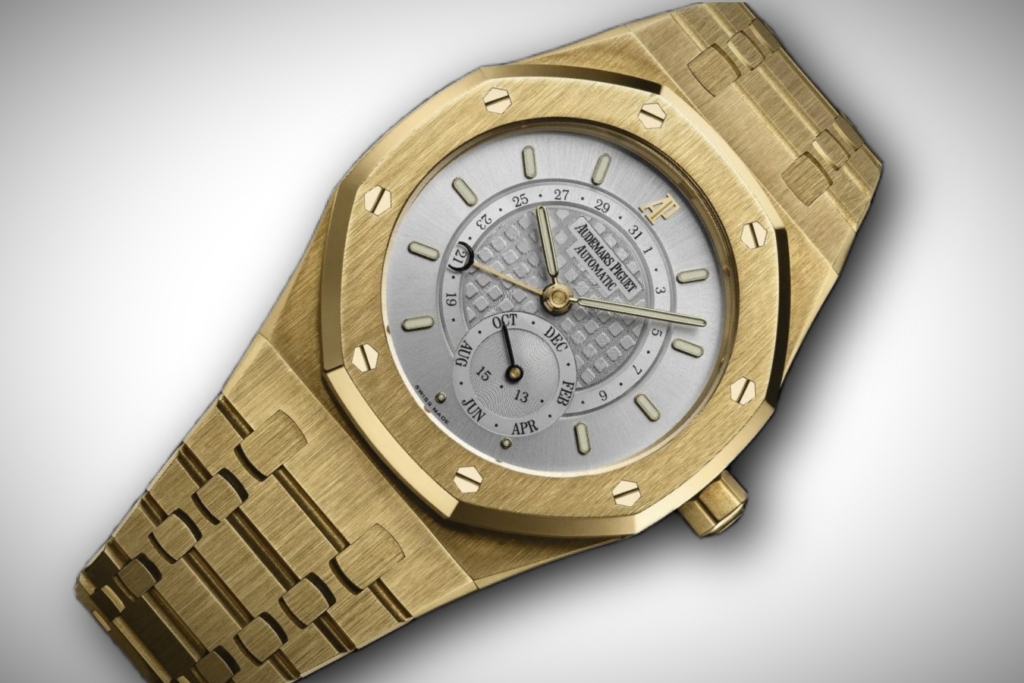
You should be able to get a pre-owned steel AP Royal Oak with an annual calendar complication for $30,000, which is coincidentally roughly the list price of a new basic time-and-date model.
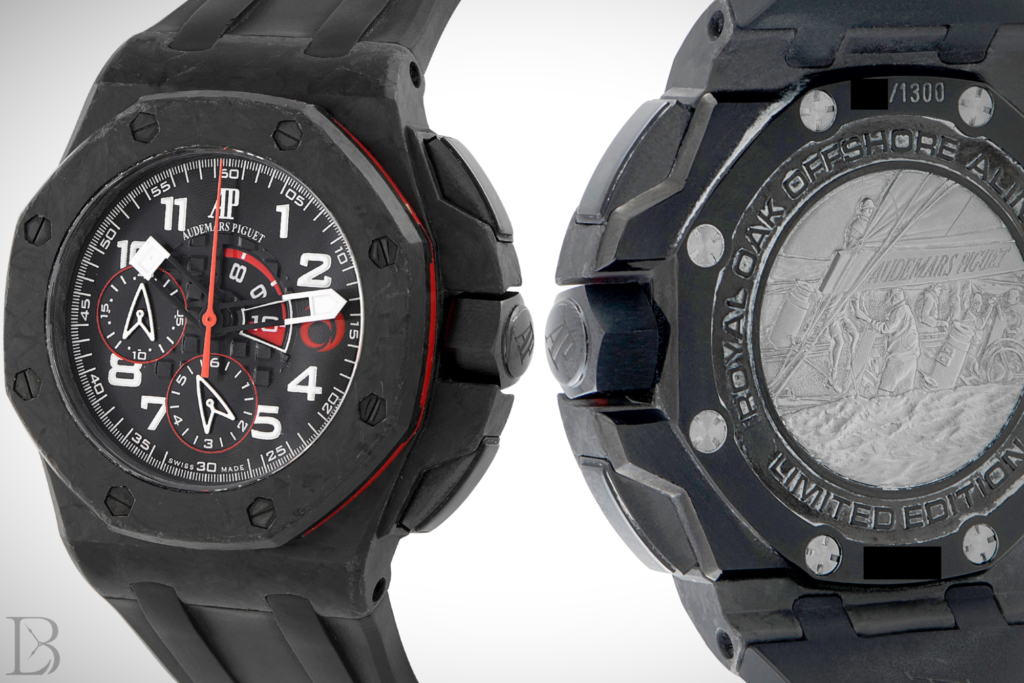
Flyback Chronograph
First seen: 2007
A 2021 refresh of the 41 mm Royal Oak Selfwinding Chronograph gave it the integrated caliber 4401, a vertical clutch column wheel movement that adds flyback functionality. But the first flyback Royal Oak was actually the regatta-oriented Alinghi Offshore Chronograph model from 2007.
Chronograph (Non‑Flyback)
First seen: 1993
The first automatic chronograph Royal Oak model was actually the original chunky Royal Oak Offshore launched in 1993.
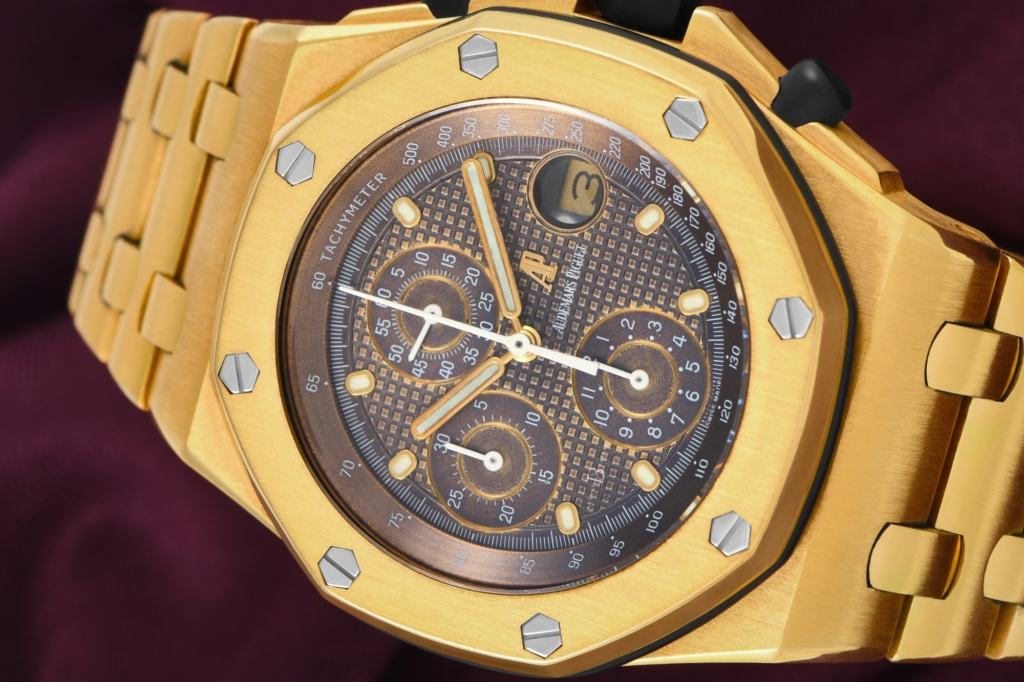
Non-Offshore Royal Oak Chronographs first appeared in the late 1990s sporting a 4:30 date window, and they’ve been a part of the catalog ever since (and as I mentioned above, they’ve been flyback since 2021).
The AP Royal Oak Offshore’s Forgotten Complication: Complete Calendar
First seen: 1996
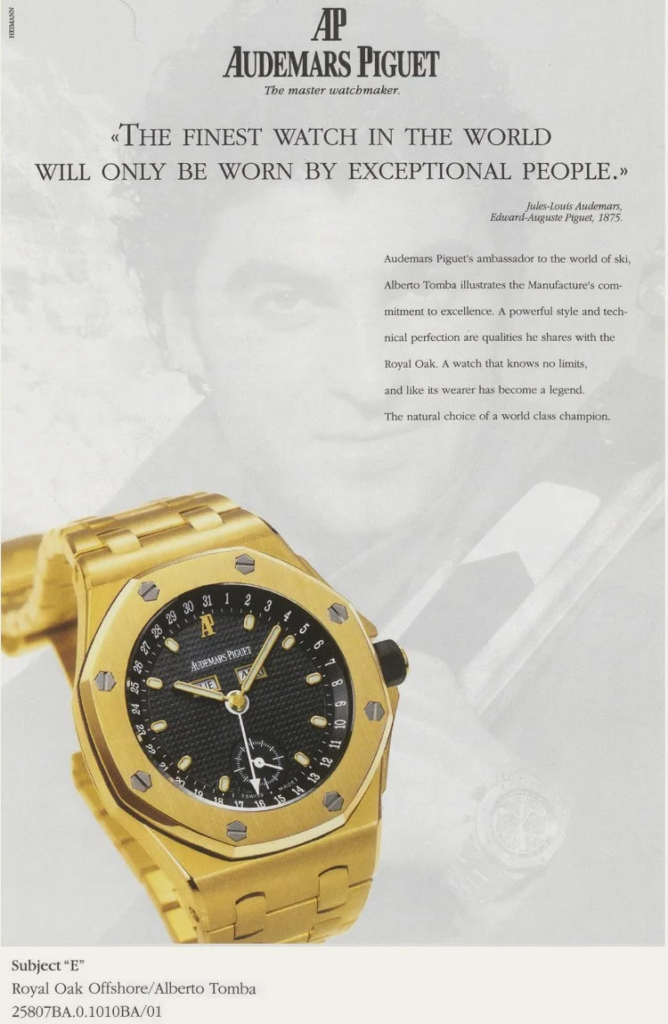
The largely-forgotten Royal Oak Offshore 25807 Complete Calendar model was launched in 1996. While the regular Royal Oak line has gotten annual calendars and perpetual calendars, only the Offshore has ever had the simpler complete calendar (a.k.a. “triple calendar”) complication. If you bought this watch, you’d have to adjust the date whenever a non-31-day-month ends. The horror!
AP Royal Oak Dual Time with Power Reserve Complication
First seen: 1992
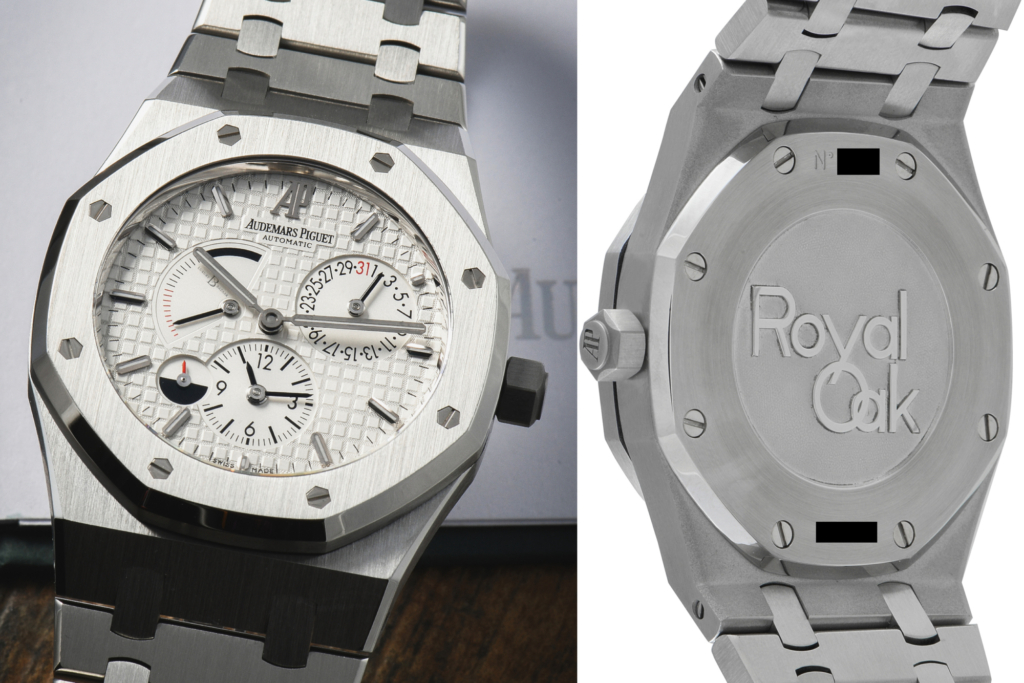
Dual Time Royal Oak watches have a second time‑zone subdial, date, and a power‑reserve indicator, notably ref. 25730 and its descendants. The Royal Oak Offshore 25970, 25971, and 25972 also have the GMT + PR combination, although they lack a day-night indicator.
The First AP Royal Oak Complication Besides Date: Royal Oak Day Date
First seen: 1983
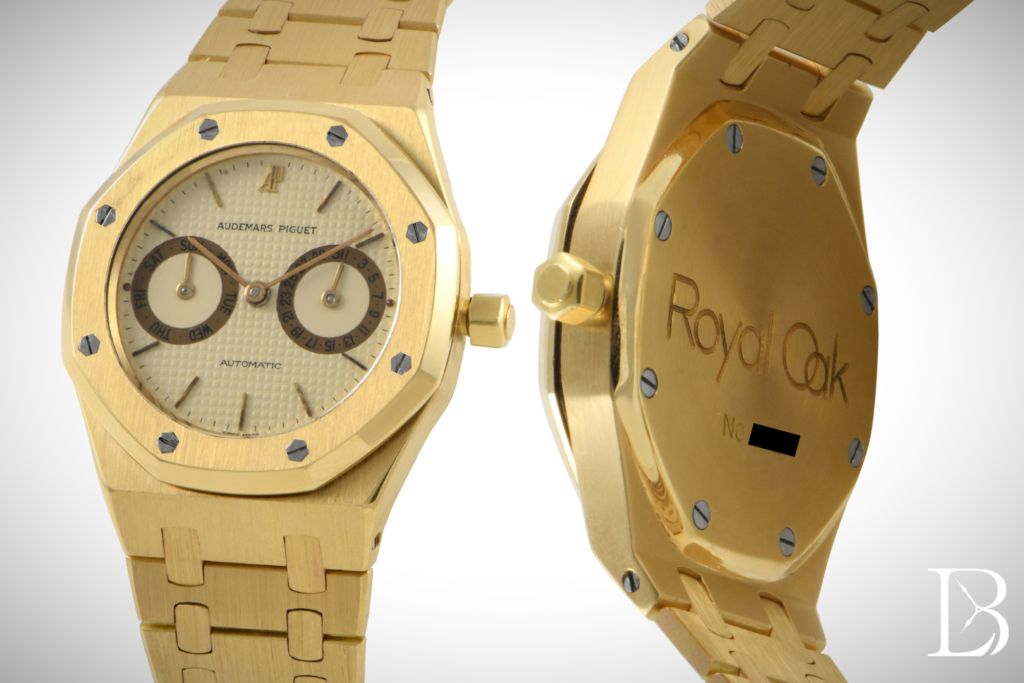
The very first complication beyond time and date in the Audemars Piguet Royal Oak lineup came in 1983. The “Owl” displays the day and date in two subdials, so it’s not hard to see where this Audemars Piguet nickname came from. The 36mm diameter should work on almost any wrist, and you can find two-tone examples for under $30,000.
Automatic Two-Hand Extra Thin
First seen: 1972
While standard Royal Oak models have three hands and a date, the 39mm “Jumbo” models–which aim to be relatively faithful to the original Royal Oak–have no seconds hand. Yet Jumbo models get ranked/priced above three-hand models because they’re extra thin. Although it’s a simple movement, in terms of prestige and difficulty, extreme thinness is very much like a complication.
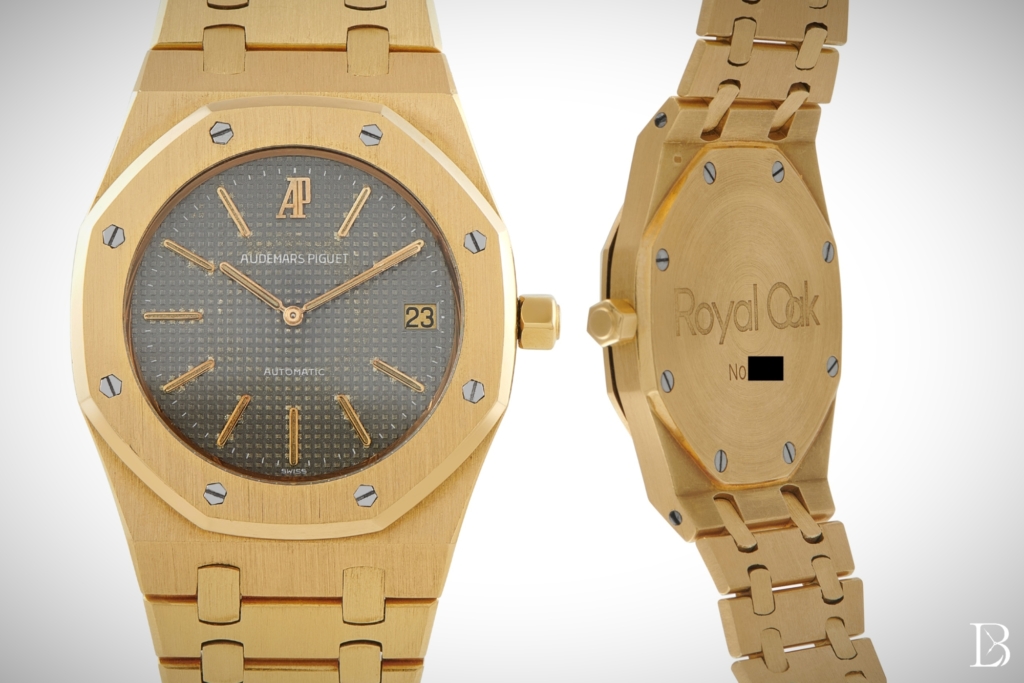
Automatic with Seconds
First seen: 1977
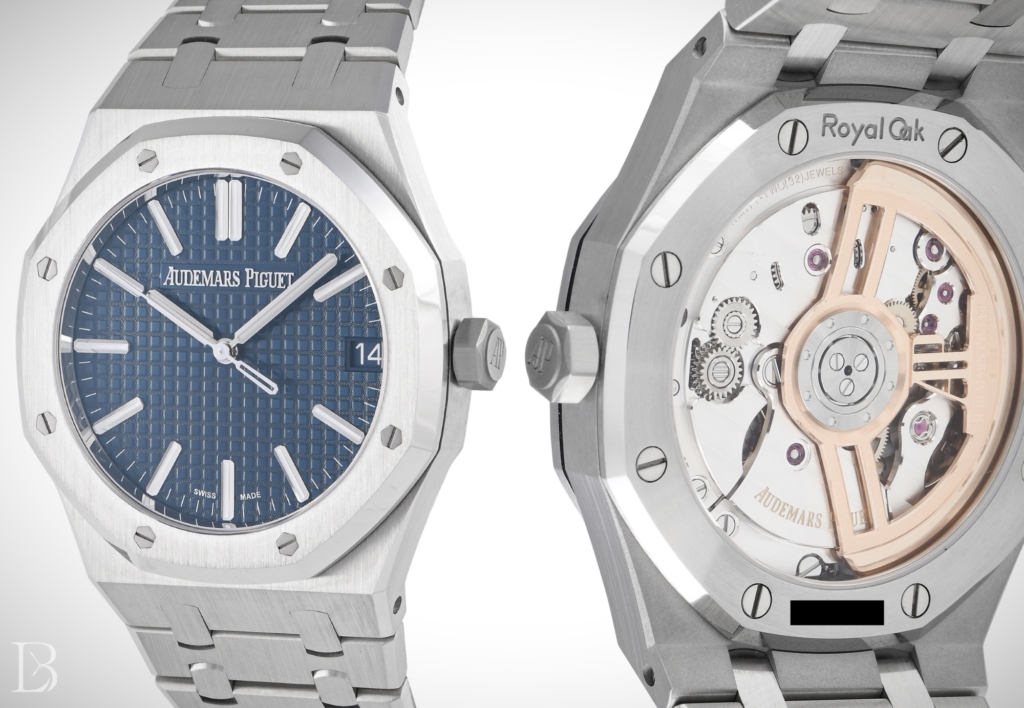
The first three‑hand Royal Oak with a central seconds hand was the mid‑size Royal Oak ref. 4100, launched in 1977. Today that’s the standard configuration for “normal-thickness” automatic Royal Oaks. Note that automatic Royal Oak models always have a date, or at least some other complication like a tourbillon.
Quartz Two-Hand
First seen: 1981
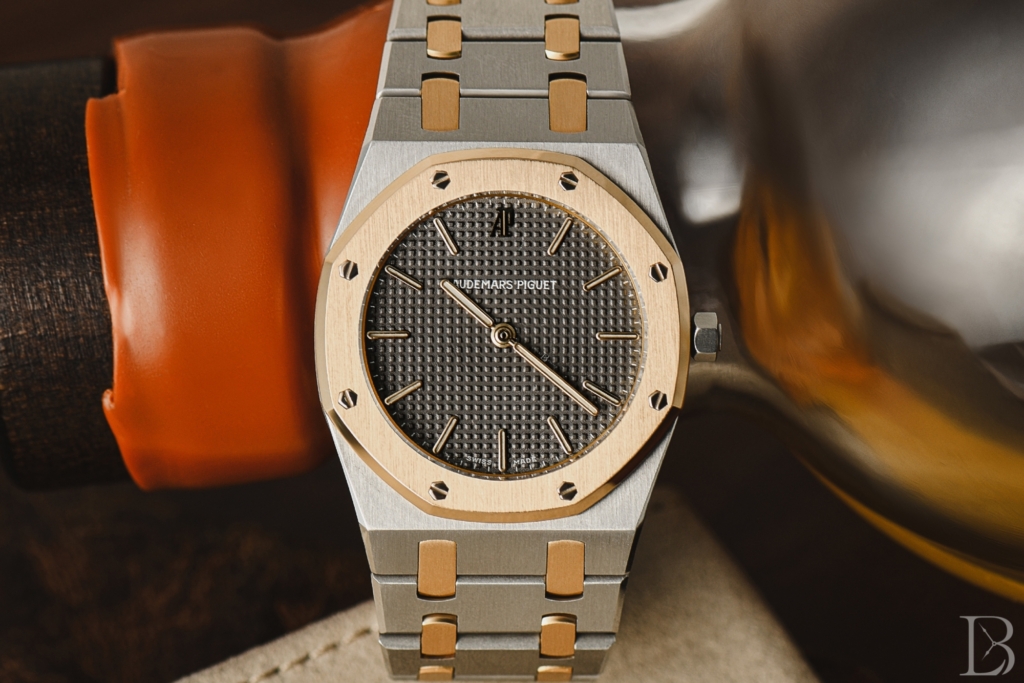
Quartz Royal Oak models first appeared in the early 1980s and are still made today. AP doesn’t even say who supplies their quartz ebauches, but I guess nobody cares. Some have dates and some don’t, and personally I’m a big fan of the simple two-hand no-date quartz models.
Well, now that I’ve covered the entire Royal Oak movement range from “face-melting grand complications” to “quartz ebauche that nobody even mentions,” hopefully you’ve gotten a better picture of the crowded Royal Oak complication hierarchy. If I’ve forgotten any, or if you’d rank them differently, let me know below!
More on the AP Royal Oak:



Leave a Reply