A Collector’s Guide to Rolex Tridor Models

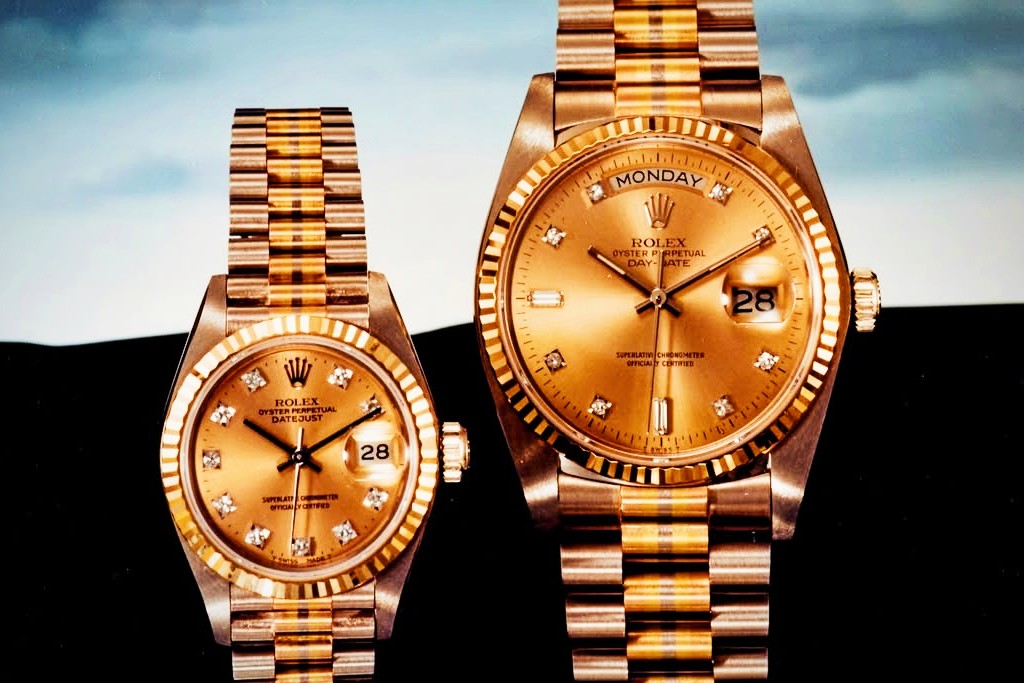
One of Rolex’s most underappreciated achievements is their creation of Tridor (“three gold”) bracelets and cases. The most well-known Tridor is a white gold-cased 36mm Day-Date from the 1980s-1990s, with center bracelet links each made from five fused layers of gold–rose, yellow, white, yellow, and rose again. There are also similar Tridor Datejusts in women’s sizes, and a little-known Rolex Cellini dress watch with a Tridor case. Plus the Pearlmaster Tridor models simply have different colored gold links (not fused), and to this day it’s a look no other brand has replicated. Let’s go over all the Tridors.
How is Tridor Made?
Rolex apparently fuses multiple layers of gold into a single slab to make Tridor. If you cut a center bracelet link from a Rolex Day-Date Tridor 18039B in half, for instance, it would have the same color pattern all the way through. Note that these Day-Dates still had hollow center links.
Rolex also made some Cellinis with bi-gold cases, but those are just 18k white gold with some yellow gold plating on half. Tridor is a step up from that (well, except for the Tridor Pearlmasters which are just rose gold, yellow gold, and white gold bracelet links put together on the same watch). To my knowledge, no other watch brand has ever fused layers of gold to such an effect.
36mm Rolex Day-Date Tridor
36mm Tridor Rolex Day-Date models began with the 18039B (you may also see it written as 18039BIC) around 1980. In the late 1980s it was replaced by the 18239B, which added double-quickset functionality (meaning you can set both the day and date quickly with the crown). Both have white gold cases with fluted yellow gold bezels.
Ref. 18129B is the diamond-set bezel equivalent of 18039B, while 18139B has a diamond-set bezel and lugs. Note that these models were given a unique kind of diamond Rolex bezel known as a “cartouche bezel.” That means there are diamonds almost all the way around the bezel, but a few at the bottom are replaced by a little gold plaque with “Rolex” written on it. They were replaced by the 18349B and 18389B, respectively, which feature typical diamond bezels.
The B/BIC stands for “bicolor,” which may seem silly because Tridors are tri-color, but it’s worth nothing that some BIC models are actually bicolor–they have white gold Jubilee bracelets with diamond-covered yellow gold center links. “A” indicates a diamond dial, as in “18239A,” so if you see “18239A BIC” then it has a diamond-dial and a multi-hue gold bracelet.
Ladies’ Datejusts
Ref. 69179B is essentially the 26mm Lady-Datejust equivalent of the Day-Date 18039B. After a movement upgrade in the mid-1990s it became the 79179B. 69139B, 69149B (cartouche), and 79139B are the diamond-bezel equivalents.
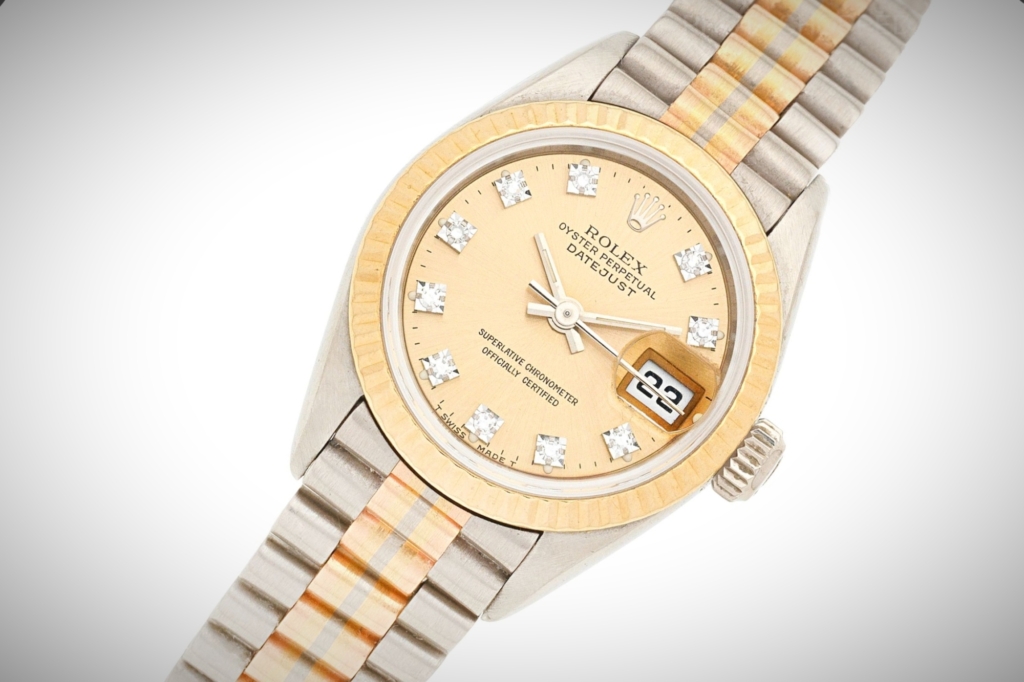
31mm Datejust Tridor models were also made, and their model numbers always have an “8” as the second digit instead of a “9.” Model numbers include 68279B and its replacement 78279B, as well as 68149 and 68289 if you’re looking for a diamond-set bezel.
Rolex Cellini Tridor
The underrated Rolex Cellini King Midas ref. 5038 has a striking solid Tridor bezel with a matching Tridor dial. The mid-case itself is just white gold. It’s only 28mm wide, but watches of this shape wear larger than their specs suggest.
29mm Tridor Pearlmaster
Four different 29mm Rolex references with five-link Pearlmaster bracelets were offered in Tridor form beginning in the 1990s. You could choose either 12 diamonds (80318 and 80319) or 32 diamonds (80298 and 80299) on the bezel, with either a white gold or yellow gold case.
39mm Rolex Tridor Masterpiece Day-Date
In the early 2000s came the Tridor 39mm Rolex Day-Date Masterpiece, offered with either round (ref. 18948) or trapezoidal diamonds (ref. 18958) covering the bezel. Masterpiece models all have Pearlmaster bracelets, which are now extinct from the Rolex catalog.
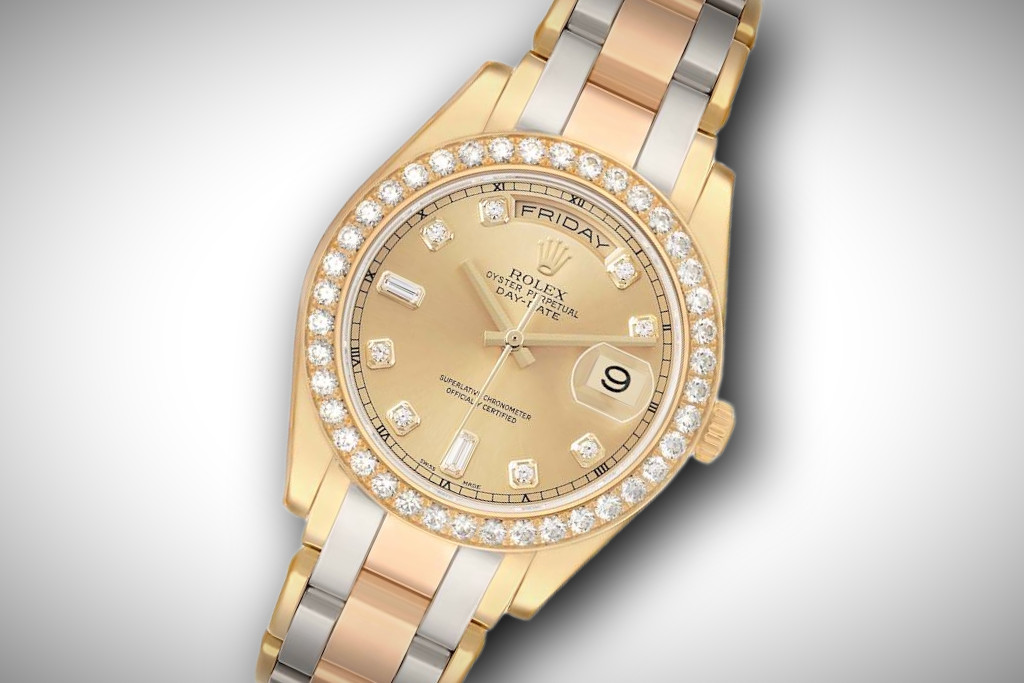
Unlike other Rolex Tridor models, the Tridor Pearlmasters and Masterpieces do not use fused layers of multi-colored gold. They simply have yellow gold outer links, rose gold center links, and white gold intermediary links.
More on the Day-Date:
| ➢ | The Ultimate Rolex Day Date Price Guide |
| ➢ | The Best Rolex Day-Date Alternative Watches |
| ➢ | Slate Ombré Rolex Day-Date 40 Unveiled |

Rolex Tridor Price
At this point, Rolex Tridor watches generally sell for about the same price as standard equivalent gold models. That means about $9,000 for ladies’ Datejusts, $18,000 for typical Tridor Day-Dates, $20,000 for ladies’ Pearlmasters, and $50,000 for Masterpieces (give or take).
Singer and longtime Rolex ambassador Michael Bublé was seen wearing a Rolex Le Mans Daytona in December 2025 that some (including us) speculated was a new Tridor model but Bublé has since confirmed it was a yellow gold Le Mans Daytona in odd lighting. So for now, Tridor remains a relic of Rolex’s past, and I think it’s cool when Rolex does things other brands won’t (or perhaps can’t).




Leave a Reply