Rolex Files Patent for AI-Equipped Next-Generation Timegrapher

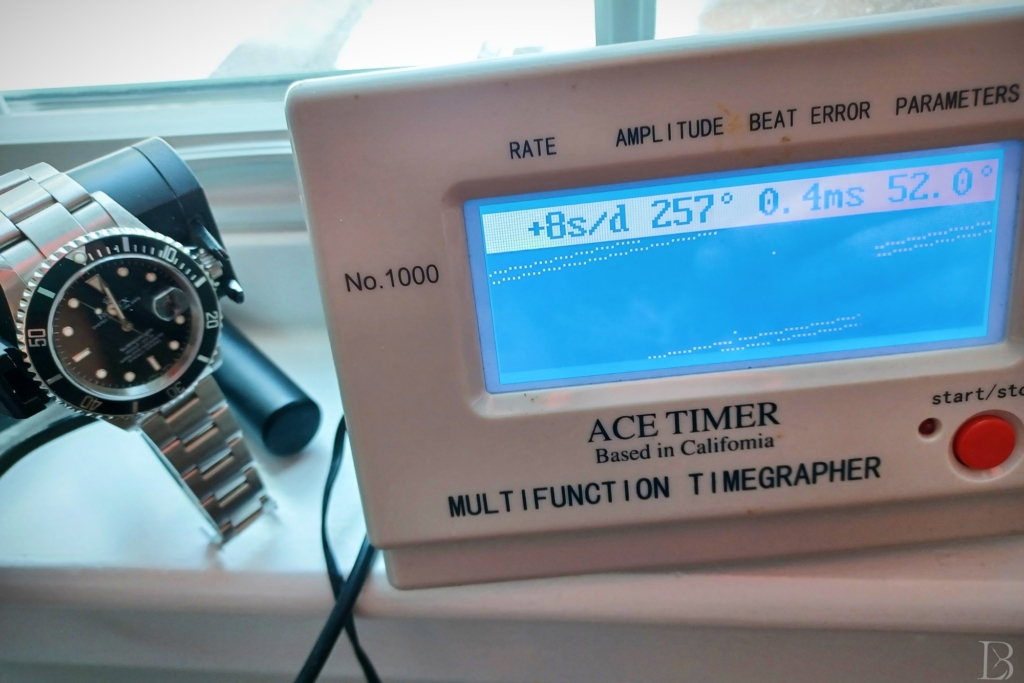
Most watch nerds know the drill: clamp a watch to a timing machine with a tiny built-in microphone, wait a few seconds, and watch a graph appear underneath three numbers: rate, amplitude, and beat error. The lines on a timegrapher screen tell you a lot about a watch’s health, but they’re built on surprisingly crude signal analysis. A Rolex patent published in late 2025 points to a more advanced timing system that involves algorithmic noise canceling and machine learning. This next-generation Rolex timegrapher patent describes a way to scrutinize the sound of a movement with enough precision to help authenticate it.
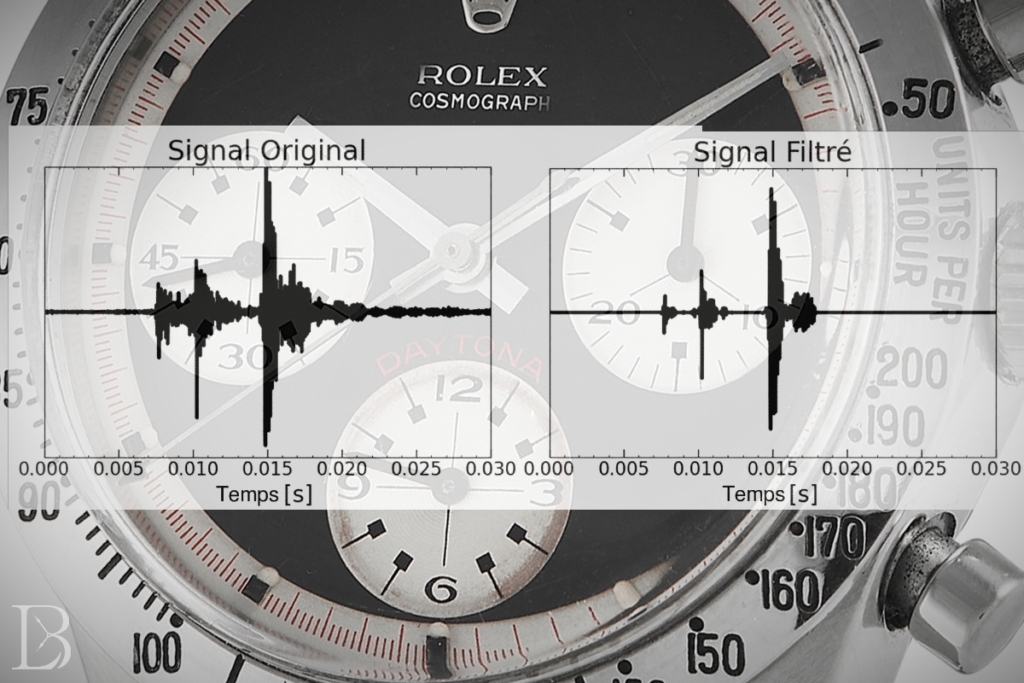
The key idea is that, while traditional timegraphers really are just calculating the lengths of time in between peaks in soundwaves, Rolex’s new patented timegrapher actually analyzes the wavelets comprehensively.
What is a Wavelet?
A wavelet is short sound wave followed and preceded by a period of silence. What pitch is the sound? Is there any hum? How is the damping? Any additional problematic subtle clicking going on? Wavelet analysis can tell you those things, while old timing machines can’t.
Timegraphers like my trusty Ace Timer (and phone apps that replicate it) simply infer amplitude from the timing between escapement sounds plus the lift‑angle value you give it. Rolex’s patent, however, explicitly states that they use an “acoustic measurement of the actual amplitude.”
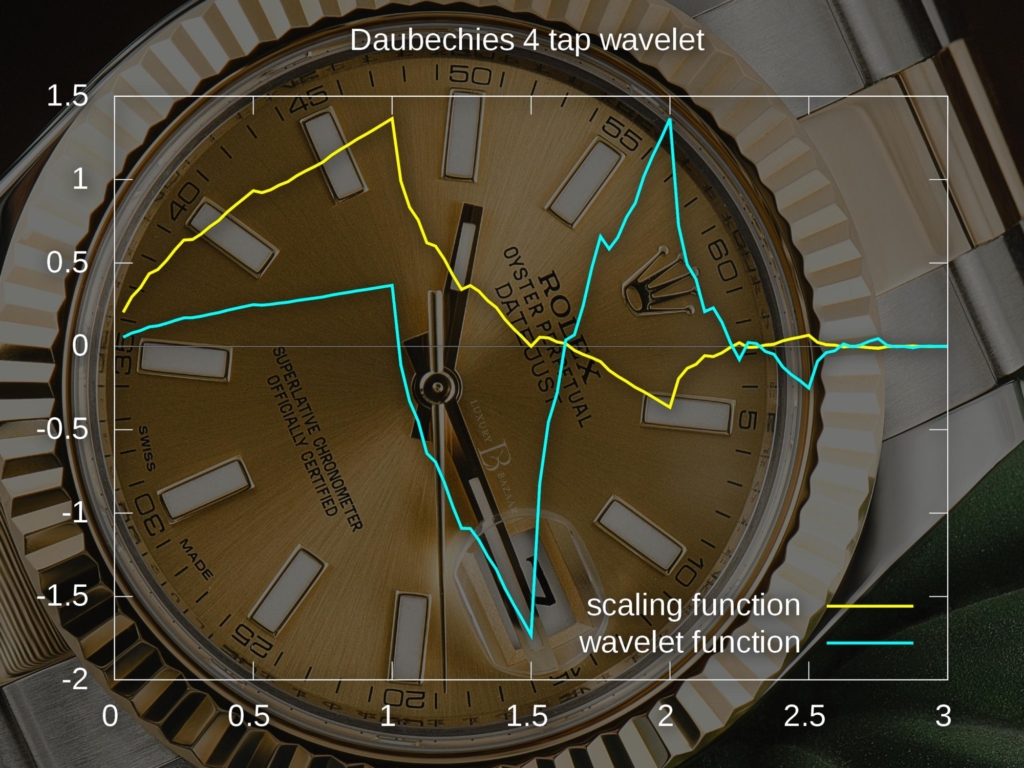
Rolex specifically mentions Daubechies and Symlet wavelets, which are basically just the “shapes” that the algorithm uses to chop the pieces of a tick-tock sound up. So one slice of the signal corresponds to the escapement at one stage, another slice corresponds to a different escapement action etc. This opens up the possibility for all sorts of mathematical correlations and conclusions to be developed.
Does This Rolex Timegrapher Patent Really Involve AI?
The 2025 Rolex timegrapher patent does indeed specifically mention machine learning and neural networks. To be clear, much of the analysis (e.g. noise canceling) is done algorithmically, and computers following algorithms is not “AI” in itself.
But Rolex intends to use the filtered noise data to build (and continually expand upon) an AI model that “knows” how every watch “should” sound and which acoustic deviations indicate which problems. This also opens up all sorts of possibilities for authentication.
Rolex Timegrapher Patent: Final Thoughts
So all in all, this 2026 Rolex patent seems to describe three key advantages over traditional timegraphers: more accurate measurements, more granular diagnostic data for assessing which part(s) of the movements might be having issues, and the ability to potentially spot fakes based on sound alone.
Kudos to the credited inventor, Niloufar Alipour Tehrani, for her work on this Rolex timegrapher patent. While I don’t expect Rolex-branded next-generation timegraphers to be sold to the public, I wouldn’t be surprised to see them in local authorized dealers and Rolex Service Centers soon.