Understanding Bell & Ross Watches

Bell & Ross was founded in 1992 by Bruno Belamich (“Bell”) and Carlos A. Rosillo (“Ross”) as a university project in Paris. Their first watch, released in 1994, was literally just a Sinn 142 with “Bell & Ross” written on the dial. Sinn made all the early Bell & Ross watches, but Chanel began acquiring a stake in the company in 1998 (now rumored to be as high as 49%), and within a few years Bell & Ross had their own Swiss manufacturing facility. Their first square watch, the BR 01, debuted in 2005, and that has been the foundation of their design language ever since. Although they’ve never made their own movements, Bell & Ross has remained a notable player in the four-figure watch space, and here we’ll try to give you a coherent understanding of all their offerings.
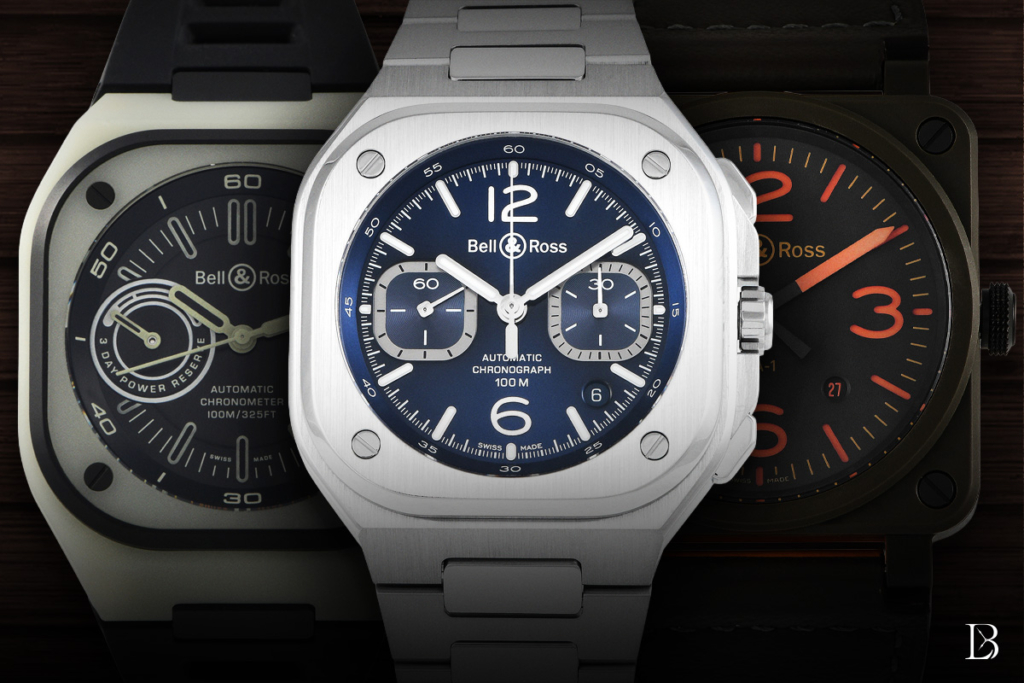
Bell & Ross Market Overview
The vast market of pre-owned Bell & Ross watches isn’t like the world of vintage Rolex. Dial colors and minor details usually don’t affect the collectability or value all that much, but that makes it fun. Shopping for a Bell & Ross is a relatively carefree exercise in finding the style, color, size and material you like. In addition to a wide range of colors, there are numerous special cockpit-gauge-themed versions to choose from.
While their straightforward square-cased watches are what they’re most known for, we’ll go over all their other case styles too. Note that “Instrument” is Bell & Ross’s term for all of their sandwich-cased square watches, not just the ones visually based on actual flight instruments.
As for complications, most Bell & Ross watches have simple time-and-date movements from ETA or Sellita, but there are plenty of chronographs, GMT’s, and divers to choose from. Power reserve indicators and tourbillons round out the lineup.
From a collecting standpoint, early Sinn-made Bell & Ross watches are kind of their own thing, and the modern B&R lineup essentially has five movement tiers.
In addition to recently-discontinued quartz models at the bottom and fancy tourbillon watches at the top of the lineup, there are three levels: the entry-level Sellita-based tier, the “Experimental” line with more intricate case construction and somewhat more upscale movements, and the “Cyber” line featuring artistically skeletonized movements and beveled cases.
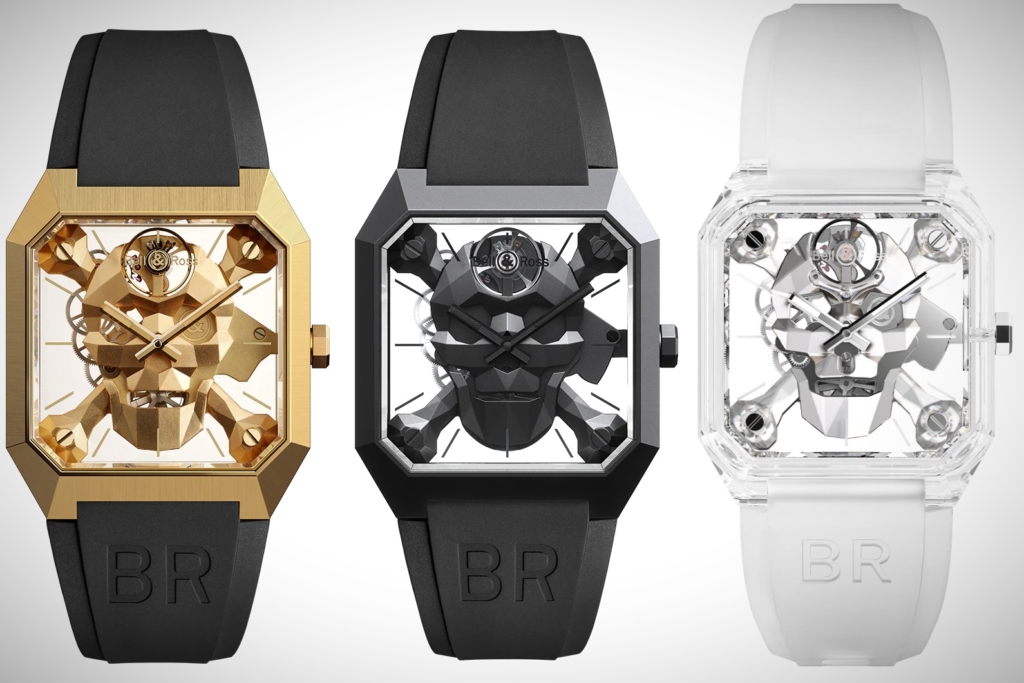
Some skeletonized “standard” models are more expensive than the cheapest Experimental models, and some Experimental watches also have tourbillons, but in general, I think of Bell & Ross watches in terms of these six echelons:
Bell & Ross Watch Tiers
| Type of Bell & Ross Watch | Years Made | Movement Maker/Type | Example Models | Typical Market Price (2025) |
|---|---|---|---|---|
| Sinn-era | 1994-2002 | Automatic or quartz ETA | Space 1, Space 2, Diver 300, Hydro Challenger | $2,500-$4,500 |
| Standard | 2002+ | Automatic ETA or Sellita | BR 03-92, BR 03-93, BR 03-94 | $1,700-$6,000 |
| Quartz | 2008-2025 | Quartz ETA | BR-S | $1,200-$1,700 (Steel) $3,500 (with diamonds) $8,500 (Gold) |
| Experimental | 2014+ | Automatic ETA with Dubois Depraz chrono module or more recently, Kenissi (often skeletonized) | BR-X1, BR-X3, BR-X5 | $4,500-$12,000 |
| Cyber | 2020+ | Concepto (skeletonized, artfully finished bridges etc.) | BR 01 Cyber Skull, BR 01 Cyber Skull Sapphire, BR 03 Cyber Ceramic | $65,000 (full sapphire case) $8,000-12,500 (others) |
| Tourbillon | 2008+ | BNB Concept or more recently, MHC (Manufacture Haute Complication) | BR 01 Tourbillon, BR Minuteur Tourbillon, BR-X1 Tourbillon, BR‑X2 Skeleton Tourbillon Micro‑Rotor, BR‑X3 Tourbillon Micro‑Rotor | $140,000 (full sapphire case) $35,000-$70,000 (others) |
We’ll break down the visual styles of modern-era Bell & Ross watches, but first let’s quickly go over what you should know about the Sinn era, then we’ll briefly cover the transitional post-Sinn period before “the squarening” of the brand.
Bell & Ross Sinn Era (1994-2002)
The first Bell & Ross “Space 1” was so named because it was essentially a reissue of the Sinn 142. At one point there were claims that the Sinn 142 was the first automatic chronograph in space, but it turns out the Seiko 6139 “Pogue” was actually first. From the mid-1990s until about 2002, Bell & Ross would go on to sell re-branded Sinn 103, 156, 203, and 144 models. They also made their own version of the Sinn Hydro UX, which has the deepest depth rating of any watch ever thanks to its special oil-filled case.
But some collectors feel like Bell & Ross really hit their stride with 1998’s Space 3, which has no exact Sinn equivalent.
List of Sinn-Era Bell & Ross Watches (1994-2002)
| Year | Model | Sinn Equivalent | Diameter | Movement | Notes |
|---|---|---|---|---|---|
| 1994 | Space 1 | Sinn 142 | 43mm | Lemania 5100 automatic chronograph | The Sinn 142 was once thought to be the first automatic chronograph worn in space (but the Seiko Pogue was actually first). Large cushion case, integrated bracelet |
| 1995 | Military M1 | Sinn 156 | 43mm | Lemania 5100 automatic chronograph | Military-style chronograph with black dive bezel, sandblasted steel case, slim lugs and fat bezel |
| 1995 | Pilot Chronograph | Sinn 103 | 41mm | Valjoux 7750 automatic chronograph | Military-style chronograph with black dive bezel, sandblasted steel case, fat lugs and slim bezel, offered in titanium or steel |
| 1996 | Type Marine | None | 39.5mm | ETA 955.612 Quartz | Dive watch with angular 1970s-style Rolex Land-Dweller-like case, integrated bracelet, 4:30 crown |
| 1996 | Type Demineur | None | 39.5mm | ETA 955.612 Quartz | Like the Type Marine but with a Faraday cage for magnetic resistance, made for French bomb disposal squad |
| 1996 | Diver 300 | Sinn 203 | 41mm | Valjoux 7750 automatic chronograph | Military-style chronograph with metal dive bezel, sandblasted steel case, fat lugs and slim bezel, offered in titanium or steel |
| 1996 | Space 2 | Sinn 144 | 40mm | Valjoux 7750 automatic chronograph | Aviation chronograph, made of titanium, angular case, integrated bracelet, offered in titanium or steel |
| 1996 | Space 2 GMT | Sinn 144 GMT | 40mm | Valjoux 7750 automatic chronograph w/GMT module | As above but with GMT function, titanium case |
| 1997 | Military M2 | Sinn 256 | 38.5mm | Valjoux 7750 automatic chronograph | Smaller version of the Military M1 |
| 1997 | Hydromax | Sinn Hydro UX | 39.5mm | ETA 955.612 Quartz | Oil-filled diver with world-record depth rating (11,100m) |
| 1998 | Space 3 | None | 41mm | Valjoux 7750 automatic chronograph | T-Crown System, recessed pushers, unique 1970s-esque case |
| 1998 | Space 3 GMT | None | 41mm | Valjoux 7750 automatic chronograph w/GMT module | GMT version of Space 3, offered in titanium or steel |
Post-Sinn Bell & Ross Watches (2002-2005)
In the 2002-2005 post-Sinn “transitional” period before Bell & Ross came into its own as the “square watch brand,” the first truly Swiss-made Bell & Ross watches were built. Bell & Ross’s own factory in La Chaux de Fonds was operational by 2002, so they no longer had to rely on Sinn, who is based in Frankfurt, Germany.
Most of the Sinn-made Bell & Ross watches also say “Swiss Made” but that was back when the rules for that labeling were more lax, and focused on the movement (which was always Swiss, to be fair). If the model says “Classic” then it likely came in the early post-Sinn days, e.g. the Classic Diver 300 is the Swiss-made replacement of the Sinn-era Diver 300. The Classic Pilot is similar but less focused on water resistance.
Meanwhile, some models, like the Type Demineur (and Type Marine, which is almost the same thing but without a Faraday cage) carried on for a few years basically unchanged from their Sinn days. Lots of lume, big legible numbers, “fauxtina,” and aviation-inspired aesthetics already permeated the lineup, but most Bell & Ross watches still had relatively normal round cases.
The Classic 123 and 126 models were launched in the early 2000s and remained in the Bell & Ross lineup under the “Vintage” and “V” monikers until 2025. The 123 Heure Sautante in particular was a notable achievement of the early post-Sinn era, as it was the first-ever jump hour watch with a power reserve indicator. The BR-100S “Function” ana-digi and the 120 quartz chronograph are also notable oddballs.
Shapes, Sizes and Complications of the Modern Era (2005+)
The first square Bell & Ross, the 46mm BR 01, debuted in 2005, and stayed in production for 15 years. 46mm is big for a square watch, and nowadays Bell & Ross doesn’t even make anything bigger than 42mm. But in its day, the BR 01 was made in numerous metals including carbon, ceramic, yellow gold, rose gold, steel, bronze, titanium and even sapphire.
Skulls, power reserve indicators, big dates, left-handed crowns, standard chronographs, ana-digi chronographs and beveled case corners were all part of the lineup at one time or another.
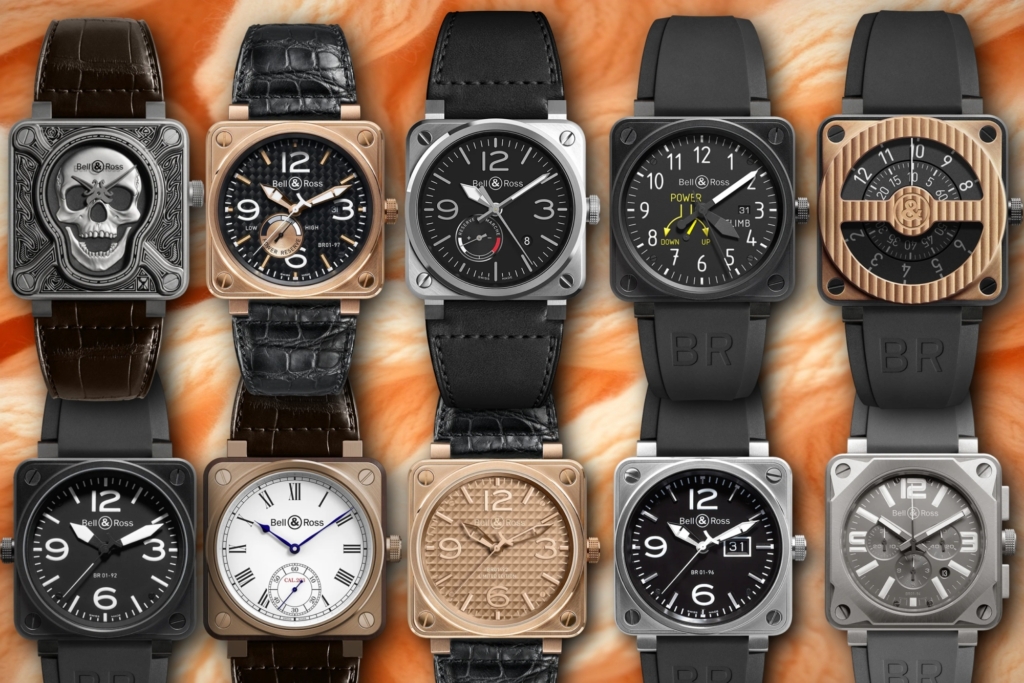
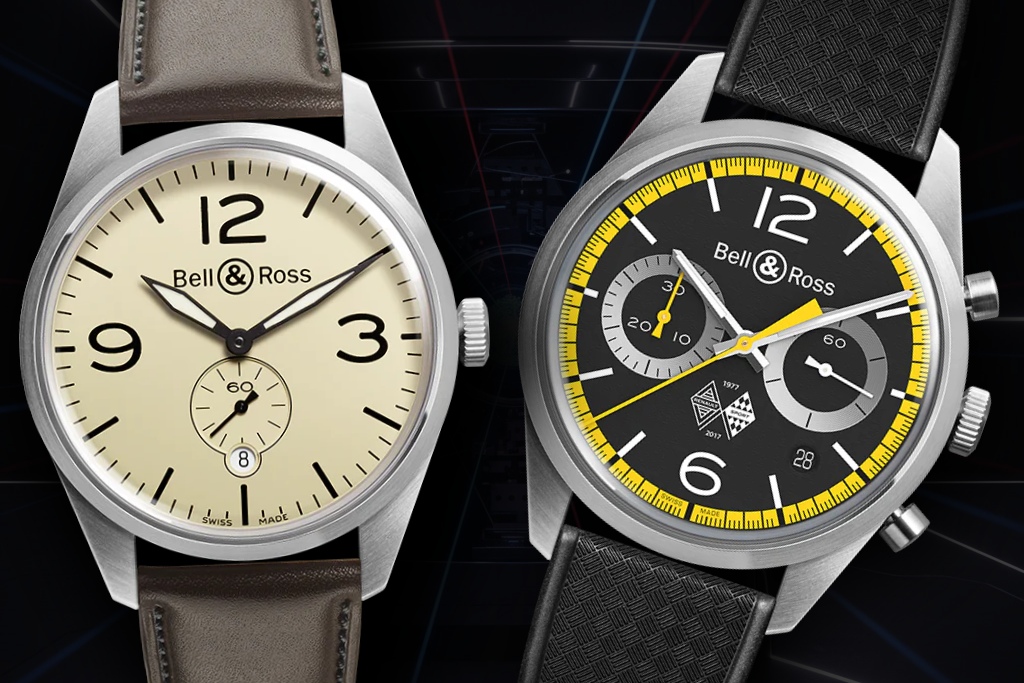
The Bell & Ross lineup has changed a lot in recent years, however. In fact, as of 2025, quartz movements, non-square cases, and vintage design cues are all gone from the Bell & Ross catalog entirely. But they all made appearances in the 2005-2025 window. “Vintage” models, later shortened to the “V” lineup around 2017, are the most “normal” recent Bell & Ross watches, featuring round dials and pretty standard cases.
The round Bell & Ross models have their admirers, but the BR 03–a slightly downsized 42mm interpretation of the BR 01–essentially became the quintessential Bell & Ross model.

Like the BR 01, the BR 03 was offered as a three-hand automatic, a GMT, a chronograph, or a diver–almost always with a circular 4:30 date window. Bell & Ross seems laser-focused on making square watches in those four categories now, but let’s talk about some oddballs from their somewhat recent past.
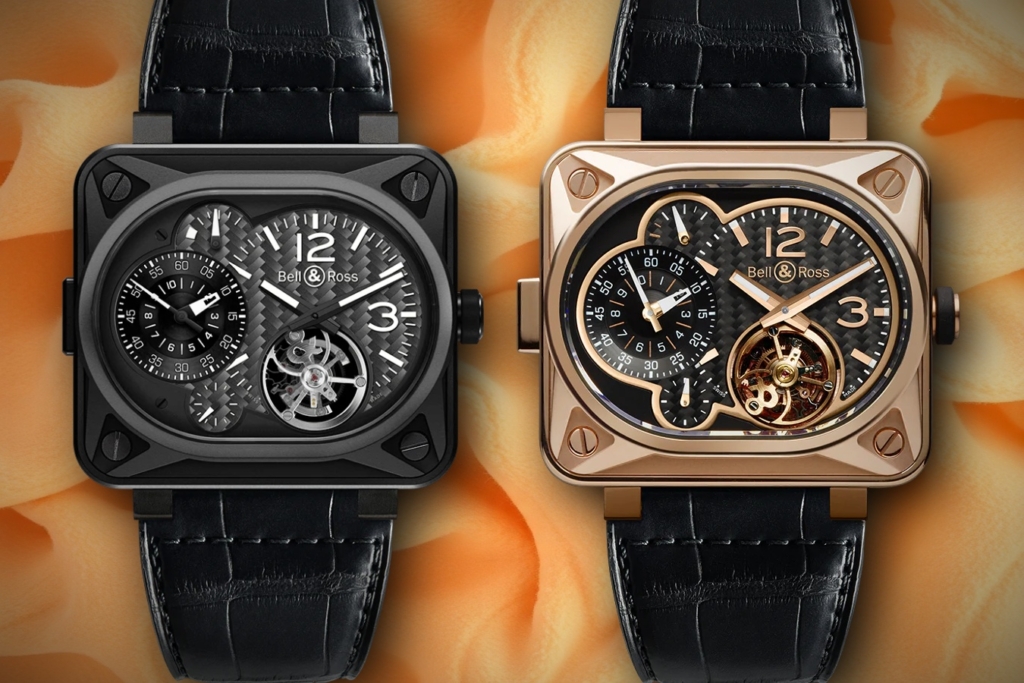
The rectangular and rather awkward Grand Minuteur appeared in 2008, soon followed by a tourbillon version, but that line was discontinued by 2013.
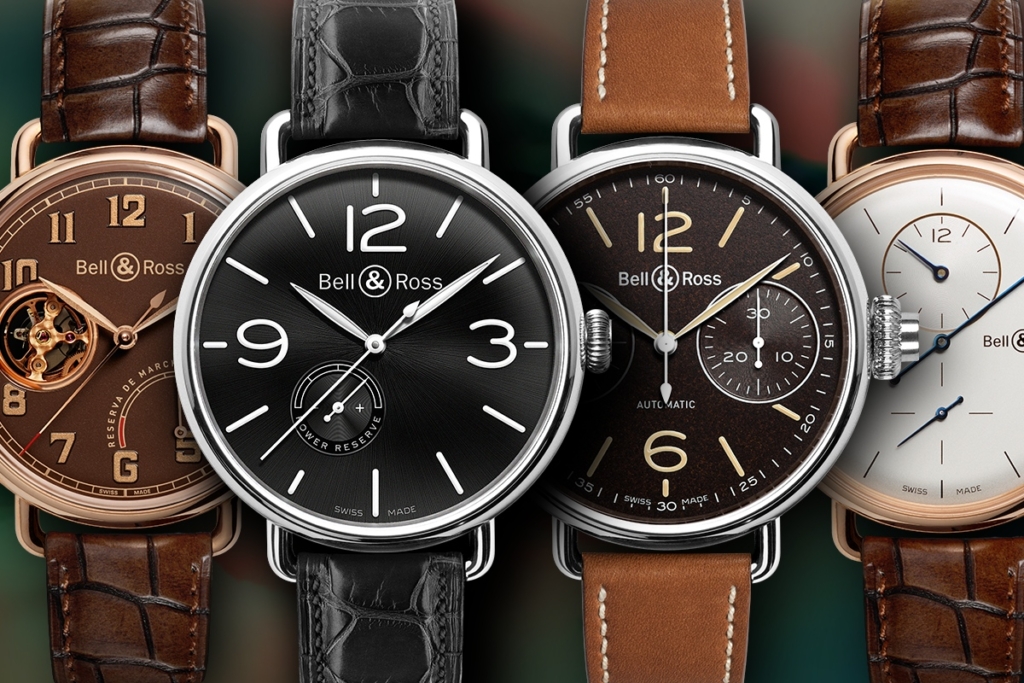
The pocket-watch-inspired 49mm WW2 family with hinged lugs, which debuted in 2011, had a similarly short lifespan.

Movable (hinged) lugs were somewhat fashionable from roughly 1910-1950, and the WW2 line of regulator watches pictured above paid homage to that aesthetic. A regulator watch is a watch with the hours displayed separately in a subdial, in order to emphasize the minute hand. The tourbillon version of the WW2 features both a power reserve indicator and a trust index (balance spring torque indicator). The massive 49mm diameter is a nod to converted pocket watches, and that width allows for a huge mainspring with a 5-day power reserve.
The more toned-down Bell & Ross WW1 watches, with a diameter of 41mm or 45mm and 1910s-inspired wire lugs, were launched in 2011 and lasted almost a decade in the catalog.
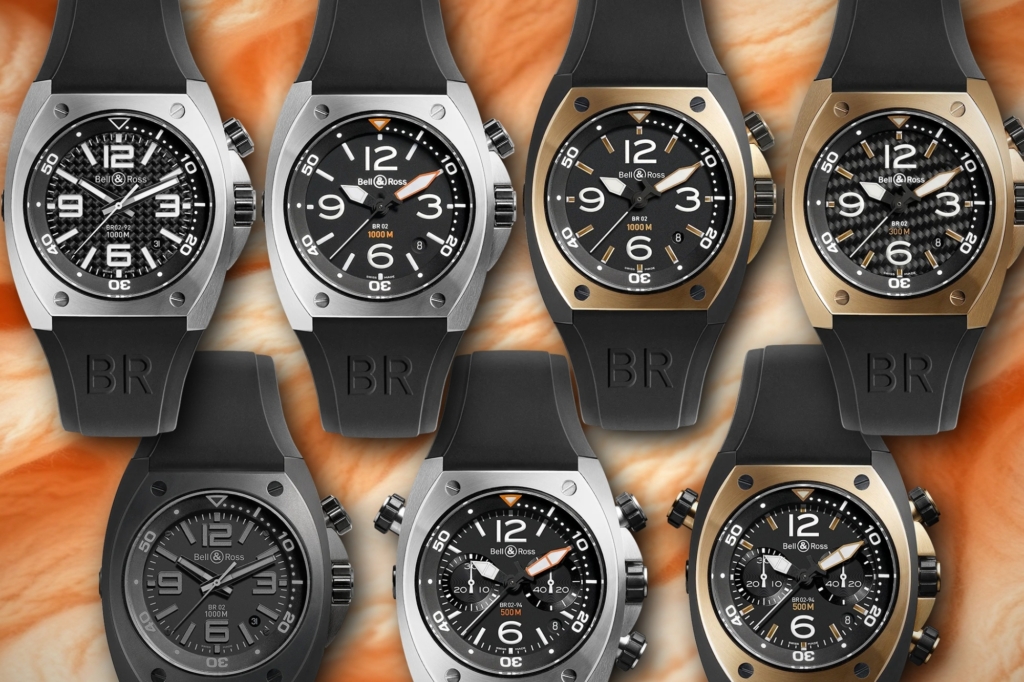
The overlooked BR 02, made from about 2007-2017, sports a futuristic 44mm tonneau case with a helium escape valve. The standard version has a depth rating of 1,000m while the chronograph is rated to “only” 500m.
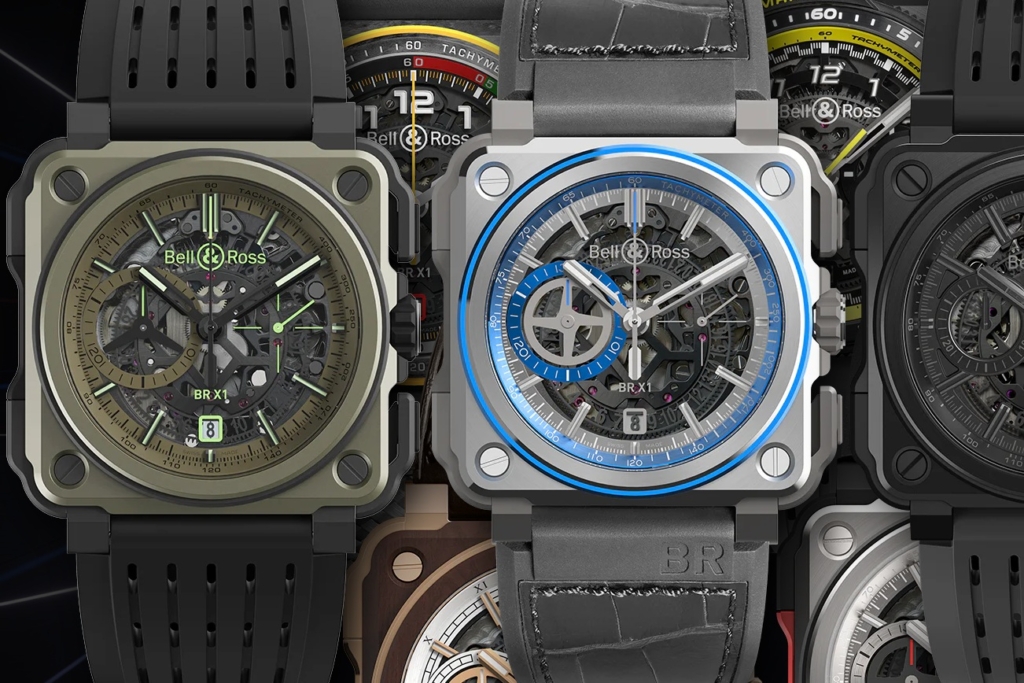
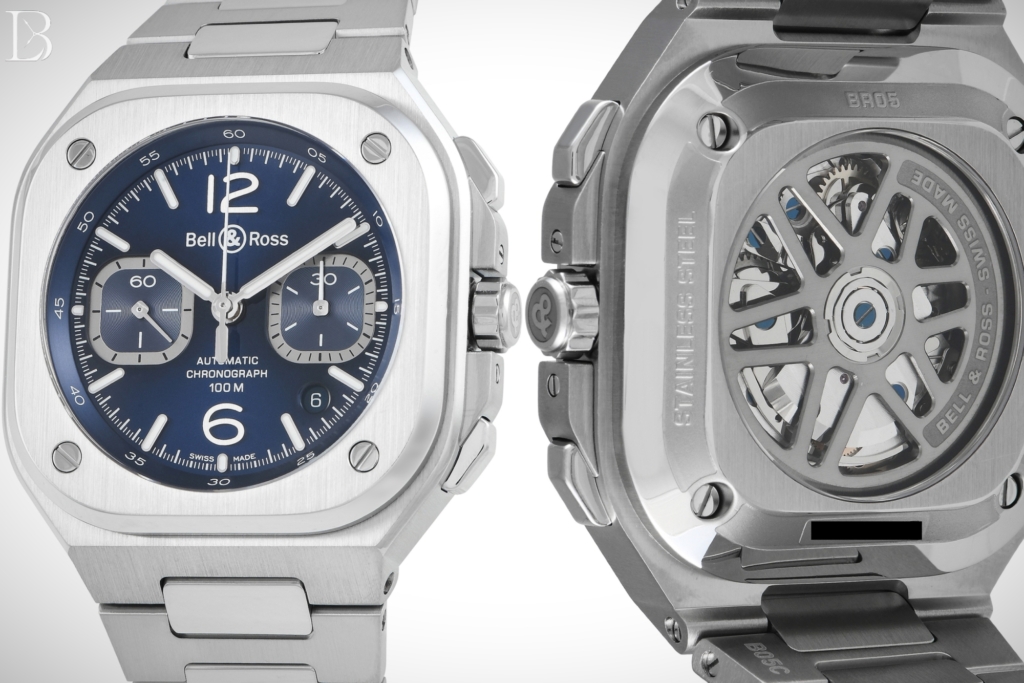
We showed pictures of Bell & Ross X1 models (the “experimental” equivalent of the BR 01) early in this article, and although that family has been discontinued, X3 and X5 models live on as the more advanced versions of the BR 03 and BR 05, respectively. The BR 05 and its more expensive cousin, the BR X5, both have rounded edges and integrated bracelets. The 03 and X3 families keep a sharper-edged square profile.
Now let’s do a quick recap/breakdown of all the Bell & Ross families made since 2005:
Chart of Bell & Ross Models (2005+)
| Model Family | Case Shape | Diameter | Years Produced | Sub-Models & Descriptions |
|---|---|---|---|---|
| BR 01 | Square | 46 mm | 2005-2020 | BR 01-92: Three-hand automatic, classic aviation instrument style BR 01-93: GMT/dual time, 24-hour hand BR 01-94: Chronograph BR 01-96: Big date BR 01-97: Power reserve indicator BR 01 Tourbillon: Tourbillon complication, haute horlogerie BR 01 Airborne/Radar/Compass/Altimeter/Casino: Bell & Ross has offered a variety of unusual instrument-themed and skull-themed dials |
| BR 02 | Tonneau w/internal bezel | 44 mm | 2007-2017 | BR 02-20: Black Large lumed hands (usually milsub style), 4:30 date window, 1000m water resistance, helium escape valve BR 02-92: Replacement of BR 02-20 BR 02-94: Chronograph version of BR 02-92, two registers, 500m WR |
| BR 03 | Square | 41mm or 42 mm | 2006+ | BR 03-92: Three-hand automatic, available with rotating dive bezel, 42mm BR 03-93: GMT/dual time BR 03-94: Chronograph BR 03-51: GMT with big date BR 03-97: Power reserve indicator BR 03-90: Power reserve indicator and big date BR 03 Type A: Ana-digi chronograph BR 03A: Replaced 03-92, slightly smaller (41mm), available with rotating dive bezel |
| BR S | Square | 39 mm | 2008-2025 | BR S: Slim quartz, dressier and smaller, simple three-hand watch with date, sometimes with diamond-set bezel |
| BR X1 | Square (Complex modular construction) | 45 mm | 2014+ | BR X1: Skeleton chronograph, avant-garde materials BR X1 Tourbillon: Skeleton chronograph with flying tourbillon BR X1 Sapphire: Case made from 9 blocks of sapphire crystal, skeletonized chronograph, $300k+ MSRP BR X1 Phantom/Military/Hyperstellar: Special editions with unique materials or colors |
| BR X2 | Square (“Sapphire sandwich” with metal midcase) | 42.5 mm | 2017-2019 | BR X2 Tourbillon Micro-Rotor: Movement sandwiched between two sapphire plates (much simpler construction than the X1 sapphire), micro-rotor automatic, sometimes with flying tourbillon. Starts around $60k BR X2 Skeleton Tourbillon: Open-worked tourbillon movement, minimalist transparent design |
| BR X3 | Square (Complex modular construction) | 41 MM | 2025+ | BR X3: “Experimental” version of BR 03, featuring a power reserve indicator and 3 o’clock date window BR X3 Tourbilllon Micro-Rotor: “Sapphire sandwich” case with tourbillon and microrotor |
| BR 05 | Rounded square w/integrated bracelet | 36 or 40 mm | 2019+ | BR 05: Integrated bracelet, three-hand automatic, 40mm BR 05 GMT: Dual time zone BR 05 Chrono: Chronograph, urban sporty design BR 05 36mm: Smaller version launched in 2025 |
| BR X5 | Rounded square w/integrated bracelet (Complex modular construction) | 41 mm | 2022+ | BR X5: Power reserve indicator at 9 o’clock, date window at 3 o’clock with previous and next dates visible. No other complications offered on this model. |
| Vintage | Round | 38.5, 41 or 43 mm | 2010-2024 | BR V1: Classic three-hand, vintage-inspired round case (38.5mm, prev. gen known as Vintage 123) BR V2: Three-hand or chronograph, vintage styling, rotating bezel options (41mm, prev. gen known as Vintage 126 Chronograph) BR V3: Large chronograph, round vintage style (43mm, prev. gen known as Vintage 126 XL) |
| BR Minuteur | Rectangle | 46 mm | 2008-2013 | BR Grand Minuteur – Wide rectangle, two-dial orientation BR Minuteur Tourbillon – Adds a tourbillon |
| WW1 | Round w/wire lugs | 41 or 45mm | 2011-2020 | WW1-92 Officer: Time-only, classic “flieger” dial. WW1-97 Reserve De Marche: Power reserve indicator, old-fashioned hour numeral typeface. WW1-90 / WW1-90-S Grande Date & Réserve De Marche: Big date complication, power reserve indicator. WW1 Argentium: Argentium silver alloy case, silver or ruthenium dial, unique metallic sheen, smaller 41mm diameter. WW1 Edición Limitada (BRWW1-GRM-PG): Red gold case, power reserve, visible balance wheel at 9 o’clock, limited to 99 pieces. WW1 Regulateur: Regulator dial (separate hour/minute hands), rose gold case. WW1 Jump Hour (Heure Sautante): Jumping hour complication, power reserve, platinum (limited to 25 pieces) or pink gold (50 pieces). WW1 Chronographe Monopoussoir: Single-pusher chronograph, heritage (brown) and ivory dials. |
| WW2 | Round w/hinged lugs | 49mm | 2011-2015 | WW2 Regulateur: Regulator watch with the hour subdial at the top, the seconds subdial at the bottom, and a central minute hand WW2 Regulateur Tourbillon: Adds a tourbillon, power reserve indicator, and trust index (torque indicator) |
Quirky Bell & Ross Materials and Aesthetics
While a military/utilitarian style is Bell & Ross’s bread and butter, the brand has toyed with a large number of interesting aesthetics over the years.
Unusual Use of Lume
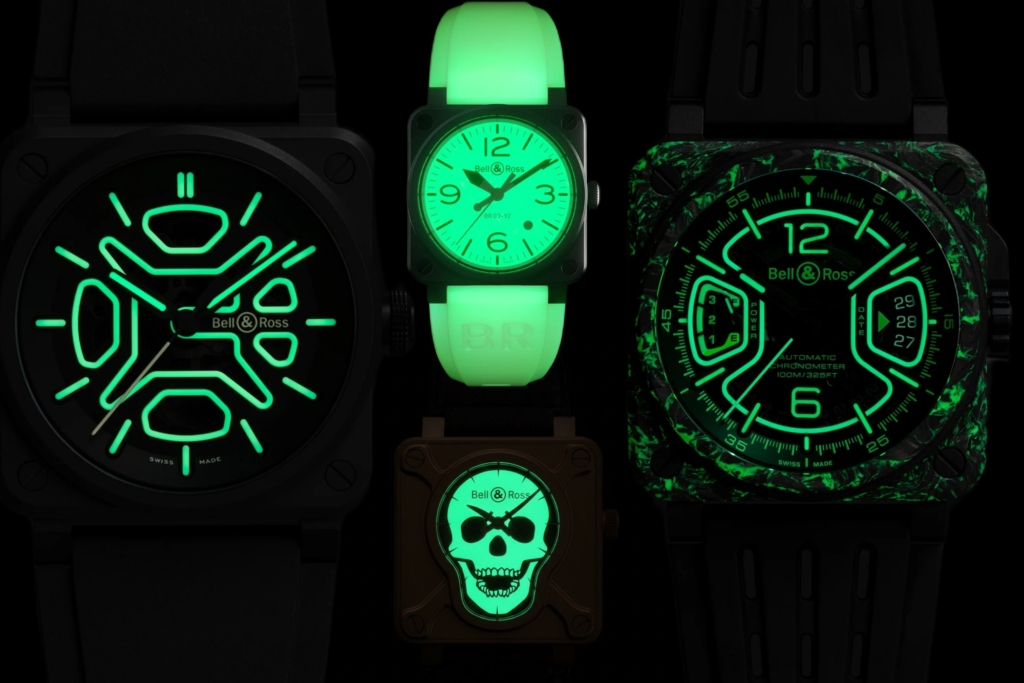
Bell & Ross doesn’t get enough credit for their willingness to use lume in cutting-edge ways. In total, they’ve made six unusual types of lumed watches:
- Full Lum – dials painted entirely with Super-LumiNova, sometimes with matching luminous strap
- Skeleton Lum – dial cutouts are outlined in lume
- Skull Airborne/Bronze – skull filled with lume
- Night Vision – carbon-fiber composite case inlaid with a camouflage-like scattering of lume
- Lum Outline – the edges of the hands and hour markers are lumed, and so are the bezel markings
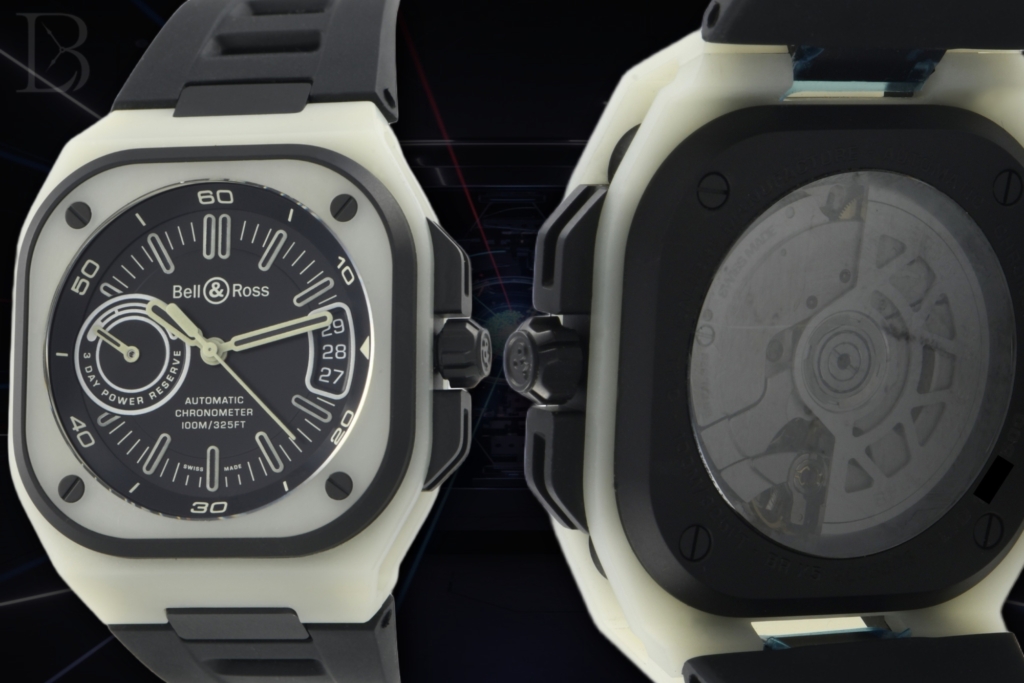
- Green/Blue Lum – fully lumed case made of a proprietary quartz‑fiberglass composite (LM3D) loaded with luminescent pigments and bound together with resin
The Green and Blue Lum models sell for about $10,000 secondhand. When we had a green one in stock, it didn’t last long.
Bell & Ross x Alain Silberstein
In 1990, Alain Silberstein founded one of the first luxury watch brands with an aesthetic that could be described as “whimsical.” His liberal usage of primary colors and enormous hands makes his watches unmistakable.
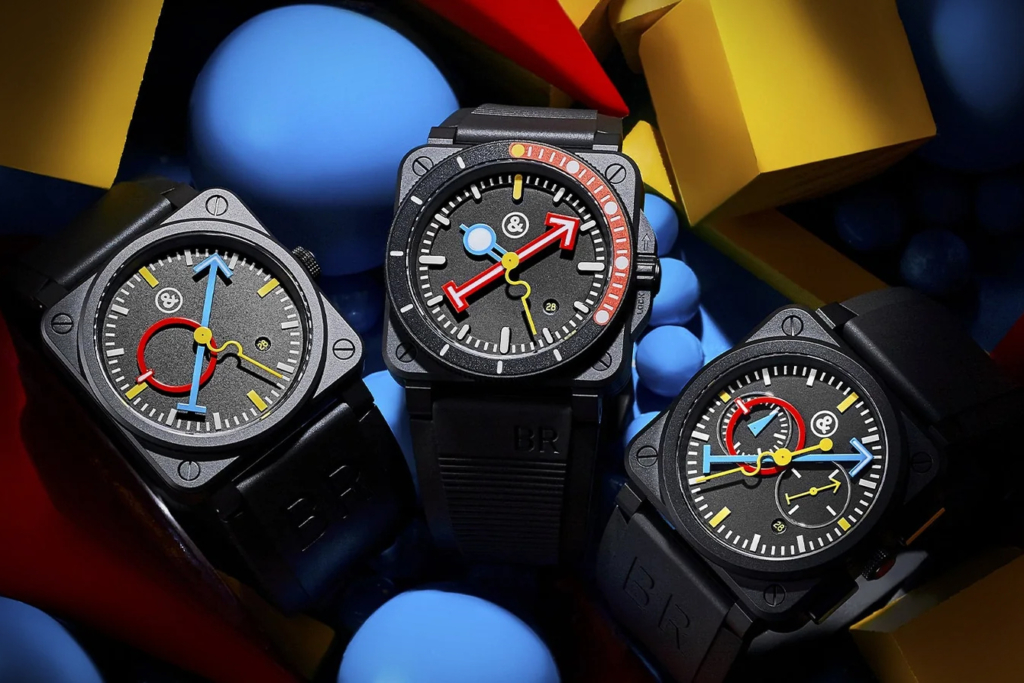
Although his eponymous brand closed its doors in 2012, Silberstein has gone on to collaborate with brands like MB&F, Louis Erard, Yema, and Bell & Ross. The Bell & Ross x Alain Silberstein collaboration in 2023 resulted in three black ceramic watches: Klub 22, Marine 22, and Krono 22.
Flight Instrument Models
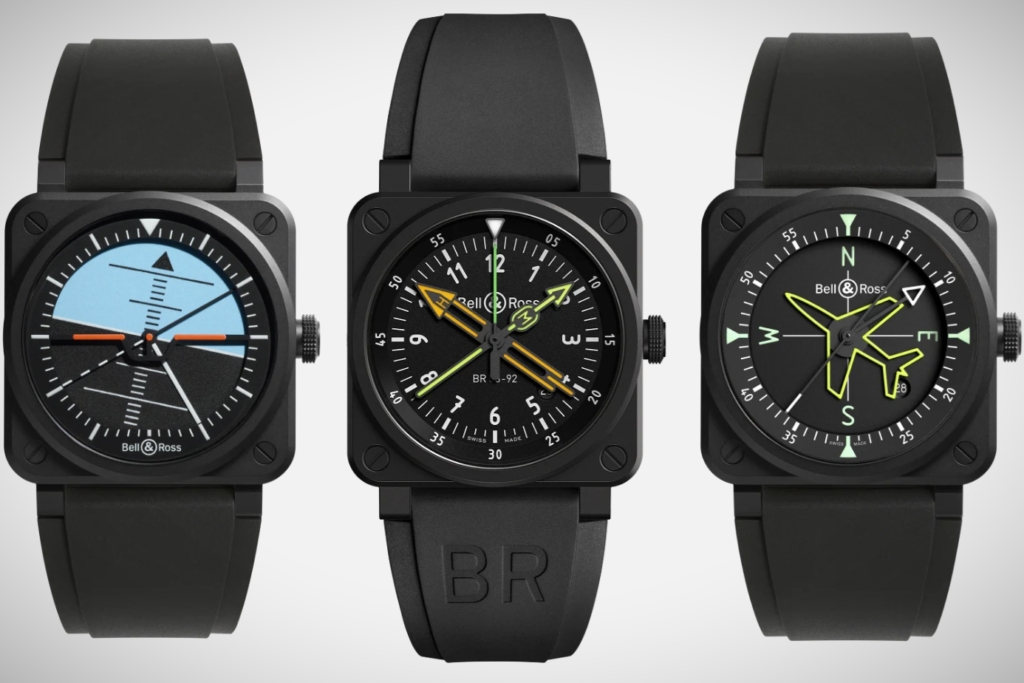
Bell & Ross made BR 01 and BR 03 models that replicated the aesthetics of thirteen different cockpit gauges: compass, gyrocompass, bi-compass, radiocompass, radar, altimeter, turn coordinator, gyrocompass, airspeed indicator, climb indicator, radio compass, HUD, and horizon indicator. They sacrifice legibility too much for my taste, but some people love them.
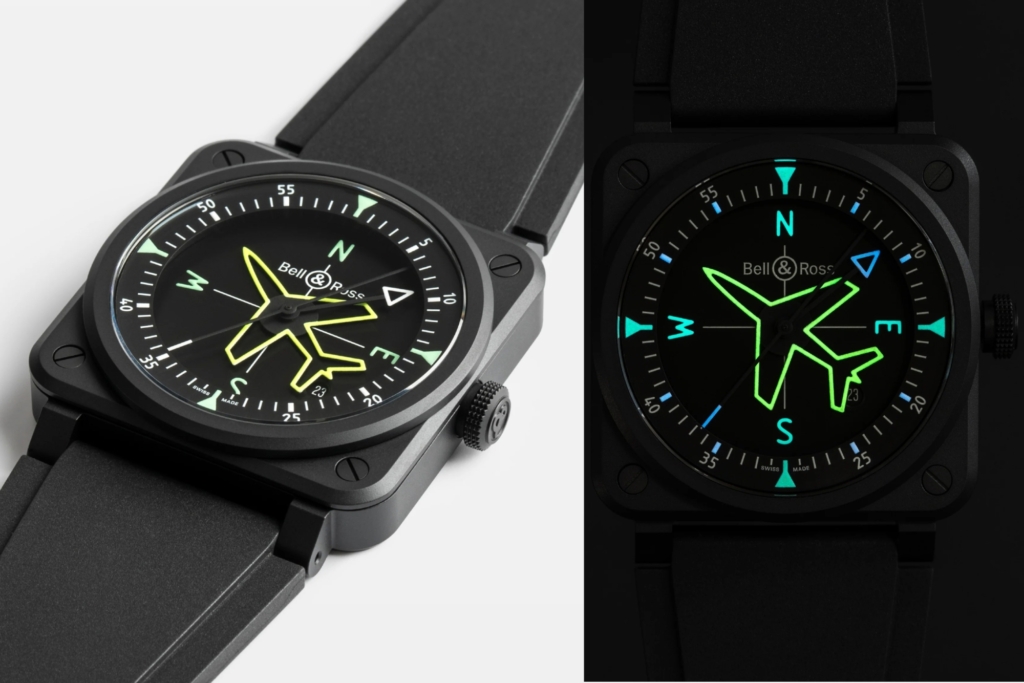
These Flight Instrument models all have black cases. BR 01 models have PVD-coated steel cases while the later BR 03’s are black ceramic.
Patrouille de France Models
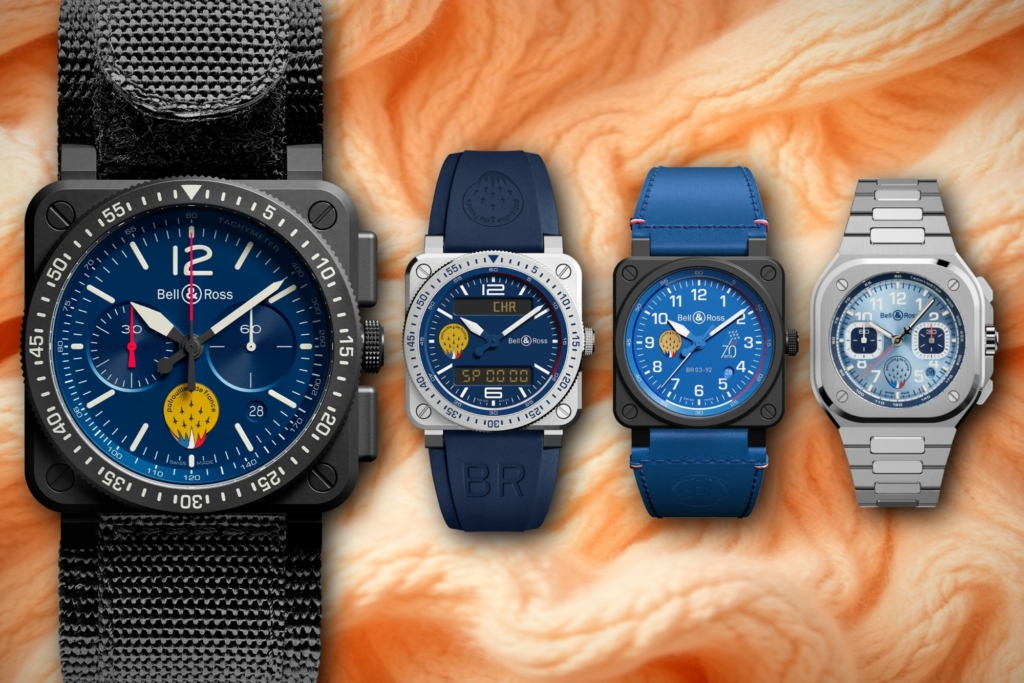
The Patrouille de France is the official aerobatic display team of the French Air and Space Force. Bell & Ross first collaborated with them in 2021 and have now released a total of four watches celebrating the Patrouille de France.
The Bell & Ross Lineup Today
The Bell & Ross lineup as of 2025 is much simpler than it used to be: there are only the BR 03, BR X3, BR 05, and BR X5 families. All current Bell & Ross watches have exhibition casebacks except for the BR 03, and sizes range from 36mm-42mm.
So basically, you can choose the square or rounded square, and either traditional or experimental. Within some of those subsets, you can then choose a simple three-hand model, GMT, diver, chronograph or tourbillon, and that’s it.
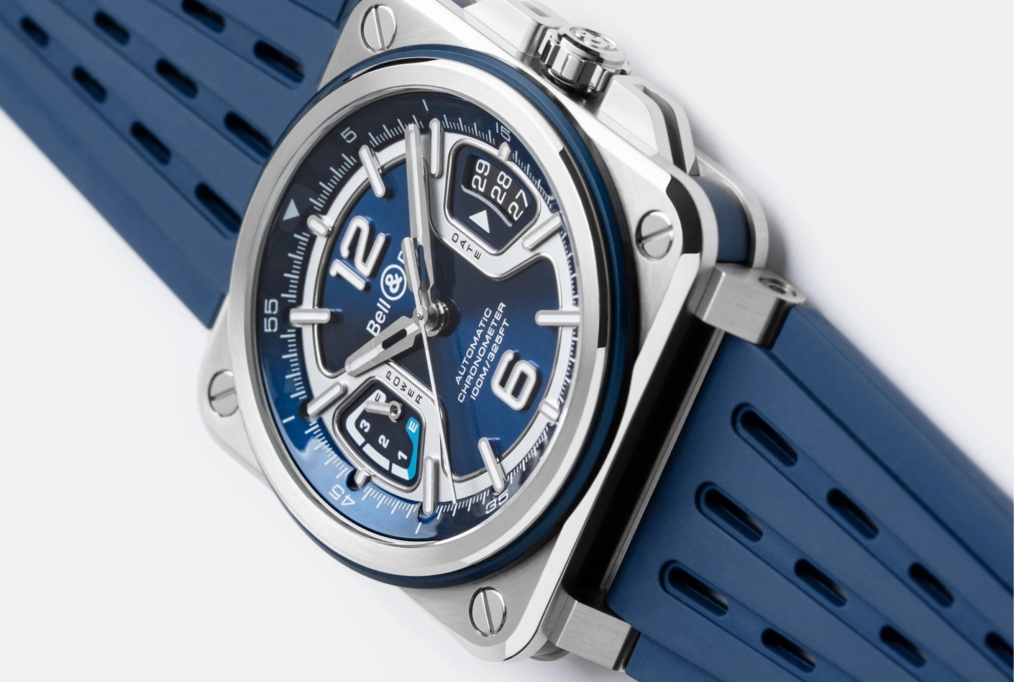
Frankly, I respect the fact that Bell & Ross no longer feels obligated to make non-square watches. They’re the square watch brand, everyone knows it, and they seem to be doing well with that position.






Leave a Reply