What To Know About The Patek Philippe 1518 — And The New Record-Breaking Sales

I’ve been binge-watching The Gentleman, the Guy Ritchie series on Netflix, and like everything the British filmmaker touches, it’s highly entertaining. Between the shady shenanigans of English aristocrats, sprawling weed farms, and stomach-turning violence, one scene in particular stuck with me. It was a discussion about a vintage Patek that had been recently acquired; not only was it a Patek Philippe 1518 (arguably the most important vintage Patek reference ever made) in yellow gold, but it was also (according to the show) the very same one worn by Winston Churchill when he accepted Germany’s surrender in 1945. While undoubtedly historically inaccurate, the ensuing conversation about its value — citing rarity, desirability and (fictional) provenance — pegged it between nine and 10 million dollars. This short, seemingly throwaway scene captured what makes the high-end vintage watch market tick: the very rich chasing the very rare.

In a case of life somewhat imitating art, the Patek Philippe 1518 has resurfaced in the watch world’s collective chatter, despite having been around for more than 80 years. That’s because a non-fictional stainless steel Patek Philippe 1518 came back up for sale, at one time carrying a rumored reserve price of $20 million. Our very own Roman Sharf had the chance to handle this grail of grails when he met Davide Parmegiani of Monaco Legend Group, the auction house behind the sale.
Update: Patek 1518 on a Bracelet, sold by Luxury Bazaar — November 2025
Big news this month: Luxury Bazaar sold the stainless steel Patek Philippe 1518 on a bracelet — an ultra-rare configuration and a true trophy watch. Roman Sharf shared the deal on Instagram, explaining that the buyer is a “young collector” not by age, but by how recently he’s stepped into high-level collecting. And now, he’s added what Roman calls the most important watch to own. It’s a reminder that even in a softer market, the very top of vintage Patek still moves in its own lane.
With the legendary Patek Philippe 1518 back in the spotlight, let’s take a closer look at the history, importance, and value of one of the most coveted watches in existence.
History and Evolution of the Patek Philippe 1518
In 1941, amid the uncertainty of World War II, Patek Philippe introduced the Reference 1518 — the first perpetual calendar chronograph wristwatch ever produced in series. It was a milestone not just for the brand but for Swiss watchmaking as a whole, signaling a shift toward intricate complications in a time when most watchmakers were scaling back. With the launch of the 1518, Patek Philippe laid the groundwork for a lineage of highly complicated chronographs that would continue for generations.
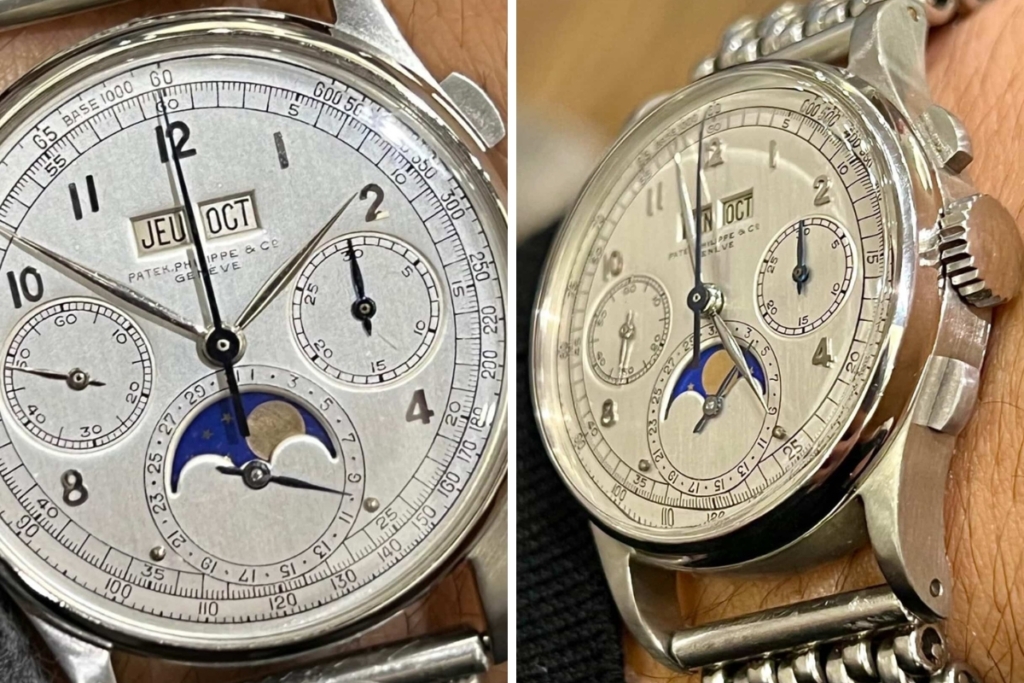
The 1518 established a dial layout that became the blueprint of the brand’s perpetual calendar chronographs for decades. Day and month apertures at 12 o’clock, running seconds and chronograph minutes at 9 and 3, a date and moonphase at 6, and a tachymeter scale along the edge. It didn’t include a leap year indication (that came later via Audemars Piguet), but otherwise, it was a masterclass in balance and legibility, beauty and functionality.
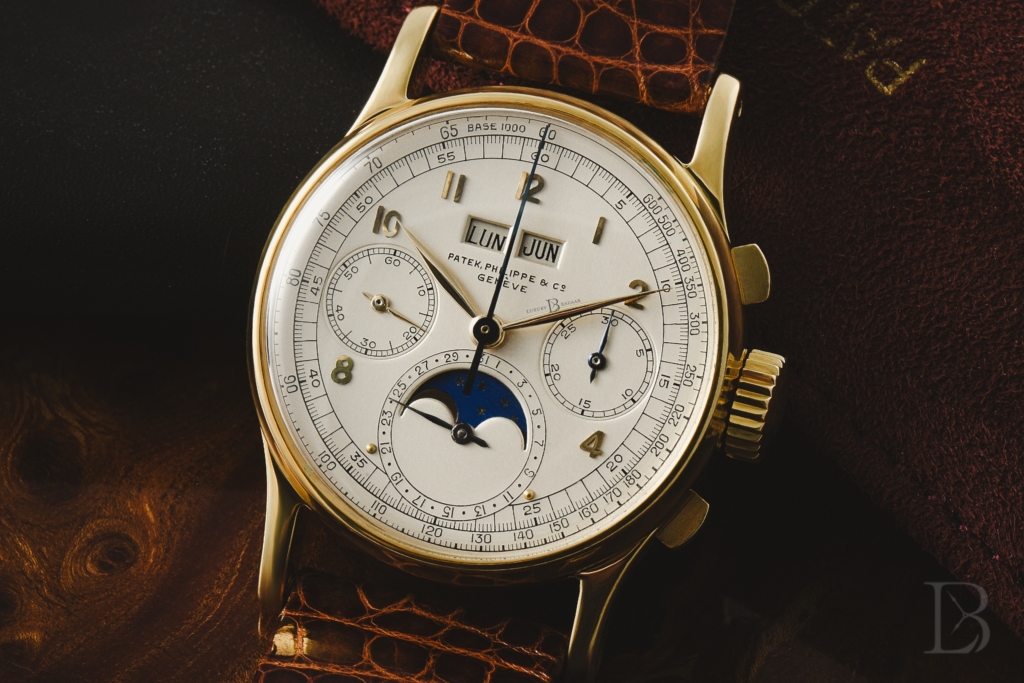
Like most Pateks of the era, details evolved over the years. Early 1518 dials featured the longer-form signature “Patek, Philippe & Co.” — an elegant flourish that was later shortened to just “Patek Philippe” after 1947. That same postwar period saw changes to other dial elements too: the weekday and month apertures became slightly smaller and the tachymeter scale on the periphery was spaced more generously. There were also variances in hour marker styles and moonphase displays. These variations may seem minor, but in today’s collector market, they carry real weight.
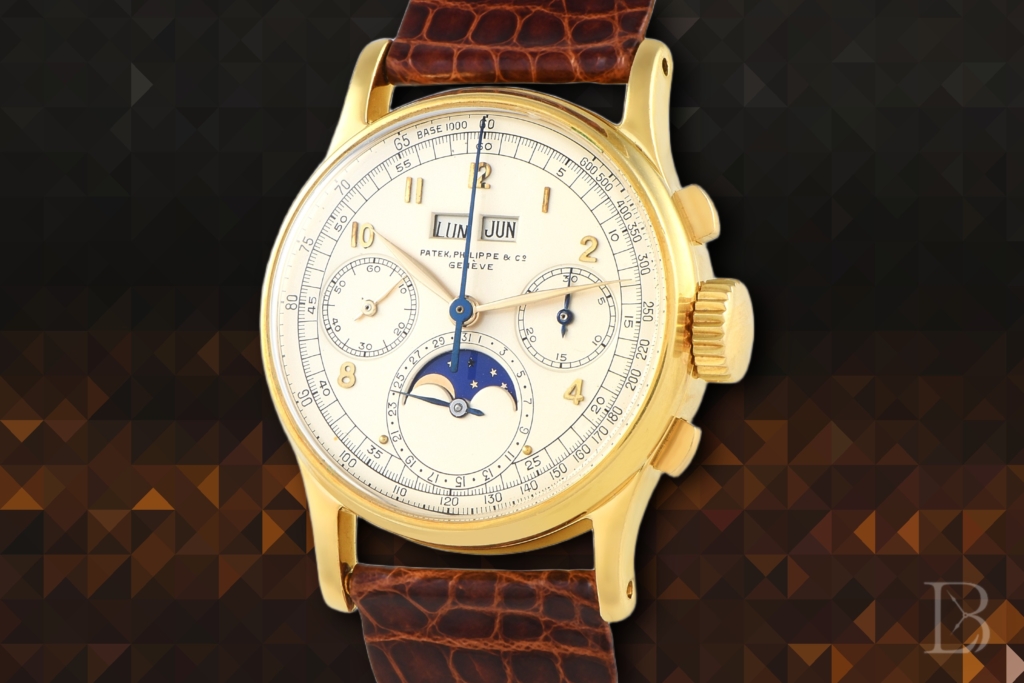
Another important detail: at the time of purchase, buyers could opt for either a leather strap or a matching metal bracelet made by Gay Frères. Collectors will pay big premiums for one on a bracelet, but only if it comes with a Patek Philippe Archive Extract stating it was delivered as such. Today, 1518s with their original bracelets are vanishingly rare, making those few documented examples especially desirable.
Case construction also evolved slightly over the years. Early examples had thicker cases and centered pushers, while later ones featured thinner profiles and adjusted corrector positions. The 35mm size was substantial for the era but is considered classically proportioned today. All known steel cases came from either Georges Croisier or Wenger, while many of the gold cases were produced by Emile Vichet — the same supplier that would go on to make early Patek ref. 2499 cases.
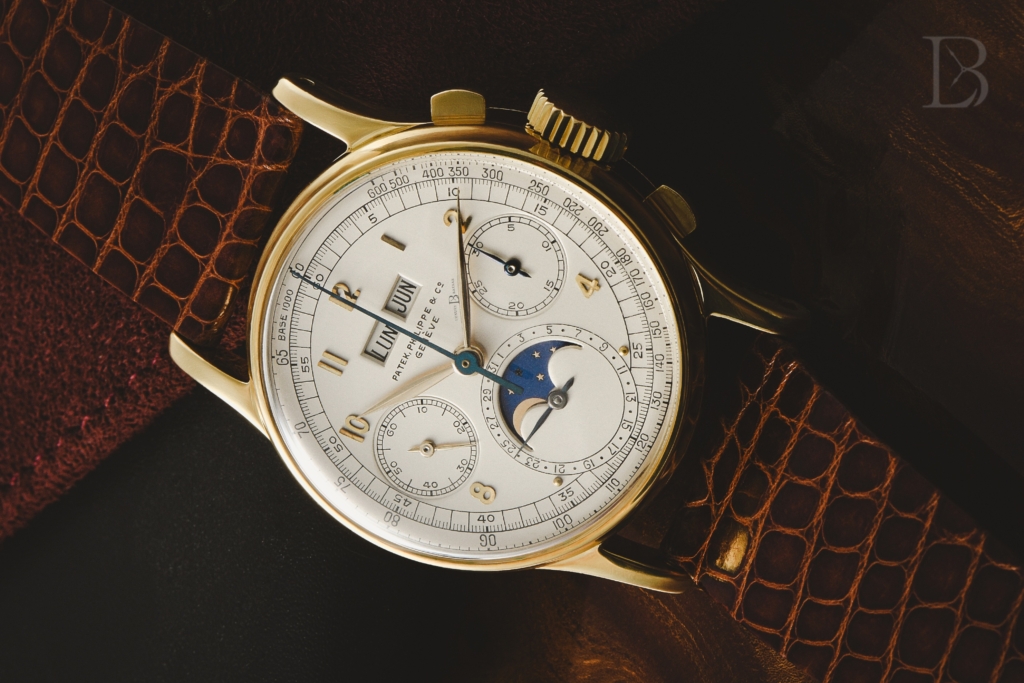
Inside the Patek Philippe 1518 was the Caliber 13-130 Q, based on a Valjoux 13-ligne ébauche, heavily modified by Patek and combined with a perpetual calendar module developed by Victorin Piguet. It beat at 18,800 vibrations per hour and included finishing and construction details that would later become trademarks of high-end Patek chronographs, including capped column wheels, swan neck regulators, and individually mounted chronograph components.
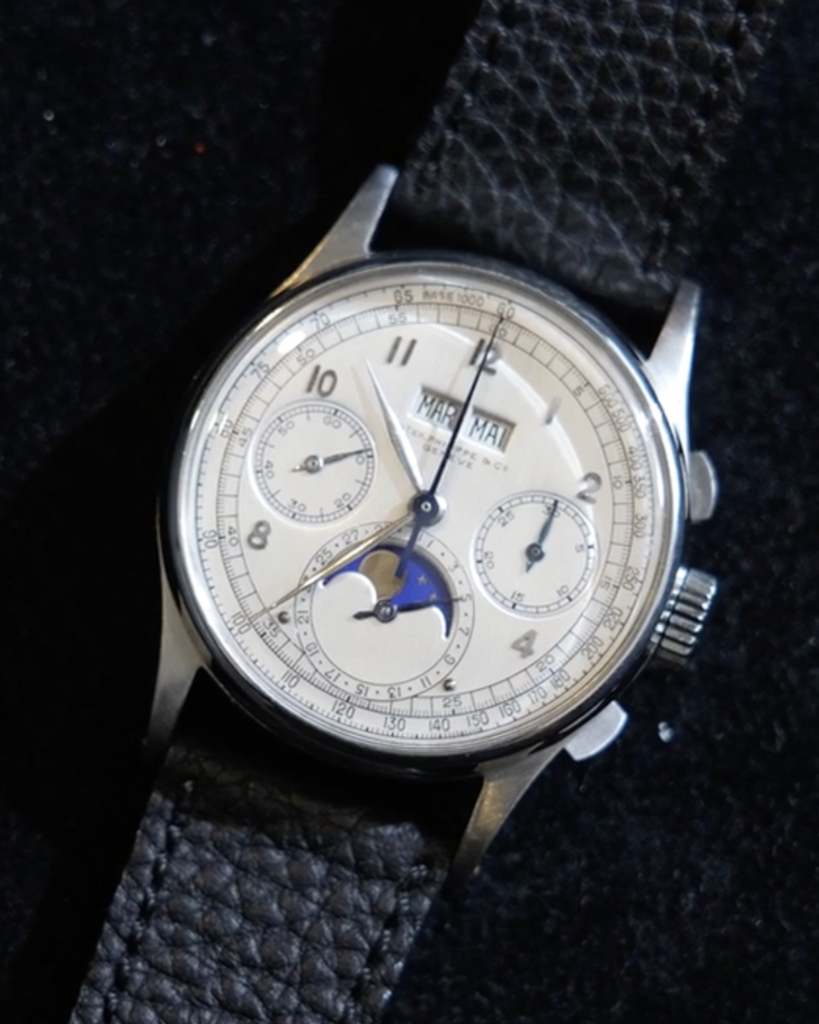
Over a production run that lasted until 1954, Patek made just 281 examples of the 1518. Most were in yellow gold, with fewer than 60 known in rose gold. And then there’s stainless steel, where only four are known to exist, making those pieces the holy grail of vintage Patek collecting.
Today, the Patek Philippe 1518 is recognized as one of the most historically significant watches ever made. It introduced a design language and technical formula that would shape the future of complicated Patek watches for decades to come. In context, it’s remarkable that Patek Philippe launched the 1518 not as a special commission, but as a serial-production piece. It marked the beginning of a new chapter, less than a decade after the Stern family had acquired the company in 1932. At a time when most watchmakers focused on survival, Patek Philippe, under the direction of Charles and Jean Stern, chose to invest in innovation.
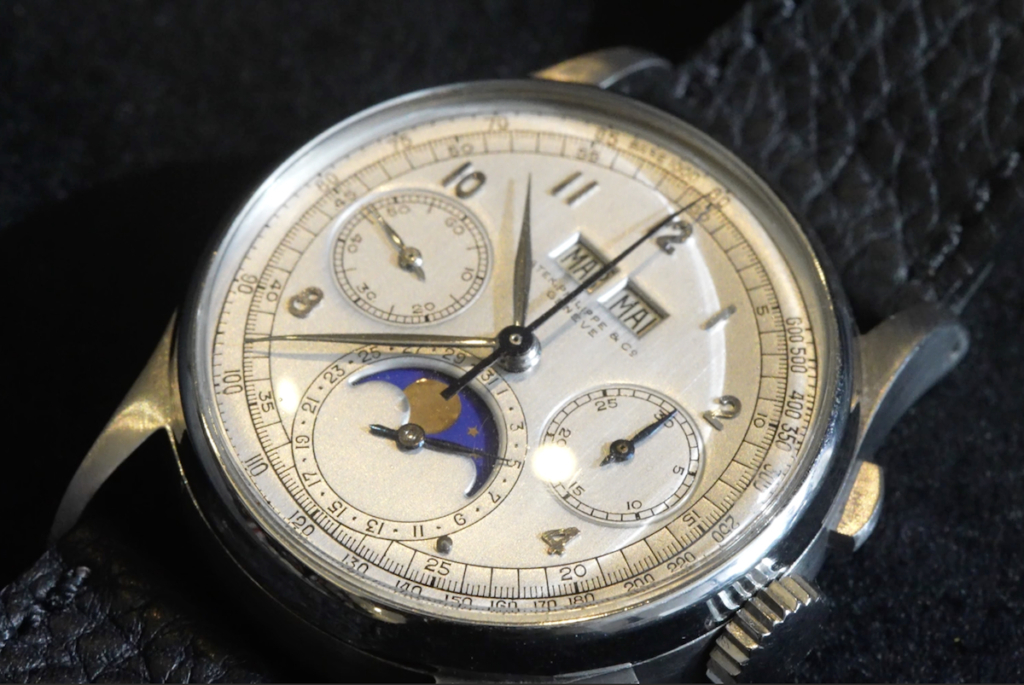
Much of what collectors associate with modern Patek perpetual calendar chronographs can be traced directly back to the 1518. Its balanced dial layout, the integration of a chronograph with a perpetual calendar, and the idea of offering this combination as a serially produced wristwatch all became hallmarks of the category. In many ways, the 1518 established the template that Patek Philippe continues to refine today.
The Value of Patek 1518 Watches
Reference 1518 watches are some of the most valuable vintage Patek Philippes any collector can add to their collection. As such, they are also some of the most expensive watches to buy.
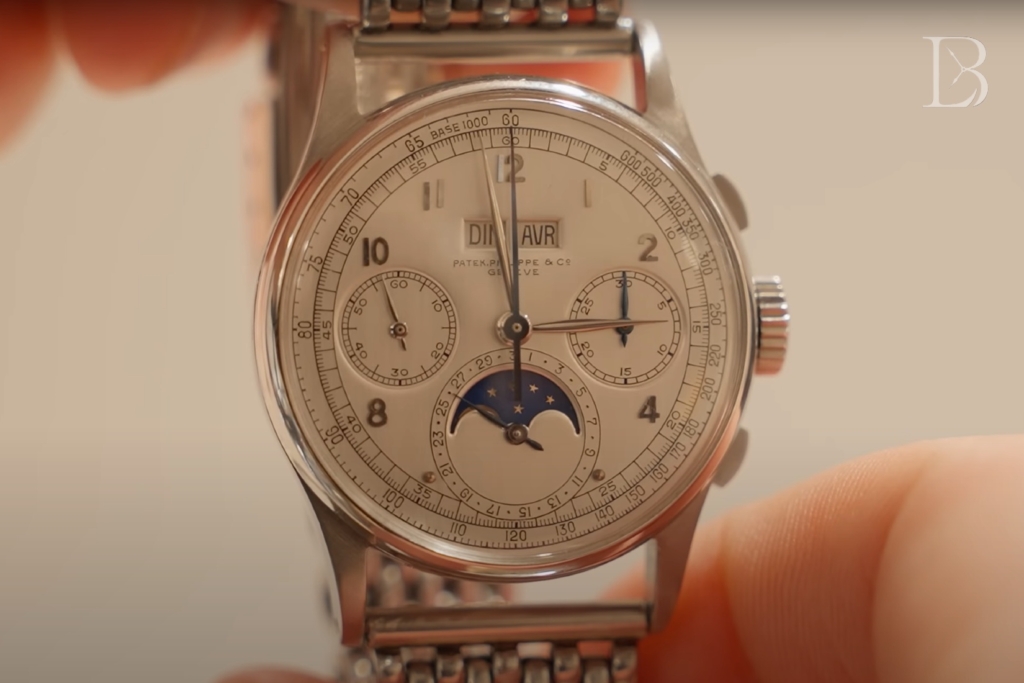
When it comes to the Patek Philippe 1518, material matters. Among the 281 examples produced, only four are known to exist in stainless steel — and as expected, they sit at the absolute top of the collecting pyramid. These watches rarely surface, and when they do, they make headlines.
Two real-world examples surfaced in November 2025. The first was the private sale of a steel Patek Philippe Ref. 1518 on a matching bracelet — a configuration so scarce it’s talked about far more than it’s ever seen — handled by Davide Parmegiani of Monaco Legend Group and Roman Sharf of Luxury Bazaar. The final price remains undisclosed, but the watch carried a reserve of $20 million. Meanwhile, during the Phillips Geneva Watch Auction that same month, another steel 1518 (not on a bracelet; case number 508,473, movement 863,193) sold for $17.6 million, becoming the most expensive vintage Patek Philippe wristwatch ever sold at auction. That number is public; the Luxury Bazaar sale is private, so we may never know which example ultimately achieved the higher figure.

Steel has long been the headline-grabber for the 1518. Back in 2016, another steel example — serial number 508473(1) — crossed the Phillips auction block for over CHF 11 million, becoming the most expensive Patek Philippe wristwatch ever sold at the time (second only to the Henry Graves Supercomplication). That result cemented the steel 1518’s reputation as one of the ultimate grails in vintage watch collecting.
Just below steel in rarity and value are the pink gold 1518s, produced in far smaller numbers than their yellow gold counterparts. They routinely command a premium — especially when paired with matching gold bracelets. Recent auction results illustrate the range:
- $3,871,500 at Sotheby’s (June 2023, gold bracelet)
- $1,633,000 at Phillips (December 2024, gold bracelet)
- $1,560,000 at Sotheby’s (November 2024, leather strap)
Yellow gold 1518s are the most prevalent, yet still far from common. Even these routinely trade hands for high-six or low-seven figures. Notable recent sales:
- $1,451,500 at Phillips (June 2025, leather strap)
- $679,716 at Phillips (November 2024, leather strap)
- $456,000 at Sotheby’s (December 2024, leather strap)
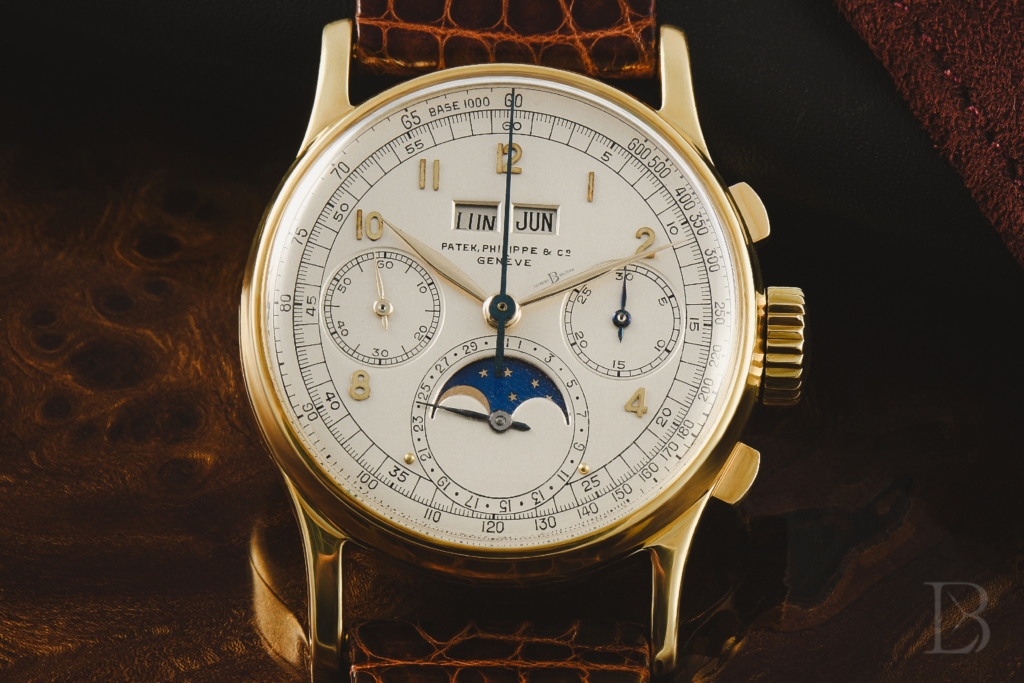
While yellow gold versions are generally the most accessible of the three metals, there’s nothing remotely ordinary about them. In short, all Patek Philippe 1518 watches, regardless of material, share the same pedigree and historical importance, but the rarest configurations command the most eye-watering results.
The 1518’s Superstar Status
The Patek Philippe 1518 has long been a cornerstone of vintage watch collecting, but recent headlines have only strengthened its mythical status. While the broader vintage market has cooled in recent years, the 1518 reminds us that some watches are so important, they buck current trends.
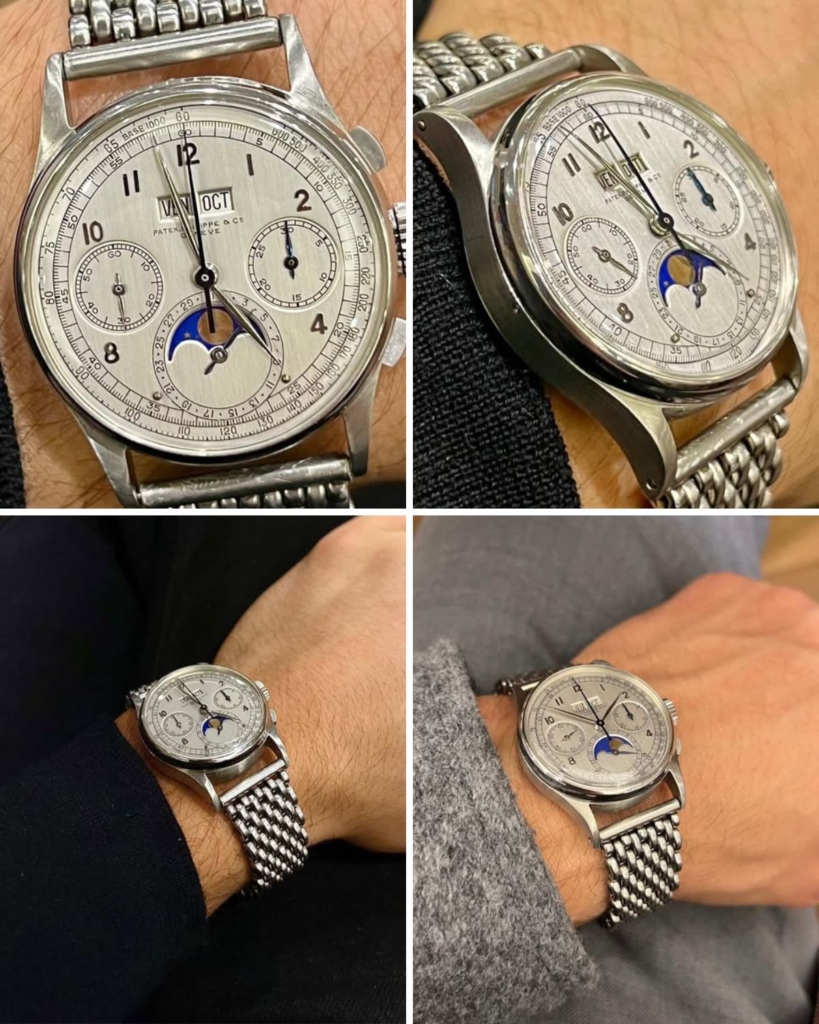
With a stainless steel example almost surpassing the price of Paul Newman’s famous Rolex Daytona at auction, and pink and yellow gold versions continuing to fetch serious sums, the 1518 is still one of the true superstars of the collecting world.


One response to “What To Know About The Patek Philippe 1518 — And The New Record-Breaking Sales”
-

Thanks for the informative article, it was an interesting read.


Leave a Reply