The “NASA Watch” Worn By the Whole Artemis II Crew: Omega Speedmaster X-33 2nd Generation

The Omega Speedmaster Professional ref. 105.003 became the first ever NASA Flight-Qualified watch in 1965, as you have probably heard if you’re into watches. Less hyped, though, is the digital function-packed Omega Speedmaster X-33 that has been NASA Flight-Qualified since 1998. An official US government document from 2013 even called it “the watch of choice for U.S. astronauts,” so it was unsurprising to see the X-33 on the wrists (well, forearms) of all four astronauts of the Artemis II mission as they prepared for launch on April 1, 2026. Commander Reid Wiseman, pilot Victor Glover, and mission specialists Christina Koch and Jeremy Hansen were all wearing second-generation Omega Speedmaster Professional X-33 watches, presumably ref. 318.92.42.79.01.001.
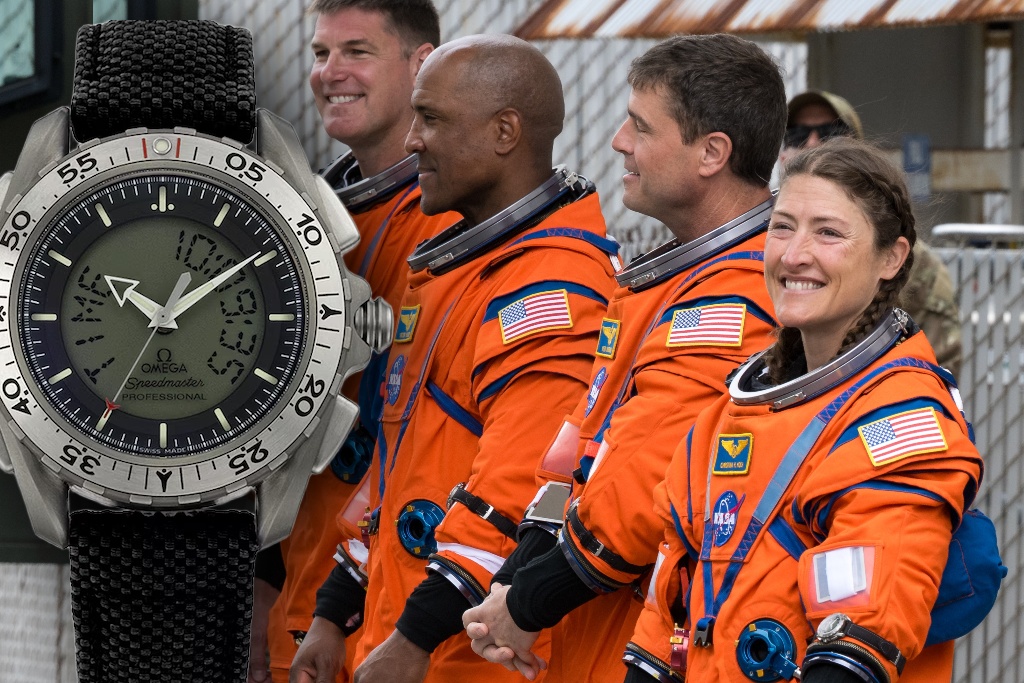
The Speedmaster X-33 “NASA Watch” in Context
The X-33 is Omega’s “ana-digi” version of the Speedmaster Professional. That means it’s a quartz-powered watch with digital features and displays, and also traditional analog hands. Specifically, its movement is the Omega Caliber 1666, based on the ETA E20.321 but with added features such as a “Mission Timer.” Astronauts apparently really do make regular use of the numerous features of the X-33, like a chronograph and a countdown timer that can be run concurrently, a repeating daily alarm, a one-time alarm set to UTC, plus a separate alarm feature that can be set to a certain elapsed time on the Mission Timer.

In addition to being Flight-Qualified by NASA, the Omega X-33 made its world debut at NASA’s Johnson Space Center in Houston, Texas, on March 28, 1998, in concert with a live satellite uplink to the Russian Mir space station. But its shiny bezel and pushers weren’t ideal for astronauts, who are keen to avoid the glare of unattenuated sunlight reflecting back at them.
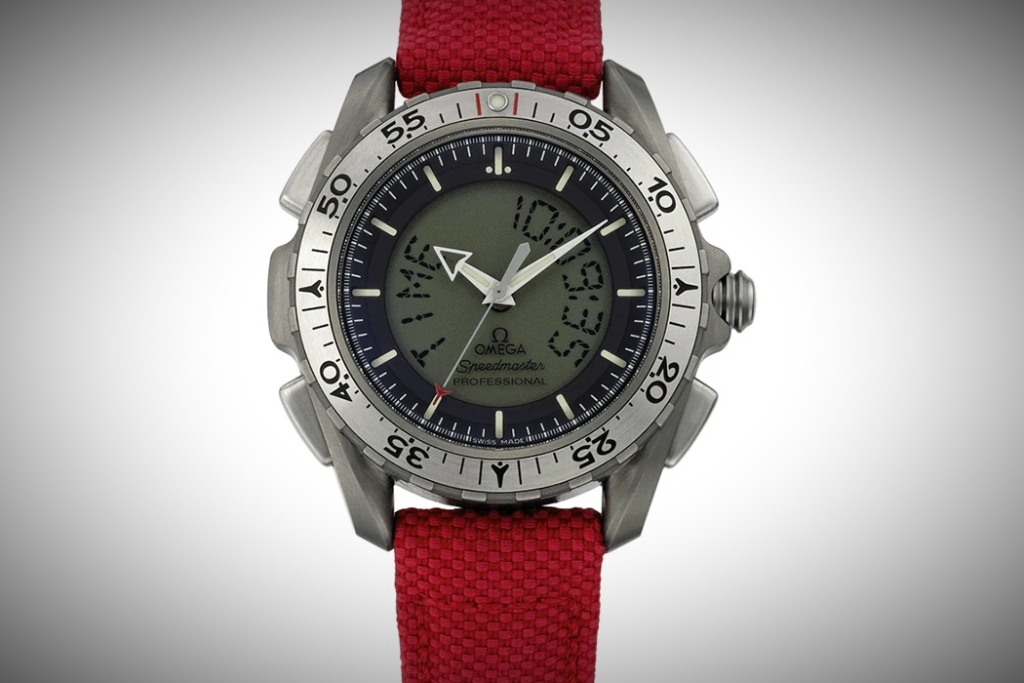
So, second-generation Omega X-33’s debuted in the early 2000s with fully brushed surfaces. In addition to the grooves of the crown being tweaked (collectors call it a “honey dipper” crown), the caseback was also updated with an engraving to celebrate its NASA status: “Flight-Qualified by NASA for Space Missions.” The second-gen X-33 remains the de facto “NASA Watch” to this day.

Note that traditional mechanical Omega Speedmaster Professional Moonwatch models say “Flight Qualified by NASA for All Manned Space Missions.” The “all manned” part was dropped for the X-33 because technically, the X-33 hasn’t been qualified for spacewalks. Its NASA qualification only pertains to remaining inside the spacecraft. That’s presumably because LCD screens, and batteries in general, would be hard-pressed to handle the ludicrous temperature swings of open space.
Omega stopped selling the second-generation Speedmaster X-33 to the public around 2006, and the third-generation Speedmaster X-33 “Skywalker” has never been qualified by NASA for whatever reason. Neither has the fourth-generation X-33 “Marstimer.”
Those newer X-33’s have multiple horizontal screens with light-on-black text displaying the data, as opposed to the concentric black text display of the first two generations. The Skywalker and Marstimer casebacks also boast about certification by the ESA (European Space Agency) in lieu of NASA bona fides.
Strap
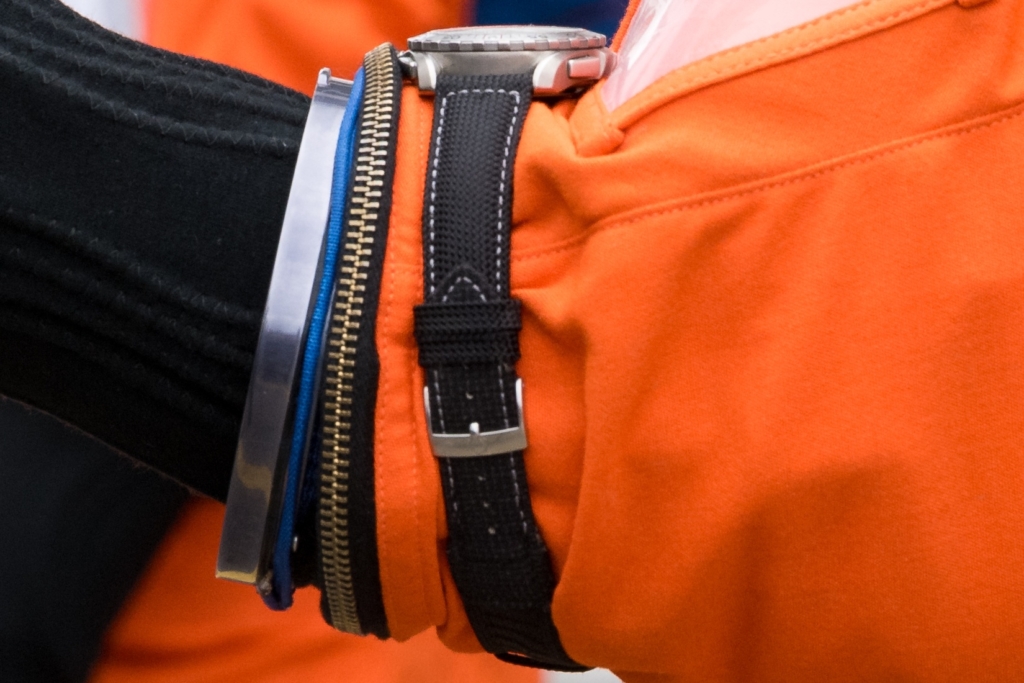
The Artemis II astronauts all wore what appeared to be black calf-lined kevlar straps on their Omega Speedmaster X-33’s, with extenders so they could cover their spacesuits.
What’s interesting is that there is no velcro involved on the watches of the Artemis II crew–just a classic, simple pin buckle.
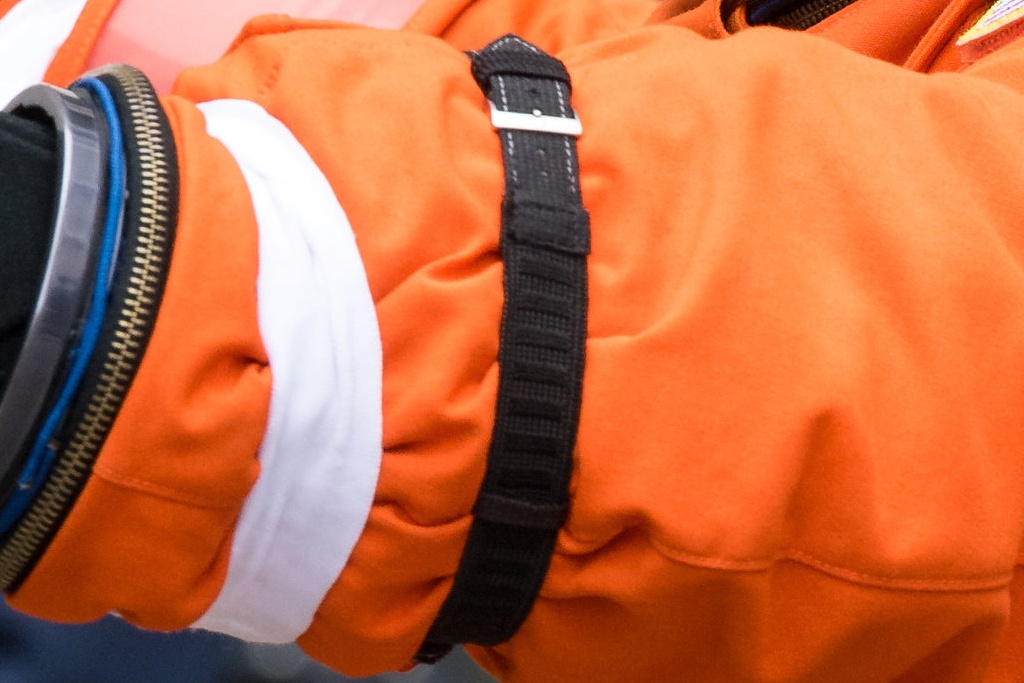
Astronauts have often used velcro strap closures, dating back to Ed White when he did the first-ever American spacewalk in 1965. But apparently a simple tang (pin) buckle works just fine. The longevity and ubiquity of the tang buckle really is remarkable.
More on the Omega Speedmaster:

Reference Number of the NASA Watch: 318.92.42.79.01.001, 3291.50 or What?
You might hear that the Artemis II astronauts wore the Omega ref. 3291.50, but that’s the civilian titanium-bracelet designation of the X-33 retired 20 years ago. The same watch is still sold to governments/militaries, but with different reference numbers. Today, on a black kevlar strap, the watch’s reference number is 318.92.42.79.01.001 while the bracelet version is 318.90.42.79.01.001. The civilian version was also sold with green or red kevlar straps until its discontinuation sometime around 2006. Only Omega could take one watch with four different strap configurations and come out with six reference numbers.
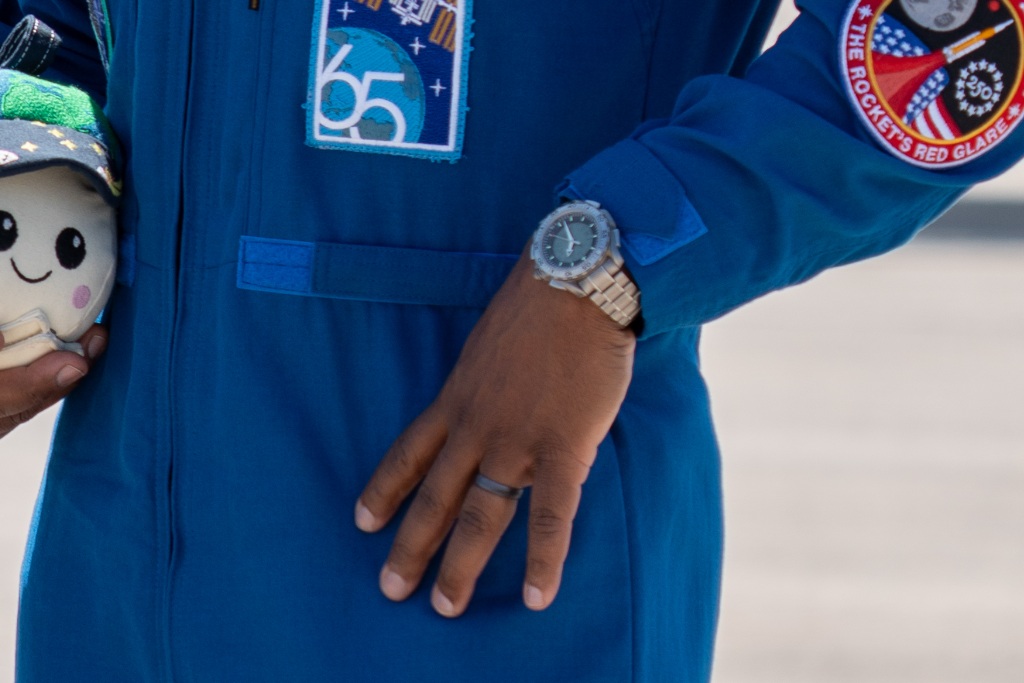
Pilot Victor Glover is the only member of the Artemis II crew to have been spotted wearing an Omega X-33 on its titanium bracelet. Presumably he owns the rare government-only ref. 318.90.42.79.01.001, but you can pretty easily find an identical civilian version (ref. 3291.50.00) for under $3,000 pre-owned.
Are These Personal Items or Loaned?
It is likely that the Omega Speedmaster X-33’s seen on the wrists of the Artemis II crew are NASA property, and NASA is known to ask for those watches back immediately after the astronauts get back. But it is also possible for astronauts to bring their own watches, provided they go through the proper channels and equipment handlers to have them ready for launch day. So, we can’t confirm if the astronauts purchased these X-33’s for themselves or not.
Astronauts have been known to purchase their own Speedmasters on occassion, and according to one random Reddit user, Victor Glover even bought himself a Speedmaster Professional “Sapphire Sandwich” recently.
Omega Speedmaster X-33 (2nd Generation) “NASA Watch” Specs
| Model Name | Speedmaster Professional X-33 (2nd Generation) |
| Reference Number Likely Worn by Astronauts | 318.92.42.79.01.001 (black kevlar, government/military only) |
| Identical References (Besides Strap) | 3291.50.00 (titanium bracelet) 318.90.42.79.01.001 (titanium bracelet, government/military only) 3991.50.06 (black kevlar) 3991.50.41 (red kevlar) 3991.50.09 (green kevlar) |
| Case Material | Grade 2 Titanium |
| Case Width | 42.25 mm |
| Case Thickness | 15 mm |
| Case Lug-to-Lug | 48.50 mm |
| Movement Caliber | Omega Caliber 1666 |
| Movement Functions | Analog/digital time, GMT, alarm, chronograph, day-date, Mission Elapsed Time (MET) with separate alarm, countdown timer, perpetual calendar, backlight |
| Battery Life | 3 years (2 years with regular alarm/light use) |
| Water Resistance | 30 m |
| Market Value (2026) | $2,750 |
Other Watches of the Artemis II Crew
If you noticed an Apple Watch-like wearable device on the right wrist of some of the astronauts, that’s actually the Actigraphy and Reaction Card (ARC) device, part of NASA’s ARCHeR (Actigraphy and Reaction Card for Human Research) study, which continuously tracks astronauts’ sleep patterns, activity levels, circadian rhythms, and behavioral performance during Artemis missions to help researchers understand how deep-space hazards like isolation and radiation affect crew well-being.
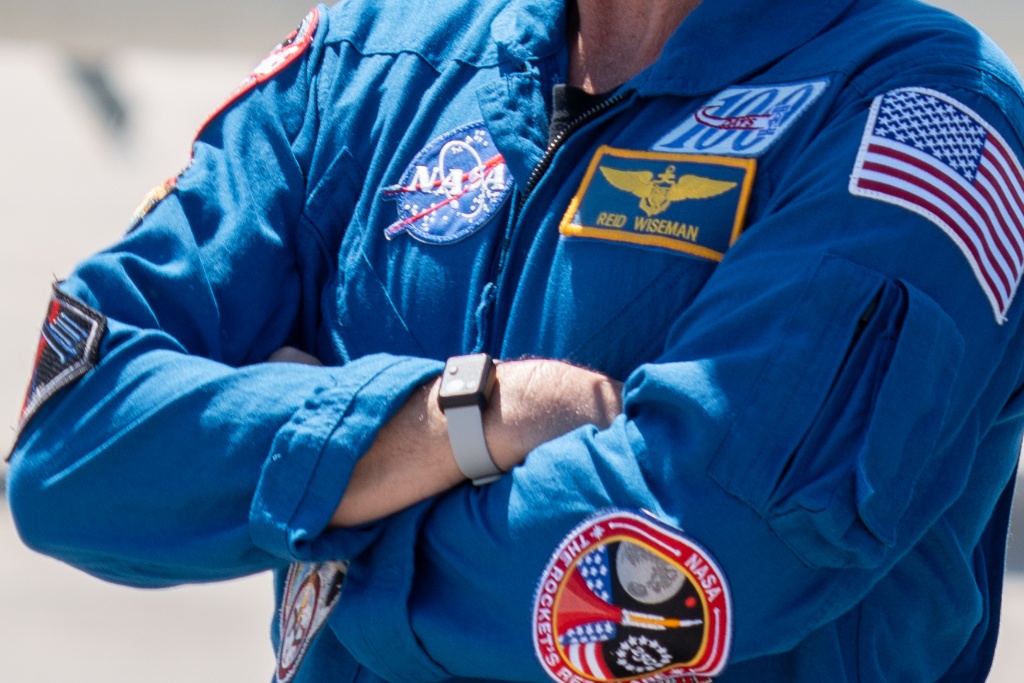
Although he wasn’t seen wearing it on launch day, in prior photo shoots Wiseman was rocking a personal platinum Scott Carpenter Breitling Navitimer, one of Breitling’s 2025 releases. Its 24-hour layout pays homage to the first Swiss watch in space: a custom Navitimer Cosmonaute that NASA astronaut Scott Carpenter wore aboard the Aurora 7 during the Mercury-Atlas 7 mission in 1962.
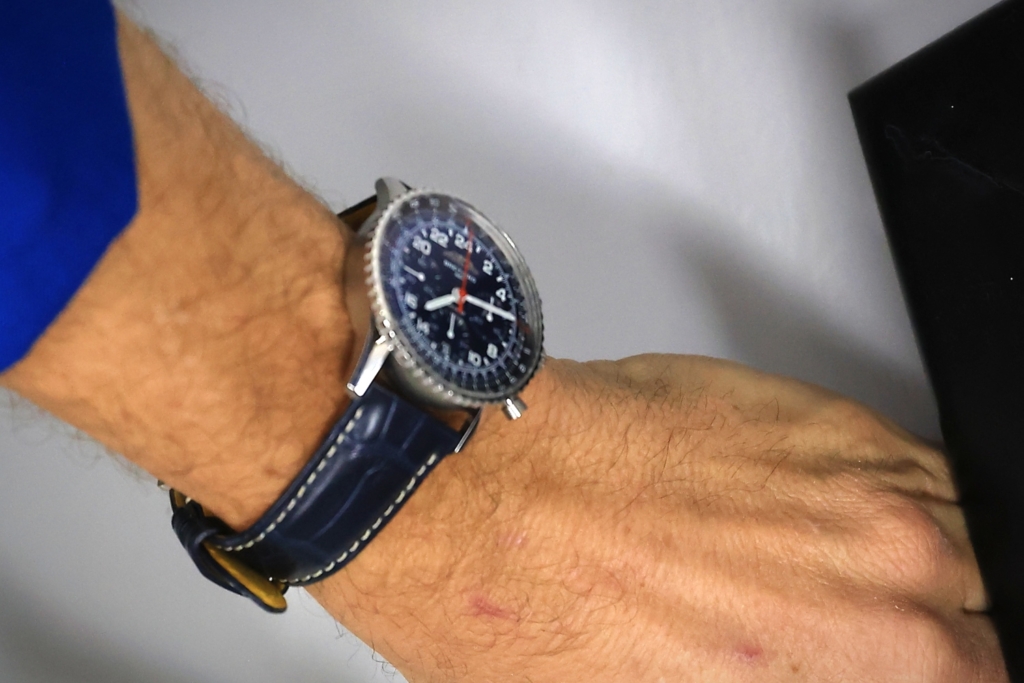
Retail price for the modern-day platinum Scott Carpenter is $43,700, and it’s limited to 50 pieces.
Christina Koch sometimes wears a blue smartwatch. And Canadian astronaut Jeremy Hansen seems less apt to roll up his sleeves and flex than his American counterparts, so watch shots of him are tougher to come across. I think I may have spotted a Breitling lurking underneath his sleeve in one photo, but I can’t be sure.

Regardless, the second-generation Omega Speedmaster X-33 shows no signs of going away in the North American aeronautics world. We wish the Artemis II crew and their X-33’s a successful and safe mission to the moon and back!





Leave a Reply